How I Prepare for Raids Without Feeding an Oversized Army
I stopped judging raids by enemy count alone. This is how I use Threat, Guards, Walls, First Strike and upkeep to decide when to recruit and when to hold.
Updated:
Quick Answer
I do not match raids by enemy headcount.
My raid check is:
Threat and enemy type
→ current soldiers and their upgrades
→ whether Walls are improving the opening attack
→ how soon the raid arrives
→ whether more permanent army upkeep is actually affordable
If I have time, I prefer improving the soldiers I already pay for before adding a large permanent army.
If the raid is already close and my force is clearly undersized, I recruit enough to survive.
Then I stop.
The battle that taught me this was a loss with 20 soldiers against 36 Goblins. Later, another fight with roughly 20 defenders against 40 enemies was comfortable because my defensive setup had improved.
Raw headcount was never the whole answer.
Raids became much easier once I stopped treating the army counter as a required-soldier calculator.
My first instinct was simple:
bigger enemy group = recruit more people.
That works for a while.
Then the army becomes expensive, more upgrades appear, Walls change the opening of fights, and the same number of soldiers can perform very differently from one stage to the next.
So I stopped asking:
How many Guards should I have?
I started asking:
What is the cheapest change that makes this raid safe?
Sometimes that means more soldiers.
Sometimes one attack or defense upgrade is enough.
Sometimes finishing the Walls gives me more value than another batch of recruits.
And sometimes the army is already strong enough, so the best military decision is to buy nothing.
If I only need the story sequence around these fights, I use the complete progression route.
Here I only care about preparing for the next fight without turning every raid into permanent overrecruitment.
The Town Guard Is Where Soldiers Become a Real Budget Decision
Once the Town Guard opens military recruitment, soldiers stop being an abstract story requirement.
They become something I have to pay for.
One early recruitment screen showed:
600 Food
- 100 Iron
per soldier.
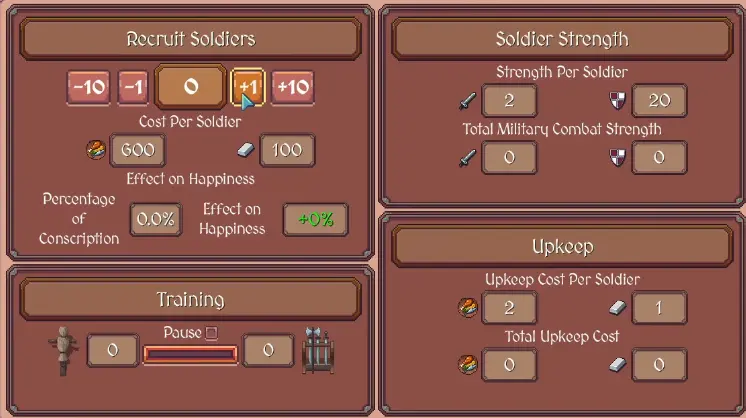
That cost makes panic recruitment add up quickly.
If I decide a raid needs ten more soldiers, that is no longer a tiny adjustment.
It is a meaningful resource commitment before the fight even starts.
So my first rule is:
I do not recruit for a raid the current army is already comfortably favored to beat.
If the incoming threat looks manageable, I leave those resources in the rest of the settlement.
Threat Is a Warning, Not a Required-Soldier Formula
The incoming raid panel eventually gives me better information, including enemy count and a Threat rating.
That is useful.
It is not a formula.
I had a raid of 24 Goblins marked Extreme.
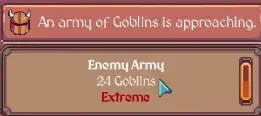
The important part of that screen is:
I need to act before the timer expires.
Then I decide what kind of action is cheapest.
Before recruiting, I check:
Can I improve attack or defense on the soldiers I already have?
Can I finish a useful Wall upgrade before the raid arrives?
Do I have enough time to train replacements normally?
If those options are unavailable or still leave the fight unsafe, then I add soldiers.
Threat tells me whether I need to respond.
It does not tell me exactly how I should respond.
I Prefer Stronger Existing Soldiers Before a Bigger Permanent Army
A flat combat upgrade is often more attractive to me than another group of Guards.
If I can increase the attack or defense of soldiers I already maintain without adding a new recurring burden, I get more combat power from the same army size.
That is especially useful when I am already close to the force size that handled the previous raid.
I treat upgrades in three groups:
flat combat improvement with no new upkeep
→ usually attractive if the raid is approaching.
more soldiers
→ useful when the army is genuinely undersized.
upgrade that raises ongoing upkeep
→ only worth buying if the extra combat strength solves a problem I cannot solve more cheaply.
This stops me from reacting to every raid by permanently increasing army size.
20 Soldiers vs 36 Goblins Was a Clear Failure
One Extreme raid arrived with 36 Goblins while I had 20 soldiers.
I tried to make the existing force work.
It did not.
The battle was not close, and the defeat left a large temporary penalty afterward.
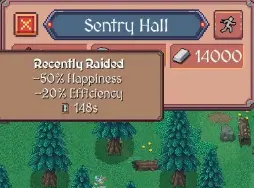
That fight changed how I use raid timers.
If the incoming threat is clearly beyond my last comfortable win and the timer is already short, I stop shopping for long-term economic upgrades.
A production bonus that pays itself back over the next twenty minutes does not help much if I am about to lose the current fight.
At that point I focus on the immediate defensive breakpoint.
But I still do not respond by permanently doubling the army.
Once the raid is over, I reassess whether the emergency force is still necessary.
Walls Change What the Same Army Can Handle
Walls are the strongest reason I do not copy soldier counts from an earlier stage of the game.
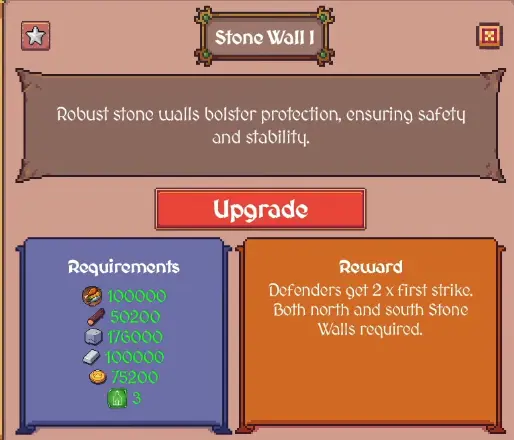
Stone Wall I gives defenders 2× First Strike when the required defensive setup is complete.
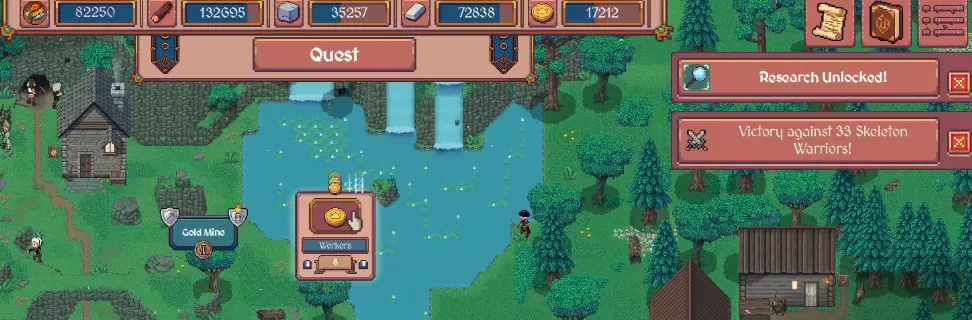
I saw the difference clearly against 33 Skeleton Warriors.
The opening attack removed 10 enemies before the normal fight had properly developed.
That changes the comparison completely.
I am no longer asking whether my soldiers can beat 33 enemies from full strength.
I am asking whether they can handle what survives the opening strike.
Later I had another fight with roughly 20 defenders against 40 enemies.
On paper, that looked worse than the failed 20-vs-36 Goblin fight.
In practice, the improved defensive setup made the battle comfortable.
That gives me the most important combat rule on this page:
I never copy an army-size number from an earlier stage of the game without checking what changed around it.
Walls, First Strike, attack, defense, health, and other upgrades can move the breakpoint dramatically.
I Stop Recruiting When the Army Is Already Winning
There is a point where more soldiers stop solving a combat problem and start creating an economic one.
I do not need the maximum army the town can support.
I want the smallest force that reliably handles the current raid tier.
That means I stop recruiting when:
- recent raids are comfortable;
- Threat is not clearly escalating beyond my current setup;
- Walls or soldier upgrades have just improved the defense;
- adding more Guards would mainly be insurance rather than a real requirement.
If recruitment starts making the Food economy unstable, that is no longer a combat question.
I switch to the Food shortage and starvation guide and fix the economy there.
I do not repeat the Food breakdown on this page.
From the raid side, the lesson is simply:
a soldier I do not need for survival is still a permanent cost.
When I Recruit, Upgrade, or Wait
When a raid appears, I use three different responses.
I recruit when the force is clearly undersized
I add Guards when:
the current Threat is above what I have been beating
and
the raid arrives too soon for a larger defensive upgrade
and
I can afford to keep the extra soldiers after the fight.
That last part matters.
Emergency recruitment is useful only if it does not create another problem immediately afterward.
I upgrade when I already have enough soldiers
If army size feels adequate but the stats are weak, I prefer improving existing soldiers.
That gives me more combat power without automatically increasing headcount.
I wait when the defense is already comfortable
This is the decision that saves the most resources.
A military button can be useful without being necessary.
If the last few raids were easy and nothing has materially changed, I do not buy another combat upgrade simply because it is available.
Call to Arms Is for a Timer Problem
Later military progression can unlock Call to Arms.
It temporarily doubles soldier training speed at double the usual resource cost.
I do not use that as my normal training method.
I treat it as an emergency answer to one specific problem:
the raid will arrive before normal training finishes.
If an Extreme threat is almost at the town and I need replacements immediately, the extra cost can be worth it.
If the raid is several minutes away, I train normally.
The rule is:
speed is valuable when time is the bottleneck.
If time is not the bottleneck, paying double is just paying double.
After a Defeat, I Fix the Combat Cause Before Repeating the Same Setup
A defeat is not a signal to rebuild the exact same army and try again.
I first ask why the setup failed.
If the army was genuinely too small
I add Guards.
If the army was large but weak
I prioritize attack or defense.
If Walls were the missing breakpoint
I work toward the defensive upgrade before the next dangerous wave.
If the economy cannot support the replacement army
I stop the military rebuild and stabilize resources first.
The detailed Food recovery belongs in the Food shortage guide.
From the combat side, my job is to avoid rebuilding the same losing setup.
I replace enough strength for the next threat, then fix the weakness that caused the loss.
I Do Not Let One Defeat Trigger Permanent Panic Recruitment
The most dangerous response to a bad raid is emotional overcorrection.
A loss makes it tempting to add a huge block of soldiers immediately so that it can never happen again.
That can work for the next fight.
It can also leave me maintaining an army much larger than the current threat tier requires.
So after a defeat I rebuild in steps.
I add enough strength to cover the next known raid.
Then I watch how the next fight performs.
If it is still close, I improve the defense again.
If it becomes comfortable, I stop.
That is much better than picking an arbitrary “safe army size” and carrying it for the rest of the game.
Battle Rewards Are a Bonus, Not a Reason to Farm Raids
Some Research adds extra rewards for defeating specific enemy types.
Those rewards can be useful.
One animal fight returned 5,000 Food after the relevant progression was active.
I treat that as a bonus for winning a fight I already needed to survive.
I do not build an oversized army because combat loot looks profitable.
Raids already happen as part of progression.
If my normal defense earns extra resources, great.
If I have to distort the whole settlement economy to farm those rewards, the army has stopped serving its real purpose.
The Raid Check I Use Before I Spend
Before buying another soldier or combat upgrade, I ask:
How dangerous is the current Threat relative to my recent fights?
What changed since my last comfortable defense?
Can Walls or one upgrade solve the problem before I add more permanent soldiers?
Is the raid timer forcing me into emergency recruitment?
Can the settlement actually maintain the army afterward?
That gives me a much better answer than enemy headcount alone.
The best army I have found is not the largest one I can build.
It is the smallest one that consistently wins the current fights while leaving enough of the town’s economy free to keep progressing.