When Another Backpack Slot Is Actually Worth the Gold
Backpack space gets expensive fast. I buy another slot when the bag repeatedly forces me to abandon relics I would have sold, not just because an upgrade is available.
Updated:
Quick Answer
I buy another Backpack Additional Slot when the current grid repeatedly makes me leave behind relics I genuinely want to bring home.
If I still finish runs with empty spaces, or the only things being discarded are weak filler, I keep the Gold. Once capacity starts competing with weapons, healing, or the Endless Vault, the missing slot has to be costing me real value before I pay for it.
The first slot looked cheap only after I saw what later ones cost.
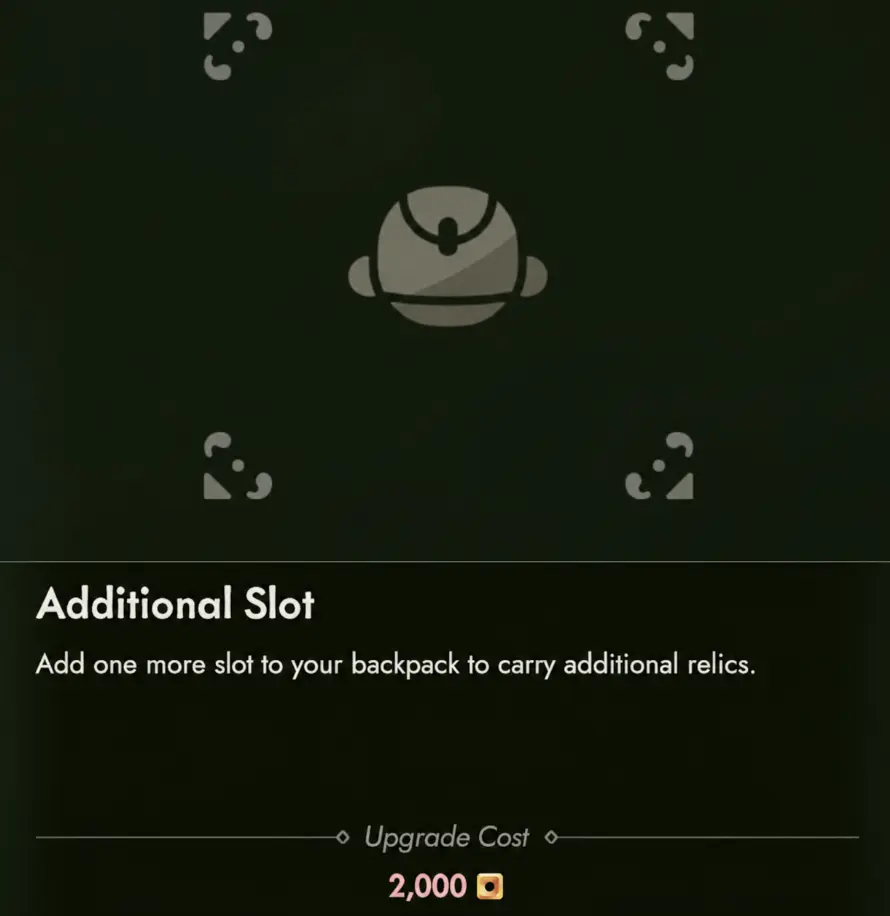
Early on, 2,000 Gold was already a meaningful purchase because the progression target I was working around was roughly 7,000 Gold.
That made one backpack square almost 29% of the amount I was trying to reach.
Then the next observed slot rose to 4,000 Gold.
Later I saw 40,000 Gold.
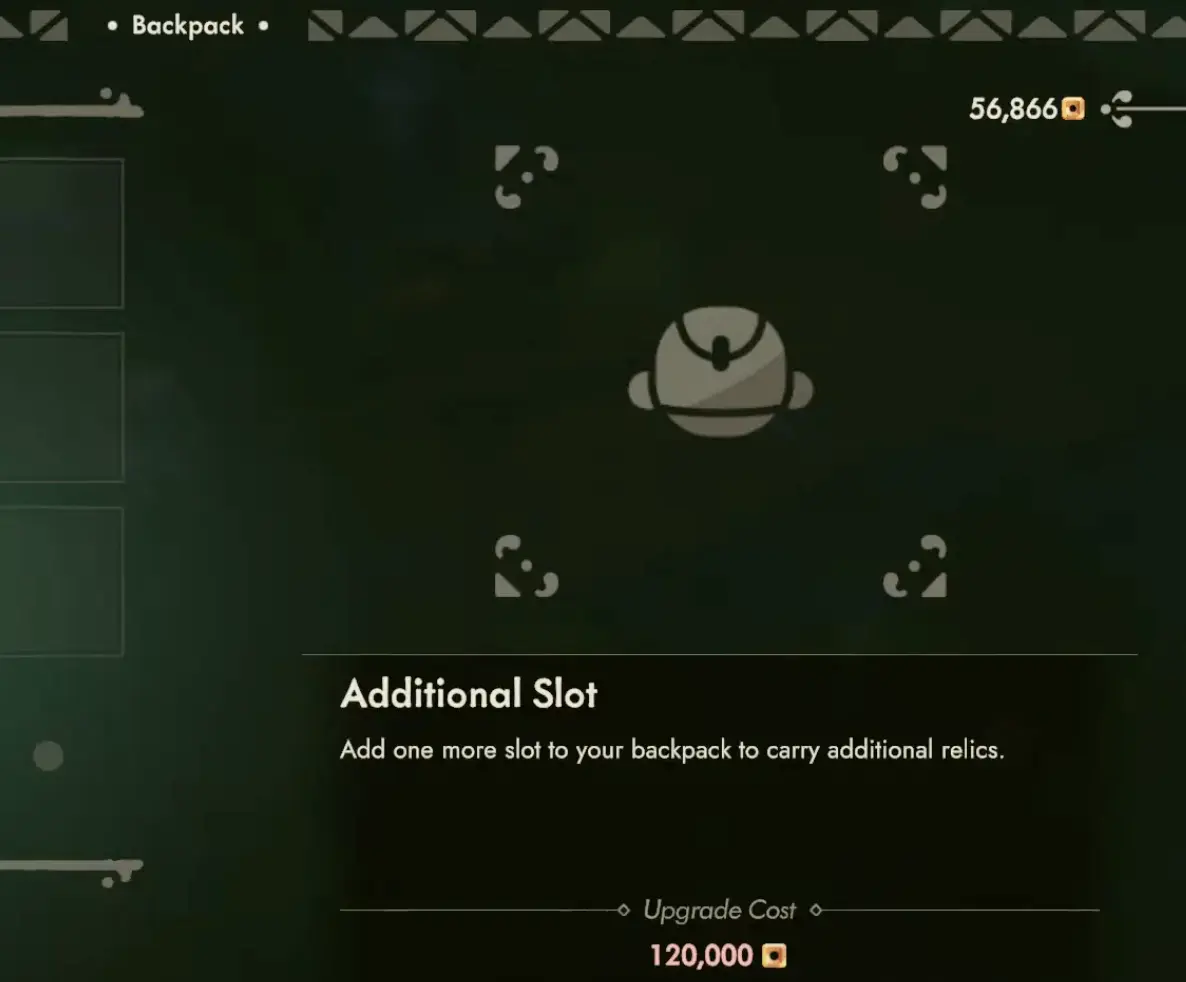
On my 1.0 save, another Additional Slot had reached 120,000 Gold.
There is no point pretending those are small convenience purchases.
The useful question is not how many slots I can afford.
It is what the current backpack is making me lose.
The Early 2,000-Gold Slot Has to Solve a Problem I Can Already See
The first Additional Slot I seriously considered cost 2,000 Gold.
At this stage I can test the purchase quickly.
A few runs are enough.
If I regularly reach the later rooms with open spaces, nothing is wrong with the backpack yet.
If every good chest starts a small argument over what has to be discarded, capacity is beginning to matter.
I look at the item that lost that argument.
A cheap Common relic is not proof that I need another slot.
A Rare, Epic, Legendary, or heavily improved relic left on the floor is much stronger evidence.
That distinction matters more than the upgrade price.
The Next Slot Already Reached 4,000 Gold
The next early Additional Slot I saw was 4,000 Gold.
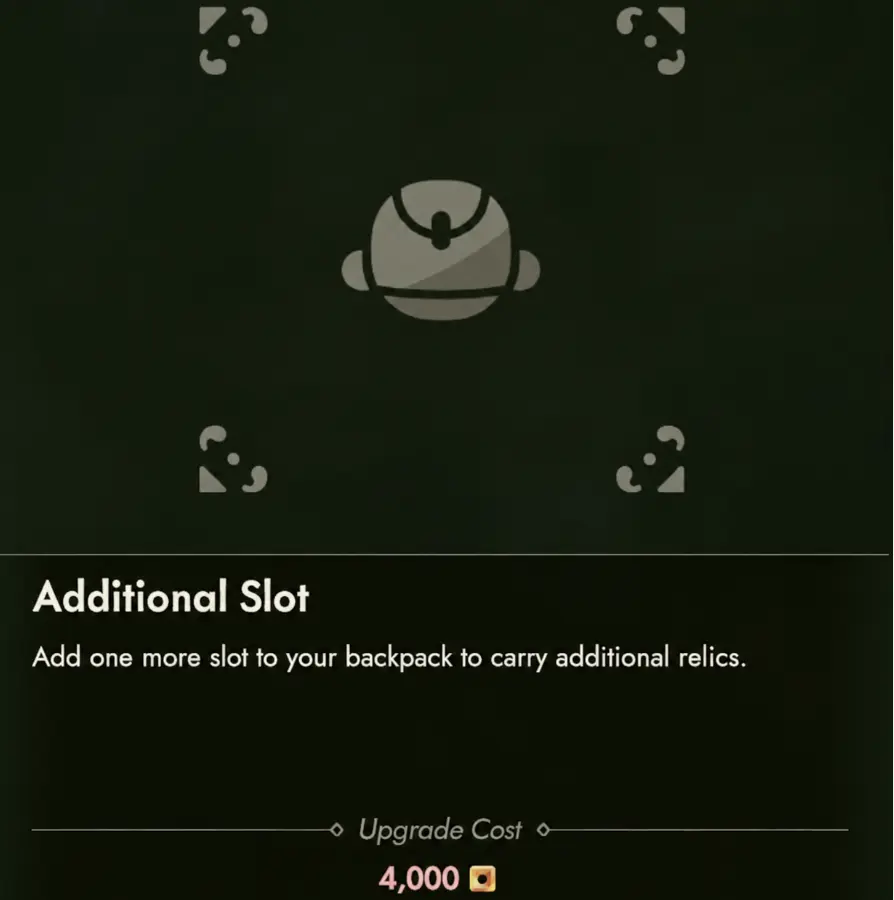
I do not use these observed prices to invent a complete upgrade table.
They are checkpoints from the save.
What they tell me is enough: the cost starts climbing early, so buying every slot automatically becomes harder to justify as progression opens more places to spend Gold.
At 2,000, I can tolerate a marginal purchase.
At 4,000, I want the bag to be filling regularly.
Later prices need much stronger evidence.
A Full Backpack Is Not Automatically a Capacity Problem
This is the screen that matters more than the upgrade menu.
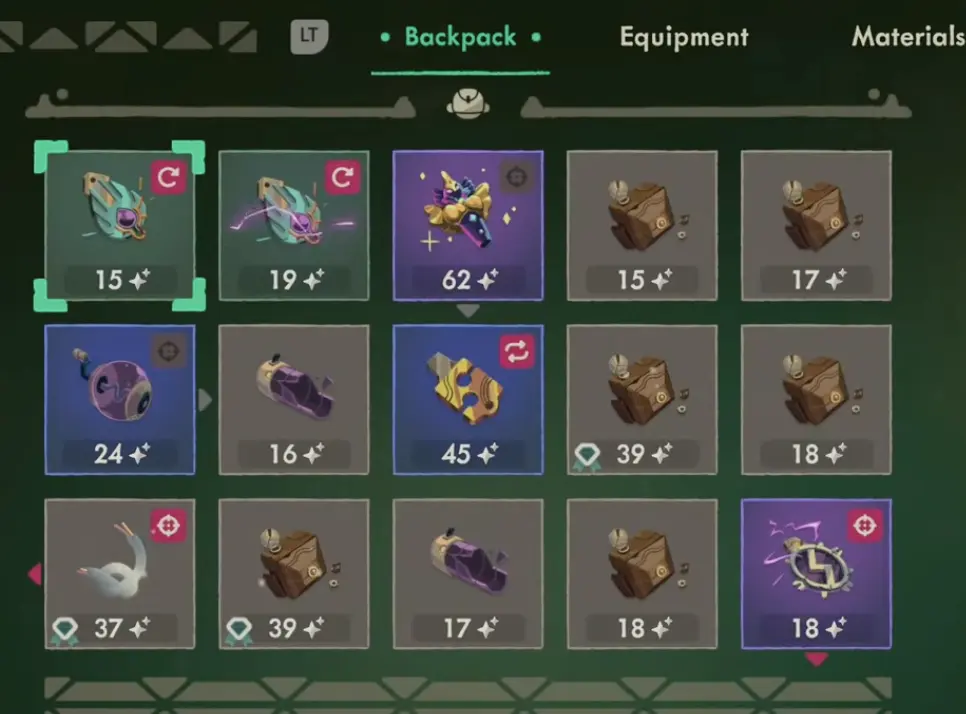
The bag can be full for two very different reasons.
One is good loot pressure.
The other is bad pickup discipline.
If I filled half the backpack with low-value relics that have weak Quality and no useful interaction, buying another square only gives me more room to carry mediocre stock.
I fix that by becoming more selective.
The purchase becomes convincing when the grid is already full of items I would happily take back to Tresna and sell.
Then the lost relic has an opportunity cost.
The Relic Quality guide is where I compare relic value and Quality interactions. For this decision, I only need the result: did the backpack force me to abandon something sale-worthy?
At 40,000 Gold, I Start Counting Runs
Later, one Additional Slot cost 40,000 Gold while I had roughly 80,000 Gold available.
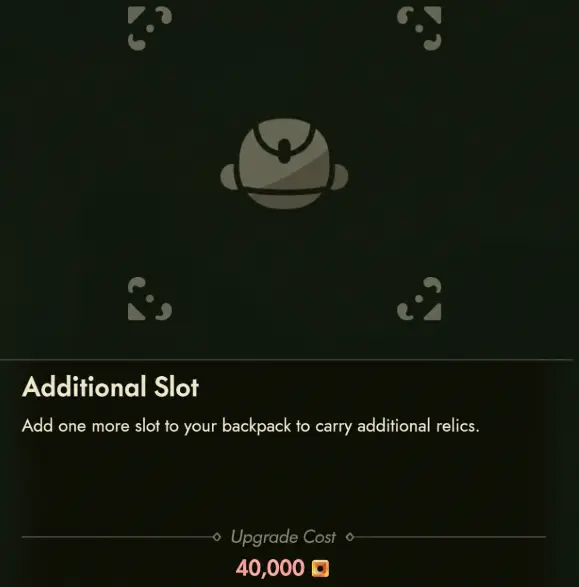
That price changed the way I valued the upgrade.
A normal expedition could already take 20 minutes or more.
If the extra slot only saves a cheap relic every few runs, it can take a long time before 40,000 Gold has produced anything meaningful.
I want to see a pattern before paying this much.
The signs I care about are concrete:
- the bag is filling before I reach the rooms I actually want;
- valuable relics are being abandoned repeatedly;
- I am cutting profitable runs short because there is nowhere useful to put the next drop;
- an extra slot would let a run I already survive bring home more of its best loot.
One painful full backpack is not enough.
Several runs ending the same way are.
The 120,000-Gold Slot Is a Late-Game Purchase, Not an Reflex
On my 1.0 save, the Additional Slot screen eventually showed 120,000 Gold.
I had 56,866 Gold.
Even spending everything I had would still leave me 63,134 Gold short.
That removes any temptation to buy it simply because permanent capacity is useful.
At this point, the bag has to beat other progression needs for the same money.
If enemies are ending the run before the backpack fills, I solve combat first.
If healing is consistently the reason I turn around, space is not the bottleneck.
If a major Endless Vault step is close, I compare the delay before committing six figures to one slot.
The larger Gold-allocation question belongs in the endgame progression guide. The backpack decision stays narrower:
does this slot let a run I can already survive bring home significantly more value?
If yes, it has a job.
If not, 120,000 Gold has better uses.
Storage Can Look Like a Backpack Problem
Some capacity pressure appears after I return to Tresna.
The backpack is crowded.
Storage is crowded.
Another expedition suddenly feels awkward because there is nowhere clean to put the next haul.
My first response is not another backpack purchase.
I sell.
If one shop shift clears enough stock to restore comfortable space, the real bottleneck was unsold inventory.
The Shop Perks guide covers how I time those sales. Here, selling matters because it lets me test whether permanent capacity is actually necessary.
If storage fills again immediately after an efficient shop day, then the case for another slot gets stronger.
If the pressure disappears, I just saved myself an expensive upgrade.
Survival Problems Make Backpack Upgrades Look Better Than They Are
The easiest false positive happens when a run ends early.
Suppose I come home with a nearly full backpack.
That does not mean capacity was the thing holding me back.
Maybe I had already used every potion.
Maybe combat was taking so long that I never reached the best rooms.
Maybe a boss was stopping the route.
Maybe I returned with several empty slots on the runs where survivability went badly.
Another square changes none of that.
Capacity becomes valuable after the run itself is healthy enough to generate more good loot than the current bag can hold.
That order matters.
A bigger backpack cannot rescue a run that never survives long enough to fill it.
The Achievement Goals Come Later
Backpack expansion also connects to two completion goals.
Bag of Holding requires 10 additional capacity slots.
Endless Backpack requires maximum backpack capacity.
I treat those as cleanup goals rather than purchase instructions.
During progression, each slot still has to justify its Gold against whatever is currently stopping the save.
Later, once the Vault, combat upgrades, and shop progression no longer need the money urgently, buying the remaining capacity for completion becomes much easier.
The achievement tells me how far the system goes.
It does not tell me when each slot is worth buying.
What the Four Observed Prices Changed for Me
The prices I actually saw were:
2,000 → 4,000 → 40,000 → 120,000 Gold
They are not a complete cost sequence.
They are enough to show how much the decision changes over the course of the save.
At the first price, frequent full bags can justify the purchase.
By 40,000, I want repeated losses of valuable loot.
At 120,000, the run should already be profitable and survivable enough that capacity is clearly the limiting factor.
That is the test I use now:
What valuable relic did the missing slot cost me?
If I can answer that question several runs in a row, I start saving.
If I cannot, the backpack is probably not the upgrade I need yet.