Welcome to Elderfield Map: Key Locations, NPCs & Routes
Find key Welcome to Elderfield locations, NPC areas, sewer entrances, bus stops, Elderfield High, Greystone Estates, the Library, Mall and Lakefront.
Updated:
Quick Answer
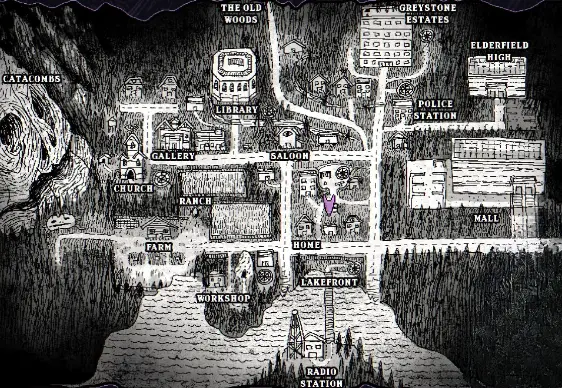
Open the town map first, then use the nearest recognizable building as your anchor. Duplex Row is useful for named residents, Professor Dayton is inside the Library, the Uptown sewer entrance is directly behind the Police Station, and Elderfield High sits farther out past that side of town. Once bus stops start opening, pay for the ones beside areas you revisit often instead of walking the entire route every time.
How I Use the Map Without Running in Circles
Welcome to Elderfield shows me a surprisingly large amount of town before every route is useful.
The Farm, Ranch, Town Outskirts, Mall, Lakefront, Church, Library, Greystone Estates, Police Station, Elderfield High, Old Woods and several stranger destinations can all become relevant while my active tasks are still bouncing between ordinary farming, NPC errands and the first real combat areas.
That difference matters because the map is better at showing regions than answering every small location question. I can know that I need Uptown and still spend several minutes checking the wrong building, the wrong sewer entrance or the wrong floor.
My route became much easier once I started remembering a handful of physical anchors instead of trying to memorize the entire town at once.
Farm and Town Outskirts Are My Early Reference Points
The Farm is the easiest place to reset my bearings because so many early systems point back toward it. Hans, the crops and the Stone Tower all sit in this part of the game, while the paths away from the farm begin connecting me to the Town Outskirts and the larger town.
Molly’s Workshop is one of the most useful early landmarks in the Outskirts. When mining becomes the reason I am traveling, I head back to Molly rather than searching the Mall first. Her route handles the first tool progression; the full mining order and later upgrade decisions are in the pickaxe guide.
The Stone Tower is also visible early, but I do not use it as a navigation target every time I return to the Farm. Seeing the sealed door does not mean there is another nearby entrance I have missed. Normal farming and later progression affect it, so I keep moving unless the current task is specifically sending me there.
That leaves the Farm doing what it does best for most of the early game: a safe place to save, store materials, process resources and decide which part of town I actually need next.
Duplex Row Is Where I Check Named Residents
One of the most useful discoveries in Uptown was Duplex Row.
A lot of the named townspeople live there, so when I need to find somebody outside their usual wandering route, I check the residential row before circling every shop and public building again.
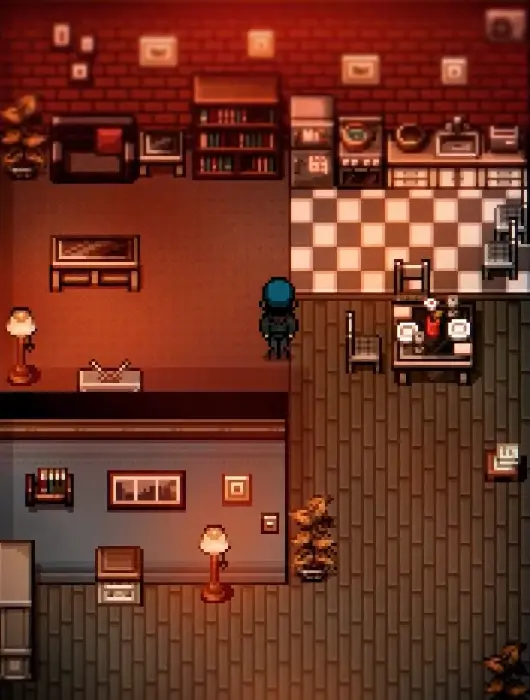
Edwin is a good example. Visiting his home makes his interest in books and knowledge obvious, which becomes useful when he later asks a friendship question. That turns the houses into more than decorative interiors: they help me remember who lives where and what sort of answers fit that person.
I still do not expect every NPC to stand inside the same building all day. When somebody is absent, I treat the home as the starting point for the search rather than assuming I have the wrong neighborhood.
The Library Is the Place I Use for Professor Dayton and Town History
When a task starts asking about Elderfield’s older history, the Library is usually more useful than another lap around Town.
Inside, Professor Dayton has his study toward the east side of the Library. That is the route I use when the Stone Tower or another historical question sends me looking for somebody who actually understands what I have found.
The Library itself can be confusing because its shelves and interior do not behave like a perfectly static building. I stay fairly close to the useful rooms unless I have a reason to explore deeper.
For simple navigation, I remember the building for two things:
Professor Dayton for historical questions, and Alice for several conversations and later discoveries.
That is enough to stop me from treating the Library like a dungeon every time a task merely wants an NPC.
The Police Station Has an Important Sewer Entrance Behind It
The sewer network has enough entrances that I stopped thinking of “the Sewers” as one doorway.
The landmark that helped most in Uptown is the Police Station.
Behind it is an Uptown sewer entrance, which gives me a much cleaner reference point when a task sends me underground on this side of town.
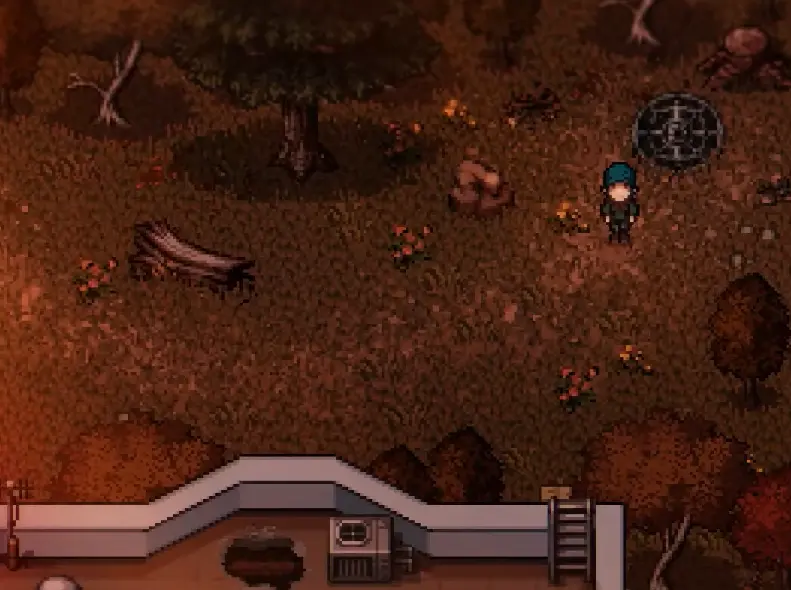
This is also where I ran into Blorf during underground exploration. The important map lesson is that a sewer entrance can connect me to NPCs, shops and locked routes that do not look related to the building above them.
I therefore mark entrances by the surface landmark beside them: Police Station sewer, Mall-side routes, and the other access points I discover later. That is much easier than memorizing a maze from underground.
Fishing also intersects with the sewer network, but bait choices and fish locations are better handled before I waste a stack underground. The fishing guide covers which bait I bring and where the important catches belong.
Elderfield High Is Near This Side of Town, but the Front Door Can Still Be Closed
Continuing through the outskirts beyond the Police Station side eventually brought me to Elderfield High.
The location itself was easy to recognize once I reached the large parking area and school entrance. The confusing part was assuming that reaching the building meant I should already be able to enter it.
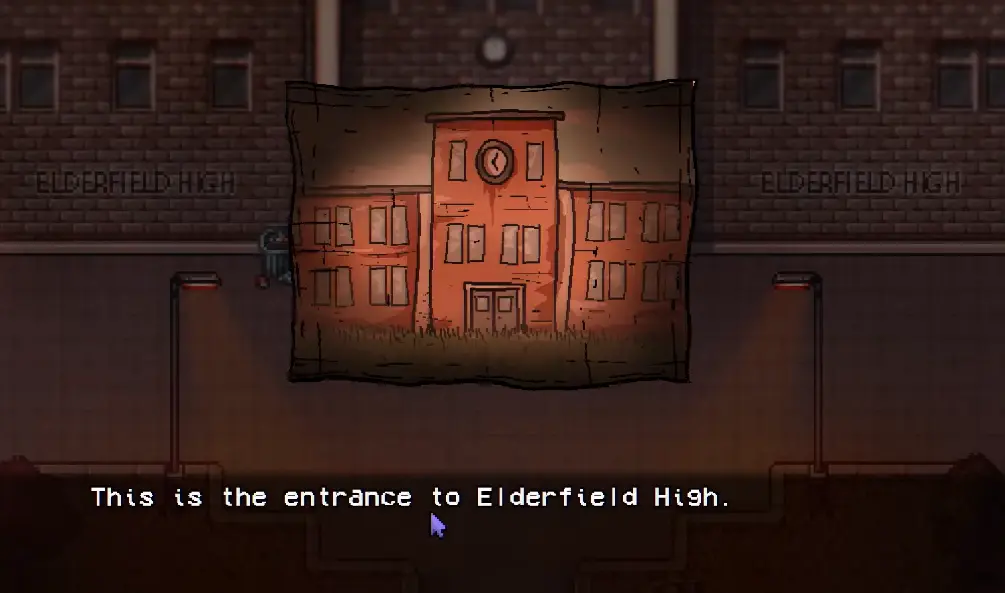
When I first checked it, the school was closed for renovations. The entrance itself hints that strange events inside become relevant as relationships around town develop and an investigation eventually gives me a reason to return.
That stops me wasting time searching around the fence for a hidden side door.
I mark the school, leave it alone, and come back when the game actually gives me an investigation connected to it.
Uptown Is Where Several Easy-to-Confuse Locations Start Clustering Together
Uptown is where my mental map needed the most cleanup.
The Library, Church area, residential streets, Art Gallery, Greystone-related routes and other large buildings sit close enough together that simply remembering “north” was not enough.
The Art Gallery is in the northwestern part of town and becomes much easier to identify once its opening announcement arrives. Inside, it is a collection-focused building rather than another normal shop. I bring discoveries there when I already have something relevant instead of making a special trip every time I pick up one strange item.
The Church is another fixed landmark nearby. I mainly care about it on Sunday, when Father Desmond can handle Old God alignment. The seven normal alignments, their bonuses, penalties and God Forge uses are in the Old Gods guide.
Those two buildings give me stable references when the rest of Uptown starts feeling like similar streets and doors.
Greystone Estates Is a Trip I Prepare for, Not a Quick NPC Stop
Greystone Estates looks like another destination on the map, but once I actually started doing jobs there, it behaved more like a multi-floor combat area.
Different rooms can need specific keys, blocked routes can demand a particular item or tool, and strong encounters can sit between me and an NPC who sounded simple to reach from the quest description.
That means I do not walk into Greystone with one empty inventory slot and no healing just because somebody says their friend lives in a numbered room.
A later trip also gave me one of the most useful travel upgrades in this part of town: the Uptown bus stop.
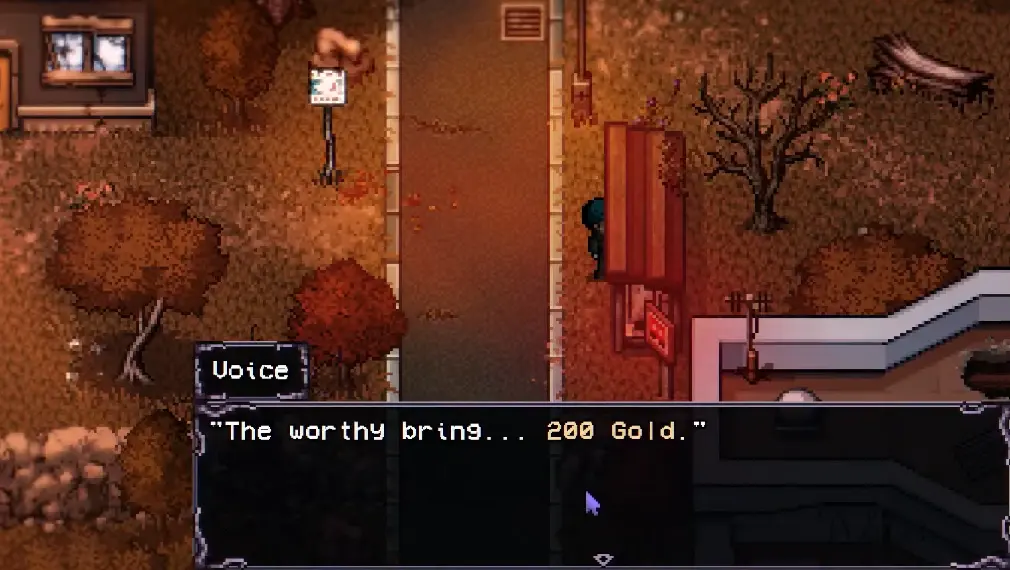
The cost was 200 gold. At the point I bought it, the available travel list included North, Uptown, the Mall and Home.
That was worth more to me than another small purchase because I already had reasons to keep returning to Greystone. Once a destination starts generating repeat trips, shortening the route saves both real time and the supplies I would otherwise spend fighting through unrelated encounters on the way.
The Fancy House Has a Working Phone
One of the easiest utility locations to forget is the working phone inside the Fancy House.
I only gained access after the related route produced the Fancy Key, so this is another case where knowing a location exists does not mean I can use it immediately.
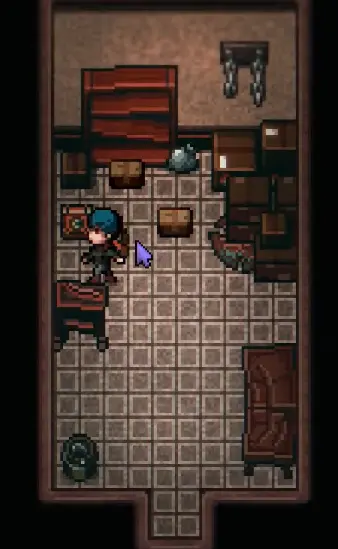
The important part is remembering the phone after I leave.
Elderfield News can broadcast unusual phone numbers, and finding the number is only half of that event. Once the Fancy House is open, I already know where I can test the next broadcast instead of searching every residence for a telephone again.
I do not keep old numbers as permanent solutions, though. A previous number may simply stop answering, so I return with the current broadcast information.
The Mall Bus Stop Saves the Worst Part of Repeat Mall Trips
The Mall is another location where travel convenience becomes more valuable after the first visit.
Before the nearby bus route was open, returning to the deeper food-court and mine side meant fighting or walking through much more of the building again. The bus stop sits near the Mall Mine, so opening it dramatically shortens later trips.
I do not duplicate the Mall’s back-office keys, bosses and mine sequence here; once Adrian has given the route a real purpose, the Mall walkthrough carries that progression.
For navigation, the useful fact is simpler: once the Mall bus route is available, I open it before committing to repeated mine runs. After that, I can return close to the food court and mine instead of treating every visit like a fresh Mall clear.
Lakefront Is My Fishing Anchor
Whenever a task asks for a fish, my first location check is Lakefront, because that is where Fisherman Herb gets the fishing system moving.
I do not turn a map question into another fishing explanation. Once I reach Herb, the fishing guide covers the rod, bait, Ghost Flounder, Fog Eel and the different bait requirements elsewhere.
What matters while navigating is that Lakefront is not only scenery. It becomes a repeat destination for fishing, cooking ingredients and tasks, which makes nearby travel access increasingly valuable as the run expands.
I Leave Some Visible Locations Marked Until the Game Gives Me a Reason to Return
A few locations are much easier to understand once I stop treating every icon like unfinished business.
Stone Tower can sit sealed beside the Farm while ordinary progression continues.
Elderfield High can be physically found before an investigation opens it.
Old Woods can start appearing in broadcasts and task conversations before I have a clean reason to push deep into the area.
Catacombs are another place I leave alone when nothing in my current route actually points there.
That is the rule that keeps my map useful instead of overwhelming: I remember where the place is, but I only spend resources on it when the current task, key, tool or NPC gives me something concrete to do there.
When my journal becomes too noisy to tell which of those leads matters, I use the quest guide to separate immediate unlocks from objectives that can sit safely for later.
The Shortest Route Is Usually the One I Have Already Paid to Open
By the middle of the game, I stop measuring distance only by what the town map looks like.
A building that is physically close can still involve two floors of enemies and a locked door. A distant area can become almost instant once its bus stop is active. Sewers can connect places that look unrelated above ground, while a quest key can turn a previously useless building into the exact route I need.
So before walking across Elderfield again, I check three things: whether I already opened a bus stop, whether a nearby sewer entrance is a better anchor, and whether the task actually supplied the key or access condition I am missing.
That small check saves more time than trying to memorize every street.