ReStory Progression Guide: What I Buy First and What I Delay
My ReStory route for license walls, money, required tools and upgrades so I always know what to buy next when story progression stalls.
Updated:
Quick Answer
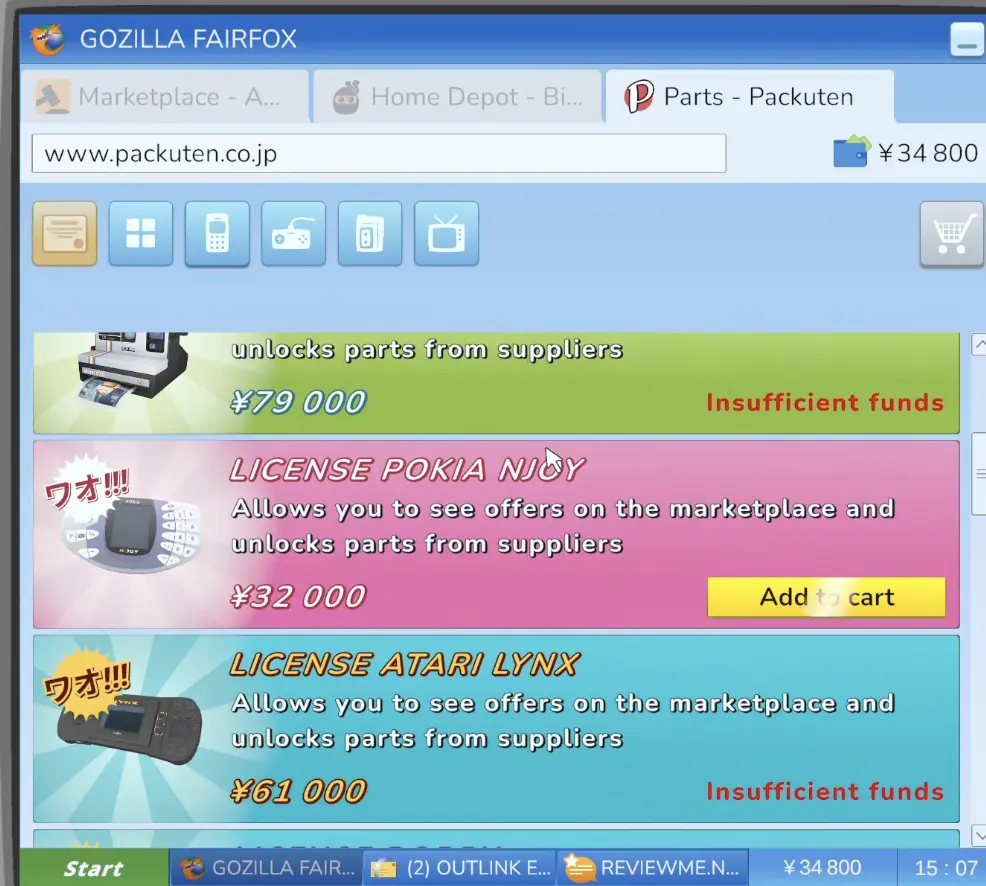
My ReStory progression order is current story blocker → required license or tool → reliable money → high-use efficiency upgrade → optional purchases. I do not buy every license in a fixed order. I buy the one blocking the repair or story step in front of me. The first serious wall in my run was a ¥40,000 PMP license, followed later by licenses such as ¥61,000 Atari Lynx, ¥71,000 PlayStation and ¥79,000 Polaroid. If progression feels stuck, I identify the blocker before spending anything.
The easiest way I found to slow down ReStory was buying something useful at the wrong time.
There is almost always another tempting purchase:
- a faster screwdriver;
- a cleaning upgrade;
- a new license;
- a Marketplace device;
- a box of parts;
- workshop furniture;
- another tool I know I will eventually want.
Most of those purchases are not bad.
The problem is timing.
I can spend almost everything on a convenience upgrade and then have the next customer ask for a device that requires a new license.
I can buy three licenses because they are available and then discover that the story actually needs a tool.
Or I can accept a pile of jobs while what I really need is one evening of clean, profitable work to fund the next progression gate.
My route became much easier when I stopped asking:
What is the best thing I can afford?
and started asking:
What exactly is preventing the next story step from happening?
What I Buy First in ReStory
I do not use one permanent item-by-item shopping list.
I use this priority.
| Current situation | What I prioritize | What I delay |
|---|---|---|
| A story customer needs a locked device | The required service license | Unrelated licenses and convenience upgrades |
| The current objective requires a new repair mechanic | The required tool | Faster versions of tools I already own |
| I know what I need but cannot afford it | Safe customer work, selected Online Orders and good Marketplace opportunities | Decorations and speculative purchases |
| Story progression is moving but repairs feel slow | High-use efficiency upgrades | Niche tools I rarely touch |
| Screws are the bottleneck | Professional/Electric Screwdriver | Expensive cleaning automation |
| Cleaning volume is the bottleneck | Automatic Ultrasonic Bath once the license fund is safe | Buying it just because it appeared |
| Repair Masters Competition becomes active | Reputation and competition progression | Random spending that does not move qualification |
The important part is that the first row can change.
Sometimes the next gate is a license.
Sometimes it is the Soldering Iron.
Sometimes I have already bought everything I need and the real blocker is a story event.
So I identify the blocker first.
If ReStory Progression Feels Stuck, I Check These Four Things
When I feel like nothing new is happening, I work through four possibilities.
1. A missing service license
A customer or story device is waiting, but I am not licensed to repair that device type.
This is the most common progression wall I hit.
2. A required repair tool
I own the license, but the repair now needs a mechanic I cannot perform yet.
Soldering is the clearest example.
3. Money
I know exactly which license or tool I need.
I simply cannot afford it.
That means I need to stop shopping and generate cash.
4. A story or reputation gate
I have finished the current repairs and purchased the important tools, but the next progression event depends on another part of the game.
Later, the Repair Masters Competition shifts some progression pressure from pure money into reputation and competition preparation.
Those four problems need four different responses.
Buying another license does not solve a missing tool.
Ending another day does not solve a license I already know I cannot afford.
Grinding random repairs does not help if the current objective simply wants me to buy the Soldering Iron.
License Order: I Buy the License Blocking My Current Route
I do not recommend buying every ReStory license in one universal order.
The game gives me many device licenses.
The correct purchase depends on which customer and story route I have reached.
The first major example happens early with the Nony PMP.
A customer wants the PMP repaired.
I do not have the license.
The customer effectively tells me to come back when I can legally service it.
Then the computer shows the cost:
¥40,000
At that stage of my run, I cannot afford it.
I do not keep clicking the blocked device.
I return to work I can already complete.
I earn the missing money.
Then I buy the license and return to the story repair.
That pattern repeats later.
License Prices Rise Fast
The ¥40,000 PMP wall is only the beginning.
Later routes give me concrete examples of how quickly license costs escalate.
I encounter:
Atari Lynx — ¥61,000
then:
Sony PlayStation — ¥71,000
and:
Polaroid — ¥79,000
I also reach a later license priced at:
¥110,000
The exact device I need at each point depends on the route currently in front of me.
The budgeting lesson does not change:
later licenses can consume the majority of a mid-game cash balance.
This is why I do not collect licenses just because they are visible in the store.
A license gets priority when:
- a current story repair requires it;
- an important customer is waiting for it;
- it opens work I am actually ready to perform;
- I have enough cash left to keep the workshop functional.
If none of those are true, I can wait.
The Platinum Partner achievement eventually wants every license, but that is a completion goal.
It is not my early progression order.
I Treat Part of My Balance as Untouchable License Money
Once licenses begin costing ¥40,000 and above, I stop looking at the wallet as one number.
I mentally split it into:
progression reserve
and:
spendable cash
For example, if I have:
¥65,000
and the current story device needs a:
¥61,000 license
then I do not really have ¥65,000 available for upgrades.
I have roughly:
¥4,000 of flexibility
plus the money I need for the license.
That sounds overly cautious until ReStory puts several expenses together.
I may suddenly need:
- the license;
- replacement parts;
- a donor device;
- a required tool;
- a recurring bill.
Spending to zero because I technically had enough for one upgrade is how I create my own progression wall.
What I Do When I Need Money for a License
When I know the next purchase but cannot afford it, I stop experimenting.
My preferred cash route is:
finish reliable customer work → clear good existing orders → use only Marketplace opportunities I understand → stop optional spending
I do not need a special infinite-money exploit.
I need work where I understand the downside.
I finish devices I already know
A familiar phone, controller or simple device is usually better progression work than an unfamiliar expensive repair that might require several parts.
I already know:
- where the layers are;
- how long disassembly takes;
- which parts normally hide underneath;
- whether I have replacements.
Predictability matters when I am saving for a license.
I clear good Online Orders
Online Orders are useful because I can choose work instead of waiting for one specific walk-in customer.
But I do not accept everything.
Before taking an order I ask:
- Do I own the required license?
- Do I understand the device?
- Is the payment worth the likely parts and bench time?
If the answer is no, I leave it.
The full accept/skip and overdue workflow stays in the Online Orders Guide.
For progression, I use Online Orders as controlled extra income rather than a second backlog.
I Use the Marketplace to Bridge Money Gaps, Not Create Bigger Ones
The Marketplace can make the next license arrive much faster.
It can also destroy the license fund.
I have opened listings that looked promising only to find multiple damaged parts inside.
I have also learned that seller rating matters.
A listing description that says a device works does not guarantee that the internals will match what I hoped to buy.
So when I am saving for progression, I prefer:
- a device I already understand;
- an obvious resale opportunity;
- a donor containing parts I actually need;
- a purchase small enough that failure does not erase my license reserve.
I avoid:
- spending most of my wallet on one uncertain listing;
- assuming the seller description is perfect;
- buying a device only because the apparent sell price is higher;
- continuing to feed replacement parts into a flip after the margin has disappeared.
When a supposed flip becomes too expensive, I change the plan.
I stop thinking:
I have to repair this because I bought it.
and start asking:
Are the remaining good parts more valuable to me as donor inventory?
The detailed listing, seller-rating and repair-versus-salvage decisions belong in the Marketplace Guide.
This page only uses Marketplace work for one purpose:
fund the next progression purchase without turning the fund into a gamble.
Required Tools Beat Convenience Upgrades
One of the clearest buying decisions in my run appears when the shop offers two things I want.
The Electric Screwdriver costs:
¥55,000
The Soldering Iron costs:
¥40,000
The Electric Screwdriver is immediately attractive.
It makes an action I perform constantly much faster.
But the current To-do list tells me to:
Buy a soldering iron.
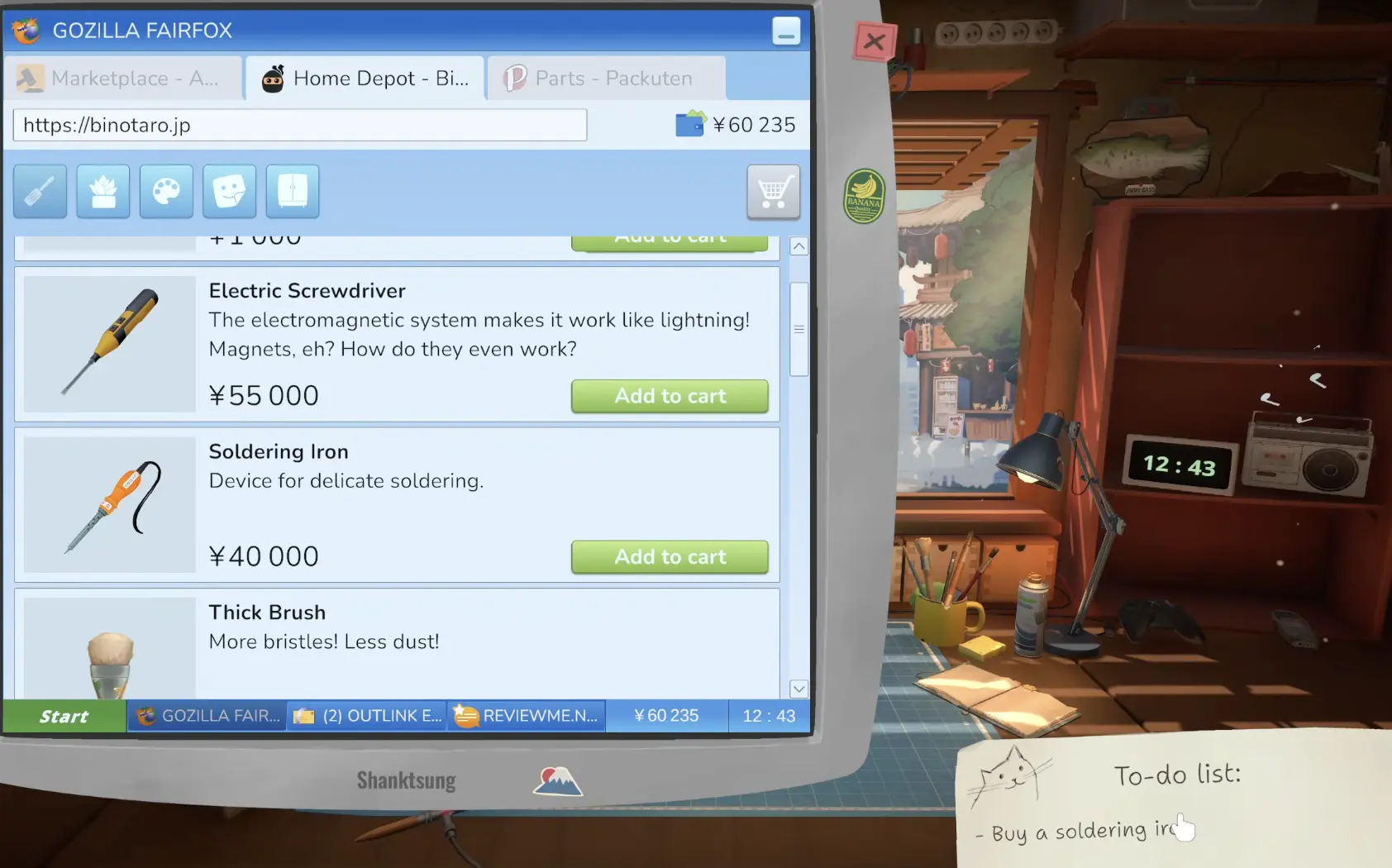
That is not really an upgrade comparison.
One option improves something I can already do.
The other opens work I otherwise cannot complete.
So my buying rule becomes:
required capability before faster capability
I use that rule for every tool.
I Buy the Professional Screwdriver Early When the License Fund Is Safe
Not every optional upgrade belongs in the late game.
The screwdriver is one of the easiest early upgrades for me to justify.
A huge percentage of devices follow some version of:
cover → screws → inner layer → more screws → actual damaged part
Phones do it.
Handhelds do it.
Controllers do it.
Consoles do it.
That means a screwdriver improvement affects many repairs rather than one niche mechanic.

I still do not buy it blindly.
If I am one job away from the money for a required license, I finish the license first.
But once that reserve is safe, screwdriver speed is one of the first convenience upgrades I am happy to pay for.
I Wait on the ¥55,000 Electric Screwdriver Until It Stops Being Dangerous
The Electric Screwdriver is much easier to feel.
Once I have it, ordinary screw interactions become dramatically faster.
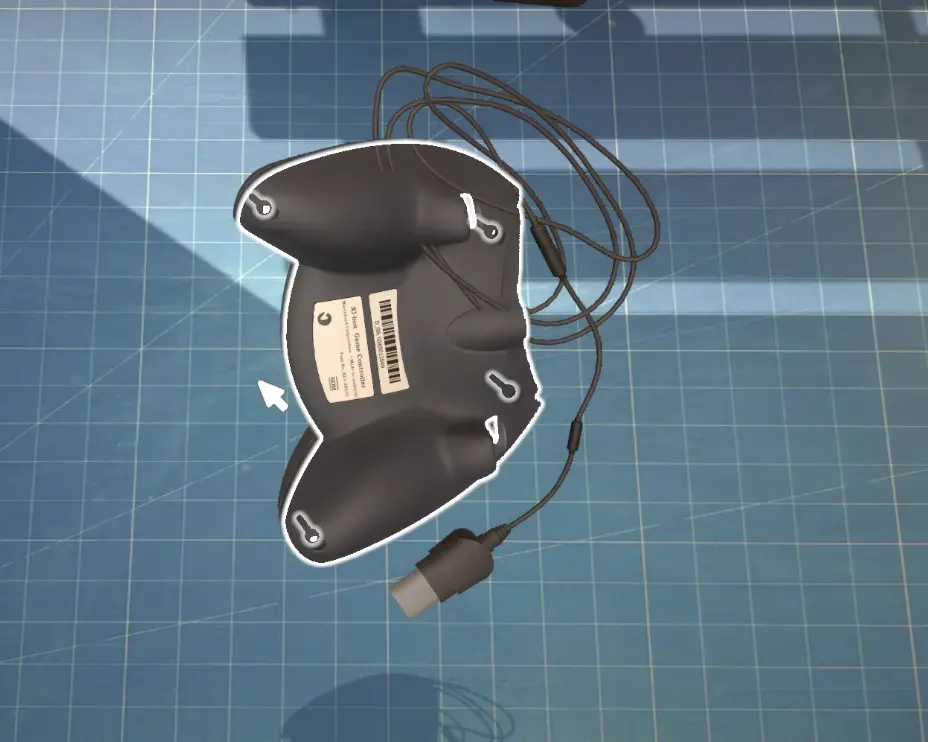
That makes it an excellent upgrade.
It does not make it worth buying the moment I reach ¥55,000.
My condition is:
Can I spend ¥55,000 and still fund the current progression route?
If I have exactly ¥55,000, my answer is usually no.
If the required license and tool are already safe, the answer changes.
At that point, reducing screw time across the next several repairs can produce a real throughput improvement.
I Judge an Upgrade by the Next Five Repairs
Once mandatory progression purchases are covered, I use one question:
How often will I use this during my next five repairs?
That keeps my upgrade decisions grounded in the current workload.
If almost every device has multiple screw layers:
screwdriver speed matters.
If the story has started presenting damaged electrical components:
soldering matters.
If I have several devices creating piles of dirty parts:
automated cleaning becomes more valuable.
If an expensive upgrade solves a problem I almost never encounter:
it can wait.
I do not need a permanent tier list.
I need to remove the current bottleneck.
I Delay the ¥80,000 Automatic Ultrasonic Bath Until Cleaning Is the Bottleneck
The Automatic Ultrasonic Bath is the upgrade most likely to tempt me too early.
It costs:
¥80,000
and can process multiple dirty parts in parallel.
It is useful.
It is also not instant.
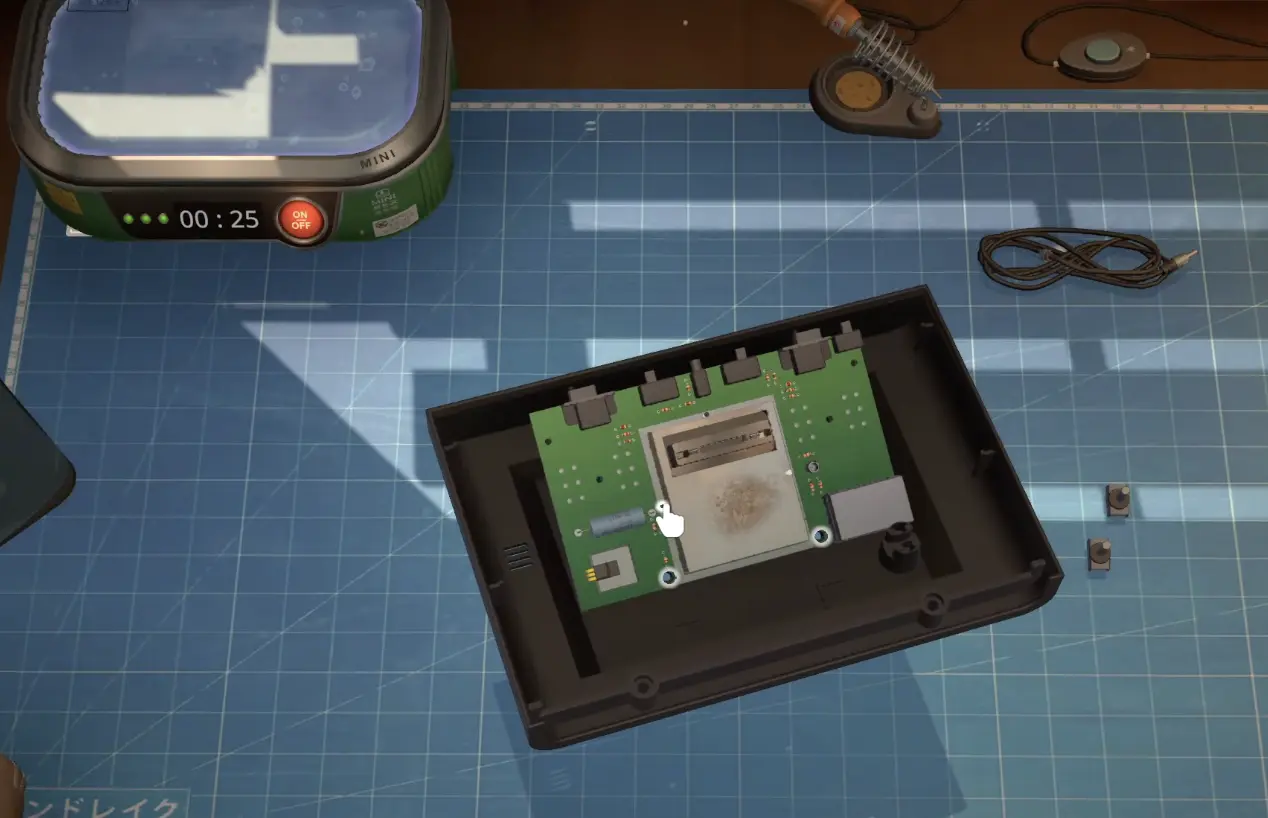
That makes it fundamentally different from the Soldering Iron.
The Soldering Iron can unlock:
a repair I cannot perform
The bath improves:
a repair workflow I can already perform manually
That gives them completely different priorities.
I buy the bath when:
- required licenses are funded;
- no required tool is waiting;
- dirty parts are regularly creating a queue;
- I have enough parallel work to do while the bath runs;
- spending ¥80,000 will not leave me unable to handle the next story gate.
Before then, manual cleaning still works.
How I Use the Ultrasonic Bath Once I Own It
I do not stand beside the bath waiting.
I use it to create parallel work.
My route becomes:
load dirty parts → start bath → manually clean other parts → work on another device → return when the batch is ready
That is where the ¥80,000 purchase begins making sense.
If I only have one device and two dirty components on the bench, I am not using the advantage I paid for.
If I have several repairs open, the bath starts removing a real bottleneck.
I Do Not Buy Every Upgrade Before the Competition
Once the Repair Masters Competition enters the story, progression starts changing.
Money still matters.
Tools still matter.
But the question is no longer only:
Which item should I buy next?
Reputation and competition progress become part of the route.
At that point I stop trying to perfect the workshop before moving on.
If I already have the tools required for normal repairs, I let customer work and reviews push the competition chain forward.
When the competition itself becomes the active blocker, I move to the Assembly Competition Guide for the qualification and device-specific route.
I do not duplicate that full system here.
The progression lesson is:
once the blocker changes from money to reputation, my priorities change with it.
Bills Are Why I Do Not Spend the Wallet to Zero
Licenses are the large expenses.
Bills are the background pressure.
Early rent is shown at:
¥2,000 per week
and after the electricity meter is installed, the electricity fee shown in my run is:
¥1,500 per week
Internet adds another recurring cost depending on the plan.
Individually, those numbers are much smaller than a ¥61,000 or ¥79,000 license.
They still matter when I have just spent nearly everything.
The dangerous sequence is:
buy expensive upgrade
→ buy replacement part
→ weekly bill arrives
→ next customer requires another license
That is why I keep an operating buffer instead of deliberately landing on zero.
I Do Not Over-Optimize Small Costs While a Large License Is Blocking Me
Once I need ¥60,000–¥80,000 for a progression purchase, tiny savings stop being the main problem.
I do not spend ten minutes trying to save a few hundred yen while accepting a bad repair that could require several new parts.
The large decisions dominate:
- Did I buy the wrong license?
- Did I buy an upgrade before the required tool?
- Did I sink money into a bad Marketplace device?
- Did I accept too many unprofitable orders?
- Did I buy completion items while the story was still gated?
Fixing those decisions matters far more than optimizing every tiny cost.
When I Stop Repairing a Device and Come Back Later
Not every active device deserves more money immediately.
If I open a repair and discover I am missing several parts, I ask:
Is finishing this device the thing that currently moves progression?
If yes, I solve it.
If no, and buying all the missing components would delay the next required license, I park the repair.
That is especially useful with devices that have:
- several broken internals;
- an expensive missing casing;
- parts I do not currently own;
- a payout too small to justify the replacement bill.
There is no benefit in turning every unfinished device into an emergency.
If the problem is not cost but the pieces refusing to fit, that belongs in Can’t Reassemble a Device?.
The broader diagnose → disassemble → clean → replace → rebuild workflow belongs in the Repair Guide.
My Check Before I End the Day
Before I actually end a day, I do one short progression pass.
I check:
- Is a completed customer device still waiting for pickup or placement?
- Did purchased parts arrive somewhere I have not collected them from?
- Is the current story repair blocked by a license?
- Is the next required tool obvious?
- Can I finish one profitable repair with inventory I already own?
- Am I about to buy something optional because I have cash sitting there?
- Are recurring bills safe?
- Would another repair tonight close the gap to the next progression purchase?
If the next story step needs ¥61,000 and I have ¥52,000, I do not spend the evening shopping.
I look for the cleanest path to the missing ¥9,000.
If the next objective already has everything it needs, I am more willing to end the day and let the story continue.
My ReStory Progression Route in One Sequence
The route I use now is:
Identify the current blocker.
If it is a license:
save for that license instead of collecting unrelated ones.
If it is a required tool:
buy the capability before a convenience upgrade.
If it is money:
finish reliable jobs, selectively use Online Orders and avoid risky Marketplace spending.
Once progression money is protected:
buy upgrades that affect many of the next repairs.
That normally puts screwdriver improvements ahead of niche convenience items.
When soldering becomes required:
buy the Soldering Iron instead of the faster screwdriver.
When ¥55,000 is no longer dangerous:
buy the Electric Screwdriver for throughput.
When cleaning volume becomes a real bottleneck and ¥80,000 no longer threatens the next license:
buy the Automatic Ultrasonic Bath.
When the story shifts toward reputation and the Repair Masters Competition:
stop treating money as the only progression problem and follow the competition route.
That is the difference between having money and actually progressing.
I do not try to own everything as soon as the computer lets me buy it.
I keep enough cash and attention focused on whatever unlocks the next useful piece of the game.
FAQ
Can I keep repairing after I close the shop in ReStory? +
Yes. Closing the shop stops normal customer traffic, but I can keep working on devices inside the workshop. I use that extra bench time to clear repairs without taking another wave of customer jobs.