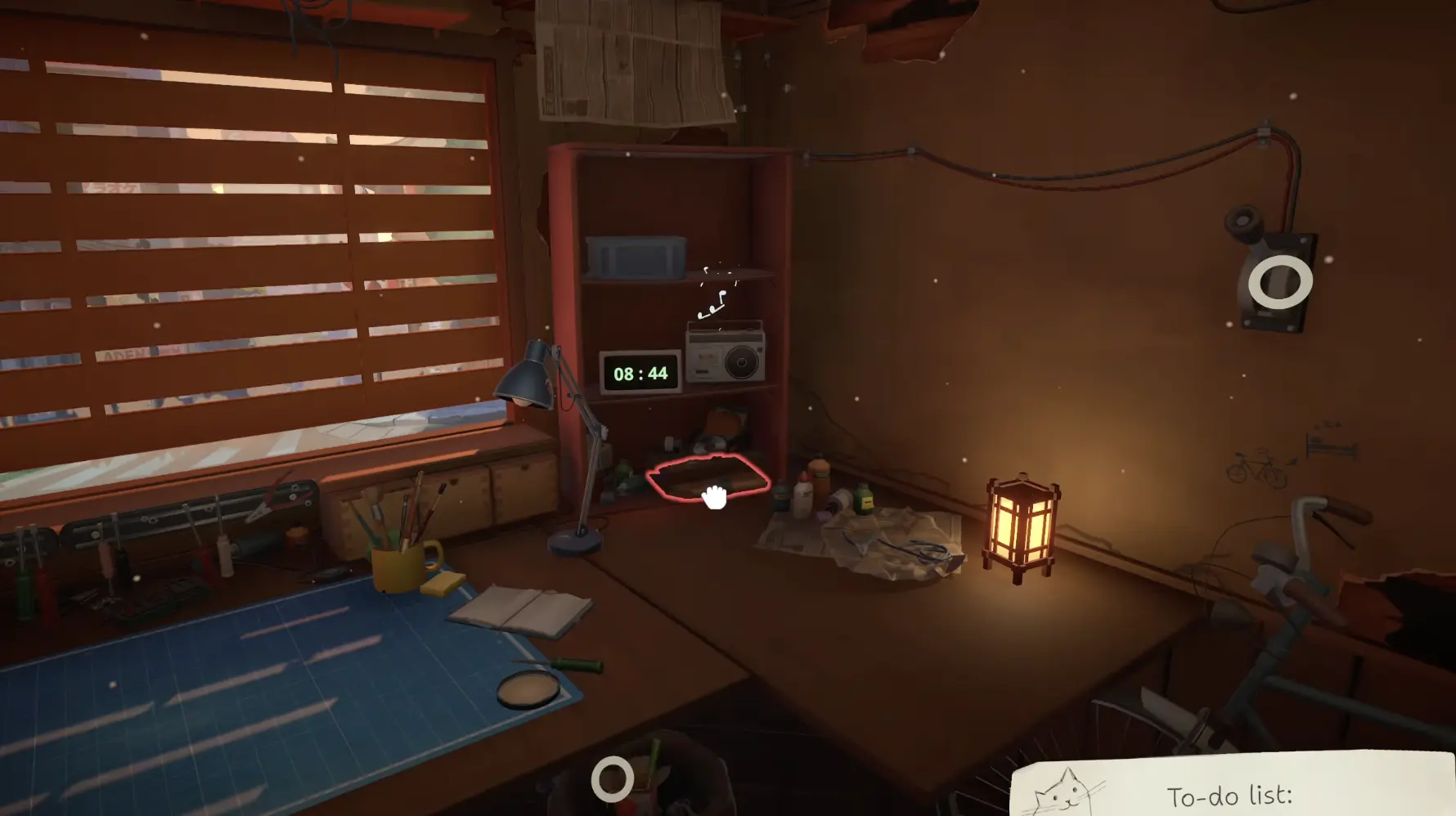
My ReStory Route From the First Repair to the Ending
The ReStory route I use from opening repairs through progression, Marketplace work, competitions, choices, achievements, and the late-game ending path.
I track all 50 ReStory achievements, fix the easy-to-miss Clean Job and Frugal routes, start long counters early, and leave the 365-day grind for last.
The ReStory choices I actually track, what changed later in my run, which decisions I repeat, and where I still refuse to guess at hidden consequences.
The late-game route I follow after the Repair Master Competition, how I handle the Mega Mall crisis, and which ending conditions I treat as confirmed or still unverified.
My ReStory route is learn one complete repair loop → identify the current
progression blocker → protect money for required access → use Marketplace and
Online Orders selectively → follow the Repair Master Competition when the story
opens it → pay attention to important character choices → keep playing after
becoming champion because the late-game ending route continues afterward. If
I get stuck, I first decide whether I am dealing with a repair, reassembly,
specific device, money, license, tool, competition, or story problem.
ReStory looks like a relaxed electronics repair game at the start.
That does not last very long.
The first few devices teach me how to take things apart, clean dirty
components, replace failures, and put everything back together.
Then the shop begins connecting those repairs to larger systems.
A customer can bring me a device I am not licensed to service.
A Marketplace purchase can turn into either a profitable flip or a pile of
donor parts.
Online Orders can give me extra work or create a backlog I no longer control.
The Repair Master Competition eventually becomes part of the main story.
And after I become champion, the game still has a larger conflict involving the
workshop, recurring characters, and the future of Akiba.
The route became much easier once I stopped trying to solve all of those systems
at the same time.
I always ask:
What is actually stopping the next useful action?
Then I move to the system that owns that problem.
The shop starts simple. The useful skill is learning when a problem is still a repair problem and when it has become a progression, money, story, or choice problem instead.
I Learn the Repair Loop Before I Optimize Anything
My first priority is learning one device from beginning to end.
I read what the customer actually wants.
I open the device far enough to understand the problem.
I inspect the components instead of immediately buying replacements.
Then I clean, repair, replace, complete any additional requested service, rebuild
the device, and return it.
That basic routine stays useful throughout the game.
When I am unsure whether the problem is dirt, damage, a missing component,
soldering, painting, or another unfinished service, I use the
Repair Guide.
The most important habit I carry forward is simple:
diagnose before spending.
If a Correct Part Will Not Attach, I Stop Treating It as a Normal Repair
Eventually I reach devices where I understand the repair but cannot put the
device back together.
That is a different problem.
If a part stays red, refuses to attach, or several later pieces suddenly stop
working, I stop buying replacements and stop repeating the general repair
routine.
I check the reassembly state instead.
The dedicated
Can’t Reassemble a Device? guide
covers the order, screws, viewing angle, incomplete teardown, part condition,
and other reasons a correct-looking component can still refuse to fit.
That separation matters.
A device can be fully repaired and still be incorrectly assembled.
If the Problem Is One Specific Model, I Use the Device Index
Some devices have their own traps.
One model hides a part on the opposite side.
Another has a long layered rebuild.
Another behaves differently enough that the general repair routine is no longer
the useful answer.
For now, the index owns the specific phone, console, controller, handheld,
camera, and other model-level problems I have actually reproduced.
If GSC later shows enough demand around one device, that is when I would consider
giving it its own guide.
When the Story Slows Down, I Identify the Blocker Before Spending
ReStory repeatedly puts useful purchases in front of me.
That does not mean I should buy them immediately.
When progression feels stuck, I first decide whether the problem is:
required access
required repair capability
money
or:
a story event that has not advanced yet
That distinction prevents a lot of bad spending.
If a story repair is waiting behind a service license, I protect money for that
license.
If the current repair needs a tool I do not own, that capability has priority
over making an existing workflow slightly faster.
If I already own everything the objective requires, buying another upgrade is
unlikely to solve the story pause.
The detailed purchase order, license gates, cash reserve logic, and upgrade
timing stay in the
Progression Guide.
I Use the Marketplace With a Purpose
Once the Marketplace opens, I do not treat every cheap listing as an
opportunity.
Before buying a device, I want to know what role it is supposed to play.
Maybe I want to repair and resell it.
Maybe I need it for donor parts.
Maybe the price is low enough that I am willing to accept the risk.
Those are different decisions.
Seller rating, real internal condition, repair cost, resale value, and the money
I still need for progression all affect whether I buy.
If I already own the device and want to know whether I should sell it, repair it
further, strip it for parts, or walk away from a bad flip, I use the
Marketplace Guide.
The Hub only keeps one rule:
an attractive Marketplace deal is still a bad purchase if it delays the
current story gate.
I Keep Online Orders Selective
Online Orders are useful because they let me choose additional work instead of
waiting only for walk-in customers.
The danger is accepting them faster than I can finish them.
I prefer jobs where I already understand the device and the requested services.
Once the accepted queue starts controlling what I can do next, I stop adding
more.
I would rather clear the work I already promised than turn the computer inbox
into another progression blocker.
The full accept-or-skip logic, backlog control, service requirements, and
overdue behavior belong in the
Online Orders Guide.
I Let Familiar Devices Make the Rest of the Game Easier
Device knowledge pays me back in more than one system.
A familiar device is faster to diagnose.
It is easier to judge as an Online Order.
I understand the repair risk when I see the same model on the Marketplace.
And when assembly competitions begin, I am not learning the device while a timer
is running.
That is why I do not treat the repair phase as something I simply finish before
moving on.
The knowledge carries forward.
I Treat the Repair Master Competition as Story Progression
The Repair Master Competition gets mentioned before it becomes fully playable.
I do not respond by hunting through menus or buying unrelated licenses.
I keep following the story until the reputation and competition route actually
opens.
Once it does, timed assembly becomes one part of the main progression chain.
New competition stages do not necessarily appear immediately after I beat the
previous record.
Story repairs and character events can sit between them.
So if the competition stops advancing, I return to the active story instead of
grinding the same completed attempt.
The full unlock route, required championship stages, troubleshooting, and final
reward belong in the
Assembly Competition Guide.
The Hub only needs the progression rule:
beat the required stage, then follow the story until the next one opens.
Becoming Champion Is a Major Milestone, Not the End of the Story
Winning the Repair Master Competition feels like a natural finale.
I keep playing.
The game continues into a more direct conflict around Akiba, the repair shop,
and the people I have been meeting throughout the run.
That changes my priorities again.
Routine shop optimization becomes less important than understanding which named
story request is currently moving the late game.
If I have become champion and nothing resembling an ending has happened yet, I
do not repeat the competition.
I continue the main story.
I Pay More Attention to Choices Once Recurring Characters Start Connecting
ReStory gives me many dialogue options.
I do not assume every one of them changes the ending.
I pay much closer attention when the decision changes:
who receives information
where someone goes
whether I help a recurring character
or:
whether I reveal or keep something important
Those are the choices where I have actually seen the game remember earlier
decisions later.
The
Choices Guide
only records consequences I can connect to something that happens afterward.
It does not turn every friendly answer into a supposed “good ending” choice.
That keeps choice advice separate from ending speculation.
I Keep Choice Consequences Separate From Ending Conditions
This distinction becomes more important late in the game.
A choice can clearly affect a character without proving that it is the exact
trigger for a particular ending.