How I Sell Devices and Use the Marketplace Without Losing Yen
How I sell Marketplace devices, judge seller ratings, choose flips or donors, compare direct parts, and avoid spending progression money on bad deals.
Updated:
Quick Answer
I use the ReStory Marketplace for three things: selling repaired devices, buying flips, and finding donors. Before I buy anything, I check the seller rating, stated condition, buy price, visible resale value, and how much repair risk I can afford. If a repair only needs one or two cheap parts, I usually buy those directly. If the replacement list gets expensive, I compare a complete donor device instead. I never count the listed buy-to-sell spread as profit until I have opened the device.
The Marketplace looked like easy money the first time I opened it.
A listing says:
Works
The purchase price is low.
The sell value is much higher.
It looks like free profit.
Then I open the device and start finding broken components.
That is when the Marketplace stops being a shopping list.
It becomes a risk decision.
The rule that made the system much more useful for me is:
decide what I am buying the device for before I click Add to cart.
I want it to be one of three things:
a flip
a donor
a cheap parts gamble
The same device can be a terrible flip and still be a useful donor.
How I Sell Devices in ReStory
The selling loop I use is simple:
buy a device I own
→ receive it
→ open and inspect it
→ clean or repair what makes sense
→ reassemble it
→ sell the finished device
This is different from a customer repair.
A customer device belongs to an order.
I repair it and complete the customer handoff.
A Marketplace device I bought for myself can instead become resale stock.
That distinction matters when I am searching for:
how to sell items in ReStory
because I do not treat every device on the workbench as something I can flip.
The Marketplace route starts with something I own.
I Do Not Sell the Device Until I Know What Is Inside
I can technically see the potential resale value before I understand the real repair cost.
That does not mean I immediately commit to finishing the flip.
My sequence is:
buy
→ inspect
→ decide whether it is still a flip
Only then do I keep spending.
One device I bought for:
¥4,000
was repaired and later sold for:
¥18,000
That is the kind of Marketplace result I want.
The device was cheap enough that the repair still had room to make sense.
What I do not assume is:
¥18,000 sale price − ¥4,000 purchase price = guaranteed ¥14,000 profit
because any additional replacement parts would also belong in the real cost.
The listed spread is only the beginning of the calculation.
Flip, Donor, or Parts Gamble?
I make this decision before I buy.
| Goal | What I Want From the Listing | When I Stop |
|---|---|---|
| Flip | Low buy price, enough resale room, manageable repair risk | Internals require too many expensive replacements |
| Donor | Specific working parts I need for another device | The donor does not contain enough useful components |
| Parts gamble | Very low entry price and several potentially useful common parts | Losing the full purchase would hurt progression money |
| Direct repair parts instead | Only one or two inexpensive known failures | A full donor would add unnecessary uncertainty |
The most important difference is what I care about.
For a flip, I care about:
- purchase price;
- seller rating;
- stated condition;
- resale value;
- likely repair cost.
For a donor, I care much more about:
Does this device probably contain the exact parts I need?
A listing can fail my flip test and still pass my donor test.
Seller Rating Changes How Much Risk I Accept
Seller rating is not a guarantee.
It is a risk signal.
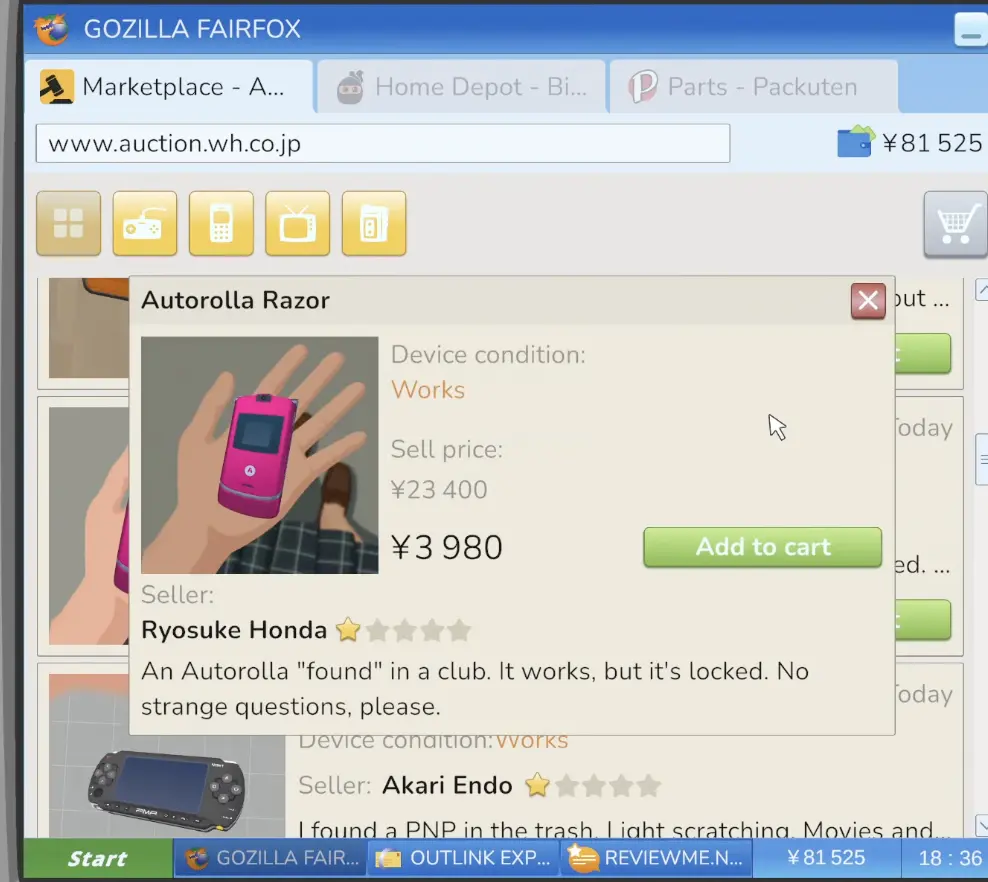
One Autorolla Razor listing gives me a good example.
The card shows:
Device condition: Works
Buy price: ¥3,980
Sell price: ¥23,400
That looks excellent.
Then I notice:
one-star seller
I still consider the device.
I just price the uncertainty differently.
I have opened supposedly working Marketplace devices and found several damaged internals.
I have also taken lower-rated listings that turned out much better than expected.
So my rule is not:
five stars = perfect
or:
one star = useless
It is:
weaker seller → I need a better price to justify the same purchase
”Works” Does Not Mean the Internals Are Perfect
This is one of the most important Marketplace lessons.
I do not read:
Works
as:
every component is healthy
I read it as one piece of listing information.
The real condition becomes clear on the repair bench.
Until I open the device, I still do not know exactly:
- what is dirty;
- what is broken;
- what is missing;
- what I can reuse;
- what I already have in inventory.
That is why I never mentally spend the profit before the device arrives.
The listing is a forecast.
The workbench is the real inspection.
I Calculate the Margin After Repair Risk
A high resale value can make a mediocre deal look much better than it really is.
For example:
buy for ¥20,000
sell for ¥30,000
looks like:
¥10,000
of room.
But if the device needs several replacement components, that room can disappear quickly.
My actual decision is closer to:
expected sale value
minus:
purchase price
minus:
likely replacement cost
with another mental penalty for:
uncertainty
That last part matters when the seller is weak or I do not know the device well.
I Like More Margin When the Listing Is Risky
During normal flipping, I became much more comfortable when I could see roughly:
¥10,000 or more of obvious room
before opening the device.
That is my own screening threshold.
It is not a hidden ReStory formula.
I use it because a small visible spread is easy to destroy.
One:
bad battery
or:
damaged board
or:
missing panel
can wipe out a thin deal.
If the seller rating is weak, I want even more room.
I Check Familiar Devices First
Two Marketplace listings can have similar theoretical profit and still be very different deals for me.
If I already know one device well, I know:
- where it opens;
- where the screws are;
- which components are normally hidden;
- how many layers it has;
- what the reassembly feels like.
That lowers my risk.
So if I see two similar flips, I often prefer the device I already understand.
The Device Repair Index is useful here because faster diagnosis has economic value.
A slightly lower theoretical margin on a familiar device can be better than a larger spread on something I will spend much longer diagnosing.
If a Flip Is Mostly Cleaning, I Like It
The Marketplace works best for me when the device survives inspection without turning into a large parts order.
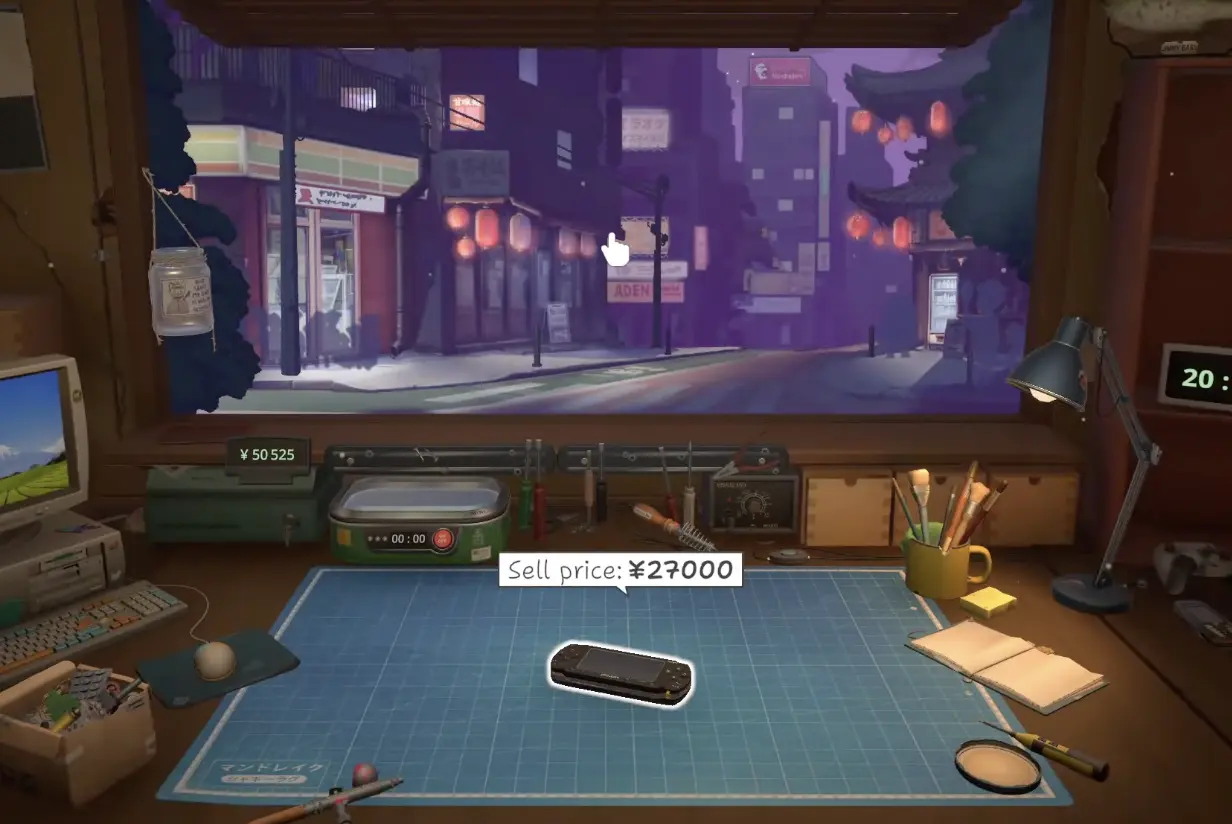
One of my better working-condition purchases needed relatively limited work.
After cleaning and rebuilding it, the device showed:
Sell price: ¥27,000
That is my preferred loop:
cheap enough purchase
→ healthy internals
→ clean or limited repair
→ reassemble
→ sell
I am not trying to turn every completely destroyed device into a pristine flip.
I Reclassify a Bad Flip Instead of Doubling Down
This probably saves me more Marketplace money than choosing perfect listings.
Suppose I buy something because I expect a flip.
I open it.
Then I find:
broken part
another broken part
another broken part
At that point I do not say:
I already paid for it, so I have to finish it.
The purchase money is already gone.
That does not make the next replacement component cheaper.
I ask:
Does this still make sense as a flip?
If no:
Can it become a donor?
That change of plan can save the deal.
A Failed Flip Can Become Useful Parts
A device does not have to reach resale condition to have value.
If several internals still work, I can use them in later repairs.
That is especially useful when I own common device families and repeatedly need the same:
- boards;
- batteries;
- panels;
- buttons;
- cables;
- frames.
So a Marketplace purchase can move through three states:
intended flip
→ too expensive to repair
→ useful donor
I would rather make that decision early than keep buying parts just to protect the original idea.
When I Buy Direct Parts Instead of a Donor
Not every missing component deserves another complete device.
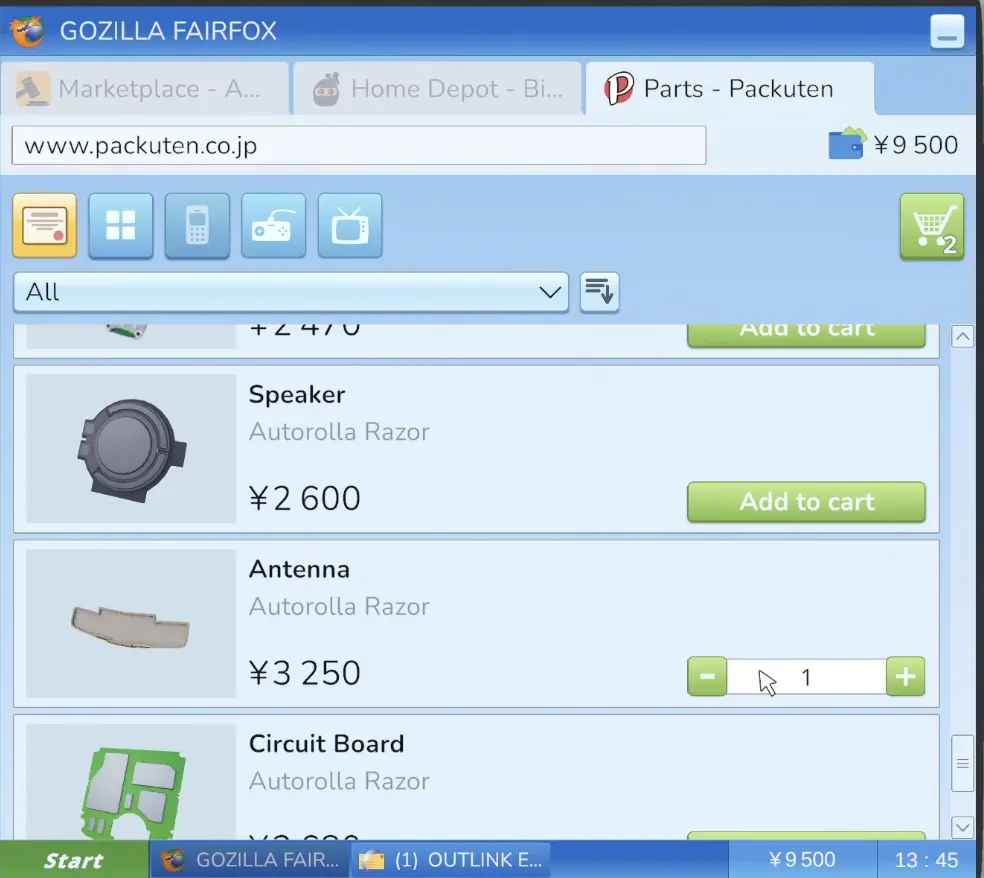
One Autorolla Razor repair gives me a clean example.
At the supplier I could see individual pieces including:
Speaker — ¥2,600
Antenna — ¥3,250
If my repair only needs:
one
or:
two inexpensive known components
I normally buy them directly.
The donor adds uncertainty I do not need.
My rule is:
short cheap parts list → direct parts
The Marketplace becomes more interesting when that list starts growing.
When I Switch to a Donor Device
I had a phone where the problem was no longer:
one battery
or:
one board.
A large portion of the device needed replacement.
At that point, buying individual components stopped making sense.
I found a working-condition phone on the Marketplace for roughly:
¥22,000
and after opening it, most of the components I needed were usable.
That complete donor cost less than reconstructing the damaged phone one supplier part at a time.
So my donor rule is not:
one part broke → buy another device
It is:
the replacement basket has become worse than buying a complete donor
The general diagnose-first workflow stays in the Repair Guide.
This page owns the sourcing decision after I know what the repair needs.
A Donor Is Not Automatically My Second Repair Project
Once I decide a Marketplace purchase is a donor, my goal changes.
I take the working components I actually need.
I keep useful leftovers.
I do not feel obligated to restore the donor itself.
That would defeat the reason I bought it.
If I spend another large amount repairing the donor after stripping the useful components, I can turn one smart sourcing decision into two expensive repairs.
The Flashlight Is a Good Example of a Donor Route
Some repairs make the donor idea especially clear.
The flashlight route points me toward finding another device and paying attention to seller quality.
Once I have the donor available, I only need to identify which internals are usable.
That repair taught me not to assume:
every broken component has a normal direct-purchase solution
Sometimes the intended practical route is:
find donor → salvage working parts → finish target device
The actual Flashlight teardown belongs in the Device Repair Index.
One-Star Listings Are Not Automatic Skips
I still buy some weak-seller listings.
The price just has to justify the risk.
A cheap one-star device can make sense if:
- I need common parts from that model;
- the entry price is low;
- I can tolerate a bad outcome;
- I am not risking progression money;
- several usable components would still make the purchase useful.
What I do not like is:
one-star seller + expensive purchase + I urgently need the device to work
That combines too many risks.
Low seller confidence is easiest to accept when the purchase does not have to become a successful flip.
I Do Not Let the Marketplace Spend My License Money
The Marketplace is dangerous because a deal can look cheap compared with my total balance.
That does not mean the money is actually free.
If the current story route needs:
a license
or:
a required tool
I mentally reserve that money first.
Then I decide whether the Marketplace purchase fits inside what remains.
This prevents:
attractive listing
→ buy it
→ next story customer needs a major license
→ I am broke again
The Marketplace should help fund progression.
It should not become a new progression wall.
The full license and upgrade priority stays in the Progression Guide.
New Licenses Can Expand What I Can Buy
If a device family seems absent from the Marketplace, I check whether I actually own its service license.
Licenses do more than let me accept new repair work.
As I unlock new device families, I also gain access to more relevant purchasing and parts options.
So when I cannot find:
the device
or:
its supplier parts
I do not assume the Marketplace is bugged.
I check progression first.
This is particularly important later when licenses become expensive enough that I delay some device families until I actually need them.
How I Decide Whether to Repair and Sell or Strip for Parts
Once the device is open, I stop looking at the original listing description.
I use the actual components in front of me.
I keep it as a flip when:
most of the important internals work
and:
the remaining repair cost still leaves enough resale room.
I turn it into a donor when:
several expensive components are broken
but:
enough useful parts remain for future or current repairs.
The decision is not emotional.
I do not care what I originally intended to do with the device.
I care what it is worth now that I know its real condition.
I Do Not Repair a Donor Just Because It Has a Sell Price
This is another easy trap.
A stripped donor may still make me think:
Maybe I can replace everything I removed and sell this too.
Sometimes that could work.
But I do not do it automatically.
I first ask how much I would have to spend rebuilding it.
If I remove valuable working components and then buy those same components back just to create another sellable device, I may erase the value of the donor strategy.
The donor already did its job when it solved the original repair cheaply.
Anything beyond that needs to make sense as a new flip decision.
Marketplace Prices Are Useful for Decisions, Not Permanent Rules
I keep real prices in this guide because they show the scale of the decision.
For example, I have seen:
¥3,980 buy / ¥23,400 sell
on the risky Razor listing.
I have also repaired a Marketplace device that reached:
¥27,000 sell value
and another purchase went from:
¥4,000 buy
to:
¥18,000 sale
But I do not turn those observations into:
always buy this exact device
or:
this model always gives this margin
The useful lesson is the decision structure.
I still read the current listing in front of me.
I Do Not Mix Marketplace Flips With Customer Orders
This is an important distinction when the workbench gets busy.
A customer repair already has a purpose:
finish the requested work and return it
A Marketplace flip has a different purpose:
create resale value
I do not let an uncertain flip delay an important story device or a good customer order just because I already bought it.
If the shop is overloaded, the speculative Marketplace repair can wait.
That is another reason I like cheap purchases.
They give me more flexibility to pause.
Selling Five Devices Also Matters for Completion
Marketplace selling eventually overlaps with achievement cleanup.
The Making money! achievement asks me to:
sell 5 devices
I do not make that a separate early grind.
If I am already using Marketplace flips as part of normal progression, those sales naturally move the counter.
That is more efficient than reaching late completion with no experience evaluating resale devices.
The rest of the 100% route stays in the Achievements Guide.
If a Marketplace Purchase Is Much Worse Than Advertised
I do not automatically keep repairing it.
My order is:
finish inspection
→ count usable parts
→ count actual failures
→ check existing inventory
→ estimate replacement cost
Then I choose:
repair and sell
or:
strip for useful parts
That decision is much safer than continuing to buy components because the listing originally looked profitable.
If I Cannot Find the Part I Need
I check three things before assuming the Marketplace has failed me.
Do I own the correct service license?
A locked device family can also limit the parts and offers I can access.
Am I looking for a part that is cheaper from the supplier anyway?
One or two ordinary missing components may not need a donor.
Do I actually need a donor, or have I not finished diagnosing the device?
I do not shop until the missing-parts list is complete.
If the problem is that I already own the correct part but cannot get it back into the device, that is no longer a Marketplace problem.
I switch to Can’t Reassemble a Device?.
The Marketplace Check I Use Before Every Purchase
Before clicking Add to cart, I ask:
What am I buying this device for?
Flip, donor, or parts gamble?
What is the seller rating?
How much uncertainty am I accepting?
What is the stated condition?
Useful clue, not a guarantee.
How much space exists between buy and sell value?
Is there room for an unexpected repair?
Do I already understand this device?
Familiar models are faster to inspect.
If it is a donor, do I know which parts I actually need?
No complete diagnosis means no donor purchase yet.
Will this spend money reserved for the next license or required tool?
If yes, I usually wait.
If the device arrives much worse than expected, am I willing to stop?
If not, I should not buy it.
That last question is the one I care about most.
The Marketplace is useful because it gives me options.
A cheap device can become a profitable flip.
A failed flip can become a donor.
A donor can solve a repair more cheaply than a basket of new parts.
But only if I am willing to change the plan after I see what is really inside.
FAQ
How do I sell devices in ReStory? +
I sell devices that I own rather than customer repair orders. My normal flip route is buy a Marketplace device, receive it, inspect it, clean or repair what is worth fixing, reassemble it, then sell the finished device for its resale value.
Why can't I see a device or its parts on the ReStory Marketplace? +
I check the device license first. A service license can open Marketplace offers for that device family and unlock its replacement parts from suppliers, so a missing license can block both routes.