The Research Order I Use When Every Branch Looks Useful
I choose research by what the settlement can use next. Wood Processing opens leveling; after that, materials, party weakness and the next expedition set the order.
Updated:
Quick Answer
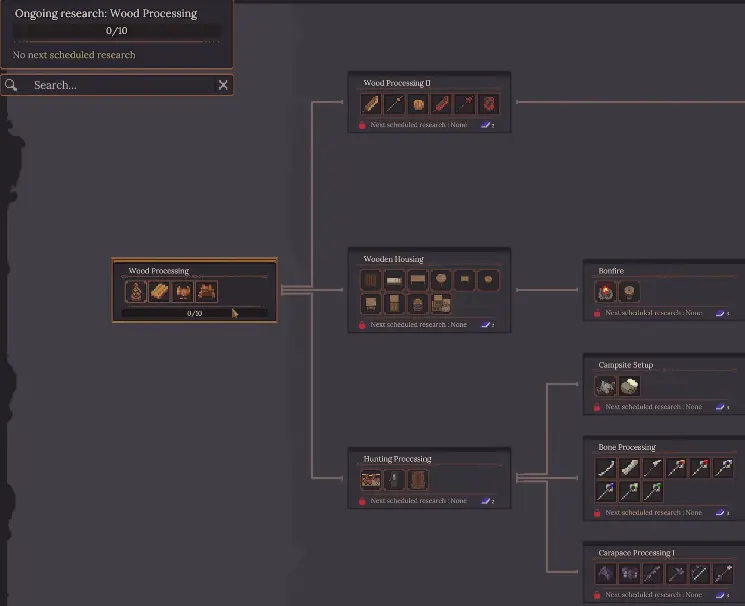
I take Wood Processing first because it opens the early leveling path.
After that, I research the system that is already costing me progress: Basic Storage when inventory fills too early, Wood Processing II when combat gear is weak, Cuisine when food delays expeditions, Basic Alchemy when consumables or a safer deeper-floor setup matter, and Wooden Housing when recovery or room quality becomes the limit.
Before spending another Research Book, I check whether I can build or use the first thing that technology unlocks.
The research tree is good at making everything look urgent.
Better weapons are useful.
Storage is useful.
Food is useful.
Alchemy, housing and magic all lead somewhere I eventually want to go.
The problem is that those branches do not become valuable at the same time.
What finally made research easier for me was ignoring the end of each branch and looking at the first result I could use immediately.
If a technology finishes and nothing changes before the next expedition, it probably was not the research I needed most.
Wood Processing Is the One Early Unlock I Do Not Delay
Most research choices depend on the current bottleneck.
Wood Processing is the exception.
The early leveling path runs through it.
Once a character reaches maximum EXP, continuing to fight does not perform the level-up. I need access to the Wooden Goddess Statue, and Wood Processing is part of that progression chain.
That makes the node more important than a normal convenience unlock.
If my main objective already wants a Level 2 character, I do not spend the opening books wandering into side branches first.
I finish Wood Processing.
Then the settlement can start producing the materials that lead into the statue and the actual level-up system.
The Goddess Statue, Mana Stone costs and prayer choices belong in the Level Up Guide. From the research screen, the useful conclusion is simply that Wood Processing removes an early progression gate.
After it is done, the tree becomes much more situational.
Basic Storage Moves Up When the Dungeon Is Giving Me More Than I Can Carry
Storage research did not look exciting until I started leaving useful resources behind.
The unlock that changed my mind was the Cloth Bag.
One bag gives:
Max Weight +50.0
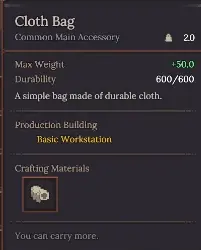
That is a meaningful increase for a character who is repeatedly hauling wood, grass, loot and consumables out of Floor 1.
Across four active expedition members, four bags could represent 200 additional Max Weight before accounting for their existing capacity.
I still do not rush Basic Storage when the party is barely surviving.
If the real problem is that slimes are putting the frontline into near-death, an extra bag does not solve the next fight.
But when combat feels controlled and the inventory is what sends me home early, storage research starts paying for itself on every run.
That is the kind of technology I like: the benefit keeps repeating after the first craft.
Wood Processing II Becomes Valuable When Equipment Is the Bottleneck
Once the settlement works and the active party is still carrying weak early weapons, Wood Processing II gets much more attractive.
It opens access to stronger wooden combat gear, including:
Greatsword
and
Shield.
The exact value depends on who is going to use them.
A shield matters much more when I already have a character growing into a frontline role.
A greatsword makes sense when somebody has the aptitude and skill direction to take advantage of it.
Researching the branch does not make either item appear automatically, so I look at the stockpile before paying for the unlock.
If the settlement has almost no wood left, the technology may finish while the equipment still sits uncraftable.
That is not a failure of the research.
It is a timing problem.
The weapon stats and role tradeoffs belong in the Builds & Party Guide. My research decision ends one step earlier:
is there a member of the active party who can use this equipment as soon as I make it?
If yes, Wood Processing II can improve the next dungeon run directly.
Cuisine Becomes Urgent When Food Starts Cancelling Other Plans
I let food research wait while scavenged supplies are enough.
That changes the moment the settlement starts producing warnings that interfere with the expedition.
The pattern is easy to recognize:
I want to leave,
the party does not have enough food,
and now the next dungeon trip is partly an emergency grocery run.
At that point, Cuisine is no longer just a settlement feature.
It is holding progression together.
Cuisine opens a Cooking Workstation and lets the food coming home from the dungeon become part of a controlled production loop rather than a pile of ingredients settlers may eat however they want.
That matters more once raw meat, turnips and other supplies are entering the settlement regularly.
I move this branch forward when food is affecting:
when I can leave,
how long I can stay underground,
or what resources I am forced to search for.
The complete cooking, Consumption Policy and expedition-food setup stays in the Food Guide.
For research priority, the warning itself is enough:
if hunger keeps changing the plan, Cuisine has earned its place.
Basic Alchemy Is Better Once I Know What I Want to Make
Alchemy is a branch I find easy to buy too early.
It opens several attractive production options, but those options bring their own ingredient chains.
The Alchemist Workstation can lead into:
- Ointment;
- Elemental Stones;
- Mana Stone Powder;
- Ash of Solace;
- Return Scrolls;
- other magical materials.
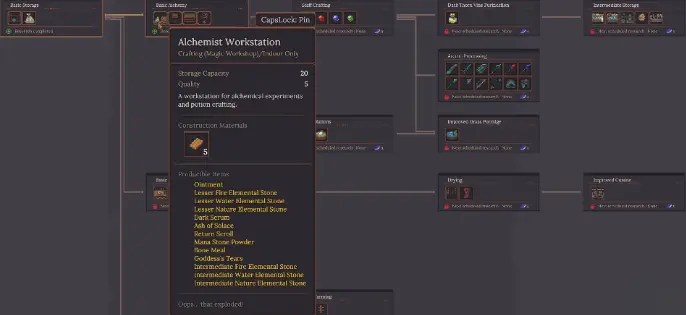
That distinction matters.
If I research Basic Alchemy because the tree is available, I may discover that the item I wanted still needs bone-derived materials, elemental ingredients or another production step I do not have.
The node is unlocked.
The problem is not solved.
My best alchemy purchases have a product attached to them before I click.
Maybe I need recovery consumables.
Maybe a caster needs an Elemental Stone.
Later, a Return Scroll gives the branch a very strong purpose because it can support safer deeper-floor progression.
When that happens, alchemy is not competing with decorative upgrades anymore.
It is supporting the expedition’s exit plan.
The detailed Return Scroll preparation belongs in the Floor 2 Guide.
Wooden Housing Is Worth More Once Rooms Need to Do More Than Count as Indoors
The first settlement does not need beautiful rooms.
It needs working rooms.
That kept Wooden Housing lower on my list at the beginning.
Later, the branch starts solving real problems.
A Log Floor has Quality 5.
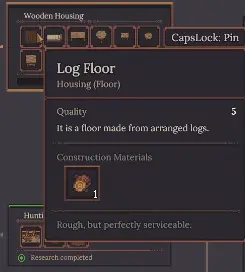
Wooden Housing also gives access to better beds.
Those two upgrades start mattering together.
Higher-quality rooms can satisfy stronger room requirements, while better sleep improves how quickly the active party can recover between expeditions.
I have used Quality 5 flooring while pushing rooms toward better tiers, including temple improvements.
That is when the branch earns the material cost.
If bedrolls are already getting everybody ready before the next expedition and no room requirement is blocking me, I can delay Wooden Housing.
If characters are taking too long to recover or a room needs more Quality, the same technology suddenly addresses both problems.
Hunting Processing Needs Bone Before It Needs Research Books
Hunting Processing taught me one of the simplest checks I now use across the whole tree:
do I own the material this branch expects me to process?
I have looked at the node while still wondering where my bone supply was supposed to come from.
That was enough reason to wait.
A technology tied to bone recipes is much less useful when the settlement has almost no bone.
Later, the same research made much more sense.
I had 11 Bone available and used 6 of it on a Bone Bow for a primary ranged damage dealer.
Now the chain was complete:
material exists,
recipe is useful,
a current party member wants the item,
research enables the craft.
At that point, the books are buying a real upgrade instead of future possibility.
Staff Crafting Comes After the Caster Stops Being Hypothetical
Magic research creates the same problem on a larger scale.
A recruit can have promising magic potential.
The research tree can expose Staff Crafting.
That still does not mean I have a functioning mage.
For one planned Nature Magic setup, the staff needed a Lesser Nature Elemental Stone plus the appropriate weapon material.
The Elemental Stone itself depended on alchemy.
Other staff variants introduce different ingredients.
So before I spend books on Staff Crafting, I want three things to be true:
the active party has a character I actually intend to use as a caster;
the production chain needed for the staff is available;
the missing ingredients are already in storage or have a realistic source on the next expedition.
If one of those pieces is missing, Staff Crafting can sit in the tree for a while.
The character can still fight with a temporary physical weapon.
I can preserve skill points if the long-term direction is clear.
What I avoid is paying for an entire magic branch and then discovering that the first staff is still several missing resources away.
The Best Research Order Changes After Wood Processing
After the leveling gate is open, I do not use one fixed sequence.
The branch that rises next depends on what is currently wasting the most expedition value.
Inventory fills while the party is still healthy
Basic Storage becomes attractive.
Weak weapons or frontline protection are making Floor 1 expensive
Wood Processing II moves forward.
Food warnings are delaying departures
Cuisine becomes progression research.
Healing, magical materials or a Return Scroll have a real job waiting
Basic Alchemy earns the books.
Recovery is slow or room Quality is blocking construction
Wooden Housing starts paying back.
Bone is already available and a useful recipe has a target character
Hunting Processing makes sense.
A caster and the staff material chain are both real
Staff Crafting stops being speculative.
That is the closest I get to a “best early research order.”
The first node is fairly stable.
The rest of the tree follows the settlement I actually have.
A Finished Research Node Can Still Produce Nothing Useful
This is the check that catches most of my bad purchases.
Research completes.
The unlock appears.
Then I discover:
the workstation needs more wood,
the weapon needs a material I never collected,
the magic item needs another production chain,
or nobody in the current party can make good use of the result.
Technically, progression happened.
Practically, the next expedition is unchanged.
Now I look one step past the research node before paying for it.
Can I build the required workstation?
Can I craft at least one useful item?
Does somebody need that item?
Does it remove a warning or bottleneck I currently see?
If the answer is no across the board, the node can stay locked for another cycle.
The Research Books Guide covers where the books come from and why the supply runs dry. Once the books are already in storage, this page is about making each one lead somewhere.
Research Labor Is a Separate Limit
Paying for a technology does not complete it.
Someone still has to research.
That becomes noticeable when I unlock several projects close together.
The books may already be committed, but only the active research project is actually moving toward completion.
So there is little advantage in buying half the tree merely because I have enough books at that moment.
The settlement cannot receive all those benefits at once.
I use recovery time to absorb some of that cost.
If several expedition members are sleeping, crafting or otherwise waiting, that is a good window for a capable researcher to work.
When everybody is healthy, equipped and ready for another useful dungeon run, I do not keep the whole group sitting above ground simply because three paid research projects remain in the queue.
The dungeon still contains the materials, Mana Stones and future Research Books that make those technologies useful.
Researcher Choice Matters More Once the Queue Gets Long
Not every character handles settlement work equally well.
As stats improve, their competency in different jobs changes too.
That means the person researching matters when several technologies are waiting.
I prefer a character who can make meaningful progress while the rest of the party is recovering or crafting.
A poor researcher can turn a long queue into a reason the settlement feels stuck even when I have already paid for the correct nodes.
I do not build the whole party around research skill.
Dungeon performance still matters.
But once the expedition has four useful members, matching settlement jobs to the characters who are good at them makes the time above ground more productive.
The research tree and the dungeon stop competing quite as much when useful work continues during recovery.
My Research Spending Has One Final Check
Before another unlock, I look at what happens before the next dungeon trip.
Wood Processing can open leveling.
A Cloth Bag can add 50 Max Weight.
Wood Processing II can put better weapons or a shield into the active party.
Cuisine can stop food from delaying departure.
Alchemy can produce something the expedition actually needs.
Wooden Housing can improve room Quality and sleep.
A bone or staff branch can turn a material already in storage into equipment for a specific character.
Those are clear outcomes.
A technology whose only immediate result is:
now I can eventually research something else
is much harder for me to justify while the early settlement still has visible problems.
The strongest research node is not always the one with the best endgame branch.
Early on, it is usually the one that changes what I can do next.