Four Research Books Felt Like Plenty Until the Tree Opened Up
My early Research Books came from Floor 1 loot, but the real problem was how quickly they disappeared once several useful technologies opened at once.
Updated:
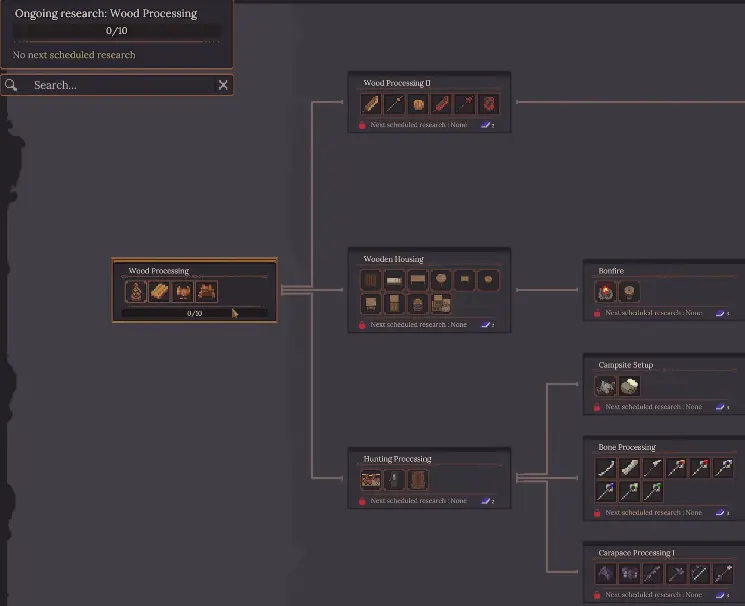
Quick Answer
If I run out of Research Books, I go back to the dungeon rather than waiting at the Research Station.
I have found them on Floor 1, including a single chest that paid out four Research Books at once, so I do not push to Floor 2 just because the technology tree is empty.
Once I bring books home, I avoid unlocking every available branch. The supply can disappear much faster than the research itself finishes.
The first four Research Books I found made the resource look generous.
They came out of one chest.
I came home with several technologies waiting.
Then I started buying research and watched that comfortable reserve disappear almost immediately.
That is the part of Research Books that matters most in the early game: finding them is only half the problem. The tree gives me more reasonable things to buy than I can afford to unlock at once.
If you have been searching for Tech Books, this is the same bottleneck. The in-game resource I am spending on technology is Research Books.
My Best Early Research Book Drop Came From Floor 1
I did not need a deeper floor to start finding books.
My strongest early payout came from one of the better-looking treasure chests on Floor 1.
Opening it produced:
4 Research Books
plus a Grand Crown.
Four books from a single chest is enough to change an early settlement.
It can reopen several research choices that were previously sitting behind an empty book counter.
It is also large enough that I start treating the expedition differently after finding it.
I may continue through safe nearby rooms if the party is healthy, but I no longer feel any pressure to prove the run was worthwhile.
The valuable part is already in my inventory.
If somebody is badly hurt or Energy is collapsing, getting those books back to the settlement matters more than finding out what is behind the next door.
A Treasure Chest Does Not Guarantee a Book
The four-book payout is not what I expect from every chest.
On another Floor 1 expedition, one lower-value chest gave me an Ash of Solace and a Gold Coin.
No Research Book.
Later in that same run, I found one Research Book together with a Physical Attack Potion.
That is why I do not calculate a run as:
one chest = one book
or:
Floor 1 = four books per clear.
The drops do not work that cleanly, and the dungeon layout itself changes between expeditions.
There is no fixed room I route toward every time I need another book.
My repeatable strategy is much simpler:
go into a floor the party can handle, explore valuable rooms efficiently, check worthwhile loot, and get out with the books when the run starts deteriorating.
Running Out of Books Does Not Mean I Need Floor 2
This is the conclusion that saved me the most unnecessary risk.
When the research tree stops moving, it is easy to assume the good progression currency must be farther down.
I already had proof that Floor 1 could supply Research Books.
That makes another controlled Floor 1 expedition much more attractive than forcing a weak party onto Floor 2 just because I want another technology.
A deeper floor should solve a deeper-floor problem.
Research Book scarcity by itself is not enough.
If Floor 1 is still giving me useful chest loot while the active party is gaining levels, gathering Mana Stones and bringing construction materials home, the floor is doing several jobs at once.
I keep using it.
When Floor 1 itself starts losing value, that becomes a broader progression decision rather than a Research Book decision. I use the Progression Guide for that.
Eight Books Can Turn Into Four Before the Settlement Feels Established
The dangerous part comes after I return.
The research screen makes several branches look equally reasonable.
I have had 8 Research Books available and watched that number fall to 4 while setting up only part of the next research cycle.
The settlement was nowhere near finished.
There were still better weapons I wanted.
Housing could improve.
Food systems were opening.
Alchemy and magic had their own branches.
The problem was not finding four bad technologies.
The problem was finding four reasonable ones.
That is why Research Books behave differently from an ordinary construction resource.
When I have 100 wood, spending some wood rarely closes an entire branch of progression.
When I have eight books, several clicks can.
Buying Research Does Not Finish Research
There is another reason I stopped unlocking a long list at once.
Spending the Research Books and completing the technology are separate steps.
A technology can already be paid for while another project is still being actively researched.
Someone still has to do the work.
That creates two limits at the same time:
Research Books decide what I can unlock.
Research labor decides how quickly those unlocks actually arrive.
If I spend most of my books buying five future projects, I have committed a scarce resource without receiving five immediate upgrades.
The researcher still has to work through them.
Meanwhile, the next dungeon expedition may expose a much more urgent problem.
That makes a small unspent reserve valuable.
Zero Books Is a Different Stall From Slow Research
The research system feels very different when the book count actually reaches zero.
The room can be valid.
The Research Station can work.
A capable researcher can be standing next to it.
The technology tree can contain exactly what I want.
Nothing starts because the currency is missing.
That is when I stop trying to solve the problem inside the settlement.
Rearranging work priorities will not create another Research Book.
Adding another researcher will not create one either.
I need dungeon loot.
Once I recognize that state, the next expedition gets a clearer objective.
Treasure rooms and valuable chests move up in priority because one good Research Book drop can reopen progression immediately.
I Decide What the Next Book Is For Before I Go Looking for It
There is a useful difference between:
I need more Research Books.
and:
I need enough Research Books for the technology that fixes my current problem.
The second version gives the expedition a finish line.
If leveling is blocked by an unfinished technology chain, I know why I want the books.
If a piece of equipment is waiting behind research, I know what the book turns into.
If food production is holding the settlement back, the same logic applies.
Once I already have the books, choosing between those technologies becomes a research-order problem rather than an acquisition problem. That choice lives in the Research Guide.
For this part of the loop, I only need to know that another book has a job waiting for it.
That keeps me from returning home, opening the tree and spending the new supply on the first interesting icon I see.
A Book Haul Changes When I Turn Around
Common materials are easier for me to replace.
Wood is always useful, but another expedition can bring more.
Grass keeps feeding textiles, food and construction, but it is a resource I expect to gather repeatedly.
Research Books are less predictable.
That changes the value of getting home.
If I have just found four of them, a mediocre expedition has already become a good one.
I do not instantly abandon a healthy party, but my tolerance for unnecessary risk drops.
A useful chest behind a manageable room may still be worth checking.
An unknown lower floor is a different question.
A dangerous fight for no specific reward is harder to justify.
The same is true when one member has already hit near-death or several characters are running low on Energy.
The books have already solved part of the settlement’s problem.
Losing the expedition while carrying them only recreates it.
I Do Not Need to Empty Every Chest on the Floor
Research Book scarcity can make me play badly if I let it.
The thought process becomes:
the next chest might have another one.
That can keep an expedition underground long after the sensible return point.
The dungeon does not promise that the next chest contains books.
I already know that from the runs where chest rewards were completely different.
So I judge the next room on the party I have now, not the Research Book I hope might be inside it.
If the expedition is healthy, I keep exploring.
If the party is already limping and I have books in the inventory, scarcity is not a good reason to gamble the existing haul.
That has been much more reliable than trying to maximize the number of containers opened per trip.
Research Books Become More Valuable as the Tree Gets Wider
At the beginning, the decision can look easy because only a few relevant technologies are visible.
Then several systems open at once.
Equipment.
Storage.
Alchemy.
Food.
Housing.
Magic.
Processing chains.
The Research Book supply does not suddenly expand to match the number of choices.
That is why the same single-book drop feels more valuable later than it did when I first entered Floor 1.
It is no longer just one more unlock.
It may be the book that lets me choose between two progression paths that are both waiting.
That also explains why I prefer keeping some books uncommitted when the settlement is stable.
An unopened technology is not automatically a problem.
Having no Research Books when a real problem appears can be.
My Research Book Cycle Now Has a Clear Start and End
When the book counter gets low, I stop looking for a trick inside the research screen.
I decide what technology is currently blocked.
Then I use a dungeon run that the party can already handle to look for valuable loot.
If I find books, I protect the haul.
Back at the settlement, I spend enough to move the current bottleneck and resist turning the remaining books into a collection of future projects.
That keeps the cycle short:
run out of useful books → know what I need them for → search Floor 1 loot → bring the books home → unlock the current blocker → keep a reserve when I can.
The four-book chest was a great early windfall.
What made Research Books feel scarce was discovering how little time it took to spend them.