Town to City Warehouse Range Guide
A practical Town to City warehouse range and layout guide explaining shop supply, warehouse transport, no path connected to station, duplicate building warnings, road fixes, granaries, and warehouse upgrades.
Updated:
Quick Answer
If a shop is not serving houses in Town to City, check the warehouse chain before you rebuild the district. The shop needs workers, the shop needs warehouse support, the warehouse needs transport workers, and the station-road-warehouse path must actually connect. If you see “warehouse can’t transport to this building” or “no path connected to station,” fix roads, range, staffing, and warehouse placement before adding more houses.
What This Guide Fixes
Warehouse problems are easy to misread because the town can look fine from above.
A shop might be close to a house but still fail because:
- the shop has no worker,
- the shop lacks warehouse support,
- the warehouse cannot transport to that building,
- the station path is not connected correctly,
- the district is too far from the first warehouse,
- the same building type is already connected,
- the road layout has a tiny gap,
- or your labour pool is already empty.
This guide focuses on practical fixes for the specific warnings players actually see.
Quick Diagnosis
| Problem | First check |
|---|---|
| Shop is placed but not helping | Does it have workers? |
| Shop cannot sell | Does it have warehouse support? |
| Warehouse can’t transport | Is it too far, understaffed, overloaded, or poorly connected? |
| No path connected to station | Redraw the road path from station to warehouse and town. |
| Duplicate building warning | Is the same building type already connected? |
| New district is falling behind | Does it need its own local warehouse? |
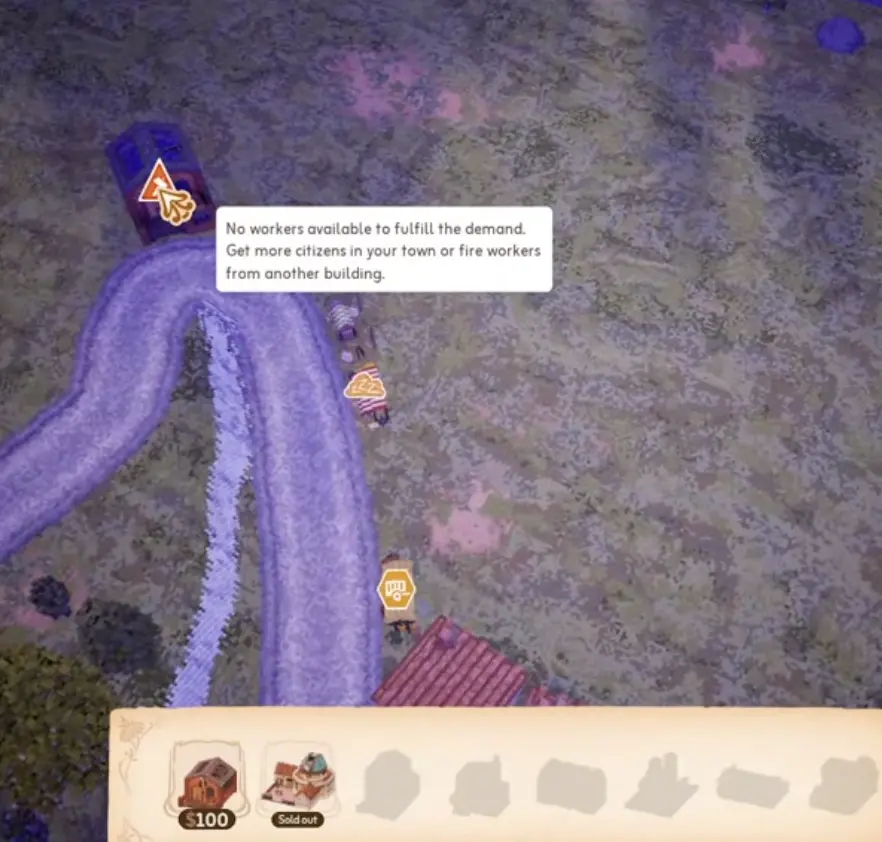
| No workers available | Can you reassign labour before expanding? |
Start with the exact warning or symptom, then apply the first fix before rebuilding the district.
Shops Need Workers and Warehouse Support
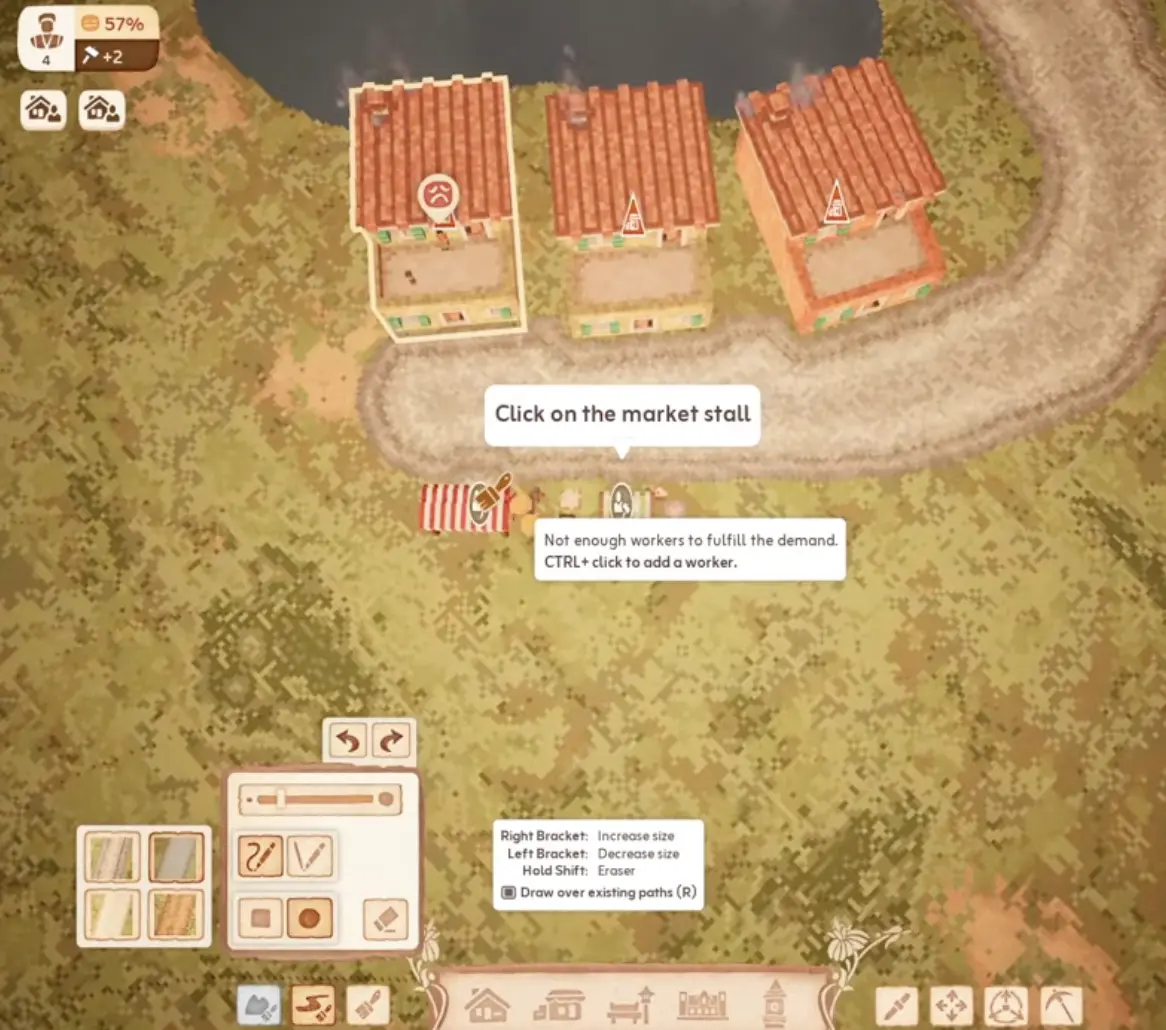
Your first food stalls teach the core rule: a shop is not useful just because it is on the map.
Before a shop can serve residents properly, it needs workers. Then it needs warehouse support so it can sell reliably.
| Shop state | What it usually means |
|---|---|
| No workers | Add or reassign labour. |
| Workers added, still not selling | Check warehouse support. |
| Food category still low | Check whether homes actually connect to the service. |
| New houses still unhappy | The new block may need local services. |
Fix “No Path Connected to Station”
No path connected to station is one of the most frustrating warehouse errors because the road can look connected from above.
When this happens, treat it as a pathing problem first, not as a warehouse range problem.
| Step | Fix |
|---|---|
| 1 | Select the station, warehouse, and nearby road to confirm the path visually. |
| 2 | Redraw the road from the station toward the warehouse. |
| 3 | Paint over the existing road if it looks connected but still fails. |
| 4 | Check for tiny gaps, broken corners, or road pieces that almost touch. |
| 5 | If the station has more than one road attachment point, make sure each one connects to an actual road segment, not just touches the station edge. |
| 6 | Recheck the warehouse and shop warning after redrawing the road. |
| 7 | If the error remains, remove and rebuild the short road segment closest to the station or warehouse. |
Use this when the warehouse or commerce chain says there is no path to the station.
What “Warehouse Can’t Transport” Means
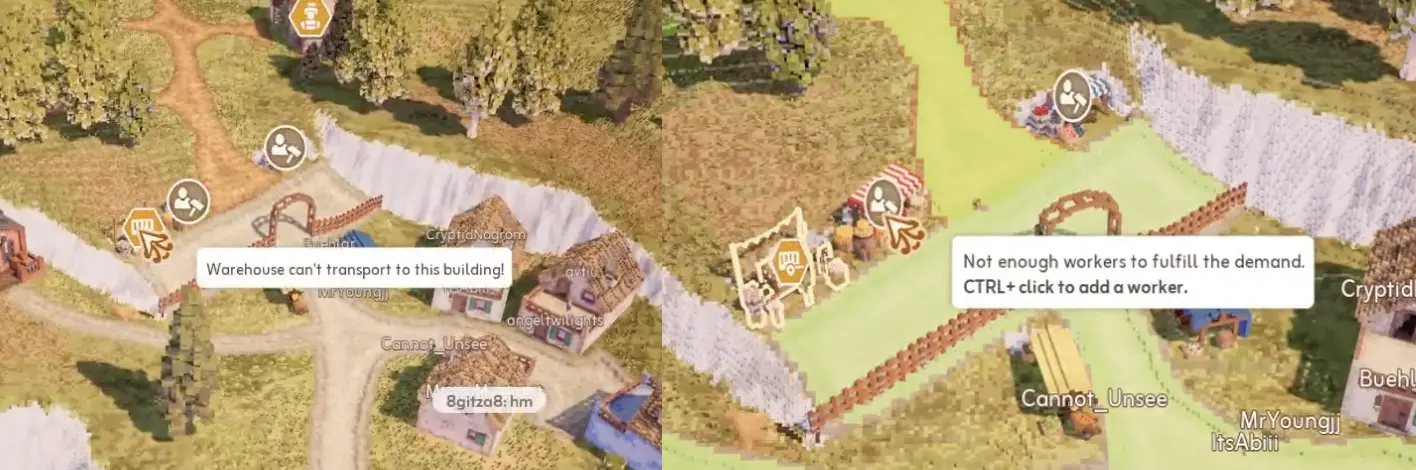
When you see a warehouse transport warning, the problem is usually not cosmetic. The building may be too far away, the path may be awkward, transport demand may be too high, or the warehouse may not have enough workers.
| Cause | Fix |
|---|---|
| Too far from warehouse | Add a local warehouse or move the shop. |
| Warehouse understaffed | Add warehouse workers. |
| Road layout is awkward | Redraw or simplify the road. |
| Transport demand is high | Split the district, upgrade roads, or improve warehouse capacity. |
| Station path is broken | Redraw the road connection to the station. |
Duplicate Buildings: Why Another Copy May Not Help
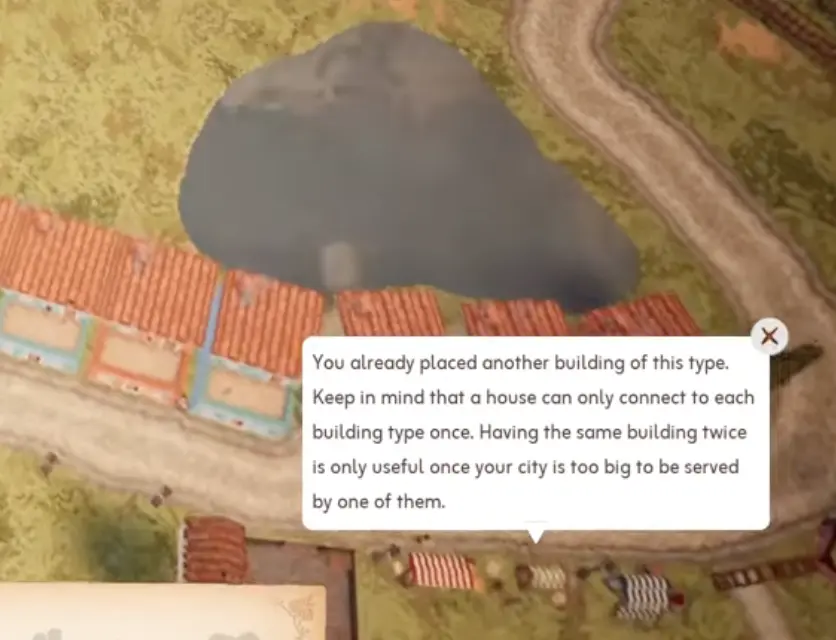
Town to City gives an important warning: a house can only connect to each building type once.
That means placing the same service twice near the same houses may not improve those homes. A duplicate is useful when your city is big enough that one building cannot serve the whole area, or when a separate district needs local coverage.
| Situation | Should you duplicate? |
|---|---|
| Same houses already served | Usually no. |
| Small first block | Usually no. |
| Different district far away | Yes, a local copy can help. |
| One service is understaffed | Add workers before duplicating. |
| One warehouse is stretched | A second warehouse may help. |
When to Build a Second Warehouse
A second warehouse is useful when your town has outgrown the first supply area.
Do not wait until every shop is failing. If a new district is far away or the first warehouse is overloaded, place a local warehouse before the area becomes a mess.
| Build another warehouse when… | Do not build yet if… |
|---|---|
| A district is far from the first warehouse. | You have no workers available. |
| Transport warnings keep appearing. | The first warehouse is simply unstaffed. |
| Several shops share one overloaded supply point. | The road layout is broken and easy to redraw. |
| A new block needs local services. | You are duplicating near the same houses too early. |
Roads Matter More Than They Look
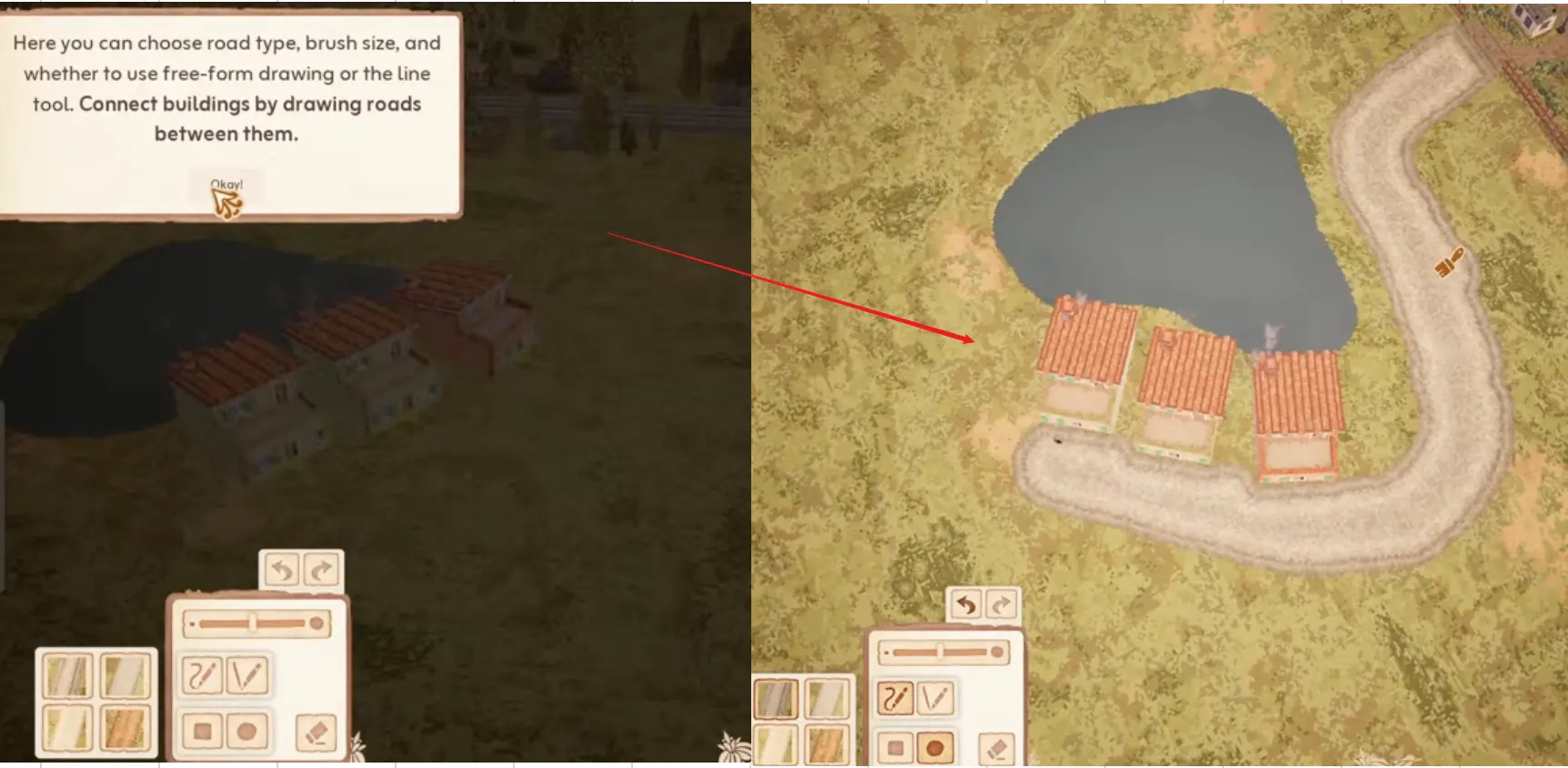
Roads are not only decorative. They decide how cleanly your town is connected and how easy your districts are to read.
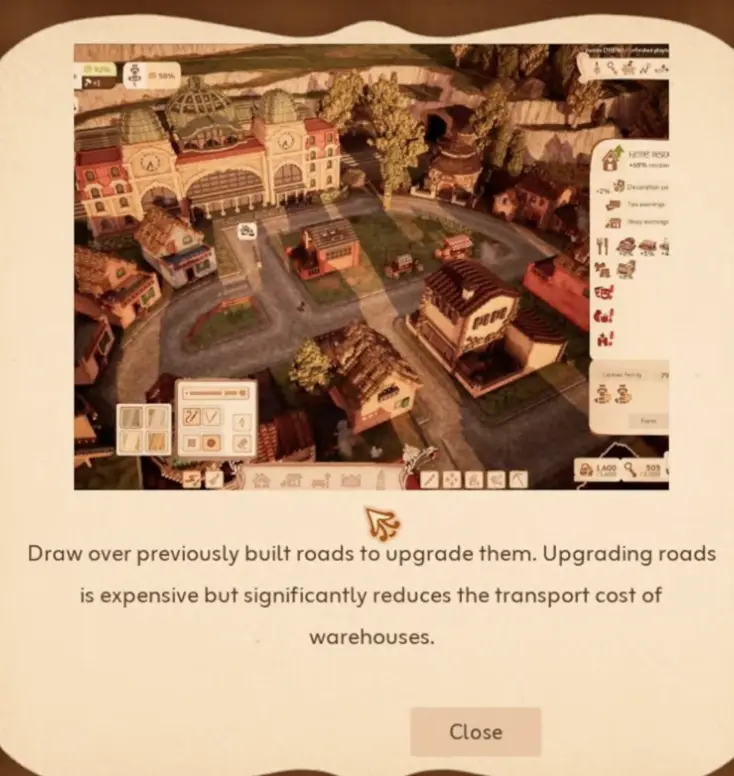
In the opening, simple roads make it easier to place services and warehouses. Later, upgraded roads can reduce warehouse transport cost.
| Road issue | Fix |
|---|---|
| Messy first block | Simplify the road before placing more services. |
| Awkward service access | Redraw the road near houses and shops. |
| No path connected to station | Repaint the road link from station to warehouse. |
| Transport pressure rising | Upgrade roads once available. |
| New district isolated | Give it a clean connection and local supply. |
Warehouse Upgrades: Workers vs Efficiency
Warehouse bottlenecks are not always solved by more buildings. Later research can improve how each warehouse performs.
Do not confuse these two upgrade ideas:
| Upgrade type | What it helps with |
|---|---|
| Extra Warehouse Workers | Adds more warehouse labour slots, letting you assign more workers to transport. |
| Extra Warehouse Efficiency | Increases warehouse transport capacity, helping larger districts move goods more effectively. |
| Road upgrades | Reduce transport cost and make existing warehouse coverage easier to support. |
| Second warehouse | Splits distance and demand into a cleaner local supply area. |
Large Warehouses Are Not Magic
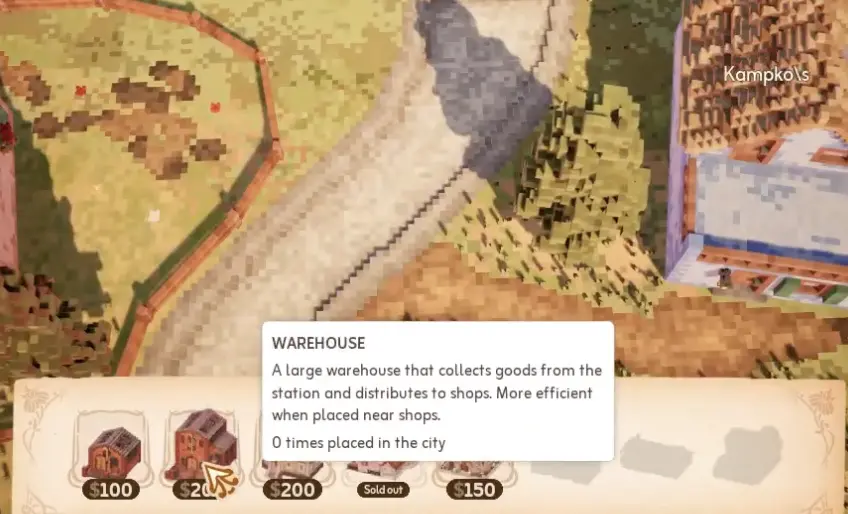
A larger warehouse can help, but it does not remove every bottleneck.
If the area is too spread out, workers are short, or the road layout is poor, a bigger warehouse can still struggle. Use large warehouses with a clean road plan and enough workers.
| Bigger warehouse helps when… | It will not fix… |
|---|---|
| Storage or support demand is rising. | No workers available. |
| A district has grown around one supply point. | Bad road layout. |
| You can staff it properly. | Broken station path. |
| You can rebuild roads around it. | Duplicate services aimed at the wrong homes. |
Granary vs Warehouse
Warehouses and granaries solve similar problems in different parts of the game.
| Building | Where it matters |
|---|---|
| Warehouse | Main town shops, commerce buildings, market stalls, and normal service supply. |
| Granary | Fontebrac farming, Farmer Residences, crop storage, and crop-powered buildings. |
If you are in a normal town district, check warehouses. If you are in a farming district and crops are not moving, check granaries instead.
Warehouse Fix Checklist
Use this when shops or houses are not getting served.
| Step | Action |
|---|---|
| 1 | Click the problem building. |
| 2 | Check worker staffing. |
| 3 | Check warehouse support. |
| 4 | Check whether the warehouse needs more workers. |
| 5 | Check the station path if a path warning appears. |
| 6 | Redraw roads if the connection looks suspicious. |
| 7 | Check distance from the warehouse. |
| 8 | Avoid duplicate services for the same homes. |
| 9 | Add a local warehouse if the district is too far. |
| 10 | Upgrade roads or warehouse efficiency if transport capacity is the bottleneck. |
| 11 | Add more houses only after supply works. |
FAQ
Why are my shops not serving houses in Town to City? +
A shop needs workers, warehouse support, and a useful connection to the houses it should serve. If a shop is placed but not helping, check staffing, warehouse transport, road connection, and duplicate service logic.
What does warehouse can't transport to this building mean? +
It usually means the warehouse cannot support that building cleanly because of distance, transport pressure, road layout, worker shortage, or district placement. Try adding warehouse workers, improving roads, moving the building, or using a local warehouse.
How do I fix no path connected to station? +
Redraw the road connection between the station, warehouse, and town. If the road looks connected but the warning remains, repaint the road over the existing path, check every station entrance, and remove tiny gaps or broken road segments.
Why does Town to City say I already placed another building of this type? +
A house can only connect to each building type once. A second copy only helps when your city is too large for one building to serve the area or when a new district needs its own local service.
When should I build a second warehouse? +
Build a second warehouse when a new district is too far from the first warehouse, transport demand is too high, or one warehouse is trying to support too many shops and houses. Make sure you also have workers for it.
What is the difference between a warehouse and a granary? +
Warehouses support normal town shops and commerce. Granaries are the farming-side equivalent used around Farmer Residences, crops, and crop-powered buildings in Fontebrac.