Town to City Workers Guide
A practical Town to City workers guide explaining how to fix not enough workers, no workers available, shop staffing, warehouse workers, research workers, labour priority, and class-based worker pressure.
Updated:
Quick Answer
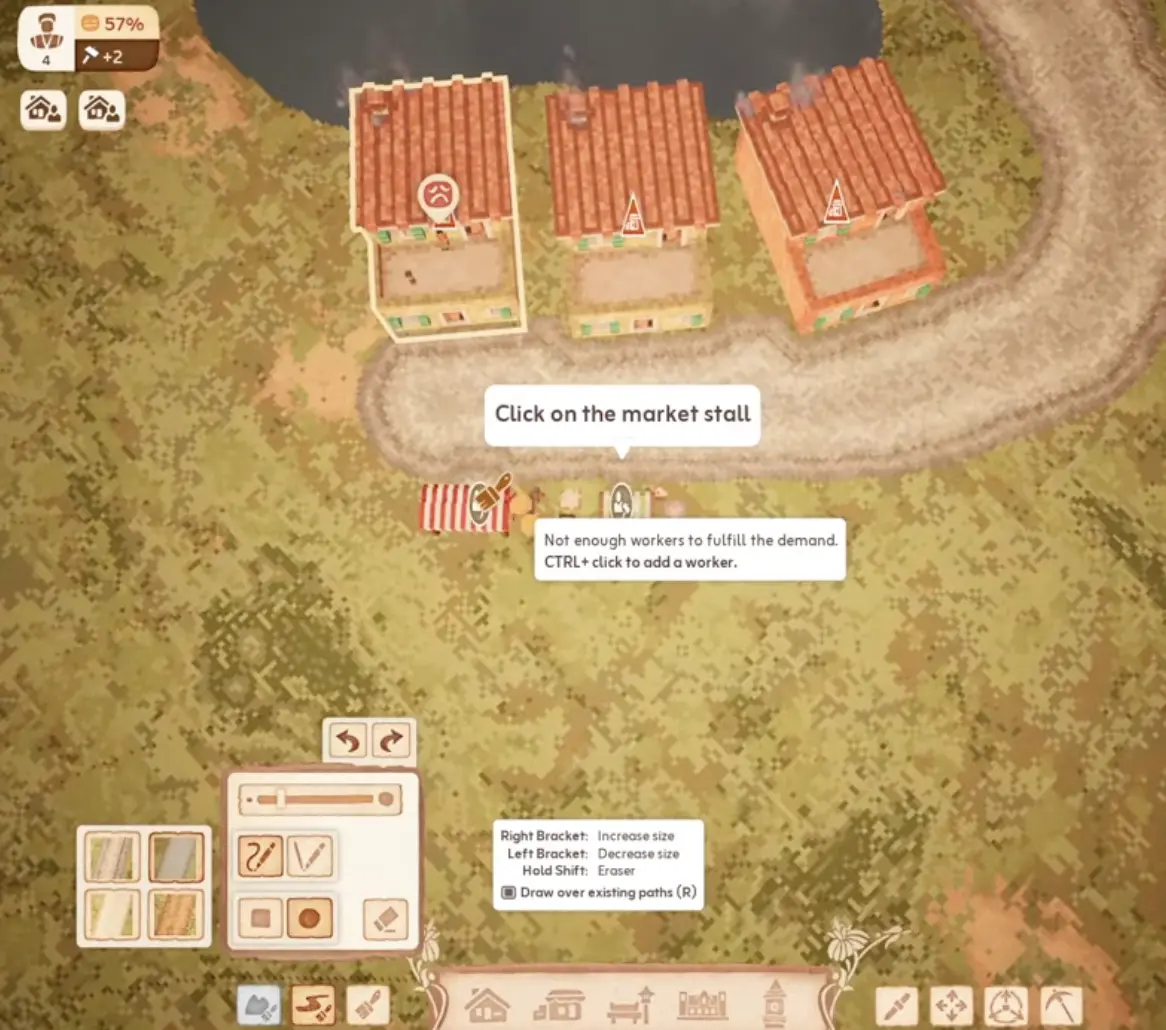
If Town to City says not enough workers, do not only build more houses. First check which building is short: a shop may need staff, a warehouse may need transport workers, or the Research Center may be using adults you need elsewhere. Staff food and essential services first, keep warehouses covered, use research workers only after the base works, and add houses slowly so new demand does not outpace your labour pool.
Why Workers Matter
Workers are the link between your buildings and your residents.
A food stall without workers cannot serve enough people. A warehouse without workers cannot cover transport demand. A Research Center without workers cannot produce research points. Later, bigger districts, public services, luxury services, and Artisan jobs add even more pressure.
Most worker problems are not solved by one button. You need to decide what deserves labour first.
Worker Problem Index
Use this as a navigation table. Start with the warning you see, then scroll to the matching section below.
| Warning or symptom | Where to look next |
|---|---|
| Not enough workers | See Shops Need Workers First below. |
| No workers available | See What to Do When No Workers Are Available below. |
| Shop cannot sell | See Warehouses Need Workers Too below. |
| Warehouse transport is uncovered | See Warehouses Need Workers Too below. |
| Research is progressing but services fail | See Research Workers Are Useful, But Not Always Urgent below. |
| Demand jumps after expansion | See Demand Rises When the City Grows below. |
| Late-game services have no staff | See Late-Game Labour Pressure below. |
This table is a reading guide, not a clickable table of contents. Match your warning to the section name below.
Shops Need Workers First
Your first worker warning usually appears on a food stall.
Before a shop is useful, it needs labour. Each worker increases the building’s ability to serve residents, so a single worker may be enough early but not enough once the nearby district grows.
| Shop situation | Fix |
|---|---|
| New stall is inactive | Add a worker. |
| Food demand is still low | Add another food type or staff the current stall. |
| Shop has workers but cannot sell | Check warehouse connection. |
| New district needs food | Build a local service cluster later. |
Warehouses Need Workers Too
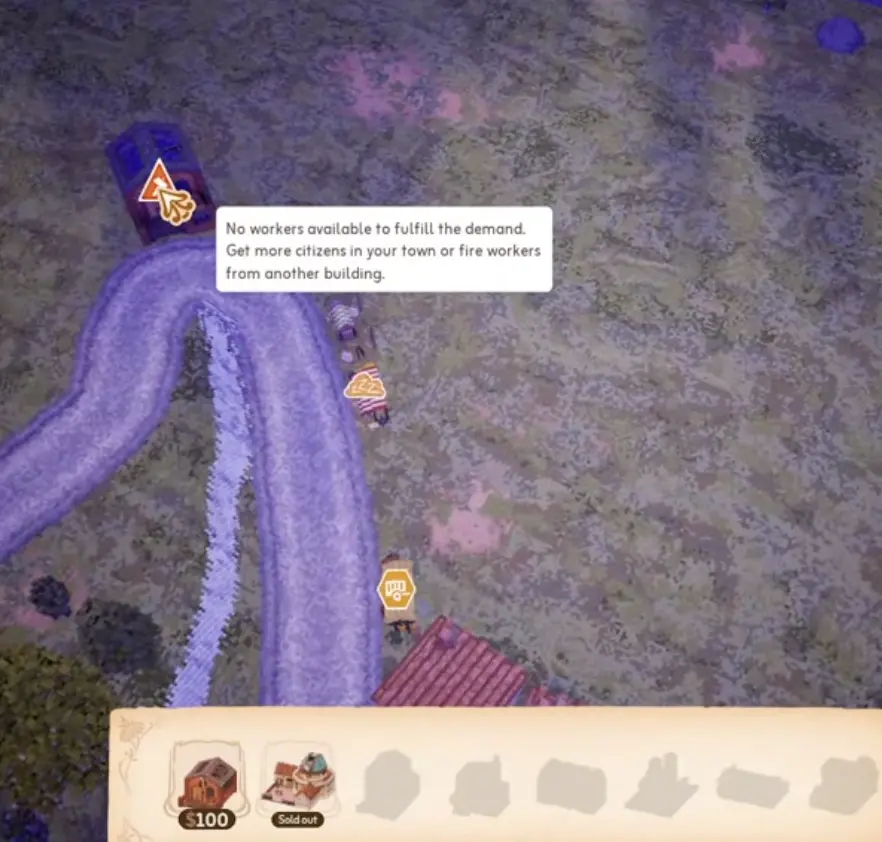
A warehouse is not just a storage building. It needs workers to cover transport demand.
If your shops cannot sell or your warehouse warning appears, check warehouse staffing before placing more services. A warehouse with no labour can become the hidden reason your food, services, and happiness start falling behind.
| Warehouse issue | First fix |
|---|---|
| Transport demand is not covered | Add warehouse workers. |
| Shop lacks warehouse support | Connect or place a warehouse. |
| New district is far away | Use a local warehouse later. |
| Warehouse still overloaded | Reduce distance, split the district, or upgrade roads. |
| Warehouse labour slots are too limited | Research Extra Warehouse Workers when available to expand warehouse labour capacity, up to 12 slots per warehouse. |
What to Do When No Workers Are Available
“No workers available” means you cannot simply add staff to the building right now.
You have three basic options: bring in more citizens, wait for more families, or move workers from a lower-priority job.
| Option | Use it when |
|---|---|
| Add more houses | Happiness is stable and services can handle more demand. |
| Wait for families | Average happiness is already above 60%. |
| Reassign workers | Essential buildings are failing right now. |
| Pause expansion | New buildings would create more demand than you can staff. |
Research Workers Are Useful, But Not Always Urgent
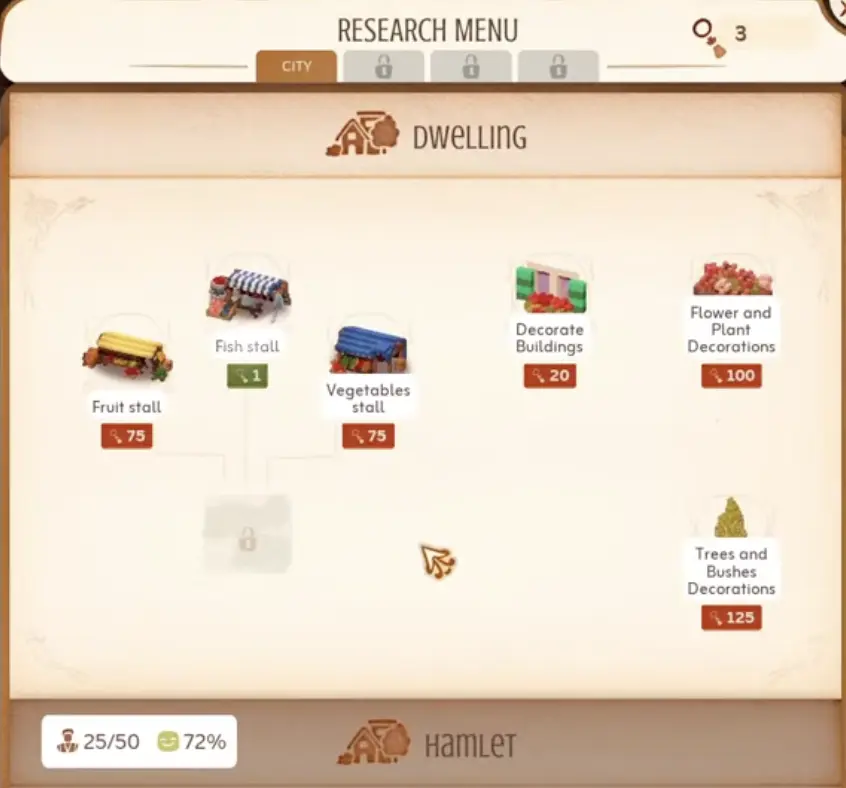
The Research Center is important because it unlocks better services. But research uses workers from the same pool as shops and warehouses.
If your first district is stable, research is a good use of labour. If food stalls, warehouses, or buildings fixing red happiness categories are failing, move workers back into essential services first.
Demand Rises When the City Grows
A small district can run on a few workers. A larger district cannot.
As your city grows, reach and demand increase. New homes need food, services, decoration, warehouse transport, and later higher-tier needs. If you expand too quickly, the town may suddenly need more workers everywhere.
| Growth change | Worker impact |
|---|---|
| More houses | More demand and possibly more adults. |
| More services | More buildings need staff. |
| Larger reach | One building may serve more people, but demand rises. |
| New district | You may need a local service cluster. |
| Higher classes | Better services and more specialized labour. |
Duplicate Buildings Are Not Always a Worker Fix
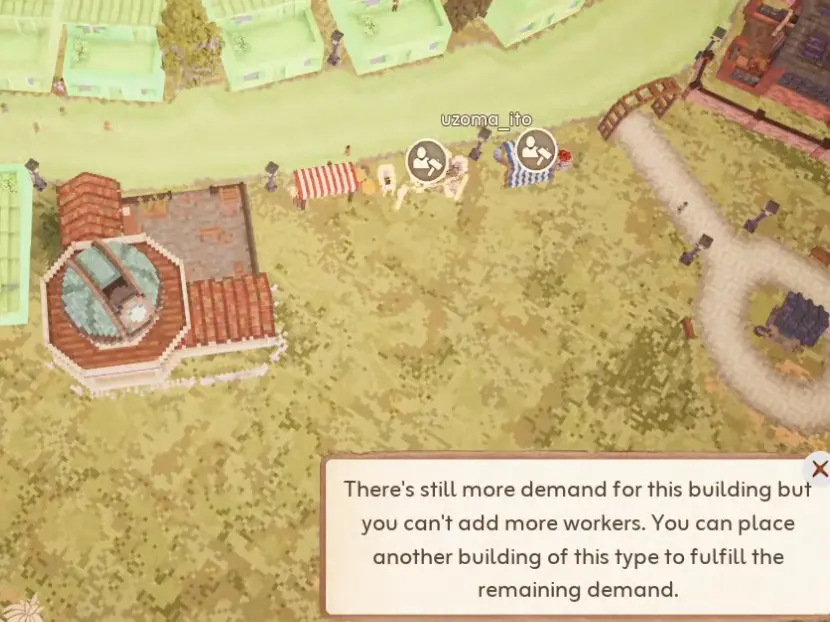
If demand feels high, it is tempting to place another copy of the same service. That is not always useful.
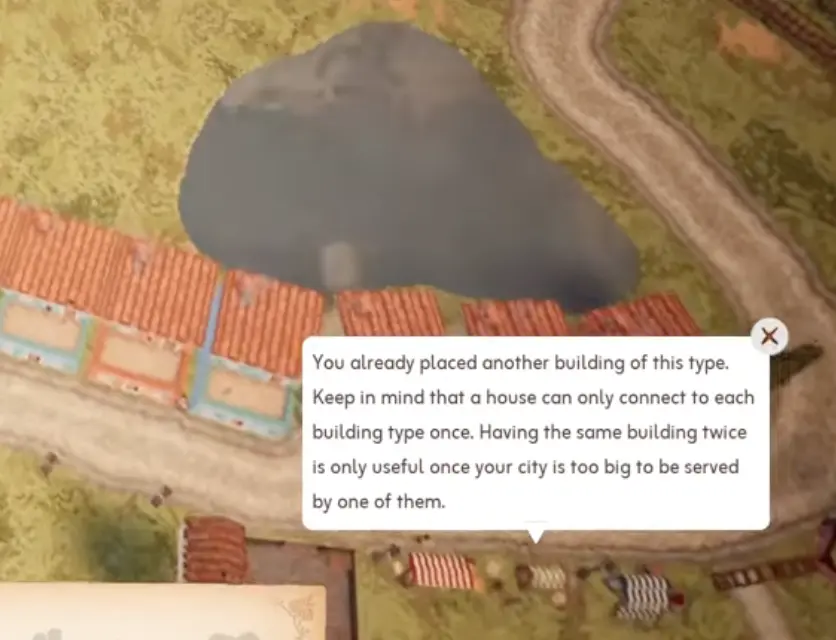
A house can only connect to each building type once. If the same homes already connect to that service type, a duplicate may not solve the problem. Duplicates become useful when the city is too large for one building or one district to serve cleanly.
| Situation | Better fix |
|---|---|
| Same homes already served | Do not duplicate; improve staffing or coverage. |
| Building is understaffed | Add workers first. |
| Warehouse is the bottleneck | Staff or move the warehouse. |
| New district is far away | Add a local copy there. |
Worker Priority Table
Use this when you have fewer workers than jobs.
| Priority | Building type |
|---|---|
| 1 | Food stalls and essential needs. |
| 2 | Warehouses and transport. |
| 3 | Buildings fixing red happiness categories. |
| 4 | Research Center for key unlocks. |
| 5 | New services for expansion districts. |
| 6 | Optional duplicates and cosmetic growth. |
Late-Game Labour Pressure
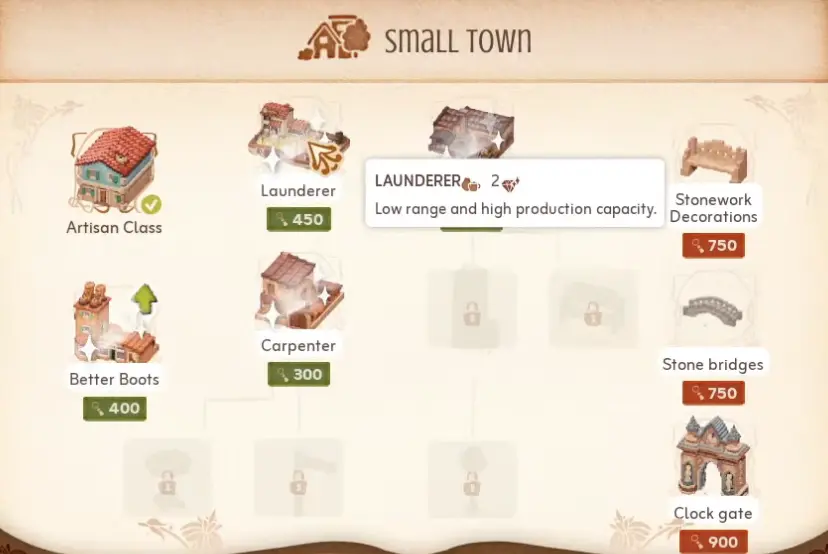
Later, your worker problem becomes more complicated. New services, luxury needs, entertainment, warehouse pressure, public services, and higher-class districts can all compete for labour at the same time.
When this happens, do not treat every warning separately. Look for the bottleneck that affects the most systems.
| Late-game pressure | First check |
|---|---|
| Luxury service is weak | Does the building have workers? |
| Entertainment is missing | Add the specific service, then staff it. |
| Warehouse workers are low | Staff transport before expanding services. |
| Too many high-tier homes | Check class balance and basic labour. |
| Several warnings at once | Fix warehouse and core services first. |
Normal Workers, Artisans, and Class-Based Jobs
Late-game labour is not always one shared pool. Some buildings can depend on specific worker classes, and higher-tier districts may create jobs that normal workers cannot always cover efficiently.
If a public service, school, luxury building, or advanced service sits empty even though your town has people, check whether the building needs a different worker class or whether your Artisans are tied up elsewhere.
| Situation | What to check |
|---|---|
| School or public service lacks workers | Check whether Artisan labour can fill the role. |
| Normal workers are overloaded | Move normal workers back to food, warehouses, and basic services. |
| Artisan district is growing | Reserve Artisans for buildings that need higher-class labour. |
| High-class services stay inactive | Check worker class, not only total population. |
| Basic supply collapses late-game | Keep enough normal workers for farms, shops, and warehouses. |
Recovery Plan for Worker Shortages
Use this when the town has several labour warnings at once.
| Step | Action |
|---|---|
| 1 | Pause new housing. |
| 2 | Click the warning building. |
| 3 | Add workers if available. |
| 4 | Check warehouse support. |
| 5 | Reassign workers from low-priority jobs. |
| 6 | Restore food and essential services. |
| 7 | Restore warehouse transport. |
| 8 | Check happiness before adding homes. |
| 9 | Add new houses slowly if you need adults. |
| 10 | Split distant districts into local service clusters. |
| 11 | Later, research Extra Warehouse Workers if warehouse labour slots become the bottleneck. |
| 12 | In high-class districts, check whether the building needs normal workers, Artisans, or another class-specific labour source. |
FAQ
Why does Town to City say not enough workers? +
The building needs labour before it can meet demand. Market stalls, warehouses, research buildings, and later services all compete for your worker pool, so you may need to assign workers, reassign workers, or bring in more citizens.
How do I assign workers in Town to City? +
Click the building that needs labour, then use the building panel to add workers. Shops need workers to serve residents, warehouses need workers to cover transport, and the Research Center needs workers to generate research points.
What does no workers available mean? +
It means your current adult labour pool is already assigned or unavailable. Add more citizens, wait for new families, or move workers out of lower-priority jobs such as research or duplicate services.
Why is my shop still not working after I add a worker? +
The shop may also need warehouse support. In Town to City, a shop can be staffed but still fail to sell if it does not have a useful warehouse connection.
Should I add more houses when I need more workers? +
Sometimes, but not blindly. More houses can bring more adults, but they also create more demand. If services, warehouses, and happiness are already strained, adding homes can make the worker problem worse.
How do I get more warehouse workers? +
First assign more available workers to the warehouse. Later, look for the Extra Warehouse Workers research upgrade, which can increase warehouse labour slots and help larger districts handle transport demand.