Town to City Happiness Guide
A practical Town to City happiness guide explaining why families stop arriving, how the 60% happiness rule works, and how to fix food, apparel, leisure, decoration, public service, luxury, density, and tax problems.
Updated:
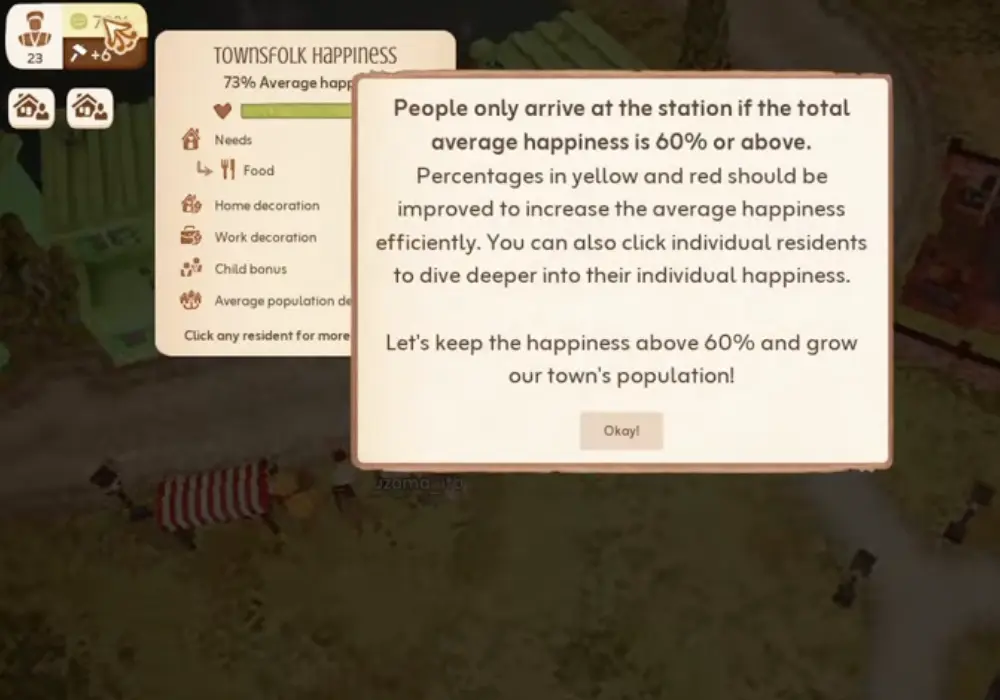
Quick Answer
If families stop arriving in Town to City, check average happiness first. People only arrive at the station if total average happiness is 60% or above. Do not add houses blindly. Open the happiness breakdown, find the red or yellow category, then fix the exact need: food, apparel, leisure, decoration, work decoration, public service, density, luxury, workers, or tax pressure.
Why Happiness Matters
Happiness is not just a comfort score. It controls whether your town keeps growing.
If average happiness drops below the arrival threshold, the station stops bringing in new families. That means fewer new residents, fewer possible workers, slower expansion, and a town that feels stuck even when you still have money.
Happiness Categories Explained
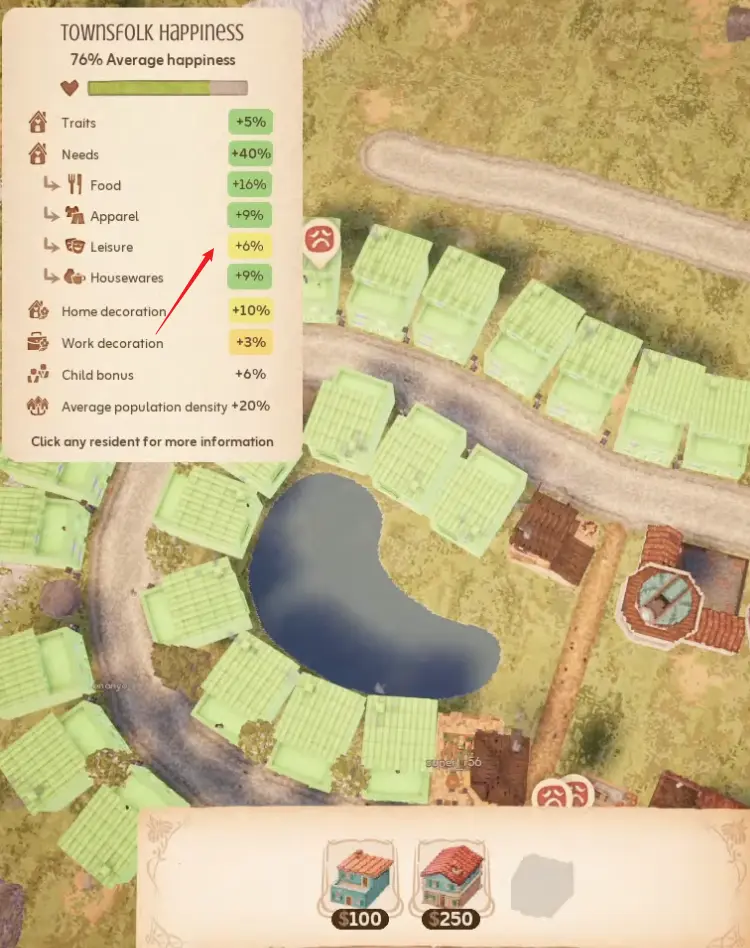
When the happiness panel shows a red or yellow category, do not guess. Match the category to the type of building, service, or layout fix it needs.
| Category | What it means | Common fixes |
|---|---|---|
| Food | Residents need reliable food access. | Poultry, Cheese, Butcher, Bakery, Bistro, Restaurant |
| Apparel | Residents need clothing or appearance services. | Clothing Store, Optician, Shoemaker, Hattery |
| Leisure | Residents need entertainment or social activities. | Puppet Theatre, Street Organ, Ball Throw, Barber, Pub, Social Club |
| Home decoration | Houses need stronger surroundings. | Trees, flowers, benches, lamps, fountains, decorative objects |
| Work decoration | Workplaces feel too plain. | Decorate shops, warehouses, service buildings, and work districts |
| Public Service | Residents need civic or public buildings. | Newspaper Stand, School, Chapel, Apothecary, Cathedral |
| Population Density | The district is too packed. | Parks, open space, wider blocks, less housing pressure |
Use this table to match each visible happiness category to the correct fix. Do not solve one category with the wrong building type.
When New Happiness Needs Appear
Town to City adds more happiness pressure as your settlement grows. A town that was stable at one stage can drop again after a new need unlocks.
| Stage | New happiness pressure to expect | What to prepare |
|---|---|---|
| Early settlement | Food, home decoration, work decoration, density | Food stalls, basic decorations, clean first block |
| Hamlet | Apparel demand starts to matter | Clothing Store, Optician, Shoemaker |
| Village | Leisure demand starts to matter | Puppet Theatre, Street Organ, Ball Throw, Barber |
| Small Town / Town | Public Service becomes more important | Newspaper Stand, School, Chapel |
| Artisan phase | Luxury and higher service standards | Better food, apparel, leisure, and luxury coverage |
| Bourgeoisie phase | Luxury, public service, tax sensitivity, density | High-tier services, cleaner districts, careful tax rates |
Use this as a stage-read, not a full walkthrough. Your current objective panel still matters.
The 60% Arrival Rule
The most important beginner threshold is simple:
People only arrive at the station if total average happiness is 60% or above.
That means a town at 57% can feel frozen. You may still have money, space, and build options, but growth slows because new families are no longer arriving.
| If you see… | What to do |
|---|---|
| Average happiness below 60% | Stop expanding and repair the weakest category. |
| New families not arriving | Check the town average before building more houses. |
| Red category | Fix this first. |
| Yellow category | Improve it after the red problems. |
| One block complaining | Click individual homes or residents. |
Food Is the First Happiness Fix
In the opening, low happiness often starts with food.
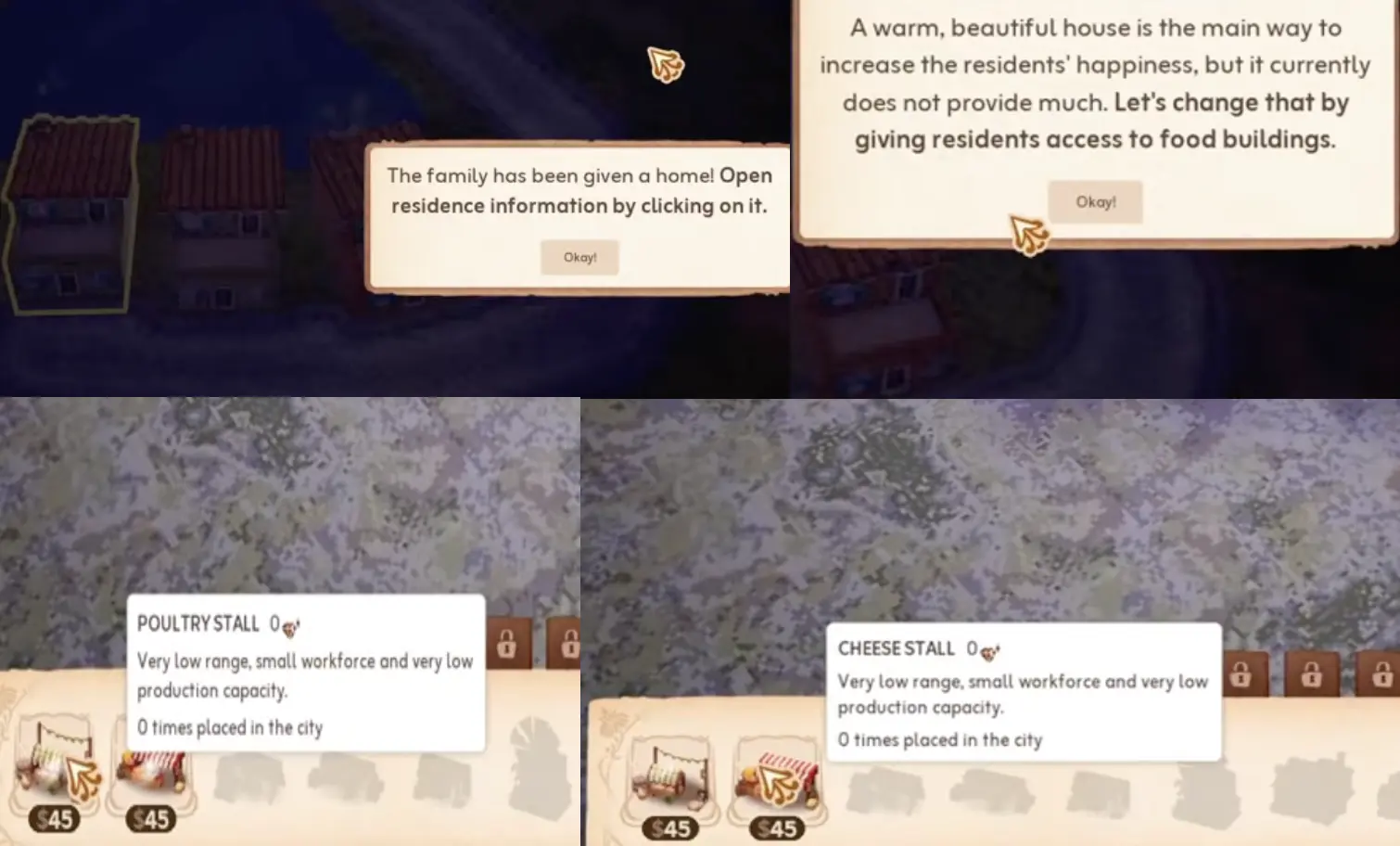
A warm house helps, but it does not solve the first family’s needs by itself. You need food buildings, and those food buildings need workers and warehouse support.
| Food problem | Fast fix |
|---|---|
| Homes have weak food access | Add food stalls near the first block. |
| Only one food type is available | Add a second food option when possible. |
| Food stall is not helping | Check workers first. |
| Shop cannot sell | Check warehouse support. |
| Later food demand rises | Add stronger chains such as Butcher, Bakery, Bistro, or Restaurant. |
Apparel: The First Mid-Game Surprise
Apparel is one of the first new happiness categories that can surprise players after the early food-and-decoration phase.
If Apparel turns red or yellow, more food will not solve it. Add buildings that cover clothing, appearance, or apparel-style needs.
| Apparel issue | Fix |
|---|---|
| Apparel is red | Add a Clothing Store or equivalent apparel service. |
| Apparel stays weak | Add stronger or additional apparel coverage. |
| Higher-class apparel pressure | Look at buildings such as Hattery or Perfumer chains. |
| Building exists but does not help | Check workers, warehouse support, and service coverage. |
Leisure: Do Not Wait Until It Turns Red
Leisure becomes more important as your town grows. Early leisure fixes can include simple entertainment buildings; later, buildings like Pub and Social Club become part of the bigger chain.
| Leisure issue | Fix |
|---|---|
| Leisure is low | Add Puppet Theatre, Street Organ, Ball Throw, or Barber. |
| Leisure demand grows | Add stronger leisure buildings such as Pub or Social Club. |
| Higher-class leisure pressure | Keep crop-powered leisure chains supplied. |
| One district lacks leisure | Build local leisure coverage instead of relying on one central area. |
Public Service: The Civic Happiness Layer
Public Service becomes more important as the town develops. When this category drops, normal shops and decorations may not be enough.
| Public Service issue | Fix |
|---|---|
| Public Service is low | Add civic buildings such as Newspaper Stand, School, or Chapel. |
| Service exists but does not help | Check coverage and workers. |
| Higher-tier public service pressure | Use buildings such as Apothecary or Cathedral when available. |
| One district is underserved | Add local civic coverage instead of centralizing everything. |
Home Decoration and Work Decoration
Decoration is not only for houses. Workplaces matter too.
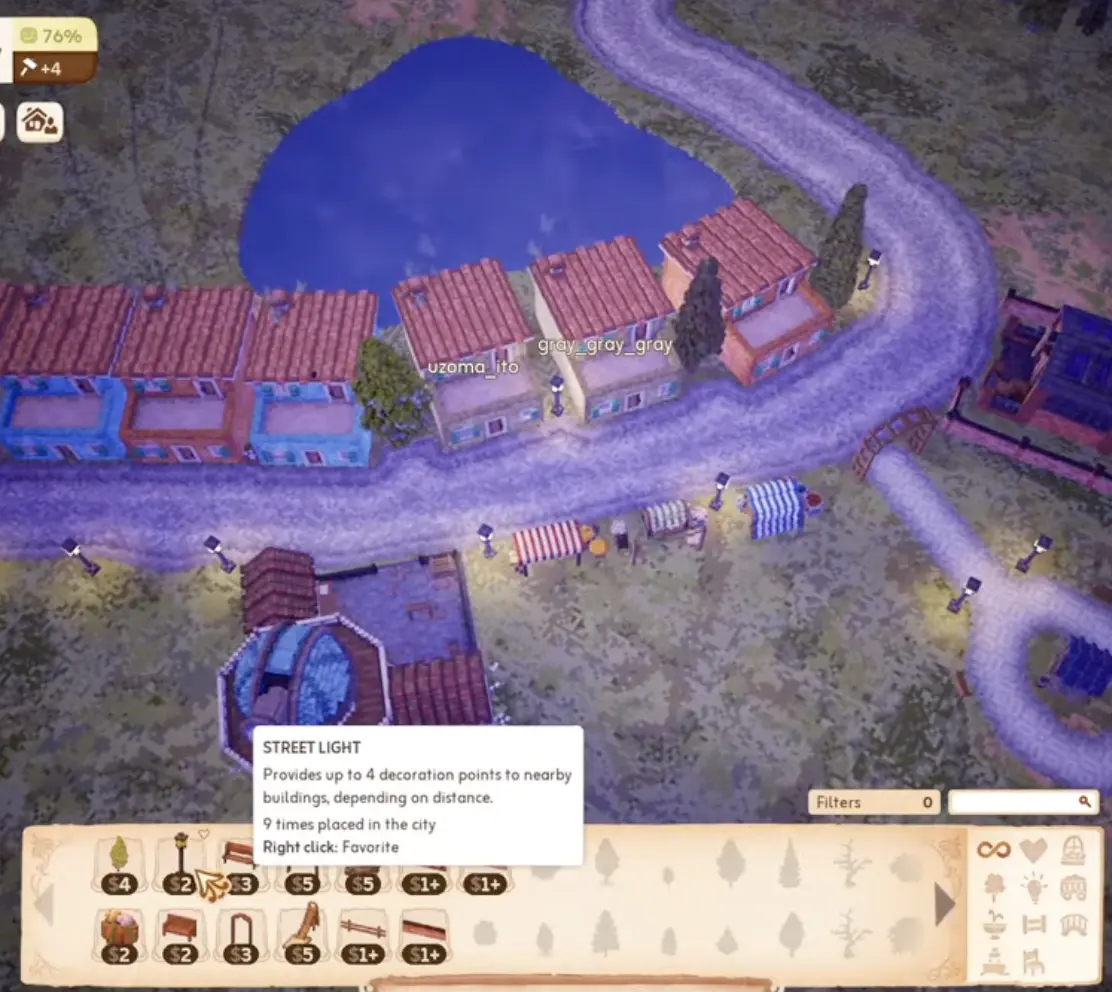
If home decoration is low, decorate residential streets. If work decoration is low, decorate near shops, warehouses, and service buildings.
| Decoration issue | Fix |
|---|---|
| Home decoration is low | Add trees, flowers, benches, lamps, or fountains near houses. |
| Work decoration is low | Decorate shops, warehouses, and service areas. |
| Dense blocks feel weak | Add parks, small plazas, and open space. |
| Need a larger decoration boost | Use stronger decoration pieces such as Fountain of Seasons near important buildings. |
Population Density Can Drag Happiness Down
High population density can reduce overall happiness. This does not mean you should never build dense areas, but it does mean you need to balance density with space, parks, and cleaner district planning.
| Density problem | Fix |
|---|---|
| Houses packed too tightly | Leave room for decoration and paths. |
| No open space | Add parks, trees, or small plazas. |
| One block grows too fast | Expand in smaller service clusters. |
| Average happiness slips after expansion | Pause housing and improve the district first. |
Luxury and Higher-Class Happiness
Luxury is best understood as a higher-class pressure layer, not as a simple early-game category like Food or Apparel.
When Artisans and Bourgeoisie arrive, they expect better service coverage and higher-quality districts. Some buildings help because they provide stronger luxury-style value, while others help because they cover the specific Food, Leisure, Apparel, Housewares, or Public Service need that higher-class residents care about.
| Higher-class issue | What to check |
|---|---|
| Luxury pressure is high | Add high-value buildings such as Clock Maker, Barber, or Bistro where they can actually cover the district. |
| Clock Maker is available | Use it as a strong luxury-support building, especially near higher-class homes. |
| Barber or Bistro is available | Use them where Leisure, Food, or luxury-style coverage is weak. |
| Food or Leisure is red | Fix the specific category first; do not treat it as a generic Luxury problem. |
| Winery, Bakery, Pub, or Restaurant exists but does not help | Check crop inputs, workers, warehouse or granary support, and service coverage. |
| Bourgeoisie still unhappy | Check high-tier service coverage, nearby luxury support, density, and tax pressure. |
Taxes Can Hurt Artisan and Bourgeoisie Happiness
Higher Class Taxes can affect Artisan and Bourgeoisie happiness. If a high-class district looks well served but still unhappy, check tax pressure.
| Tax symptom | Fix |
|---|---|
| Artisans unhappy despite services | Lower higher-class tax pressure and recheck needs. |
| Bourgeoisie happiness drops | Check Luxury, Public Service, Leisure, and taxes together. |
| Income is high but happiness is falling | You may be overtaxing the class that funds the district. |
| Only high-class homes complain | Do not rebuild the whole town; inspect their class-specific panel. |
Service Coverage Can Look Like a Happiness Problem
Sometimes happiness is low because residents are not actually receiving the service you think they are receiving.
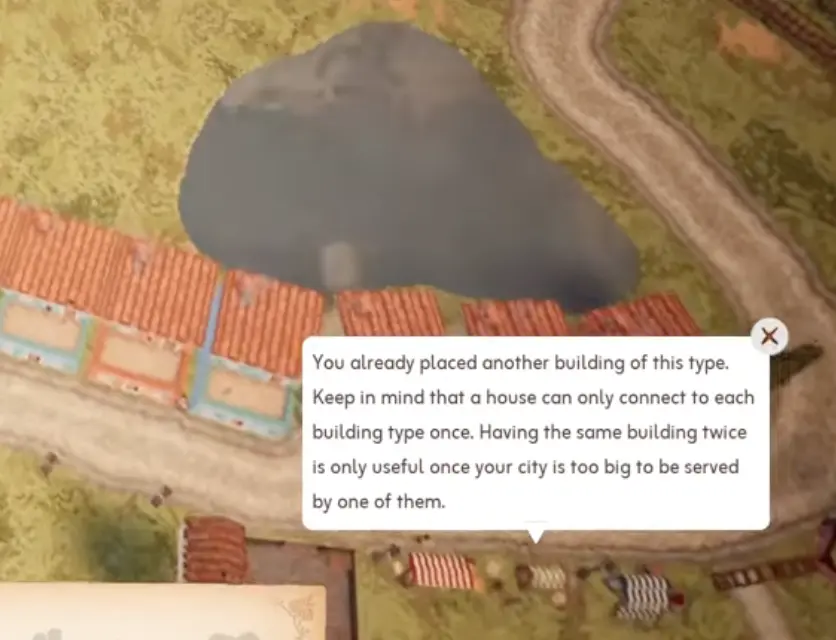
A building can be nearby but still fail because of workers, warehouse support, service logic, or duplicate building rules.
| Symptom | Check first |
|---|---|
| House still unhappy near a shop | Is the shop staffed? |
| Food category stays low | Does the shop have warehouse support? |
| Duplicate service does nothing | Is the same building type already connected? |
| New district is unhappy | Is it too far from the first service area? |
| One block is worse than the town average | Inspect homes or residents individually. |
Worker Shortages Can Block Happiness Fixes
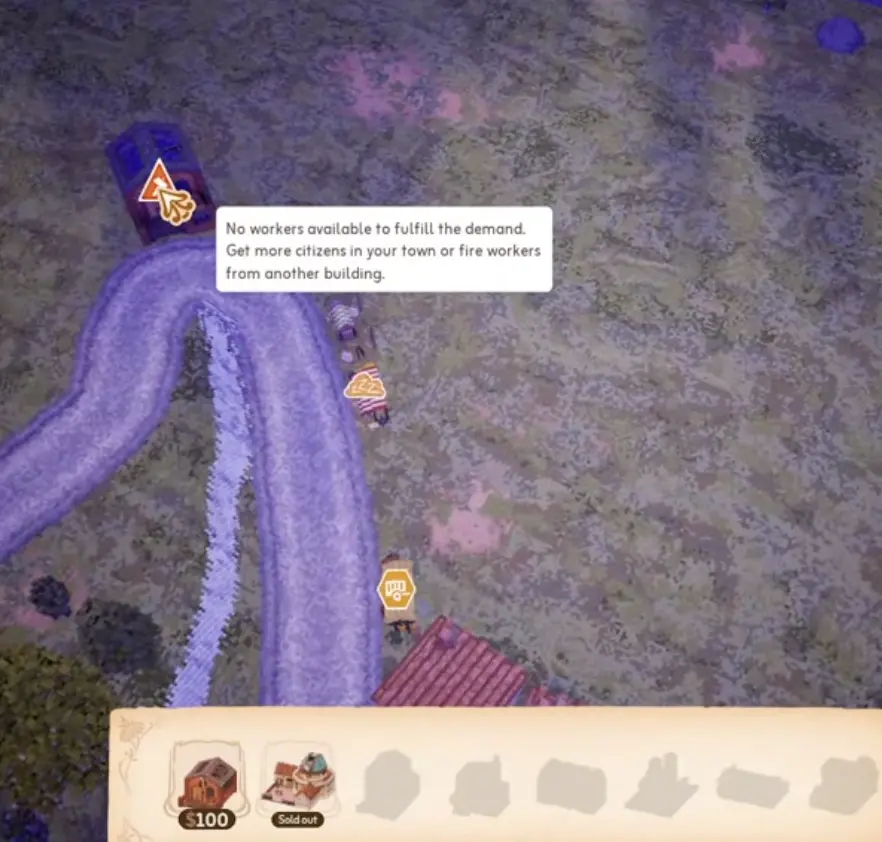
If you place the right building but have no workers, the happiness fix still fails.
This is why worker shortages and happiness problems often appear together. A new food stall, warehouse, public service, or leisure building is only useful when it has labour.
| If this happens… | Do this |
|---|---|
| No workers available | Reassign workers or wait for more citizens. |
| Food stall is inactive | Staff the stall first. |
| Warehouse is understaffed | Add warehouse workers before expanding. |
| Research uses too many workers | Move workers back to essential services. |
| New homes create more demand | Stabilize services before adding more houses. |
Fast Happiness Boosts
Some fixes are broad, but a few are especially useful when you need a quick push above the 60% threshold.
| Fast boost | Why it helps |
|---|---|
| Tastier Meals for Butcher | Adds a direct +5% happiness boost and is a strong early food upgrade. |
| Second food type | Prevents food coverage from depending on one stall. |
| Home decoration cluster | Raises residential decoration quickly. |
| Work decoration cluster | Helps shops and warehouses stop dragging happiness down. |
| Fountain of Seasons | Gives a large decoration bonus to nearby buildings. |
| Fix red category first | Usually gives more value than improving a category that is already green. |
Recovery Plan for Families Not Arriving
Use this when the town stops growing even though you still have money and space.
| Step | Action |
|---|---|
| 1 | Pause housing expansion. |
| 2 | Open the happiness breakdown. |
| 3 | Check whether average happiness is below 60%. |
| 4 | Identify the red or yellow category. |
| 5 | Match the category to the right fix: Food, Apparel, Leisure, Home Decoration, Work Decoration, Public Service, or Population Density. |
| 6 | If Artisans or Bourgeoisie are unhappy, also check luxury support and tax pressure. |
| 7 | Check workers and warehouse support for the building you added. |
| 8 | Inspect individual homes if only one district is unhappy. |
| 9 | Wait for the average to recover above 60%. |
| 10 | Add new houses slowly. |
| 11 | Recheck happiness after the next stage upgrade. |
What to Read Next
If you are still learning the opening build order, read the Beginner Guide.
If your happiness problem is caused by empty labour, inactive shops, or warehouse staffing, read the Workers Guide.
If services are placed but do not reach the right homes, read the Warehouse Range Guide.
If your base town is stable and you are ready to support bigger needs with crops, read the Farming Guide.
Return to the Town to City Guide Hub if you want the full cluster overview.
FAQ
Why are no families arriving in Town to City? +
Families only arrive at the station if your total average happiness is 60% or above. Open the happiness breakdown, then fix red or yellow categories before adding more houses.
What affects happiness in Town to City? +
Happiness can be affected by food, apparel, leisure, home decoration, work decoration, public service, population density, luxury needs, workers, service coverage, and later tax pressure on higher classes.
When does Apparel demand unlock in Town to City? +
Apparel becomes important around the Hamlet stage. Buildings such as Clothing Store, Optician, and Shoemaker help solve that demand.
When does Leisure demand unlock in Town to City? +
Leisure becomes important around the Village stage. Puppet Theatre, Street Organ, Ball Throw, Barber, and similar buildings help cover leisure needs.
How do I increase happiness fast in Town to City? +
Fix the weakest category first. Early fast fixes include food access, home and work decoration, and upgrades such as Tastier Meals for Butcher. Later, public service, luxury, tax, and density become more important.
Do taxes affect happiness? +
Yes. Higher class taxes can reduce Artisan and Bourgeoisie happiness. If those residents are unhappy even when services look good, check tax pressure as well as luxury and service coverage.