Town to City Tourism Guide
A practical Town to City tourism guide covering hotels, tour routes, scenic routes, Rocemarée, Lighthouse, Obelisk, monumental ruins, Bourgeoisie tourism, Town Hall, and Art Atelier rewards.
Updated:
Quick Answer
Tourism in Town to City 1.0 is built around hotels, landmarks, and scenic routes. The core loop is to plan tour routes between hotel areas and landmark destinations such as Rocemarée’s monumental ruins, Lighthouse, or Obelisk. Tourism also connects to late-game Bourgeoisie progression, Town Hall work, new requests, and Art Atelier rewards.
Tourism at a Glance
Tourism is the headline late-game system in Town to City 1.0. Instead of only building a pretty district, you now plan tourist routes between hotels and landmarks, then use scenic roads, monuments, and decoration to turn that district into a destination.
| Core piece | What it does |
|---|---|
| Hotels | Tourist accommodation and route anchors. |
| Tour routes | Planned paths between hotels and landmarks. |
| Rocemarée | Tourism-focused campaign map with ruins and tourist hotels. |
| Art Atelier | Late-game reward path for super fancy decorations. |
Start with these four ideas. The full feature reference is near the end of the guide.
Tourism Is a Route System, Not Just a Hotel System
The biggest mistake is thinking tourism starts and ends with placing a hotel.
A hotel is only the anchor. The actual tourism system is about connecting that hotel to something worth visiting.
| Tourism piece | Role |
|---|---|
| Hotel | Starting anchor for visitors. |
| Road path | Connects the hotel to the destination. |
| Scenic decoration | Makes the route attractive and intentional. |
| Landmark | Gives tourists a destination. |
| Support district | Keeps the area functional for workers, residents, and services. |
When to Start Tourism
Tourism is a late-game layer. You do not need to rush it while your basic city is still unstable.
| Check | Good sign |
|---|---|
| Happiness | New families are still arriving and the town is not stuck below 60%. |
| Workers | You have enough labour for new support buildings. |
| Warehouses | Existing districts are supplied cleanly. |
| Roads | Main routes are readable enough for route planning. |
| Farming | Fontebrac can support higher food and crop-powered demand. |
| Space | You have room for hotels, landmarks, decoration, and scenic roads. |
Use this short checklist before you commit to hotels, routes, and Rocemarée planning.
Hotels: Boutique Stays vs Luxury Resorts
Hotels are the base of the tourism system. The 1.0 tourism update supports a range of hotel styles, from compact boutique-style stays to large luxury resort-style hotels.
Use that difference when planning districts.
| Hotel style | Best use |
|---|---|
| Small boutique-style hotel | Compact tourism district, inner town street, decorated plaza, or dense Artisan/Bourgeoisie area. |
| Large resort-style hotel | Wide scenic area, beach district, water edge, landmark approach, or open luxury zone. |
| Rocemarée tourist hotels | Built-in tourism anchors for planning routes around ruins and landmarks. |
A good hotel district usually needs:
- a readable road connection,
- nearby decoration,
- room for route design,
- access to services,
- and a clear landmark destination.
How Tourist Routes Work
Tourist routes are planned between hotels and landmarks.
A basic route should start at a hotel area, follow a readable road, pass through an attractive district, and end at a clear destination such as ruins, Lighthouse, Obelisk, or another landmark.
| Route part | What to plan |
|---|---|
| Hotel anchor | The starting point for the tourist route. |
| Readable road | A path that is easy to follow from above. |
| Scenic decoration | Trees, lamps, benches, plazas, beach props, and visual detail. |
| Landmark target | Ruins, Lighthouse, Obelisk, or another high-value destination. |
| Support area | Nearby services and supply so the district still functions. |
Scenic Routes: What Makes a Route Worth Building
A scenic route should not feel like a random road between two buildings. It should look intentional.
Use decoration and district planning to make the path feel like a destination.
| Route improvement | Why it helps |
|---|---|
| Trees and flowers | Adds natural beauty along the road. |
| Benches and lamps | Makes the route feel designed rather than accidental. |
| Beach-themed decorations | Works especially well for resort-style or coastal routes. |
| Plazas and open space | Gives tourists a readable place to gather or pass through. |
| Landmark framing | Makes Lighthouse, Obelisk, or ruins feel like the route’s endpoint. |
| Separated supply roads | Keeps the tourist path from becoming visually messy. |
Rocemarée: The Tourism Map
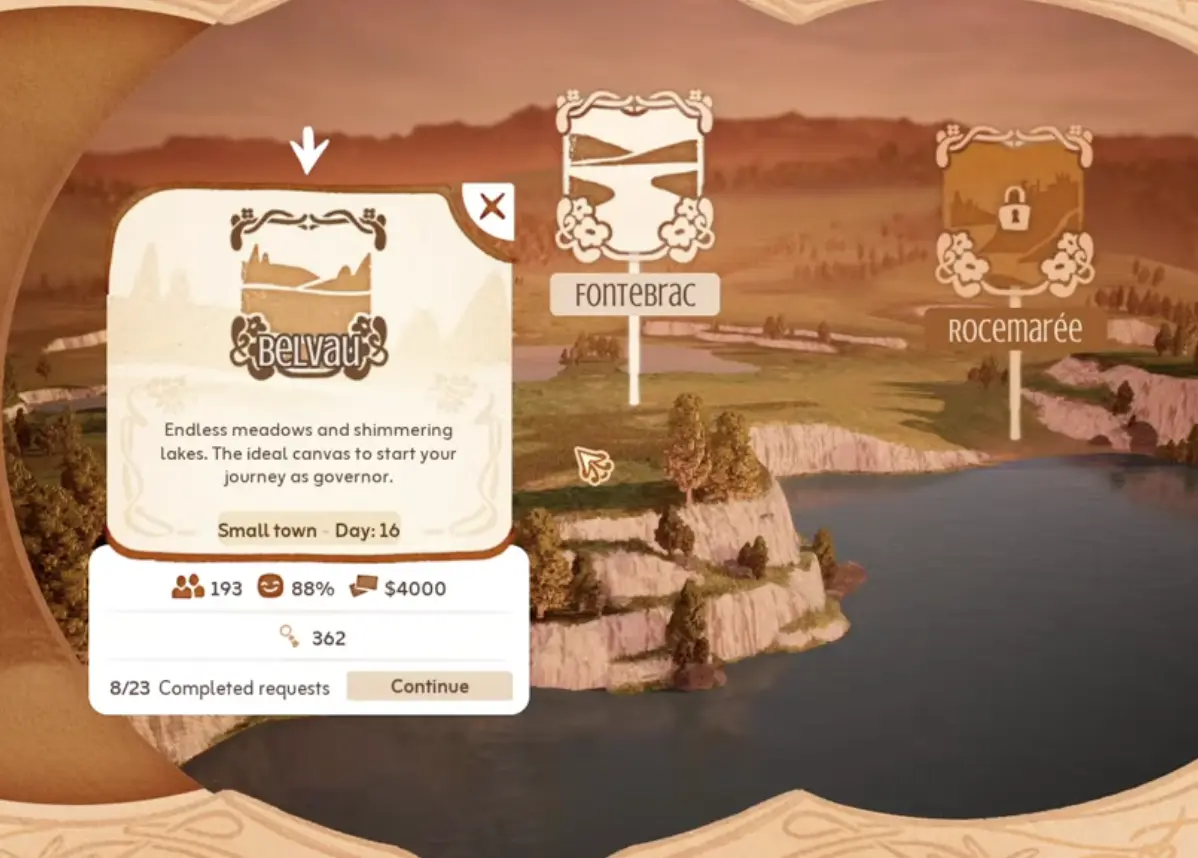
Rocemarée is the clearest tourism map in Town to City 1.0.
It features:
- two monumental ruins,
- three hotels for tourists,
- and a layout that pushes you to think in routes and destinations instead of only normal town blocks.
| Rocemarée feature | How to use it |
|---|---|
| Two monumental ruins | Treat them as major route destinations. |
| Three tourist hotels | Use them as hotel anchors for separate or connected routes. |
| Scenic route system | Connect hotels to ruins, monuments, and decorated streets. |
| Beach-themed decorations | Build resort-style districts around water or open scenic space. |
| Late-game tourism mechanics | Use Rocemarée to push Bourgeoisie, Town Hall, and Art Atelier progression. |
Lighthouse and Obelisk Planning
Lighthouse and Obelisk are important because tourist routes need destinations.
Use these monuments as endpoints, visual centers, or scenic district anchors.
| Landmark | Best placement idea |
|---|---|
| Lighthouse | Coastal district, beach route, water edge, or resort-style area. |
| Obelisk | Central plaza, formal route, high-status district, or city monument axis. |
| Monumental ruins | Main Rocemarée destination anchors. |
| Art Atelier district | Late-game decorative area after tourism progression. |
Tourism, Bourgeoisie, Town Hall, and Art Atelier
Tourism is part of the late-game Bourgeoisie layer. The 1.0 update lists tourism, Town Hall work, and Art Atelier decoration rewards together as late-game Bourgeoisie mechanics.
The safe way to read this is:
| Late-game system | Tourism connection |
|---|---|
| Bourgeoisie | Tourism belongs to the late-game class layer. |
| Town Hall work | Part of the 1.0 Bourgeoisie mechanics, so keep your Town Hall progression in mind. |
| Art Atelier | Unlocks super fancy decorations through late-game progression. |
| Hotel districts | Give higher-class city planning a destination layer. |
| Scenic routes | Turn landmarks and decoration into structured tourist paths. |
What Tourism Gives You
Tourism is best understood as a late-game progression and decoration system.
It gives you a reason to build beautiful routes, high-status districts, hotels, monuments, and destination areas.
| Tourism output | What it helps with |
|---|---|
| Art Atelier rewards | Unlocks super fancy decorations. |
| New 1.0 requests | Adds more late-game objectives to complete. |
| Bourgeoisie progression | Supports late-game class mechanics. |
| Destination districts | Gives purpose to hotels, landmarks, and decorated roads. |
| City identity | Turns a working town into a place worth visiting. |
Full Tourism Feature Reference
Use this table as the full 1.0 tourism reference after you understand the basic hotel → route → landmark loop.
| Tourism feature | What it means |
|---|---|
| Hotels | Tourist accommodation, ranging from smaller boutique-style stays to larger luxury resort-style hotels. |
| Tour routes | Routes planned between hotels and landmarks. |
| Scenic routes | Tourist paths built around attractive roads, decoration, and readable landmarks. |
| Rocemarée | A new tourism-focused campaign map. |
| Two monumental ruins | Built-in landmark anchors on Rocemarée. |
| Three tourist hotels | Built-in hotel anchors on Rocemarée. |
| Lighthouse | A new monument for scenic route planning. |
| Obelisk | A new monument for scenic route planning. |
| 11 new requests | Additional 1.0 objectives tied to the new content layer. |
| Bourgeoisie tourism | Late-game class mechanics linked to tourism. |
| Town Hall work | Listed as part of the late-game Bourgeoisie mechanics in 1.0. |
| Art Atelier | Unlocks super fancy decorations through late-game progression. |
| Beach-themed decorations | Decoration tools for resort-style and coastal tourism districts. |
These are the major tourism-related additions from the 1.0 update and launch materials.
Tourism Layout Checklist
Use this before you commit to a hotel district or Rocemarée route.
| Check | Good sign |
|---|---|
| Hotel anchor | The hotel has room around it and is not trapped in a supply bottleneck. |
| Landmark target | The route has a real destination: ruins, Lighthouse, Obelisk, or scenic district. |
| Road readability | The path is easy to understand from above. |
| Decoration support | The route has trees, lamps, benches, beach props, plazas, or open space. |
| District support | Nearby services and workers are not already failing. |
| Expansion space | You can extend the route later without rebuilding the whole district. |
Beginner Tourism Build Order
| Phase | Goal |
|---|---|
| 1. Pick the hotel anchor | Start with a hotel or existing Rocemarée tourist hotel. |
| 2. Pick the landmark target | Use ruins, Lighthouse, Obelisk, or another strong scenic endpoint. |
| 3. Draw a readable route | Connect hotel and landmark through a clear road path. |
| 4. Add scenic decoration | Use trees, benches, lighting, beach props, plazas, and open space. |
| 5. Check district support | Make sure workers, services, and supply are not collapsing nearby. |
| 6. Expand the route slowly | Add more landmarks or hotel areas after the first route works. |
Common Tourism Problems
| Problem | First fix |
|---|---|
| Tourism feels too early | Wait until your base town has stable workers, warehouses, and happiness. |
| Hotel district feels weak | Add scenic decoration and connect it to a real landmark. |
| Route feels pointless | Give it a clear destination such as ruins, Lighthouse, or Obelisk. |
| Rocemarée feels overwhelming | Start by planning around the two ruins and three hotels. |
| Bourgeoisie progression feels stuck | Check Town Hall, tourism layer, and Art Atelier progression. |
| District becomes hard to manage | Separate tourist routes from your busiest supply bottlenecks. |
FAQ
What does tourism add in Town to City 1.0? +
Tourism adds hotels, tour routes between hotels and landmarks, scenic routes, Lighthouse and Obelisk monuments, Rocemarée, monumental ruins, new requests, late-game Bourgeoisie mechanics, Town Hall work, Art Atelier rewards, and beach-themed decorations.
How do tourist routes work in Town to City? +
Tourist routes are planned between hotels and landmarks. A strong route starts from a hotel area, follows a readable and scenic road, and reaches a destination such as monumental ruins, Lighthouse, Obelisk, or another landmark.
What hotels are in Town to City tourism? +
Town to City 1.0 supports a range of hotel styles, from smaller boutique-style stays to large luxury resort-style hotels. Rocemarée also includes three tourist hotels as part of its map setup.
What is Rocemarée in Town to City? +
Rocemarée is the 1.0 tourism-focused campaign map. It features two monumental ruins and three hotels for tourists, making it the clearest map for learning hotel and scenic route planning.
What landmarks should I use for tourism routes? +
Good tourism route anchors include Rocemarée's monumental ruins, Lighthouse, Obelisk, scenic coastal areas, beach-themed districts, and later Art Atelier-style decorative districts.
What does tourism reward in Town to City? +
Tourism connects to late-game Bourgeoisie mechanics, Town Hall work, new 1.0 requests, and Art Atelier progression, which unlocks super fancy decorations.