Teamfight Manager 2 Safe Picks vs Scaling Picks Guide
A practical Teamfight Manager 2 draft guide explaining safe picks, scaling picks, trap picks, champion examples, AI draft adaptation, Serpen, Morgard, and how to build stable comps.
Updated:
Quick Answer
In Teamfight Manager 2, safe picks reduce draft risk while scaling picks raise your late-game ceiling. The best drafts usually combine one clear win condition with enough early stability to survive Serpen, reach Morgard, and avoid getting punished by repeated AI counter-drafts.
Early Access Note
Teamfight Manager 2 is in Early Access, so champion strength can change with patches, AI updates, and balance changes. Treat the champion examples below as early draft reads, not permanent tier-list law.
Some principles are stable:
- A scaling carry still needs time and protection.
- A safe pick should work before perfect late-game setup.
- A trap pick is not always weak; it is a pick that needs too many conditions.
- Your personal tier list should change after match review.
Some details can change:
- Exact champion balance.
- Meta Report win rate and pick rate.
- AI draft priorities.
- Serpen and Morgard reward values.
- Which champions become safe blind, counter-pick, or must-ban.
Safe Pick vs Scaling Pick, in TM2 Terms
A safe pick is not just a “strong champion.” It is a champion that keeps the draft playable when the enemy has not shown their full plan yet.
A scaling pick is not just a “late-game champion.” It is a champion that can win harder later, but only if the team survives early pressure and protects the win condition.
| Pick type | What it means | Draft risk | Example champions |
|---|---|---|---|
| Safe blind | Works early in draft and does not need perfect setup | Lower ceiling, but fewer ways to collapse | Swordsman, Archer, Priest, Ice Mage |
| Scaling carry | Becomes much stronger later with items, levels, or protection | Can lose before reaching payoff | Sniper |
| Objective pick | Helps control Serpen, Morgard, or fight setup | Depends on lanes and team timing | Lancer, Swordsman, Ice Mage |
| Counter-pick | Punishes a specific enemy plan | Weak if picked too early | Ninja, Demon, Executioner |
| Trap risk | Looks strong but needs too many conditions | Repeatedly creates fragile drafts | Berserker into hard CC, Sniper without peel, Ninja into heavy protection |
Quick objective note
Serpen is the early objective check. It tests whether your lanes, jungler, and early fight plan are ready.
Morgard is the bigger mid-to-late objective and closing test. It checks whether your team can convert a won fight into tower pressure, map control, or a finish.
For deeper objective settings, use the Jungle Guide.
Early Champion Labels
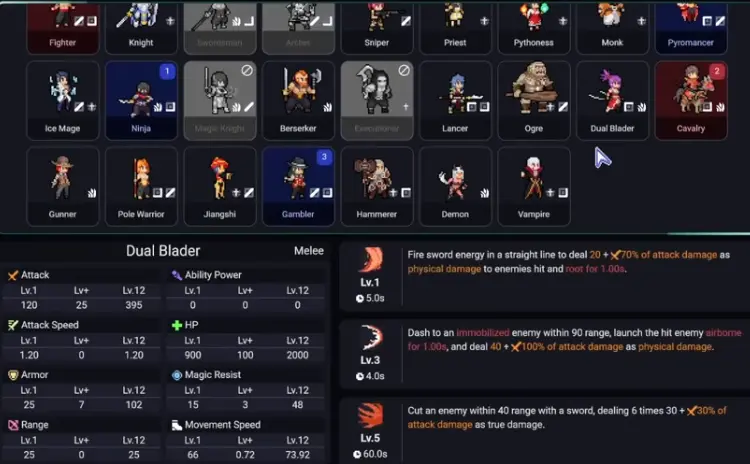
Use this table as a starting point for your Personal Tier List. Adjust after your own match review. The player fit column is important because a champion that is safe for one player can be risky for another.
| Champion | Early label | Why it fits | Draft with | Watch out for | Player fit |
|---|---|---|---|---|---|
| Swordsman | Safe blind / lane priority | Gives wave control and helps objective access | Lancer, Archer, Pyromancer | Kiting, ranged poke, comps that ignore wave pressure | Stable laner, low overextension risk |
| Archer | Safer ranged damage | Contributes earlier than pure scaling carries | Priest, Ice Mage, frontline | Ninja, Demon, Executioner, heavy dive | Reliable mechanics and stable positioning |
| Gambler | Poke / ranged pressure | Adds ranged chip damage without full scaling greed | Bomber, Pyromancer, Archer | Sustain, hard engage, stronger late carries | Patient player who avoids forced all-ins |
| Priest | Safe support / sustain | Stabilizes carries and extended fights | Sniper, Archer, Guardian Spirit | Low-damage comps, burst, anti-heal | Teamwork, discipline, mental stability |
| Ice Mage | Safe control / peel | Helps stop dive and create fight setup | Sniper, Archer, Lancer | Poke comps or drafts that need more damage | Calm player with good timing |
| Lancer | Objective / tempo pick | Helps Serpen setup, engage, and jungle pressure | Swordsman, Archer, Fighter | Weak lanes, low follow-up damage | Aggression plus objective awareness |
| Fighter | Engage / CC support | Starts fights and gives lockdown | Lancer, Archer, Sniper | Kiting, low-damage comps, poor follow-up | Decisive player with good engage timing |
| Sniper | Scaling carry | Strong late-game damage if protected | Priest, Guardian Spirit, Shieldbearer, frontline | Early pressure, dive, poor peel | Focus, positioning, low tilt risk |
| Guardian Spirit | Scaling protection | Helps fragile carries survive burst | Sniper, Archer | Drafts that need damage or engage instead | Disciplined defensive player |
| Shieldbearer | Defensive protection | Protects backline and slows enemy dive | Sniper, Priest, Ice Mage | Getting ignored while backline is flanked | Team-first player with stable decisions |
| Ninja | Counter-pick / backline threat | Punishes fragile carries with weak peel | Demon, Executioner, Bomber | Ice Mage, Priest, Shieldbearer, layered CC | Aggressive player with timing and follow-up |
| Demon | Dive / displacement threat | Breaks immobile backline positioning | Ninja, Executioner | Hard CC, peel, anti-dive comps | Aggressive player who does not over-dive |
| Executioner | Carry killer | Threatens exposed bot or scaling carries | Ninja, Demon, Fighter | Heavy peel and front-to-back protection | High-confidence finisher |
| Berserker | Skirmish / trap-risk pick | Strong in messy fights and isolated duels | Lancer, Fighter, Cavalry | Kiting, hard CC, objective discipline problems | Aggression plus mental control |
| Pyromancer | Wave pressure / poke | Helps side pressure and objective setup | Swordsman, Bomber, Archer | Dive, isolation, poor defensive setup | Lane discipline and low overextension risk |
| Bomber | Zone control / poke | Controls choke points before objectives | Ninja, Executioner, Pyromancer | Hard engage before setup | Patient objective-control player |
| Cavalry | Stable frontline / side pressure | Buys time and helps safer objective presence | Sniper, Archer, Priest | Backline getting ignored or collapsed on | Stable player who can hold space |
| Monk | Bruiser / engage pressure | Forces messy fights and punishes grouped enemies | Fighter, Berserker, Lancer | Freeze, kite, layered CC | Aggressive player with restraint |
These are early draft labels. A champion can move up or down depending on player fit, opponent draft, and patch.
Safe Picks: What They Actually Do
Safe picks are best when you need stability, not when you want the highest theoretical ceiling.
Use safe picks when:
- You are first-picking.
- You do not know the enemy comp yet.
- Your roster has one unstable role.
- You need early Serpen access.
- You want to avoid giving the AI one obvious counter angle.
| Safe pick job | Example champions | What they give you |
|---|---|---|
| Lane priority | Swordsman, Pyromancer | Easier objective setup and wave control |
| Reliable ranged damage | Archer, Gambler | Earlier damage without full scaling greed |
| Peel and control | Ice Mage, Priest | More stable fights and carry protection |
| Objective tempo | Lancer | Early Serpen and engage pressure |
| Stable frontline | Cavalry, Shieldbearer | More time for carries to deal damage |
A safe pick can still be wrong if it does not fit your player or your draft. For example, Swordsman may be stable for lane control, but it is not a complete win condition by itself.
Scaling Picks: When They Are Worth the Risk
Scaling picks are worth drafting when your team can survive long enough for the payoff.
Sniper is the clearest example. It can become the main win condition, but only if the rest of the draft answers three questions:
- Who protects Sniper?
- Who handles early Serpen pressure?
- What happens if Sniper dies first?
| Scaling support need | Good fits | Why it matters |
|---|---|---|
| Frontline | Cavalry, Shieldbearer, Fighter | Buys time for the carry to deal damage |
| Peel / protection | Priest, Guardian Spirit, Ice Mage | Stops Ninja, Demon, or Executioner from reaching the carry |
| Early stability | Swordsman, Archer, Lancer | Prevents the game from collapsing before scaling |
| Secondary damage | Archer, Pyromancer, Bomber | Keeps fights playable if the main carry dies |
| Objective patience | Safer Serpen setting, stable Morgard setup | Avoids taking the fight before the carry is ready |
When Sniper is good vs when Sniper is a trap
| Sniper state | What it means | Draft action |
|---|---|---|
| Good scaling pick | You have frontline, peel, and a plan to delay bad early fights | Pick Sniper and build around it |
| Risky blind pick | Enemy dive and counter-picks are still open | Pick only if next picks can protect it |
| Trap risk | You need three or four extra picks just to keep Sniper alive | Do not force it; draft Archer or another safer damage source |
| Ban-dependent pick | Sniper works only if Ninja, Demon, or Executioner is banned | Ban the biggest threat first or avoid Sniper |
| Player-fit problem | Your Sniper player has poor focus, positioning, or tilt risk | Do not treat Sniper as your default win condition |
Practical Draft Shells
Use these as starting templates, not fixed meta comps. The goal is to choose the shell that matches the enemy draft, your player fit, and your objective plan.
Safe objective shell
Use this when you want a lower-risk draft that can fight earlier without relying on one late-game carry.
Use this when you see:
- the enemy draft is still unclear,
- your first pick needs to stay flexible,
- you want early Serpen access,
- your roster has one unstable carry player,
- the opponent has not shown heavy dive yet.
| Slot | Example pick | Job |
|---|---|---|
| Top / frontline | Cavalry or Swordsman | Stabilize lane or side pressure |
| Jungle / engage | Lancer | Create Serpen timing and objective setup |
| Mid / control | Ice Mage | Peel and control fights |
| Bot / damage | Archer | Reliable ranged damage |
| Support | Priest | Sustain and protection |
This shell is safest when your lanes can move for Serpen and your damage source does not need perfect late-game protection. If the enemy already shows hard dive, add more peel or switch to a protection shell.
Sniper scaling shell
Use this when Sniper is your main win condition and you can build a full protection shell around it.
Use this when you see:
- Sniper is open and not heavily countered yet,
- you can draft Priest, Guardian Spirit, Shieldbearer, Ice Mage, or frontline,
- enemy dive tools are banned, picked elsewhere, or answerable,
- you are willing to delay early Serpen if the setup is bad,
- your Sniper player has stable positioning and focus.
| Slot | Example pick | Job |
|---|---|---|
| Frontline | Cavalry or Shieldbearer | Hold space |
| Jungle / setup | Lancer or Fighter | Start only when the team can follow |
| Mid / peel | Ice Mage | Stop dive and protect carry timing |
| Carry | Sniper | Main late-game damage |
| Support | Priest or Guardian Spirit | Sustain, shield, or revive protection |
This shell becomes risky if the whole draft exists only to keep Sniper alive. If you need three or four protection picks and still cannot contest early objectives, Sniper is becoming a trap risk instead of a good scaling pick.
Anti-scaling pick shell
Use this when the enemy has already shown a fragile carry or low-peel draft.
Use this when you see:
- the enemy picks Sniper, Archer, or another fragile ranged carry,
- the enemy support does not show Priest, Guardian Spirit, Shieldbearer, or reliable peel,
- the enemy frontline is slow or disconnected from the backline,
- your team has enough follow-up damage after the dive,
- you can create a pick before Morgard instead of forcing a fair 5v5.
| Slot | Example pick | Job |
|---|---|---|
| Bruiser / pressure | Berserker or Monk | Force messy fights |
| Jungle / pick | Ninja or Demon | Reach fragile carries |
| Mid / zone | Bomber or Pyromancer | Control objective space |
| Carry killer | Executioner | Punish exposed backline |
| Support / engage | Fighter | Chain CC after the pick starts |
This shell is not a pure all-in draft. It works best when you can create a numbers advantage before Serpen or Morgard. If the enemy has strong peel and grouped protection, do not force this shell just because you want to counter a scaling carry.
AI Opponent Draft Adaptation
In Teamfight Manager 2, you are not only drafting against champion strength. You are drafting against AI behavior that may react to repeated patterns, exposed win conditions, or obvious carry protection gaps.
Do not treat this as a guaranteed hidden rule. Treat it as a review pattern: if the same AI response appears across several matches, update your draft notes.
| Pattern you repeat | AI response to watch for | What it means | Safer adjustment |
|---|---|---|---|
| First-picking Sniper often | More dive, backline access, or protection bans appear | Your scaling carry pattern is easy to read | Rotate into Archer, Swordsman, or Lancer opener |
| Drafting Sniper without peel | Enemy reaches carry before fights stabilize | The issue is not Sniper alone; it is the missing shell | Add Priest, Guardian Spirit, Shieldbearer, Ice Mage, or frontline |
| Opening with Lancer every draft | Enemy contests lanes or drafts anti-engage | Your Serpen tempo plan is predictable | Mix in safe farming, lane priority, or poke shell |
| Using Ninja/Demon into every comp | Enemy drafts peel, freeze, or grouped protection | Pick comp is being answered | Save dive picks until enemy shows fragile backline |
| Always banning the same champion | Another threat attacks your comp weakness | Ban habit is replacing draft logic | Ban by current comp weakness instead |
| Always playing front-to-back | Enemy drafts poke, dive, or side pressure | One fight shape is too predictable | Rotate between scaling, poke, pick, and objective shells |
A useful review habit:
- If it happened once, note it.
- If it happened twice, watch it.
- If it happened three times, change your draft shell.
Safe Pick or Scaling Pick Decision Table
Use this during draft.
| Draft situation | Prefer this | Good examples |
|---|---|---|
| You are first-picking | Safe blind or flexible objective pick | Swordsman, Archer, Lancer, Priest |
| Enemy comp is unknown | Safe pick | Swordsman, Ice Mage, Archer |
| You already drafted a scaling carry | Protection and frontline | Priest, Guardian Spirit, Shieldbearer, Cavalry |
| Enemy has fragile backline | Counter-pick | Ninja, Demon, Executioner |
| Enemy has heavy dive | Peel and anti-dive | Ice Mage, Priest, Shieldbearer |
| Your comp lacks damage | Reliable carry or secondary damage | Archer, Sniper, Pyromancer, Bomber |
| Your comp lacks early objective access | Tempo or lane priority | Lancer, Swordsman, Pyromancer |
| Your team keeps losing before scaling | Safer early structure | Archer, Swordsman, Lancer, Priest |
| Your late game is strong but throws objectives | Safer Objective Finish and Closing Out | See Jungle Guide |
| One champion needs too much help | Mark as trap risk | Sniper without peel, Berserker into hard CC, Ninja into heavy peel |
Trap Pick Test
A champion becomes a trap when the draft has to solve too many problems just to make it playable.
Needs too much protection
Sniper is powerful, but if the draft needs four other picks to keep it alive, the pick is risky.
Fails into common answers
Ninja or Demon can become trap risks if the enemy has Ice Mage, Priest, Shieldbearer, or layered CC.
Loses early objective timing
A scaling pick is risky if it repeatedly makes first Serpen impossible to contest or trade.
Only works when already ahead
Berserker-style skirmish picks can look great in winning games but collapse when the enemy controls space.
If the same champion keeps creating the same draft problem, lower the rating or change the label in your Personal Tier List.
Player Fit Still Changes the Label
The champion labels above are not fixed for every roster. A champion moves up or down depending on who pilots it.
For example:
- Sniper is a good scaling carry only if the player has enough focus, positioning, and low tilt risk.
- Lancer becomes much safer when the player can handle aggression without forcing bad fights.
- Ninja is a counter-pick only if the player can time the dive and the draft has follow-up damage.
- Pyromancer can be a safe pressure pick for a disciplined player, but a trap for someone who overextends before objectives.
If a champion keeps failing with one player but works with another, do not change only the champion tier. Add a player fit note in your Personal Tier List.
Common Mistakes
Calling every strong champion safe
A champion can be strong but not safe. Sniper is a good example: high ceiling, but it needs protection.
Drafting scaling without early structure
A scaling comp still needs a Serpen plan. If the first objective always collapses, the late-game plan may never arrive.
Picking counter-picks too early
Ninja, Demon, and Executioner are better when you know the enemy has a fragile carry or weak peel.
Ignoring AI adaptation
If the same opener keeps getting punished, rotate the draft shell instead of repeating the same safe or scaling pattern.
Forgetting player fit
A pick that works for one player may fail for another. Champion label and player assignment should be reviewed together.
Refusing to mark trap risks
If a favorite champion keeps needing perfect conditions, label it honestly as comp-dependent or trap risk.
FAQ
What is a safe pick in Teamfight Manager 2? +
A safe pick is a champion that works in several drafts, contributes before late game, and does not need perfect protection. Swordsman, Archer, Lancer, Priest, and Ice Mage can function as safer picks depending on role fit and matchup.
What is a scaling pick? +
A scaling pick becomes more valuable later but needs time, protection, or item timing. Sniper is the clearest example of a scaling carry: powerful late, but risky without peel and frontline.
Is Sniper a safe pick? +
Sniper is usually a scaling carry, not a safe blind pick. Pick Sniper when you can draft frontline, peel, and objective patience around it.
Which champions are trap risks? +
A champion becomes a trap when it needs too many conditions. Berserker can become risky into kiting and crowd control, Ninja can become risky into heavy peel, and Sniper can become risky if picked without protection.
How do Serpen and Morgard affect safe vs scaling drafts? +
Serpen is an early objective check, while Morgard is a larger mid-to-late objective and closing test. Safe picks help you survive early Serpen pressure; scaling picks need enough setup to reach Morgard fights without collapsing.
How does AI drafting affect safe picks and scaling picks? +
If you repeat the same scaling carry or same safe opener, the AI has more chances to ban, counter, or pressure that pattern. Rotate draft shells instead of forcing the same comp every match.