How I Keep My Pet Alive in Shift At Midnight
I pay each medicine bill, keep personal funds separate from store money, and prepare for the final $250 surgery without sacrificing survival.
Updated:
Quick Answer
To keep my pet alive in Shift At Midnight, I pay the first $20 medicine bill, then the later $40 treatment covering three days, and eventually prepare $250 in personal funds for surgery. The final surgery also comes with a three-day deadline. I do not stop buying necessary traps, weapons or healing to protect that $250 because those purchases use the store-shopping balance, not my personal treatment money.
The pet starts as a simple character choice.
By late Story Mode, it becomes one of the main reasons I care about:
- clean customer transactions;
- personal earnings;
- avoiding human-kill penalties;
- knowing which money balance I am actually spending.
The mistake I avoid now is treating the whole route as:
save $250 from the beginning
That is not how the medical progression appears.
The costs arrive in stages.
Which Pet Should You Choose?
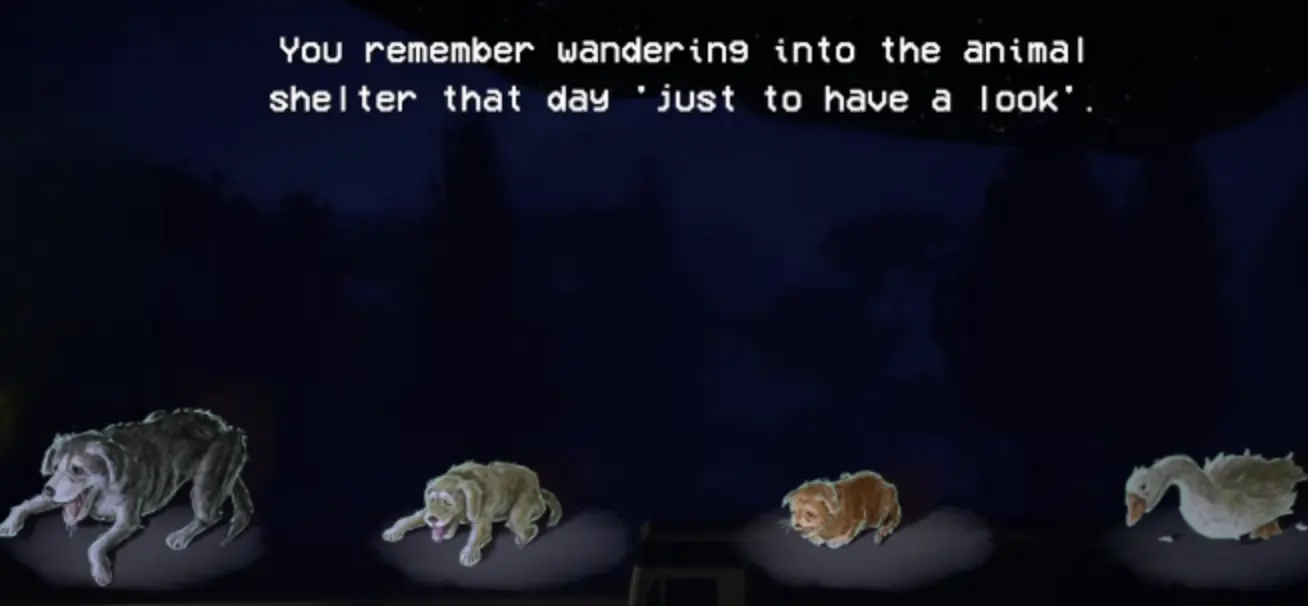
The starting selection gives me four pets:
- two dogs;
- one cat;
- one goose.
I have not confirmed a meaningful difference in:
- treatment price;
- surgery requirement;
- income;
- combat;
- endings;
- survival chances.
So I do not build a pet tier list.
If I want the dog, I choose the dog.
If I want the cat or goose, I choose that instead.
The choice matters because the selected animal and its name continue appearing through the story, not because I have found one statistically superior pet.
The Pet Treatment Timeline
The medical route escalates in three important stages.
| Stage | Cost | Time pressure | What changes |
|---|---|---|---|
| First medicine bill | $20 | Early Story Mode | Keeps the treatment route moving |
| Stronger medicine | $40 | Covers the next 3 days | The pet improves and can become available during later work |
| Surgery | $250 | Must happen within 3 days | Becomes the final pet-survival check |
I do not attach those stages to one universal Shift number.
The useful information is the sequence:
$20 medicine → $40 stronger treatment → $250 surgery
That is what I budget around.
The First Medicine Bill Is $20
The first medical cost I encounter is:
$20
At this point I do not panic about the later surgery yet.
My immediate goal is simply to avoid destroying early personal earnings with bad decisions.
I keep serving legitimate customers.
I avoid killing a real human on weak evidence.
And once I have enough to cover the medicine, I do not risk the whole Shift for one low-value optional task.
The first bill is small compared with what comes later, but it establishes the rule I use for the rest of the route:
pet treatment uses my personal funds.
The Next Treatment Costs $40 for Three Days
Later, the medicine becomes stronger.
The bill is:
$40
and the treatment covers:
the next three days
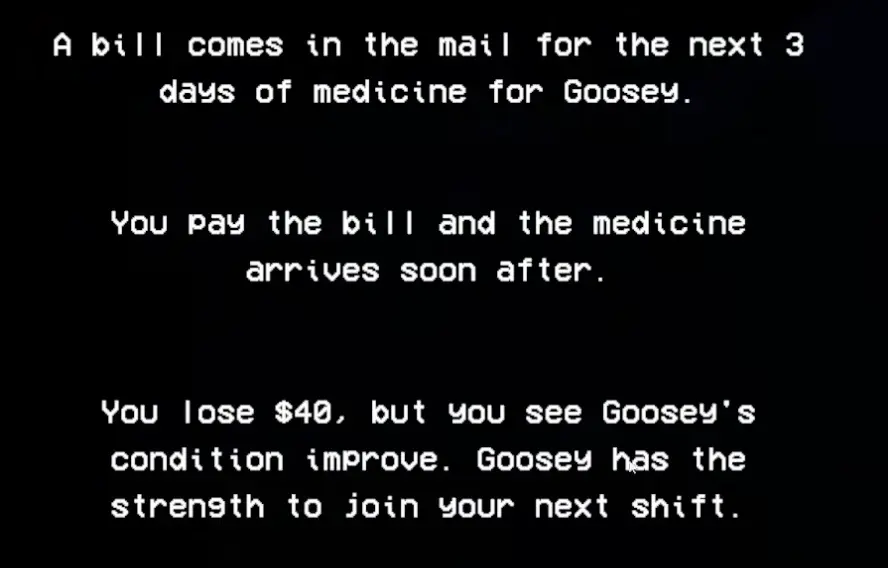
One run gave me a very useful real budgeting example.
When this bill arrived, I had:
$57
I paid the:
$40
instead of trying to protect the balance for something else.
That left very little personal cushion afterward, but the treatment improved the pet’s condition.
This is why I do not treat the medical route as one giant $250 savings account.
The earlier bills have to be handled first.
Paying the $40 Treatment Can Bring the Pet Into Later Shifts
After the stronger treatment improved the pet’s condition, I later saw my selected pet inside the store during a Shift.
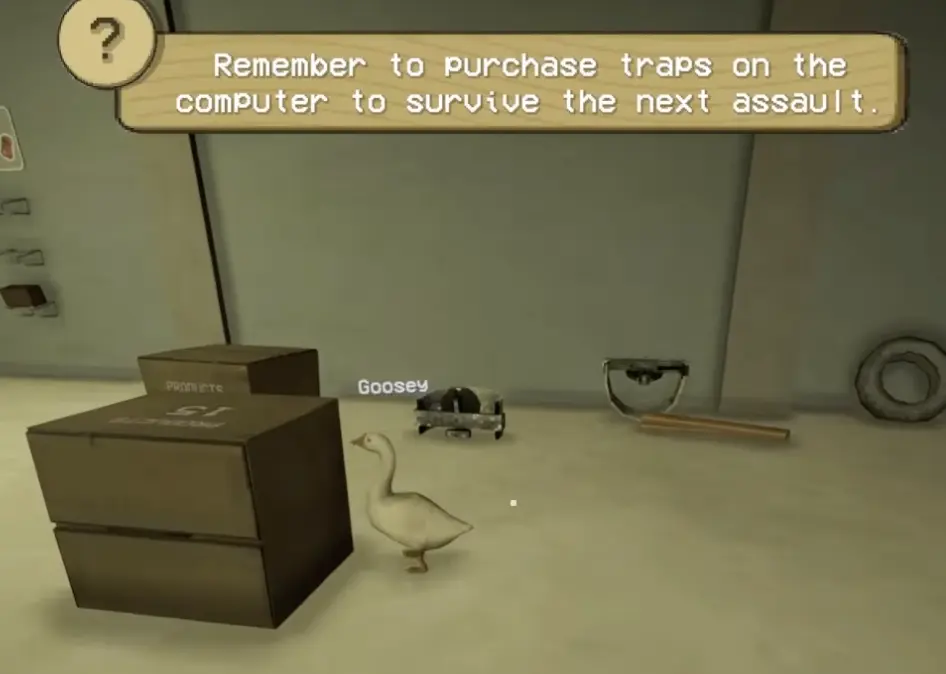
I do not promise that every pet appears on one exact Shift.
What I can rely on is the progression connection:
treatment improves condition → pet can become part of later work
That makes the $40 payment more than another text event.
I actually start seeing the pet during normal store play.
What My Pet Actually Does in the Store
I do not treat the pet as another worker.
I have seen it:
- move around the store;
- remain present during normal work;
- interact with floor-level meat.
In one route, Goosey approached meat lying on the floor.
That is interesting, but I do not turn one observation into:
pets automatically clean the store
I have not confirmed that every pet reliably removes:
- meat;
- blood;
- trash;
- other floor clutter.
So if debris is blocking checkout or hiding a small Entity, I still clean it myself.
I also do not build any combat strategy around the pet.
I have not verified a dependable:
- Entity attack;
- Doppelganger warning;
- Music Box detection;
- stat bonus;
- healing effect;
- income bonus.
For me, the pet remains primarily a story companion rather than a controllable combat or cleanup unit.
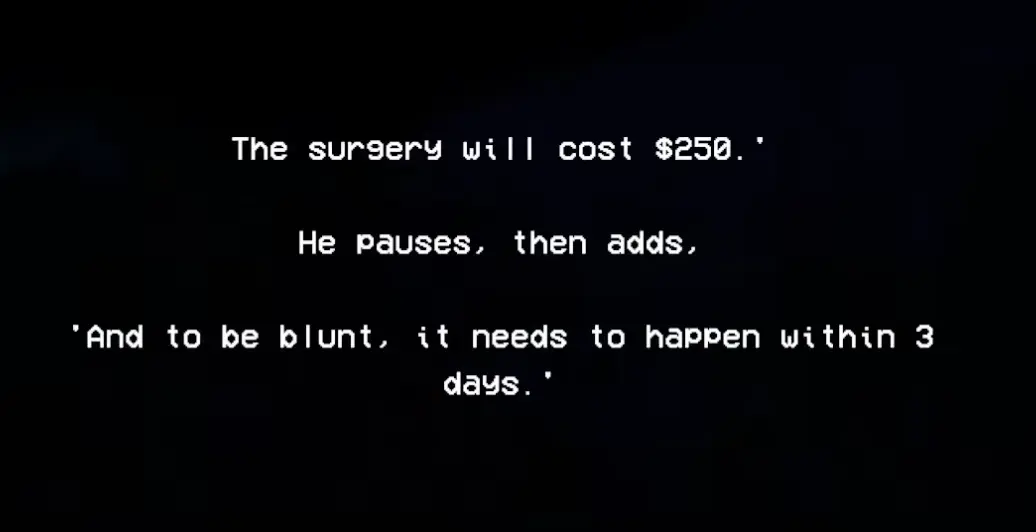
The Final Surgery Costs $250
Eventually the earlier medicine is no longer enough.
The veterinarian gives me the final target:
$250
with:
three days
to get the surgery done.
This is the point where I change how I value late-Shift work.
Before surgery, I might leave once quota is complete and the useful queue is gone.
After the $250 requirement appears, one more safe customer or nearly completed driver can matter.
I still do not stay forever.
I only keep working while the additional income is reasonably safe.
Personal Funds and Store Money Are Different
This is the most important money distinction in the whole pet route.
Personal funds pay for the pet
I track personal money for:
- the $20 medicine;
- the $40 treatment;
- the $250 surgery.
Store money pays for running the Shift
The store-shopping balance covers things such as:
- weapons;
- ammunition;
- traps;
- healing;
- stock;
- boards;
- decorations.
Buying a necessary weapon does not mean I just spent part of the pet’s $250 personal surgery fund.
This completely changed my buying behavior.
Before I understood the two balances, I was tempted to avoid useful equipment because the surgery bill was coming.
Now I ask:
Which balance is actually paying for this?
That prevents me from sacrificing survival for money that was never being spent on the same thing.
Passing Quota Does Not Mean I Can Afford Treatment
Store quota is another number I keep separate.
Quota tells me whether the business has produced enough revenue for the Shift.
It does not automatically mean my personal balance can cover:
- the next medicine bill;
- the final surgery.
So I can have a successful store night and still be financially behind on the pet route.
That is why I check personal earnings instead of using quota as my treatment progress bar.
How I Protect the Pet Fund
My money strategy is much more practical than:
never spend anything
I protect personal earnings by protecting good work.
I prioritize verified customers
A customer who is already verified and ready to pay is valuable.
I do not leave that transaction to perform cosmetic cleanup.
I avoid weak human kills
A wrong kill can cost more than the immediate mistake.
It removes a legitimate transaction and can reduce the end-of-Shift result.
When the final surgery is approaching, I become even more conservative about shooting somebody based only on a vague clue.
I finish nearly completed drivers
If I have already verified the driver and only the last part of the job remains, I usually finish it.
Walking away from a transaction that is seconds from paying is poor Solo economics.
I still buy essential defense
Weapons, healing and traps are not personal treatment purchases.
If one of those items keeps the Shift alive, I buy it.
I stop working when the extra money is no longer worth the risk
Once:
- quota is complete;
- the useful queue is gone;
- active threats are resolved;
- remaining work is mostly cosmetic;
I leave.
Dying because I wanted one more pointless cleanup task is not a good pet-saving strategy.
The broader customer, driver and task-priority workflow stays in my Solo Guide.
I Do Not Need $250 the Moment the Surgery Route Appears
The $250 target becomes important before the final check actually happens.
That means I do not assume:
below $250 right now = automatic failure
There are still late Story Mode earning opportunities.
The final Shift can also matter.
What I do not do is use that fact as an excuse for a huge deficit.
A small gap can be worth trying to close.
A large gap requires a more serious decision.
The actual Clyde choice, final money calculation and all three outcome branches belong in the Endings Guide.
For this Pet page, I only need the medical rule:
the surgery requires $250 in personal funds unless the final story branch changes who pays for it.
When I Start Prioritizing Income Over Cleanup
The surgery phase is where my late-game priorities become noticeably different.
If I still need personal money, I value:
verified customer
over:
clean floor
and:
nearly finished driver
over:
fully restocked shelf
I am not ignoring the store.
I am recognizing that not every task contributes equally to the pet route.
A clean transaction can improve the final financial position.
A spotless corner usually cannot.
The Pet Surviving Is Not Decided by the Pet Type
Nothing I have seen suggests that choosing:
- one dog;
- the other dog;
- the cat;
- the goose;
changes the surgery requirement.
The medical route remains a Story Mode progression problem.
So I do not restart the game because I think I selected the “wrong” pet.
I focus on:
pay medicine → protect personal earnings → prepare for surgery
instead.
My Pet Route in One Sequence
The route I use now is straightforward.
Choose the pet I actually want.
Then:
Pay the first $20 medicine bill.
When the stronger treatment appears:
Pay $40 for the three-day treatment.
Once the pet improves:
continue Story Mode and treat its store appearance as a companion feature, not a replacement worker.
When surgery becomes necessary:
start tracking the $250 personal-fund target seriously.
During the final days:
protect legitimate transactions, avoid unnecessary human-kill penalties, and buy the store equipment I still need to survive.
Then I let the final story decision determine how the surgery route resolves.
I do not need to micromanage the pet every Shift.
I need to keep making the right financial decisions when each medical stage appears.
FAQ
What happens if I skip the $20 or $40 pet medicine bill? +
I have not isolated each early missed-payment state well enough to claim one exact result. I treat both medicine bills as progression requirements and pay them when they appear instead of risking the pet route on an unverified failure condition.
Whose pet counts in Shift At Midnight co-op? +
I have not isolated whether the host's Story Mode pet controls every co-op session or whether joined players retain separate pet progression. When the pet route matters, I let the player whose Story Mode save matters most host.