How I Get All 3 Endings in Shift At Midnight
I use the Clyde choice and $250 surgery check to route the True Ending, Grave Decision and Empty Home without wasting another 13-shift run.
Updated:
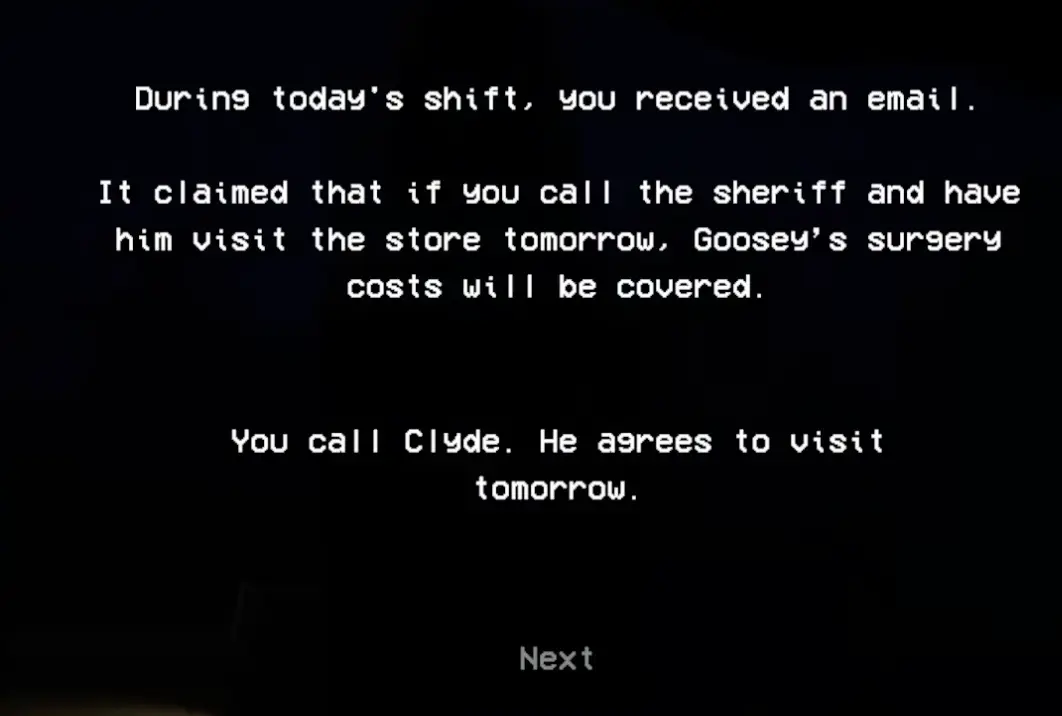
Quick Answer
Shift At Midnight has three Story Mode endings. The final branch comes down to two things: whether I call Clyde and whether I can cover the pet’s $250 surgery. For the True Ending, I do not call Clyde and reach the final veterinarian check with at least $250. Calling Clyde gives me Grave Decision, where the pet survives but Clyde dies. Refusing Clyde and reaching the vet below $250 gives me Empty Home.
The difficult part of the ending route is not finding a hidden final door.
It is deciding whether my money is actually good enough when the Clyde choice appears.
The first time I reached that point, I treated:
Don’t Call Clyde
as if it meant:
good ending
It does not.
Refusing the deal only protects Clyde.
I still have to solve the pet’s surgery problem myself.
How Many Endings Are There in Shift At Midnight?
There are three main Story Mode endings:
| Ending | Clyde choice | Surgery money | Pet | Clyde |
|---|---|---|---|---|
| True Ending | Don’t Call Clyde | At least $250 | Survives | Survives |
| Grave Decision | Call Clyde | Covered by the deal | Survives | Dies |
| Empty Home | Don’t Call Clyde | Below $250 | Dies | Survives |
That gives me a much simpler way to think about the finale.
There are really only two checks:
Did I call Clyde?
and, if I did not:
Can I personally pay the $250 surgery bill?
Everything I do during the final days is preparation for one of those two checks.
The Ending Route Starts When Surgery Replaces Medicine
The earlier pet treatment loop eventually stops being enough.
The veterinarian tells me that the pet now needs:
$250 for surgery
and that the operation has to happen within:
three days
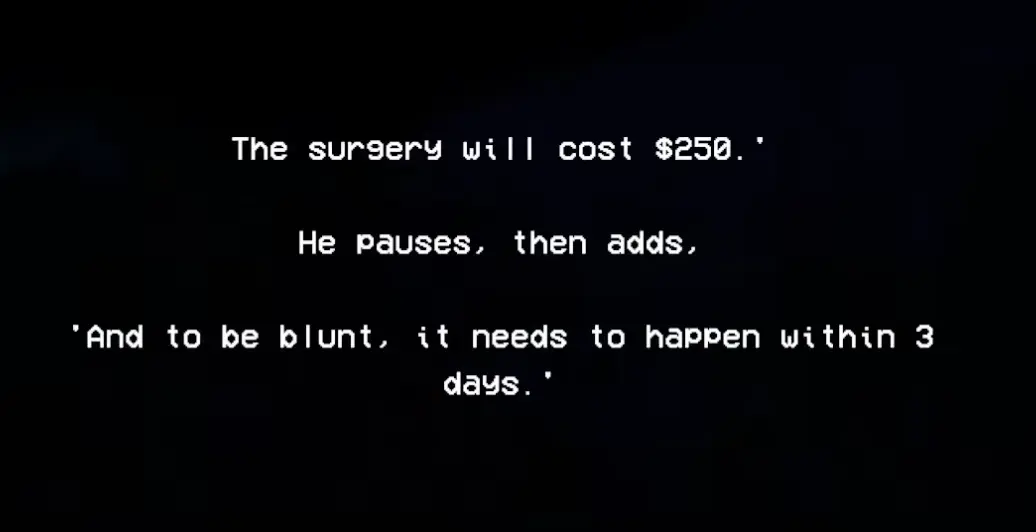
This is the first place I change how I play.
I stop asking:
Can I afford the next small expense?
and start asking:
How much personal money can I realistically reach before the final vet visit?
In one run, I had only:
$139
when the surgery requirement appeared.
That gave me three remaining days, but it was not enough of a cushion to assume the True Ending would happen automatically.
The earlier pet choice, medicine stages and when the pet can join a shift are better handled in my Pet Guide.
For this page, the important transition is:
medicine phase ends → $250 ending check begins
The Clyde Choice Appears Before the Final Shift
Later, with one final shift remaining, I receive the offer involving Sheriff Clyde.
The promise is simple:
Call Clyde and convince him to visit the store, and the pet’s surgery will be covered.
That sounds like an easy rescue route until I understand the cost.
Clyde is the sacrifice.
At this point I do not choose based on which option sounds morally better.
I look at my money first.
That is the practical difference between getting the True Ending and accidentally falling into Empty Home.
How to Get the True Ending
The True Ending is the only route where I save both:
- Clyde;
- the pet.
My route is:
- Reach the point where the veterinarian asks for the $250 surgery.
- Build as much personal money as I can during the remaining shifts.
- Reach the late Clyde decision.
- Choose Don’t Call Clyde.
- Complete the final shift.
- Reach the veterinarian with at least $250 available.
- Pay for the surgery myself.
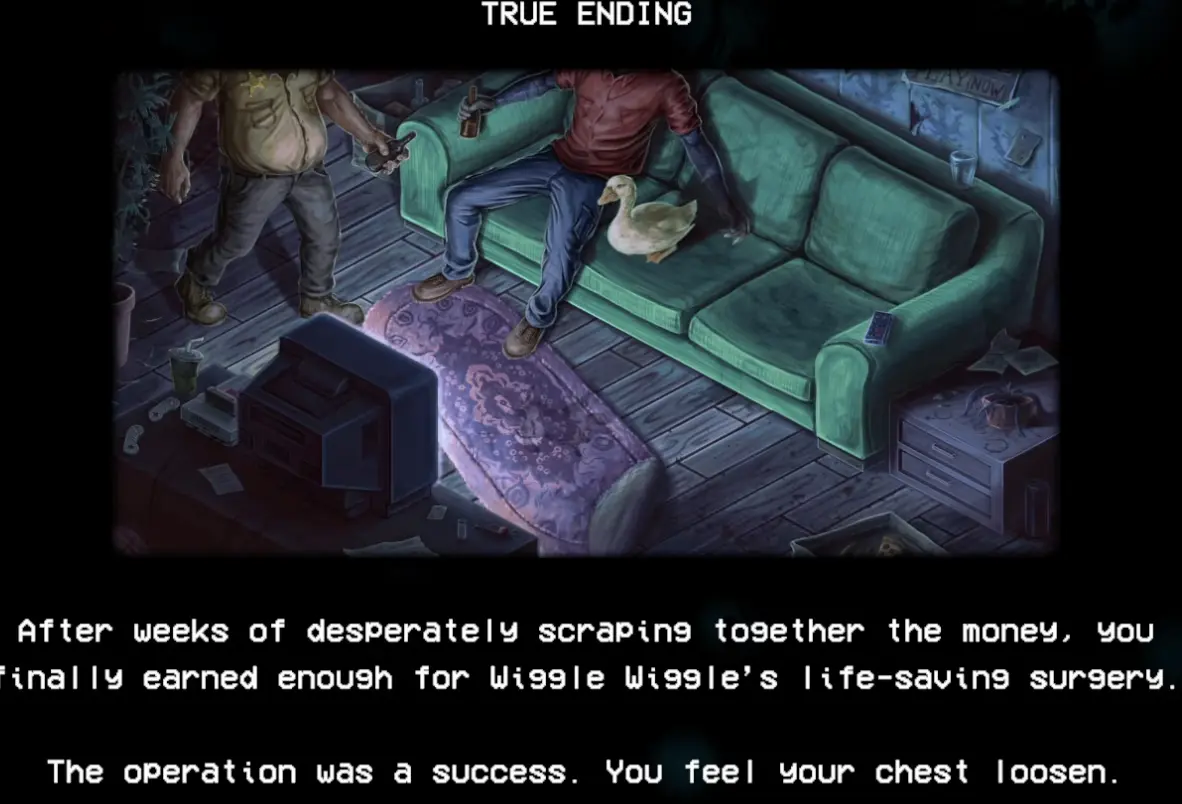
The True Ending result confirms the important part of the route:
the surgery succeeds, and Clyde is still alive afterward.
That is why I never call Clyde just because I am nervous about the final shift.
If I already have enough money, the offer does not improve the outcome.
It replaces the True Ending with Grave Decision.
I Do Not Treat Store Revenue as Personal Surgery Money
This is where I nearly misjudged the route.
The number I need for the surgery is my usable personal money.
It is not the same thing as saying:
I only need another $40 of store sales.
In completed shifts, I have seen a:
$10 daily wage
and I have used roughly:
10% of store revenue
as a planning estimate for additional personal income.
I do not treat that percentage as a guaranteed formula for every possible shift result.
I use it to understand the scale of the problem.
If I am $5 short, one decent final shift may be enough.
If I am $40+ short, I may need hundreds of dollars of actual store revenue before that gap becomes personal money.
That is a completely different risk.
A $42 Gap Was Still Too Risky for Me
This became very obvious in a co-op run.
Before the last day, we were still:
$42 short of $250
At first, that sounds close.
But once we compared the gap with the personal money we had actually been earning from shifts, it did not feel close at all.
We would have needed an unusually strong final store result.
Instead of assuming the last night would rescue the run, we chose:
Call Clyde
That run went on to confirm Grave Decision.
This is why I do not use one universal number like:
“If you are less than $50 short, never call Clyde.”
The better test is:
How much personal money have my recent clean shifts actually been adding?
If one normal result cannot cover the remaining gap, I stop pretending the money is already secured.
How I Protect the True Ending During the Final Shift
Once I refuse Clyde, I treat Shift 13 differently.
I am no longer trying to make the store look perfect.
I am trying to:
survive and finish as much reliable revenue as possible.
My priority becomes:
- survive the active threat;
- finish a customer already at checkout;
- finish a driver I have already started;
- verify uncertain people before shooting;
- clean only when the mess blocks useful movement or service.
I do not leave a nearly completed customer standing there while I chase an optional cleanup task.
I also do not start shooting because somebody merely looks strange.
One human kill in a co-op run was followed by a:
$15 loss
That is a meaningful mistake when the entire ending can depend on a small surgery-money gap.
If surviving the final night itself is the blocker rather than the ending choice, I use the Solo Guide for the broader shift-management route instead of turning this Ending page into another full survival guide.
I Still Buy What Keeps the Final Run Alive
I do not become so obsessed with $250 that I stop solving immediate survival problems.
The store economy and my ending money are not something I treat as one simple pile.
If I need an item to survive the final threat, I buy the item.
What I stop doing is wasting attention and resources on things that do not help me:
- serve customers;
- survive;
- complete the final shift;
- protect the payout.
The ending route is already long.
Saving a little store budget is worthless if the final night collapses.
How to Get Grave Decision
Grave Decision is the route where:
the pet survives, but Clyde dies.
To get it, I choose:
Call Clyde
when the late-story offer appears.
Then I finish the final shift.
The surgery is covered by the outside source as promised.
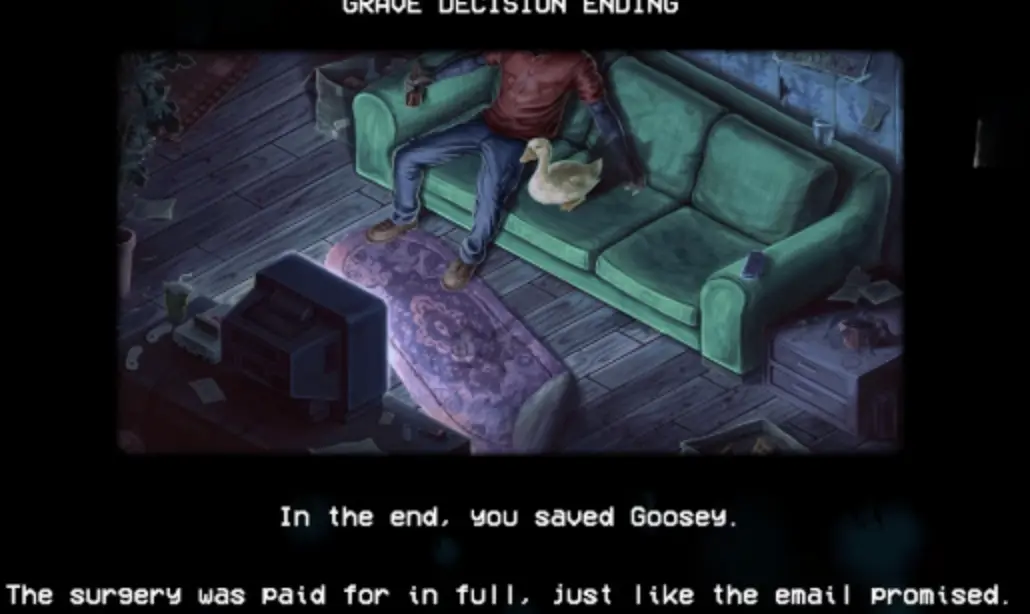
I use this route when I know the True Ending money check is no longer realistic.
That is exactly what happened in the co-op run where we were still $42 short.
We called Clyde.
At the end, the veterinarian reported that the surgery had already been paid by an anonymous source.
Then the game displayed:
Grave Decision
and confirmed Clyde’s death.
That gives me a very clean troubleshooting rule:
If I called Clyde, I should not expect the True Ending even if I later make enough money.
The Clyde branch has already changed the outcome.
How to Get Empty Home
Empty Home is the route I get when I protect Clyde but fail the surgery money check.
The path is:
- reach the Clyde decision;
- choose Don’t Call Clyde;
- complete the final shift;
- arrive at the veterinarian with less than $250;
- fail to pay for the surgery.
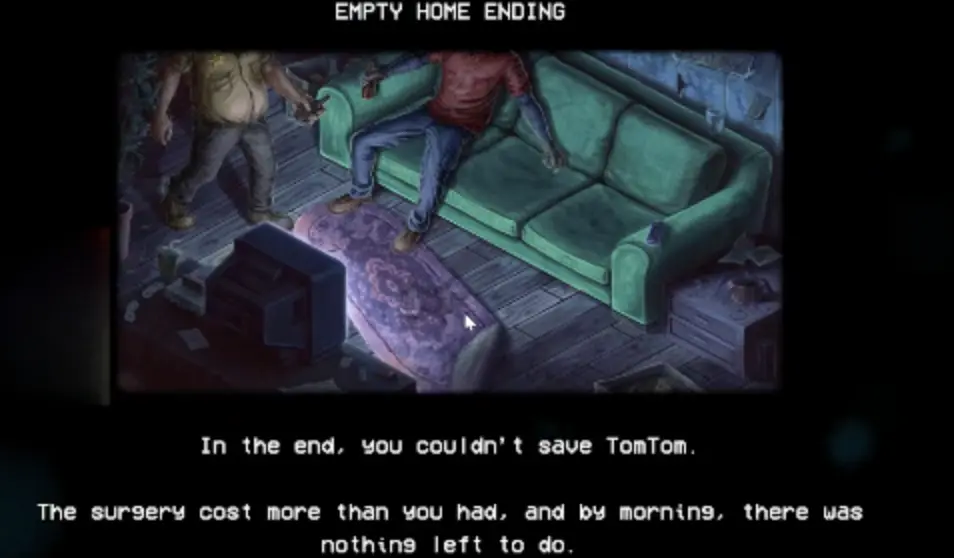
I have a very clear failed run for this condition.
When surgery was first announced, I had:
$139
I refused to sacrifice Clyde and kept playing.
By the time I reached the final veterinarian visit, I had:
$193
The bill was still:
$250
So I was:
$57 short
and could not pay.
The pet died.
Clyde remained alive.
That run is why I no longer tell myself:
“There are still a few shifts left, I’ll probably make enough.”
I calculate the gap.
Then I compare it with what my recent shifts are actually paying.
Should I Call Clyde?
I now make the choice this way.
I already have $250
I choose:
Don’t Call Clyde
There is no reason to sacrifice him when the True Ending condition is already covered.
I am only slightly short
I look at my recent personal payouts.
If one normal final shift should close the gap, I keep Clyde alive and play for the True Ending.
I am meaningfully short
I do not compare the gap to store revenue one-for-one.
If I need more personal money than one realistic shift is likely to produce, I call Clyde only if saving the pet is more important than keeping Clyde alive.
That moves me to Grave Decision.
I specifically want Empty Home
I refuse the Clyde deal and finish below $250.
I do not intentionally sabotage the whole run with random human kills just to lose money.
It is cleaner to enter the final branch with a naturally insufficient balance and complete the shift normally.
The Final Shift Can Save a Close Run, but Not Every Run
I do not require $250 at the exact moment the Clyde choice appears.
There is still one final shift.
That means a genuinely small gap may be recoverable.
But I do not treat Shift 13 as unlimited earning time.
Customers can:
- take too long;
- leave;
- become uncertain;
- get interrupted by threats;
- fail to turn into completed revenue.
And a wrong human kill can wipe away part of the money I was trying to gain.
So my rule is:
Use the final shift to close a small, evidence-based gap. Do not use it as an excuse for a bad financial position.
That one distinction prevents most accidental Empty Home runs.
My Safest Order for Getting All 3 Endings
If I want all three outcomes, I do the strictest one first.
Run 1: True Ending
I prioritize money early, refuse Clyde and reach the final veterinarian check with at least $250.
This is the route where mistakes matter most.
Run 2: Grave Decision
I call Clyde.
The pet’s survival no longer depends on reaching $250 personally, so this is the easiest branch to control deliberately.
Run 3: Empty Home
I refuse Clyde but stay below the surgery requirement.
Once I already have the other two outcomes, this becomes a simple cleanup run.
I do not build my plan around reloading one late save.
I have not verified that every platform, cloud-save setup or co-op host/client combination restores the Clyde decision cleanly.
If a backup works, that is useful.
I just do not assume it will save me from another Story Mode run.
The Ending Mistakes I Avoid Now
The mistakes that actually cost me endings are straightforward.
Assuming Don’t Call Clyde means True Ending
It only protects Clyde. I still need $250.
Calling Clyde after I already have enough money
That throws away the True Ending route and gives me Grave Decision instead.
Treating a $40 personal gap like $40 of store revenue
Personal earnings do not scale one-for-one with sales.
Trusting the final shift to rescue a large deficit
Shift 13 can close a realistic gap. It is not a guaranteed money farm.
Shooting an uncertain human late in the run
A wrong kill can remove revenue and create a deduction exactly when I need the money most.
Over-cleaning while customers are waiting
During the final money push, completed transactions matter more to me than a perfect-looking store.
The ending route became much easier once I stopped thinking of it as three hidden endings.
It is one final decision tree:
Call Clyde?
If yes:
Grave Decision.
If no:
Can I pay $250?
If yes:
True Ending.
If no:
Empty Home.
FAQ
Does killing a real human automatically block the True Ending? +
I have not confirmed a real-human kill as a separate hard lock on the True Ending. What I can verify is that killing a human can cost money; one run lost $15 after a human was killed, which matters when I am trying to reach the $250 surgery requirement.
Can I keep playing after a Shift At Midnight ending? +
Yes. Completed Story Mode runs can move into post-story endless play. Which characters or pets remain available depends on the ending you reached.