How Do You Find All 40 Dinosaur Bones on Catuaí in FS25?
Find all 40 dinosaur bones on Catuaí with a practical surface collection route, buried-bone cultivation tips, hidden locations, and museum rewards.
Updated:
Quick Answer
Start near the football pitch in Catuaí’s main village, then search the exposed dinosaur bones around the northwest fields, western farms, and coffee plantations. For buried bones, cultivate or plow fields you own, listen for the discovery sound, and collect each fossil revealed in the soil.
Catuaí has 40 dinosaur bones to collect. The hunt is divided into two parts: 25 exposed bones scattered around the map and 15 bones uncovered through fieldwork.
The exposed collectibles can be collected on foot, although some are concealed beneath trees, behind buildings, or among rocks. The buried bones require a different approach. Walking across a field will not reveal them; the soil must be worked first.
For the surface collection, the locations below are grouped into four practical search areas. Start near the football pitch, work through the northwest and western farms, then check the coffee plantations and the harder-to-spot locations.
You can follow these areas in order or visit whichever is closest to your current farm. Use the field numbers and nearby landmarks to find the general area, then search on foot.
Where Do You Find the First Dinosaur Bone?
Begin at the football pitch in Catuaí’s main village. Check the nearby buildings across the road, particularly the green-painted house with a small courtyard.
An exposed dinosaur bone can be found beside the house. Approach it on foot and use the collection interaction.
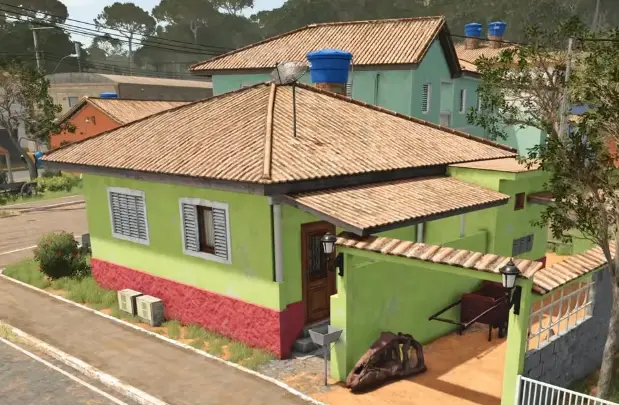
The first pickup introduces the dinosaur collection and shows 39 bones remaining.
Each collected bone awards 10,000 in your farm’s currency. The object disappears once collected, and your progress is recorded automatically.
There is no need to carry the bone to the Museum before collecting the next one.
What’s a Good Route for the 25 Surface Dinosaur Bones?
The exposed fossils are spread across several parts of Catuaí. Rather than searching every field individually, work through the larger areas and collect nearby bones before moving on.
A small vehicle is convenient for traveling between areas, but most pickups require only a short walk from a road, field edge, or building.
Route 1: Northwest Fields 87, 80, and 79
Start with the northwest part of Catuaí, around Fields 87, 80, and 79.
There are two exposed bones north of Field 87, fairly close to one another. One protrudes from the ground and can be recognized when approached from nearby. Search the surrounding grass and soil for the second before leaving.
Continue toward Field 80, where another exposed fossil lies around the field area.
From there, move north of Field 79 and look for the wooded trail. A bone is hidden beneath the trees near the path, blending into the surrounding vegetation.
The nearby oil-related facility and wooded ground also contain exposed collectibles. Check around the outside of the property and among the bushes rather than restricting the search to building entrances.
These locations are worth collecting together. You do not need agricultural equipment for the exposed bones, and the wooded trail is easier to inspect on foot.
After checking the wooded trail north of Field 79 and the nearby oil facility, open the PDA and locate Field 25. Use it as the starting landmark for the next group of surface bones.
Route 2: Field 25, Farmland 103, and the Western Roads
Continue through the countryside around Field 25.
An exposed bone can be found south of the field, sticking out of the ground. Two more were collected farther south in the surrounding area. Search the nearby vegetation before driving away.
Then head toward Farmland 103. One fossil is located near an outdoor umbrella around the property, with another farther south.
From this area, check the following recognizable landmarks:
- Field 64: Near the railway tracks, around a small outdoor cooking area.
- West of Field 48: Beside the gas station, where a backbone-shaped fossil is visible.
- Area 174: An exposed bone around the numbered map area.
- Farmland 104: Outside a house near the property.
You can visit these locations during ordinary travel through the western part of Catuaí. The railway, gas station, and houses are more useful landmarks than trying to match an exact ground coordinate.
Be careful when using the PDA. Field numbers and farmland parcel numbers identify different things, so switch to the appropriate map view when a number does not match the land you are standing beside.
For help locating the surrounding farms, facilities, and connecting roads, use the Catuaí map guide.
Once you have checked the railway, gas station, and houses around Farmland 104, move toward Field 7 and the coffee-growing area. Look for the established plantations around Farmland 105 before starting the next search.
Route 3: Field 7 and the Coffee Plantations
Next, search around Field 7 and the established coffee-growing area.
A large exposed bone can be found near a tree around Field 7. Look at the ground immediately beside the tree before moving farther into the surrounding farmland.
Continue toward Farmland 105 and the coffee plantations north of Field 91. Several fossils were collected around this area, including bones partly concealed by plants and surrounding vegetation.
Coffee rows can make this section awkward to cross. You may need to walk around the ends of the rows or jump between them to reach the ground where a fossil is hidden.
Leave your vehicle near an accessible edge and inspect the area on foot. Bringing a large harvester or trailer through the plantation will not make the exposed bones easier to collect.
Check the field edges and nearby vegetation rather than assuming every collectible lies directly between two coffee rows.
After searching the coffee plantations, the remaining stops in this circuit are the harder-to-spot locations around the riverbank, sanctuary, and rocky ground north of Field 70. Use the PDA to reach each area, then search on foot.
Route 4: Riverbank, Sanctuary, and Field 70
Finish the surface search by checking the locations most likely to be missed during ordinary exploration.
The riverbank
One bone is concealed beneath the edge of a riverbank, among large leaves and surrounding rocks. From the upper ground it can be difficult to see.
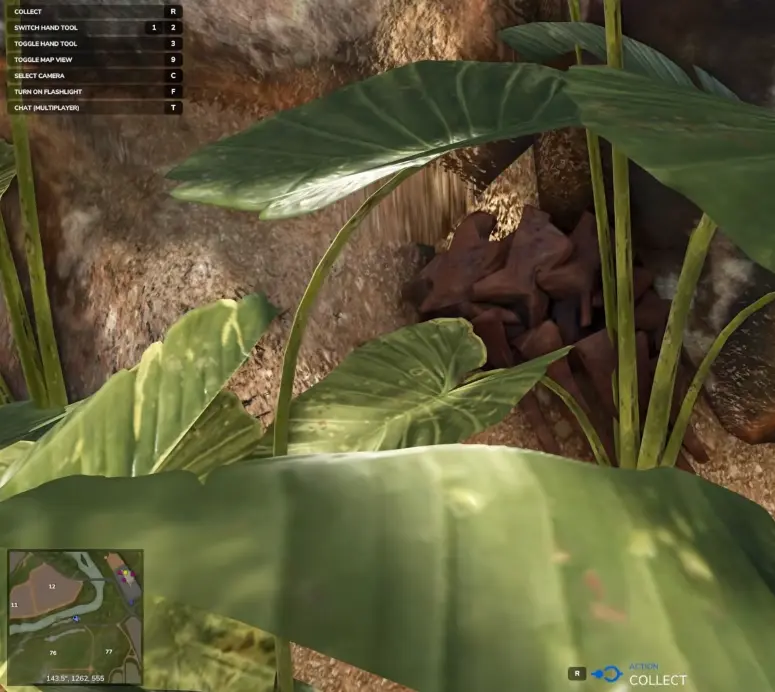
Walk along the bank and inspect the lower ground. The collectible is positioned close enough to the vegetation that looking only from the road or upper path may miss it.
The sanctuary
Another exposed bone can be found around a house near the sanctuary. Check the outside of the property, including the ground near the building and its immediate surroundings.
North of Field 70
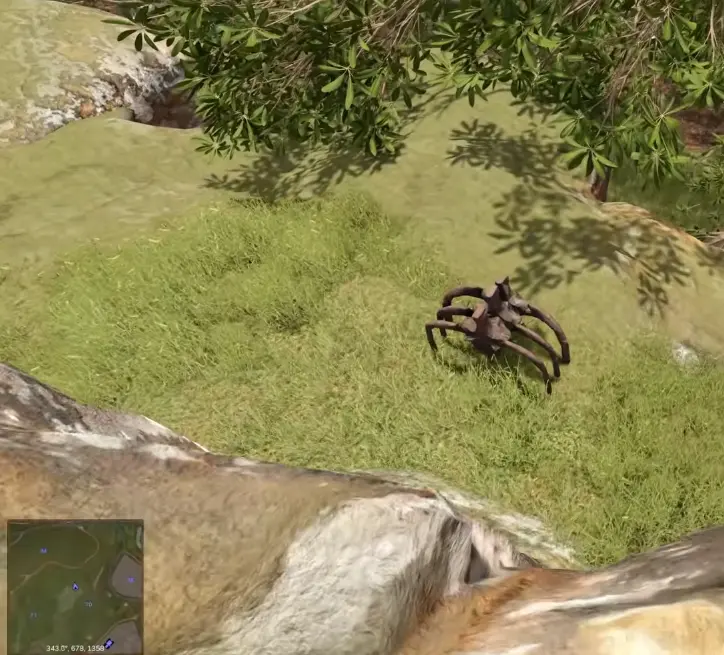
A particularly well-hidden fossil is located in raised, rocky terrain north of Field 70.
The bone is not on the lower field edge. Climb onto the elevated ground and search the small grassy clearing among the rocks and trees.
This is a good location to revisit if you have been searching around Field 70 without finding anything. Driving around the field boundary will not bring you directly to the collectible.
Other exposed bones can also be tucked around small industrial yards, roadside structures, and vegetation near buildings. Before assuming that every remaining bone must be uncovered through cultivation, check the small factory yards, roadside structures, and vegetation around buildings for missed surface collectibles.
After checking these regions, move on to the buried bones. Do not spend hours revisiting an exposed location when the missing collectibles may still be underground.
How Do You Find the 15 Buried Dinosaur Bones?
The remaining bones are uncovered through agricultural fieldwork rather than by visiting fixed roadside or building locations.
Use a cultivator or plow on land you can work. As the implement passes over the soil, a buried dinosaur bone may become visible behind the machine.
A distinctive discovery sound plays when a fossil is uncovered. That sound is your cue to stop, inspect the freshly worked area, and collect the bone on foot.
The basic process is:
- Start cultivating or plowing an agricultural field.
- Watch and listen for a newly uncovered fossil.
- Stop the vehicle and inspect the worked soil.
- Approach the bone and use the collection interaction.
- Resume fieldwork after confirming the remaining count has decreased.
Which Fields Have Produced Buried Bones?
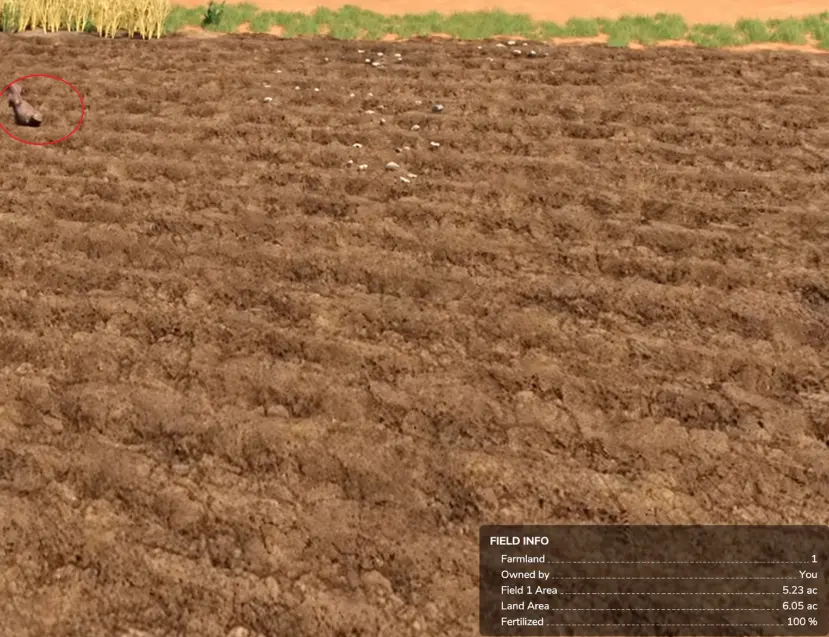
Buried fossils have appeared during fieldwork in Fields 1, 2, 5, 6, 8, 10, 11, 13, and 25.
These are useful examples of where discoveries occurred, but there is no need to buy every one of these fields specifically for the collection.
Several discoveries illustrate how the system behaves:
- Field 1: A large bone appeared during cultivation.
- Field 6: Two bones were found while working the same field.
- Field 13: Another bone appeared during later work after an earlier discovery.
- Field 25: Two bones were uncovered during the final part of the collection.
A large exposed fossil was also found beside the road near Field 35. Check the roadside if you are working nearby, but do not assume that this particular bone requires cultivating the field.
The most economical approach is to search while preparing land you already own. Buying unfamiliar farmland solely because another collection was made there can be an expensive detour.
How Much Cultivation Is Needed?
Buried-bone discoveries are tied to agricultural fieldwork, rather than simply walking over a predetermined location.
A useful estimate is about one buried bone per 0.75 hectares of cultivation. Treat this as an approximate discovery rate, not a promise that a bone will appear at the exact moment the counter reaches another 0.75 hectares.
You can check your cultivated area in the game’s Statistics menu.
Larger areas provide more opportunity for discoveries, but repeatedly cultivating soil that has already been prepared is not an effective way to force additional bones. Work fresh eligible ground during normal crop preparation.
An AI worker can also uncover bones while cultivating, although you still need to locate and collect the exposed fossils.
Prefer your own fields. Contract work should not be treated as a reliable method of progressing this collection.
What If Cultivation Stops Producing Bones?
If you have already uncovered five buried bones in the current session and further eligible cultivation produces nothing, save and reload before continuing.
Before spending money on more farmland, check whether previously uncovered bones are still lying on the soil. The discovery sound does not complete the pickup, and repeatedly working already prepared ground will not provide a useful alternative.
Why Can’t You Find the Last Dinosaur Bones?
The remaining counter shows how many bones are missing, but it does not tell you whether they are exposed collectibles or buried discoveries.
Three situations are particularly common.
You Heard a Discovery Sound but Cannot See the Bone
Stop the tractor and search the freshly worked strip, including the ground behind the implement.
A wide cultivator can reveal an object while your view is focused ahead. The fossil may remain on the soil after the vehicle has passed.
Do not rely entirely on a yellow map marker. Find the physical object and collect it before continuing.
You Found One Bone and Left the Field
Return to any field where you stopped working immediately after the first discovery.
A field can reveal more than one bone. Finish the remaining eligible ground before moving to another location; returning later with agricultural equipment only adds unnecessary travel.
You Have Finished Cultivating but Still Need a Few Bones
Check your exposed-bone locations again before committing to more agricultural work.
The easiest places to overlook include:
- The wooded trail north of Field 79.
- The riverbank beneath large leaves.
- The vegetation around the coffee plantations.
- The elevated rocky clearing north of Field 70.
- Small courtyards, roadsides, and industrial buildings.
The final missing bone may be sitting above ground, even after a long period of searching agricultural fields.
If the exposed locations are already cleared, return to eligible cultivation and check whether you have reached the current session’s buried-bone limit.
What Do You Get for Collecting All 40 Dinosaur Bones?
Each collected dinosaur bone awards 10,000 in your farm’s currency. Collecting all 40 provides 400,000 in total pickup rewards.
The fossils also contribute to the Giganotosaurus skeleton displayed at Catuaí’s Museum. The exhibit gradually fills in as more pieces are collected.
The Museum is in the main village near the football pitch. It is separate from the Research Centre construction project elsewhere on the map.
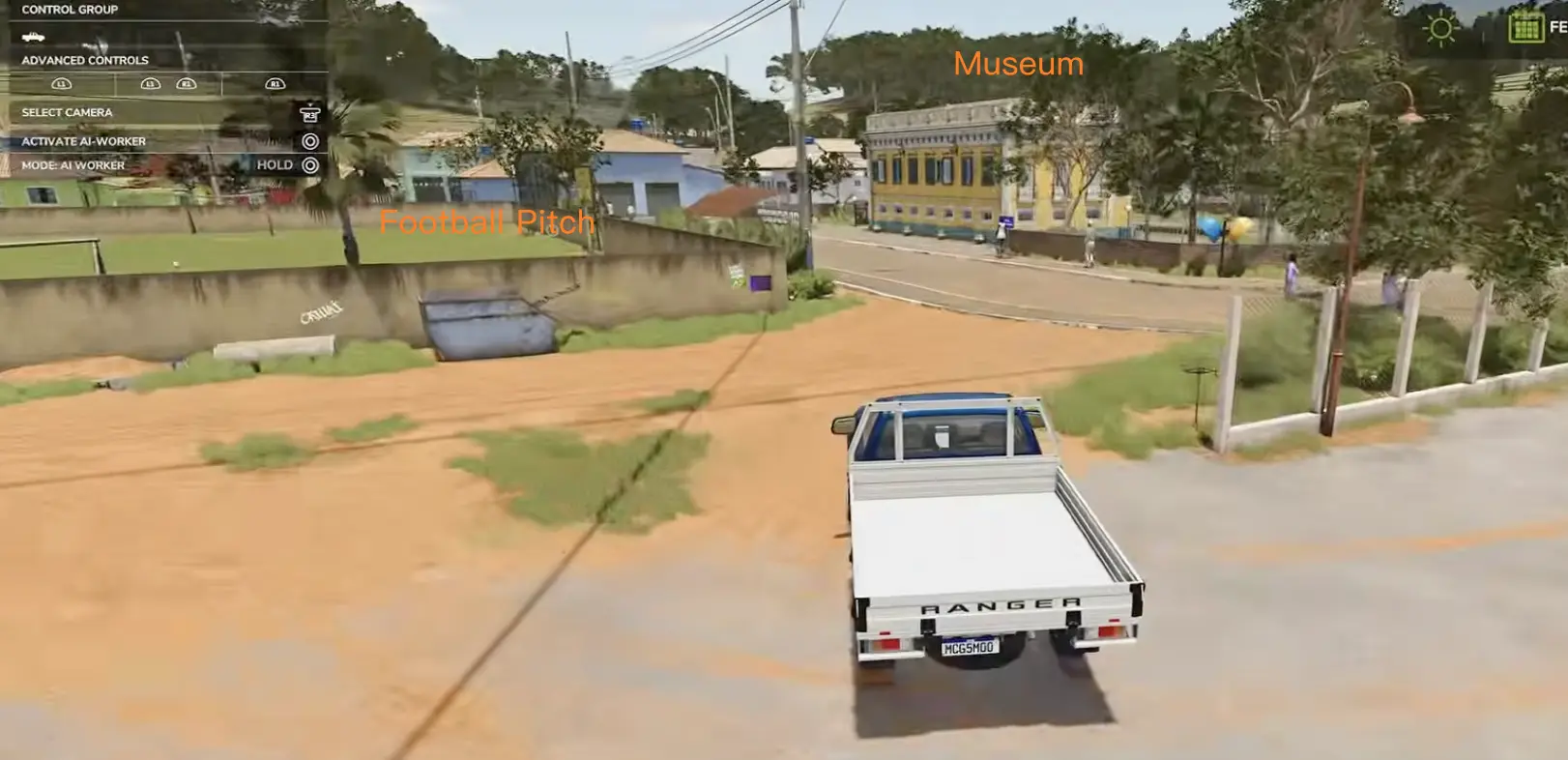
You do not need to deliver the bones to the Museum manually. Each pickup contributes to the collection automatically.
Completing the skeleton also unlocks a special wearable reward.
When the final fossil is collected, the game displays the message:
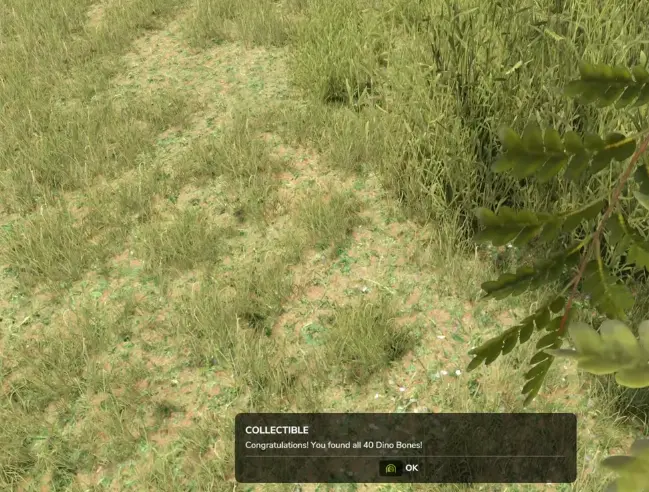
“Congratulations! You found all 40 Dino Bones!”