How Do You Grow, Harvest, and Process Coffee in FS25?
Grow coffee in FS25 with the right plantation layout, fertilizer, fungicide, harvesters, and processing facilities. Learn how to turn coffee cherries into bags, capsules, and other products.
Updated:
Quick Answer
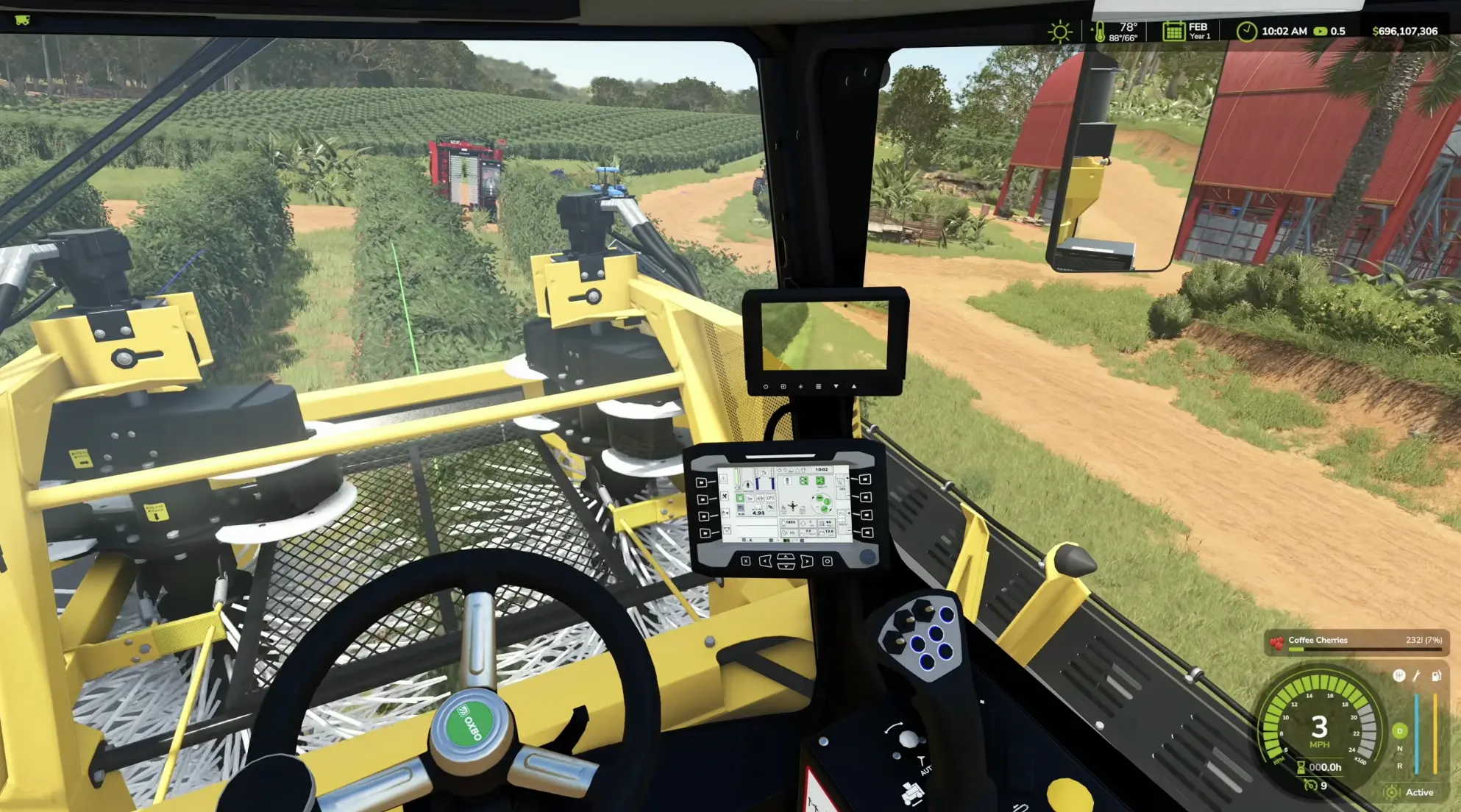
Open Construction → Productions → Cultivation → Coffee to establish a plantation, or use an existing coffee field. Fertilize the plants and treat diseased rows with a coffee-configured fungicide sprayer when required. During the harvest season, use an Oxbo or Case IH coffee harvester to collect Coffee Cherries, then deliver them to a Coffee Processing Plant to make Coffee Bags.
A coffee plantation can look ready long before it is worth bringing a harvester into the rows. The crop has its own growing season, diseased plants can remain visibly different from healthy ones, and the harvesting machines are slow enough that an unnecessary trip across Catuaí becomes a substantial detour.
The expensive part is not simply putting coffee plants in the ground. You also need a suitable harvester, a practical way to collect Coffee Cherries, and somewhere to sell or process the crop afterward. Coffee Bags open several production routes, but each additional factory ties up money and reduces or transforms the amount of material you carry forward.
How to Plant Coffee Without Wasting Space
Coffee uses the plantation construction system rather than an ordinary seed drill. Open the construction menu, select Productions → Cultivation → Coffee, and choose whether to define the planting area with a boundary or place individual rows.
The boundary tool is particularly useful on large or irregular fields. Draw around the area you intend to plant, finish the boundary, and then adjust the row direction before confirming construction. The rows can be aligned with the longest workable edge, which makes subsequent fertilizing, spraying, and harvesting easier.
One 3.46-acre plantation used a 40-degree row direction to fit 31 planting rows, with a displayed construction cost of $130,585. The angle was chosen for that particular field, not as a universal setting for coffee plantations.
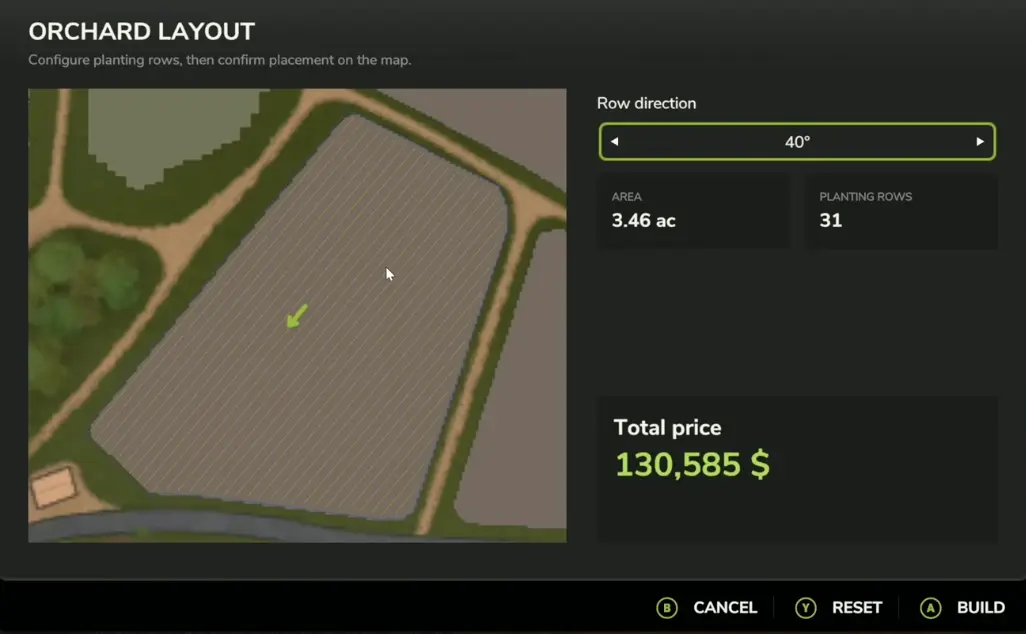
Check the ends of the proposed rows before purchasing. Coffee harvesters need enough space to turn and align with the next pass. Placing the boundary too close to a road or obstruction can leave an awkward section that takes longer to harvest than the crop justifies.
Individual coffee rows can be removed afterward, but correcting the layout before construction avoids paying for plants that immediately need to be deleted.
Should You Plant Coffee or Buy an Existing Field?
Buying an existing coffee field saves the cost of constructing new plantation rows, but the farmland itself still requires a substantial investment. Check the growth state, field condition, and access between the rows before purchasing. A poorly arranged plantation may be more expensive to work than a smaller one you build yourself.
For existing coffee fields and nearby processing facilities, use the Catuaí map.
When Can You Harvest Coffee on Catuaí?
With the Catuaí seasonal calendar enabled, coffee is harvested in May, June, July, and August. The planting calendar shows September through November as the normal planting period, although the plantation construction system can place new rows outside that window following the vineyard placement changes introduced with Update 1.25.
Planting is not the same as immediately growing or harvesting. A newly constructed plantation can initially display a harvested state. It still needs to advance through its growth stages before the Coffee Cherries are ready.
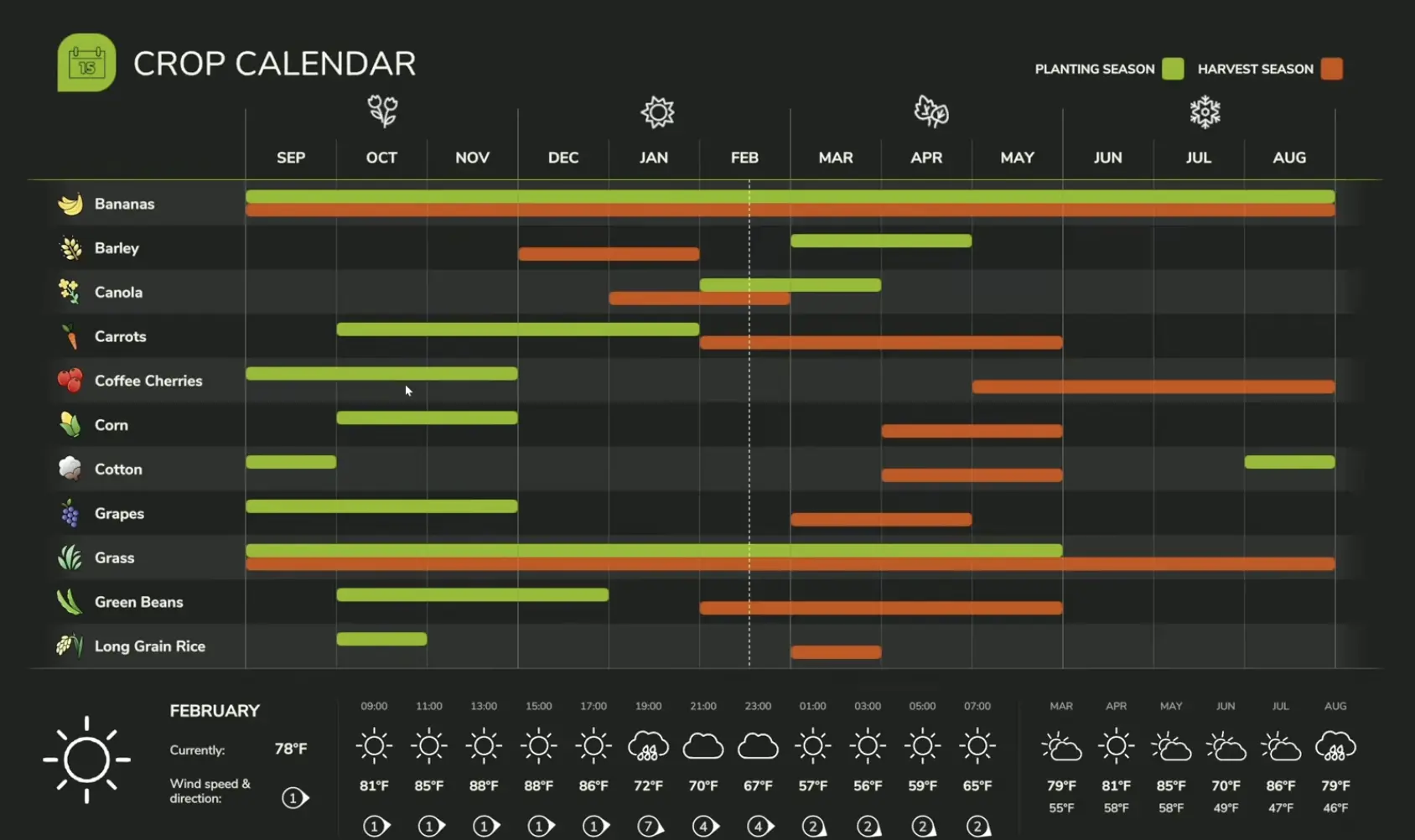
With Seasonal Growth enabled, use the May–August harvest window as your timing check, then confirm that the coffee field actually shows Ready to harvest. A newly planted field will not produce Coffee Cherries simply because the calendar reaches a harvest month.
Delay purchasing or transporting the dedicated harvester until the crop is ready. Money committed to an idle machine cannot be used for fertilizer, fungicide, or preparing the next production stage.
Fertilizing Coffee and Treating Diseased Plants
Coffee can be fertilized with conventional vineyard-compatible equipment. You are not restricted to a single new fertilizer spreader.
The KUHN ACCURA 1200 is one option for solid fertilizer, with a row-spreading configuration suitable for narrow plantation work.
Keep the spraying tractor aligned with the coffee rows; the remaining space between plants matters more than choosing a particular tractor model.
Steering Assist can align the tractor with the coffee rows, making repeated passes less tedious. It is particularly useful on long plantations, where a small alignment error can put the implement in an awkward position against the next row.
How to Recognize Coffee Orchard Disease
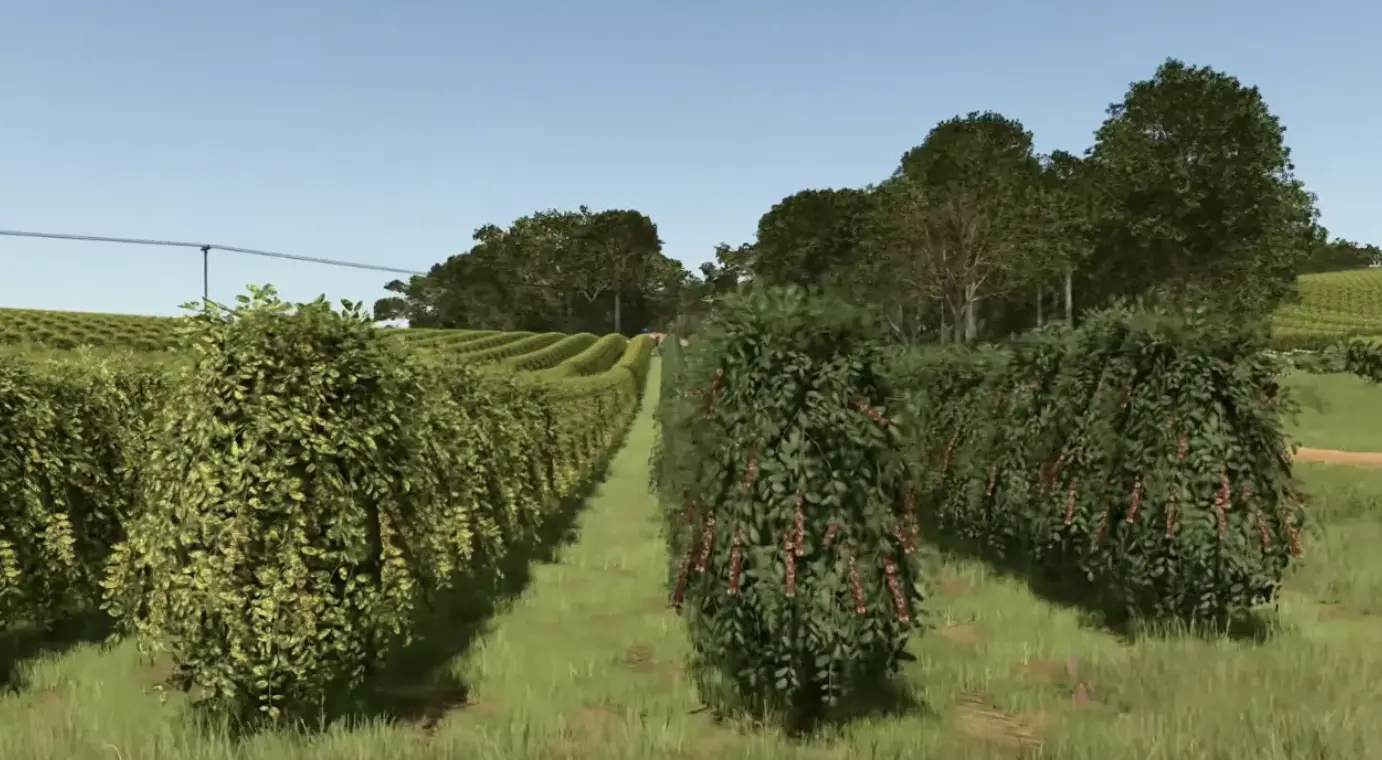
With Orchard Disease active, affected coffee plants develop a yellowish, unhealthy appearance during growth. Untreated plants become progressively rougher-looking as the crop matures, while healthy plants remain green and develop normal Coffee Cherries.
The disease may be visible before the harvest period, when there is still time to treat it. Check the foliage and the field status rather than waiting until the cherries are ready.
How to Apply Fungicide to Coffee Rows
Coffee plants should be treated while the affected rows are still in a suitable growth stage. Before entering the orchard, fill the KUHN AFS 600 with fungicide and switch it to the Coffee configuration.
Drive along the affected rows, directing the spray toward the foliage. After completing a pass, inspect the treated plants before moving to the next section of the orchard.
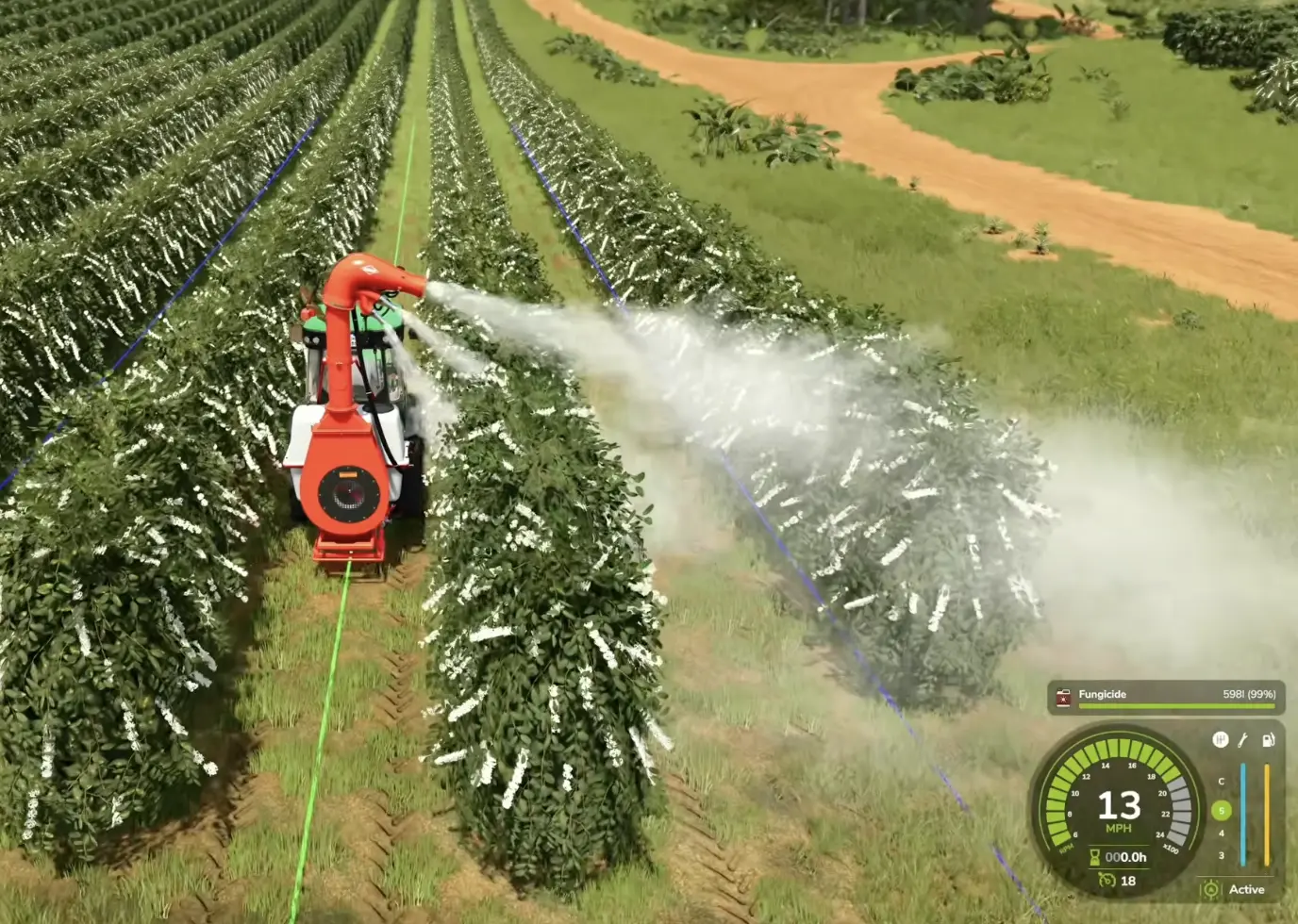
One treatment pass visibly changed diseased yellowish plants back toward a healthy green condition. That provides a useful way to check whether the spray actually reached the intended rows.
You can treat neighboring rows by adjusting the spray direction and driving the appropriate lane. On a larger plantation, the number of passes matters; leaving alternating rows untreated defeats the purpose of spraying in the first place.
Fungicide can still work during a late growth stage, but it no longer treats the affected plants once they reach Ready to harvest. Complete the disease treatment before advancing the crop into its final harvest state.
Do the disease check before advancing into harvest. The machine purchase can wait; a missed treatment window cannot always be recovered by simply driving through the field again.
Fungicide and fertilizer also perform different jobs. A crop that has received disease treatment may still require another fertilizer application before reaching its desired field condition.
Which Coffee Harvester Should You Buy: Oxbo or Case IH?
The Beans & Alpacas expansion includes two dedicated coffee harvesters: one from Oxbo and one from Case IH.
They are similar in the main task they perform, but their unloading arrangements differ. That distinction can matter more than a small difference in power when you are working in narrow plantation rows.
| Choice | Oxbo | Case IH |
|---|---|---|
| Coffee harvesting | Supported | Supported |
| Harvesting speed shown | 3 mph | 3 mph |
| Hopper capacity | 3,000 L | 3,000 L |
| Unloading auger | Right side | Left side |
| Relative purchase cost | Higher | Lower |
| Main practical advantage | Preferred right-side unloading arrangement | Preferred left-side unloading arrangement |
Both machines are slow while harvesting. Their higher road travel speeds do not change the actual speed of the coffee-collecting operation.
For most farms, choose according to the side on which your collection trailer can operate. A harvester that unloads toward the available path saves repositioning and makes it easier for another vehicle to collect Coffee Cherries alongside the working machine.
The Oxbo costs more and has greater listed power and weight. The Case IH is the less expensive alternative. Neither machine has demonstrated a meaningful increase over the other’s normal harvesting speed.
There is little reason to purchase both unless you already operate enough coffee acreage to keep two machines working.
Do You Need the Colombo CTG 4500 Trailer?
The Colombo CTG 4500 is a compact trailer intended to work in the tight spaces around coffee rows. Its 4,500 L capacity makes it easier to maneuver than a large general-purpose tipper, but it also requires more frequent unloading.
The CTG 4500 carries Coffee Cherries. Other compatible tipper trailers can transport them too, so the Colombo is not a mandatory purchase for every farm.
A compact trailer is useful when a second tractor needs to drive between narrow plantation rows and collect from the harvester’s unloading auger. If your existing trailer can approach the harvester from the edge of the plantation, buying another trailer may simply add an unnecessary expense.
The right purchase depends on how the rows are arranged and how often the harvester must stop to unload.
How to Harvest Coffee Cherries
Wait until the plants are ready for harvest, bring the selected harvester to the field, and align it with the first row.
Enable the harvester and drive forward at its working speed. Coffee Cherries accumulate in the machine’s hopper as it moves through the plants.
Steering Assist can align the vehicle with a row, reducing corrections during the harvesting pass. At the row’s end, turn around and line up with the next usable lane.
Why Won’t the AI Worker Harvest Coffee?
Steering Assist and ordinary AI Worker harvesting are not the same function.
During a coffee harvest, the AI Worker interface offered a Go To option but did not offer a normal hired harvesting task for the machine. The harvester could still be aligned with Steering Assist, but that did not turn it into an automatically operated harvester.
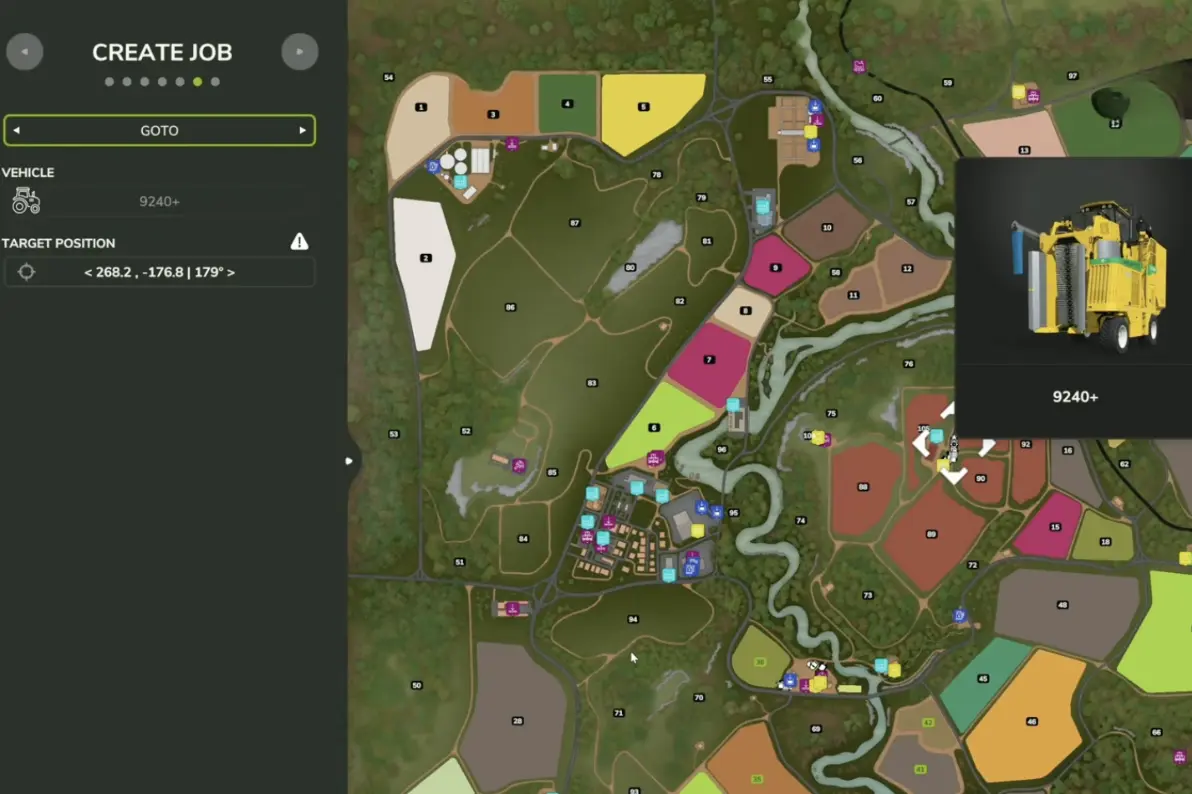
This affects how much land you should buy. A large coffee plantation may be cheap to plant relative to its long-term revenue, but clearing every row at the harvester’s working speed requires substantial driving time.
For a single-player farm, plan around operating the harvesting machine yourself unless your current worker menu provides a supported harvesting task.
Unloading Without Repeatedly Leaving the Field
Both harvesters have unloading augers, allowing Coffee Cherries to be transferred into a compatible trailer without waiting until you reach a fixed unloading point.
The Oxbo’s auger extends toward the right, while the Case IH unloads toward the left. The correct trailer position therefore changes with the machine you choose.
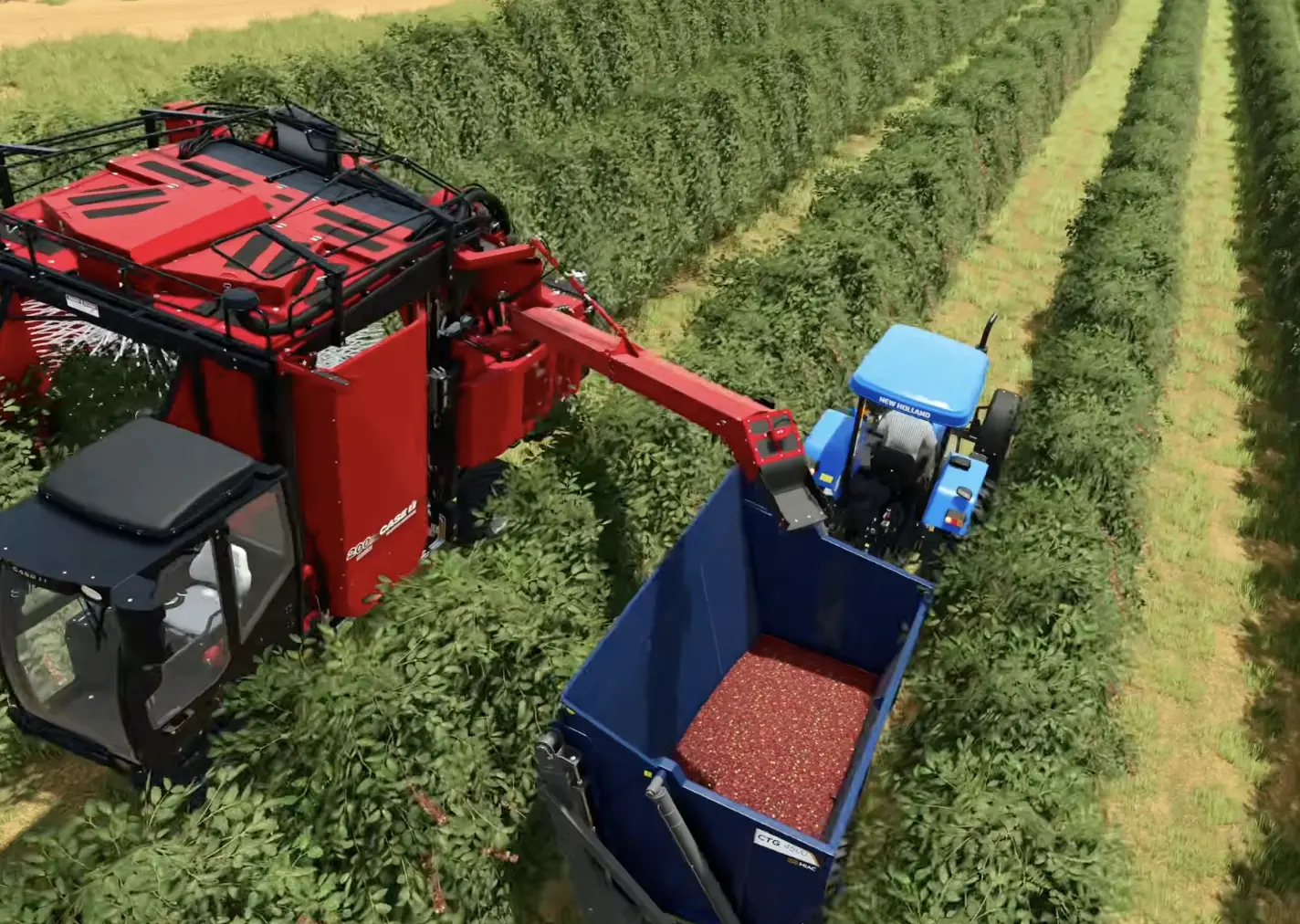
Allow the unloading animation to complete before assuming the auger is ready. The Case IH auger takes a little longer to extend than the Oxbo’s in the demonstrated operation.
On narrow rows, use a compact collection vehicle or bring a larger tipper to the field edge. Driving an oversized trailer into the plants can make the unloading arrangement harder than the harvesting pass itself.
One Oxbo harvest produced fewer than 1,000 L of Coffee Cherries across three initial passes. That result reflects the particular field and its crop condition, not a standard yield per row. With a 3,000 L hopper, there was still room to continue harvesting before unloading.
Once the Coffee Cherries are loaded, the next choice is whether to sell them immediately or begin processing.
How to Turn Coffee Cherries Into Coffee Bags
Coffee Cherries are the crop obtained directly from the harvester. They are not yet the finished coffee products sold through later production chains.
You can sell them directly at a suitable selling point such as the Farmers Market, avoiding the expense of owning a production facility.
To make Coffee Bags, deliver the cherries to a Coffee Processing Plant, own or acquire the facility as required, and activate the corresponding production.
The existing Catuaí processing plant can be purchased. One easy-economy configuration displayed a price of approximately $375,500 and storage capacity of 120,000 L of Coffee Cherries.
Those figures are tied to the displayed economy configuration and should not be treated as fixed across every game setting.
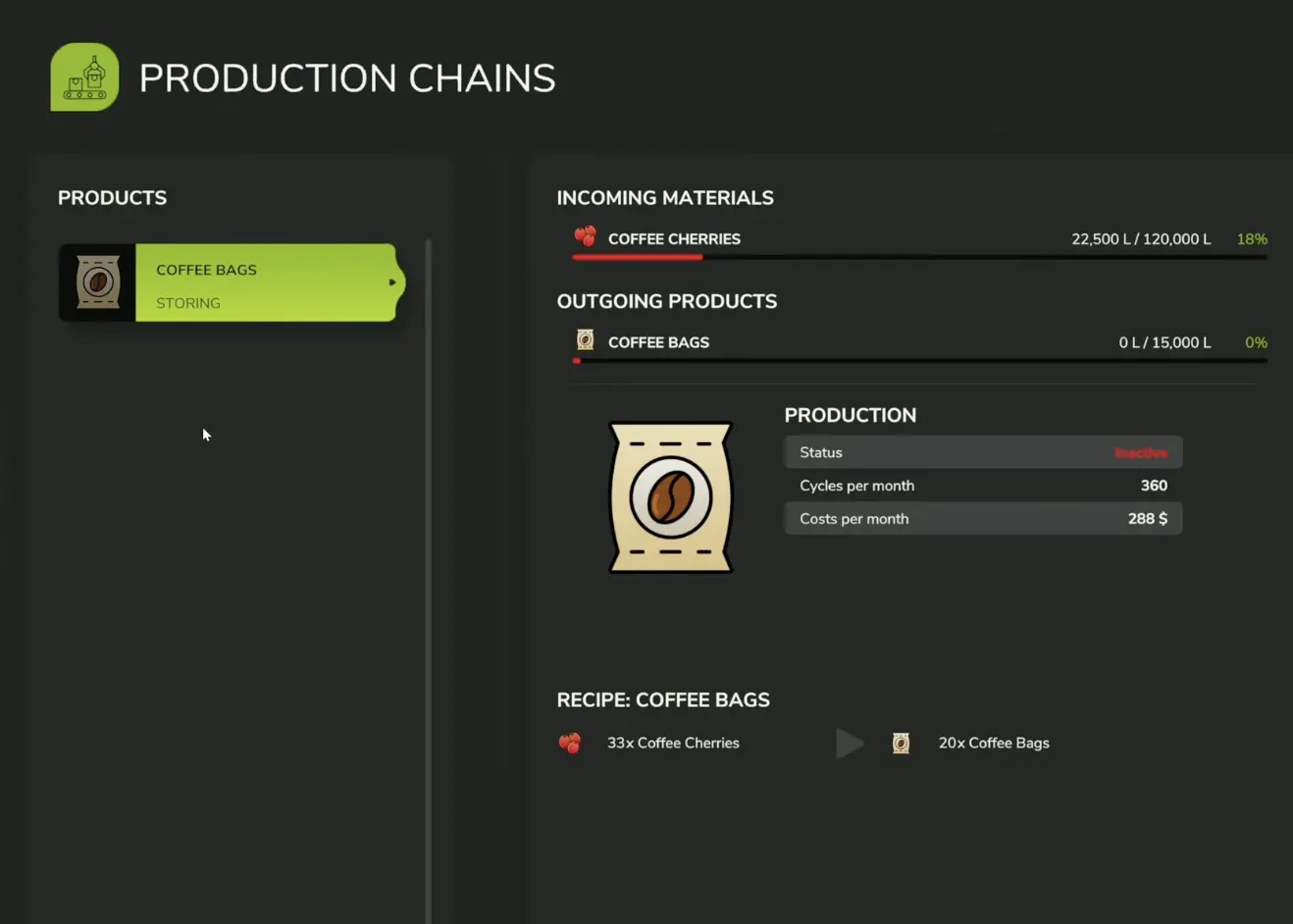
At the processing plant, unload the cherries at the designated delivery point. Check the production menu for the increased input inventory instead of relying on the building’s exterior animation, which does not necessarily change with the quantity delivered.
Activate Coffee Bags production and allow the facility to process its inventory. The finished product appears as bagged coffee, ready for sale or delivery to another facility.
How Can You Tell Whether Coffee Cherries Were Delivered?
A tall-sided trailer can make the unloading animation appear misaligned even when the Coffee Processing Plant accepts the delivery. The visual position of the transfer equipment is not always a reliable indication of whether the cherries entered storage.
A lower trailer may align more naturally with the unloading equipment, but changing trailers is unnecessary if the plant’s incoming Coffee Cherries inventory has already increased.
When a delivery seems unsuccessful, check the following in order:
- Confirm that the trailer contains Coffee Cherries, not an already processed coffee product.
- Move the trailer into the correct unloading trigger.
- Use the available unload interaction.
- Check the Coffee Processing Plant’s stored Coffee Cherries afterward.
The inventory change is the important result. A visual mismatch in the animated unloading equipment does not always mean the material transfer has failed.
Coffee Processing Conversion
The Coffee Bags recipe shown at the processing plant used:
33 Coffee Cherries → 20 Coffee Bags
That is a production input-to-output ratio, not a promise that every 33 harvested liters instantly become 20 finished liters. The plant must complete its processing cycles, and its throughput depends on the production settings.
Because the output quantity is lower than the input quantity, comparing price per 1,000 L alone will give a misleading impression of profitability.
For example, a Coffee Bag selling price more than twice that of Coffee Cherries does not automatically mean twice as much money from the original harvest. Apply the conversion ratio first, then account for the plant’s operating costs and processing time.
Coffee Capsules or Packed Coffee: Which Should You Make?
Coffee Bags can be sold directly or sent to a Coffee Roastery for further processing.
The roastery offers two important products:
- Coffee Capsules: 100 Coffee Bags → 60 Coffee Capsules.
- Coffee Packed: 100 Coffee Bags → 80 Coffee Packed.
The distinction is material efficiency. The capsules recipe produces less output volume from the same amount of Coffee Bags, while the packed-coffee recipe retains more.
In the easy-economy prices shown, Coffee Capsules could reach roughly $16,900 per 1,000 L, while Coffee Packed could reach roughly $12,000 per 1,000 L.
Those prices make capsules look like the obvious winner until you account for the different conversion ratios.
From 100 units of Coffee Bags:
- 60 units of capsules valued at $16,900 per 1,000 L represent $1,014 of gross sale value at that price.
- 80 units of packed coffee valued at $12,000 per 1,000 L represent $960 of gross sale value at that price.
That is only a comparison of the two outputs at the displayed selling prices. It excludes operating expenses, selling-price changes, and any later production. It is not a net-profit calculation.
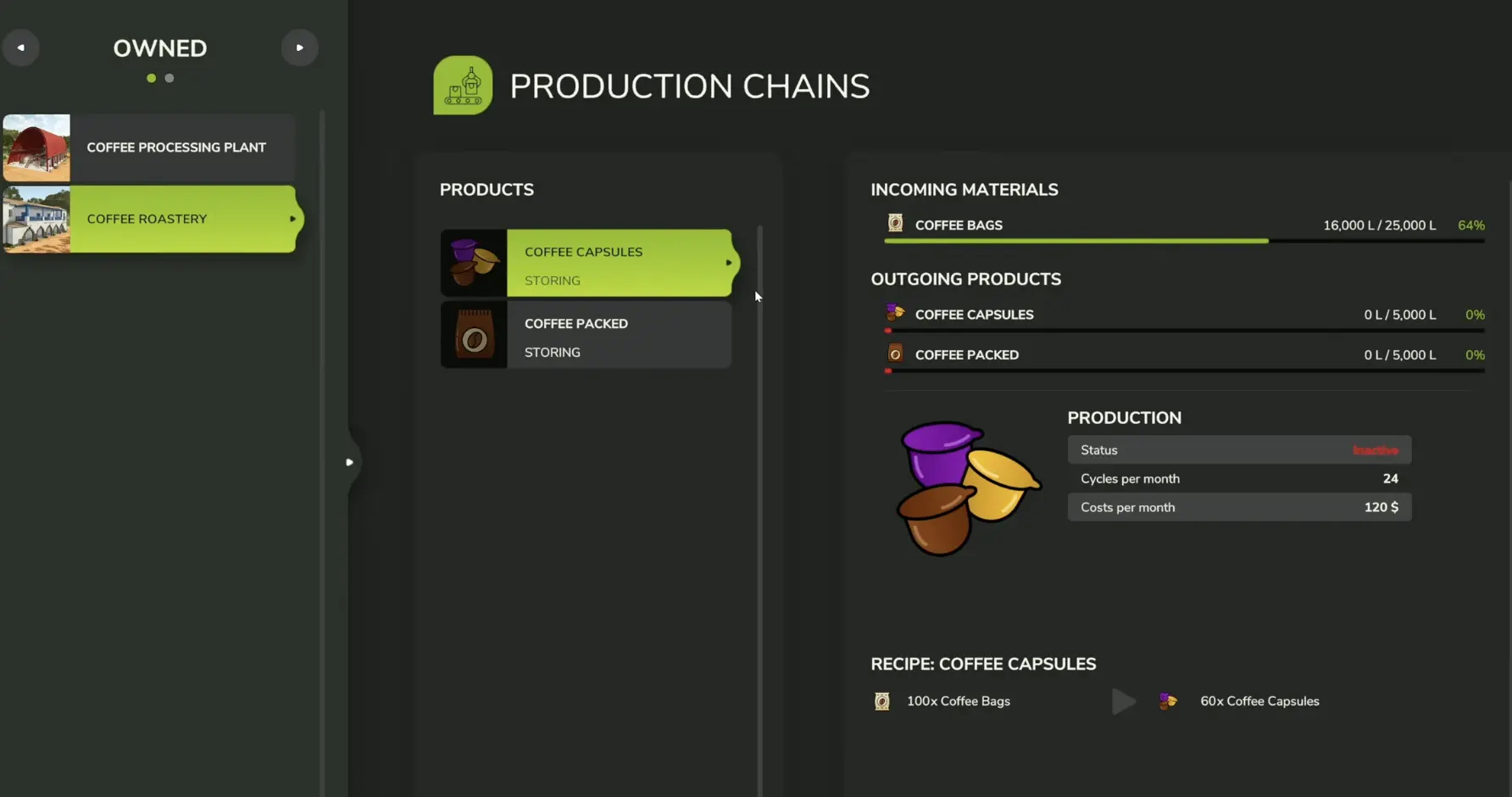
The example roastery was available to purchase for approximately $145,000. Acquiring that facility adds another substantial investment after the Coffee Processing Plant.
A farm producing only a modest number of Coffee Bags may be better served by selling them before purchasing a roastery. The extra selling price becomes meaningful only when enough material is passing through to justify the additional equipment and building costs.
Where Do Coffee Capsules and Packed Coffee Go Next?
The Coffee Roastery is not necessarily the final stop. The two processed products have different uses.
Coffee Capsules can be sent to a Coffee Shop, where the demonstrated recipe converted 90 Coffee Capsules into 230 Coffee Beverages.
Coffee Packed can also supply the Coffee Shop. Its displayed recipe converted 80 Coffee Packed into 160 Coffee Beverages.
Coffee Packed also supplies two additional products:
- Bakery: Combine Coffee Packed with flour and eggs to make Tiramisu.
- Dairy: Use Coffee Packed with milk to produce Coffee Yogurt; another recipe also requires sugar.
Coffee Bags can also be used in pigment production; check the Beans & Alpacas overview before committing them to that separate production chain.
You do not need to own all of these facilities to run a coffee farm. Each processing route introduces additional ingredients, production time, and investment.
The Bakery’s Tiramisu may have a high displayed selling price, but the recipe consumes ingredients beyond coffee. Its value cannot be judged by comparing that price directly with Coffee Cherries.
The same applies to Coffee Yogurt, especially when sugar changes the recipe’s milk requirement.
For a new coffee operation, completing one production chain and selling the output reliably is more manageable than buying several factories before the plantation has delivered its first full harvest.