How Do You Feed, Walk, and Shear Alpacas in FS25?
Learn how to raise alpacas in Farming Simulator 25, including feeding, happiness, manual shearing, animal workers, fleece yields, breeding, and wool production.
Updated:
Quick Answer
Build an Alpaca Shed under Construction → Animals → Alpacas and supply hay. Check the animal’s Age and Fleece status before shearing. Once an alpaca is ready, lead it into the shed with the Alpaca Leash and equip the Shearing Tool.
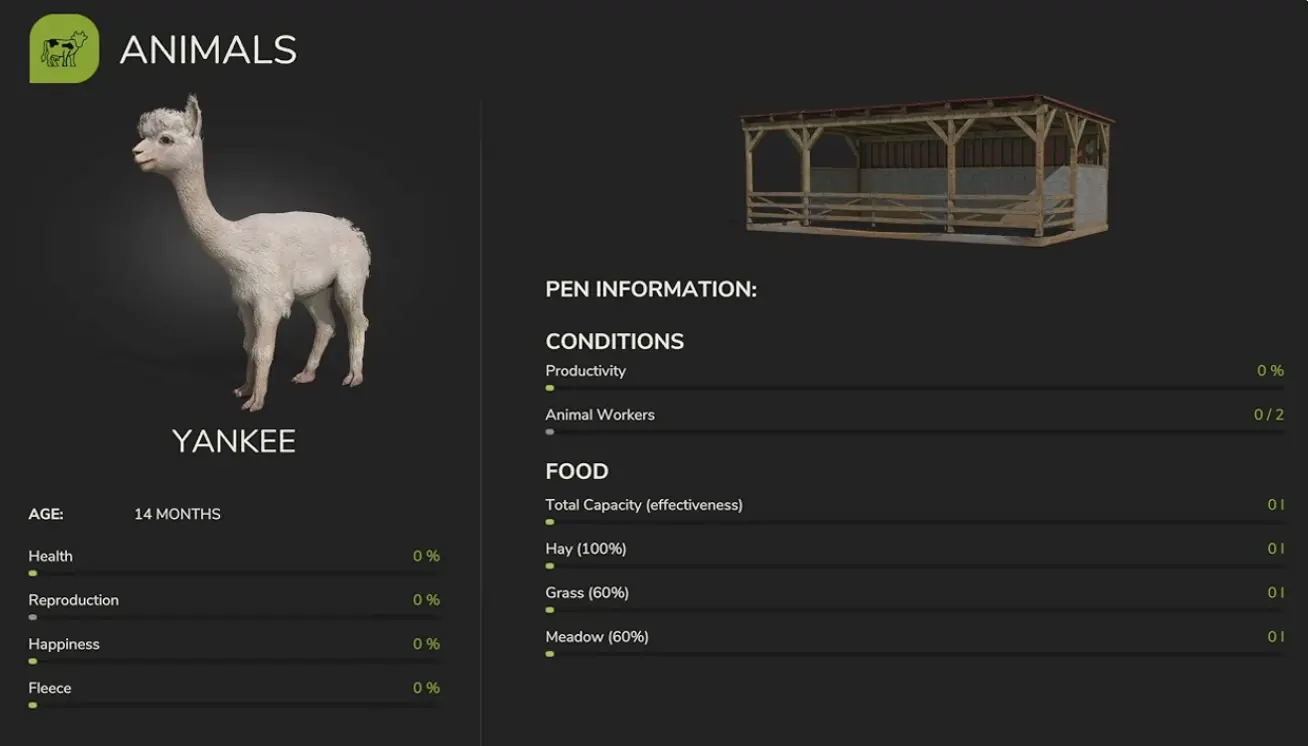
Buying a 14-month-old alpaca does not guarantee an immediate harvest. Newly purchased adults can arrive with 0% Fleece, leaving you with a fully grown animal that still cannot be sheared. The next step is to feed it, maintain its happiness, and allow its fleece to grow.
The waiting period matters most when deciding how many animals to buy. A full shed can eventually produce several thousand liters of fleece in one shearing cycle, but young animals occupy space before they become productive. Hiring workers too early also adds expenses while the animals are still growing their first fleece.
There are also two different ways to manage the animals. You can lead and shear them yourself using hand tools, or hire workers to handle the daily exercise and annual shearing. Both methods produce fleece, but the timing of the cut matters because partially grown fleece yields less.
Building an Alpaca Shed and Choosing the Right Pen Size
The Alpaca Shed costs $15,000 in the construction menu before accounting for the animals and any additional landscaping or fencing costs.
Select it under Animals → Alpacas. The shed itself has a fixed structure, but its enclosure can be customized during placement. After positioning the building, extend the fence around the area you want the animals to use, then finish the enclosure.
The shed has a gate for animal movement, a feeding point, and a designated shearing area. Leave accessible space around the building, especially near the fleece pallet spawn point. Blocking that area with fences, decorations, or parked vehicles makes collecting the finished product more awkward.
The initial enclosure can display room for 8 alpacas, with its capacity increasing as the fenced area becomes larger. However, that increase stops at 16 animals per shed.
A much larger enclosure was built during an extended farm setup, and the capacity still remained 16. Once the limit is reached, adding more fenced land will not create room for another alpaca.
For a farm intended primarily to produce fleece, build enough space for the animals you actually plan to own. An enormous pasture does not raise the maximum flock size or increase the fleece produced by each animal.
If breeding is part of the plan, leave at least one available animal slot. Filling the enclosure with 16 adults immediately prevents additional alpacas from joining that same shed until space is freed.
Which Alpacas Should You Buy: 0, 6, or 14 Months Old?
The animal purchase menu offers alpacas in three age groups:
- 0 months: Newborn animals, cheaper to buy but not yet producing fleece.
- 6 months: Young alpacas that still need time before they can be led and sheared.
- 14 months: Adults that have reached maturity and can produce fleece once the required growth and shearing conditions are met.
You can choose white, brown, gray, or fawn alpacas. These are appearance variations; the farming decisions depend on age, condition, and the amount of fleece grown.
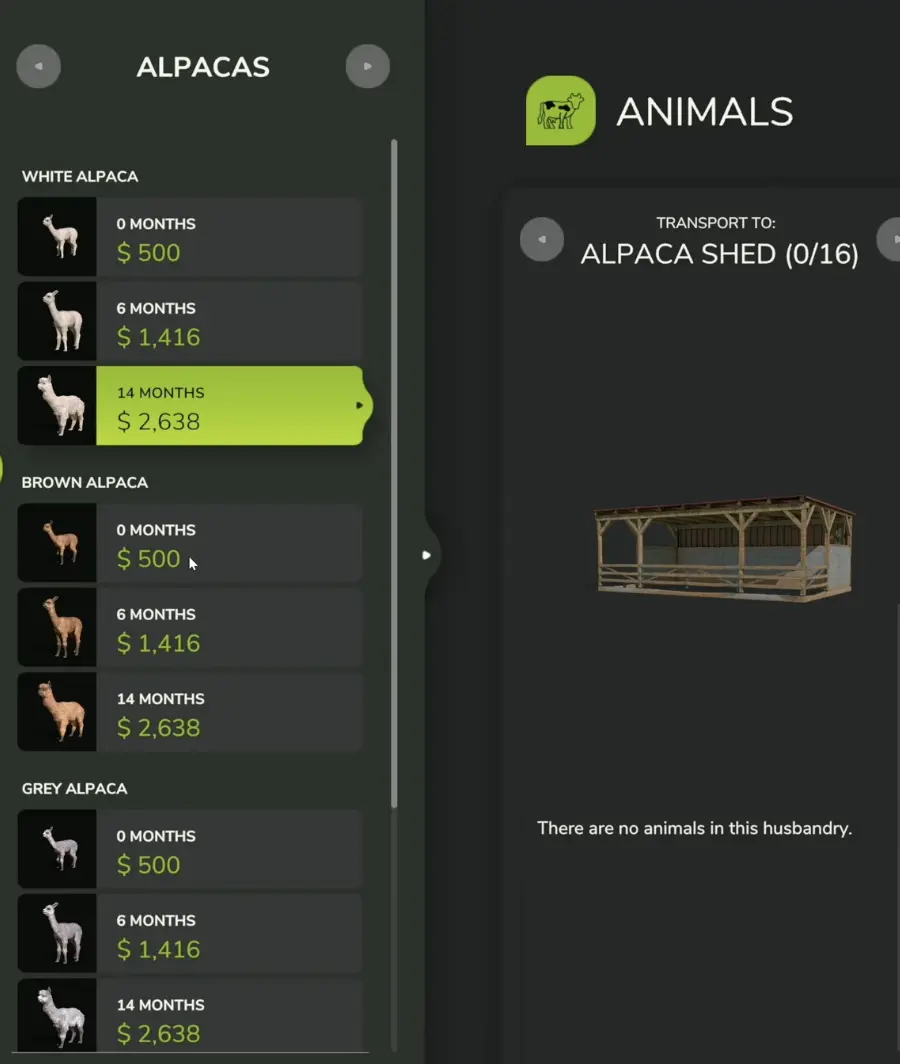
In one purchase setup, newborn alpacas cost $500, while 14-month-old adults cost $2,638. Those figures illustrate the substantial cost difference between starting with young animals and buying immediate breeding-age stock; actual prices should be checked against the current animal market and economy settings.
The 14-month option costs more because the animal has already reached maturity. It saves the time needed to raise a youngster, although the Fleece bar still determines when the next shearing becomes possible.
Buying younger alpacas preserves more cash upfront but occupies pen capacity while they mature. This makes the cheaper options useful for a farm that can wait for its first fleece harvest, while adults are better suited to establishing a productive flock sooner.
Can You Transport Alpacas Yourself?
Alpacas can be purchased directly through the shed’s animal management interface or transported from the Animal Dealer.
Compatible livestock trailers include alpaca capacity in their animal transport menus. One tested trailer accommodated 6 alpacas, while another showed capacity for 12.
This is useful when you already own an appropriate livestock trailer and want to move several animals between the dealer and the farm. Check the trailer’s supported animal types before renting or buying it, since different livestock vehicles offer different capacities.
Feeding Alpacas: Hay, Grass, or Meadow?
Feeding effectiveness has a direct impact on alpaca productivity.
The Alpaca Shed accepts hay or grass, and an enclosure with meadow grass can provide some feeding automatically. These options do not produce the same effectiveness.
Hay reaches 100% feeding effectiveness, while grass and meadow provide 60% in the displayed animal information.
That difference matters when you are trying to grow fleece efficiently. A pasture can look green and well supplied while its feeding effectiveness remains below the level achievable with hay.
For a fleece-focused operation, bring hay to the shed’s feeding point and unload it into the trough.
One enlarged Alpaca Shed accepted up to 11,500 L of hay in its displayed storage. This is enough to reduce the frequency of deliveries, but the actual storage and available food should still be checked in the animal menu.
A compatible hay trailer can unload directly into the feeding area. During one setup, a trailer left in the feeding trigger continued transferring hay as the trough required more. That can reduce repetitive deliveries, although it also leaves the trailer occupied instead of available for other jobs.
The animal descriptions mention water alongside food. With the available Alpaca Shed, there is no separate manual water-filling point to operate. Focus on supplying the accepted feed and checking the shed’s animal information rather than searching around the enclosure for an ordinary water trough.
Feeding is only one part of keeping alpacas productive. Even with enough hay, animals that receive no exercise can develop fleece more slowly. Check Happiness alongside food effectiveness before advancing through several months.
How to Walk Alpacas and Increase Happiness
Adult alpacas need exercise. Instead of riding them like horses, you lead them using an Alpaca Leash.
Buy the leash under the animal hand tools in the shop, then equip it from your available tools. Approach a mature alpaca and use the interaction prompt to attach the leash.
Walk with the animal while keeping it close enough to maintain the connection. Its happiness rises as it receives exercise.
One alpaca reached 100% Happiness after being led sufficiently. The animal can then be returned to its enclosure.
Running too far ahead can break the leash connection. When that happens, approach the alpaca again, reattach the leash, and resume walking at a pace it can follow.
Younger animals cannot always be led. In two separate farms, attempts to exercise young alpacas failed, while the same animals could be led successfully once they had reached adulthood at 14 months.
The animal’s age is therefore the first thing to check when the leading interaction is unavailable.
Does Happiness Affect Fleece Growth?
Happiness affects how quickly the animal develops fleece.
With full feeding effectiveness and regular exercise, one alpaca management setup showed fleece growth increasing by approximately 9 percentage points per in-game month.
When exercise was neglected and Happiness remained at 0%, the same setup showed a smaller increase of approximately 5 percentage points over a comparable period.
These values describe the observed management conditions rather than a guaranteed monthly rate under every setting. They demonstrate why maintaining happiness matters: slower fleece growth leaves less material available when shearing time arrives.
For a small flock, manually leading each animal is possible. Once the shed contains 12–16 adults, the daily exercise requirement becomes a much larger commitment.
At that scale, hired leading workers can free up time without requiring the animals to be moved individually.
How to Hire Alpaca Workers for Leading and Shearing
Open the Alpaca Shed management menu and select Manage Animal Workers.
The system offers two separate jobs:
Leading: Workers exercise eligible alpacas every day to maintain happiness.
Shearing: Workers perform the annual shearing when the animals are ready.
Both jobs can be managed independently. You can hire workers for daily leading while keeping shearing manual, or automate both activities.
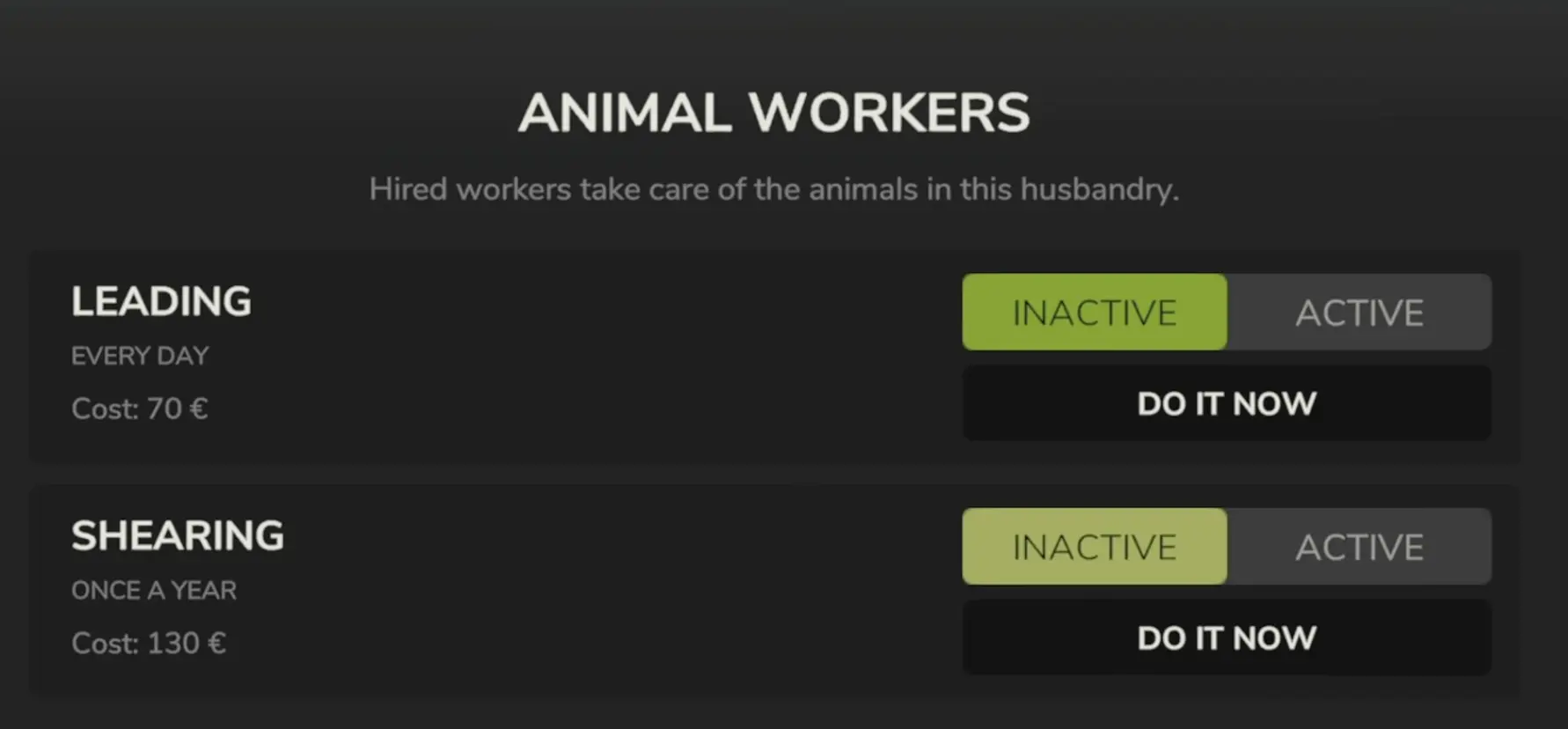
Each assignment has an Active / Inactive setting. Leading also offers Do It Now, which immediately exercises the eligible animals for the displayed charge.
A similar immediate option is available for shearing when animals meet the requirements.
How Much Do Alpaca Workers Cost?
Worker charges vary with the eligible animals and the selected task. In one setup, the management screen showed €70 for Leading and €130 for Shearing. Another full-shed setup displayed approximately 110 currency units for daily leading and 210 for an annual shearing operation.
The immediate Leading charge covers the eligible animals in that job rather than charging the displayed amount separately for each alpaca. One €70 exercise job raised the Happiness of eight eligible animals to 100%.
Check the current charge before selecting Do It Now or enabling an automatic job. A larger flock can cost more to manage, and the displayed amount depends on the animals eligible for that activity.
The useful compromise for a growing farm is automatic leading with manual shearing. Daily exercise is repetitive, while shearing happens much less frequently and can be completed when the animals have accumulated enough fleece.
If you prefer a largely hands-off setup, activate both jobs and keep the feed supplied.
The worker system handles the assigned activities, but it does not remove the need to monitor food, animal capacity, and finished fleece pallets.
Why Can’t You Shear an Adult Alpaca?
An adult alpaca must have enough fleece grown before it can be sheared.
This is easy to misunderstand when purchasing 14-month-old animals. Their age may indicate maturity, but newly purchased adults can show 0% Fleece.
Attempting to shear them immediately can fail even though they are old enough to reproduce.
A newly purchased group required additional in-game months before its fleece bar increased and manual shearing became available.
The reliable check is the Fleece percentage and the interaction prompt, not appearance alone.
As fleece grows, alpacas become visibly thicker and shaggier. The amount of fleece shown in the management panel also increases.
A mature animal with insufficient fleece cannot be turned into a full harvest merely by moving it into the shearing shed. Continue feeding and exercising it, then check again after more growth.
How to Shear Alpacas Manually
Buy the Shearing Tool from the animal hand tools category.
When an alpaca is eligible for shearing, use the Alpaca Leash and lead it into the shearing area inside the Alpaca Shed.
The shearing interaction must be performed at this designated location. Trying to activate the shearing tool beside an alpaca elsewhere in the pasture can produce an instruction telling you to lead the animal to the shed.
Once the alpaca is positioned inside:
- Switch from the Alpaca Leash to the Shearing Tool.
- Start the shearing interaction.
- Hold the required input while the shearing progress completes.
- Confirm the amount of fleece collected.
- Return the alpaca to the pen when prompted.
On PC, the manual shearing interaction can be completed by holding the left mouse button. The progress indicator fills while the shearing animation runs.
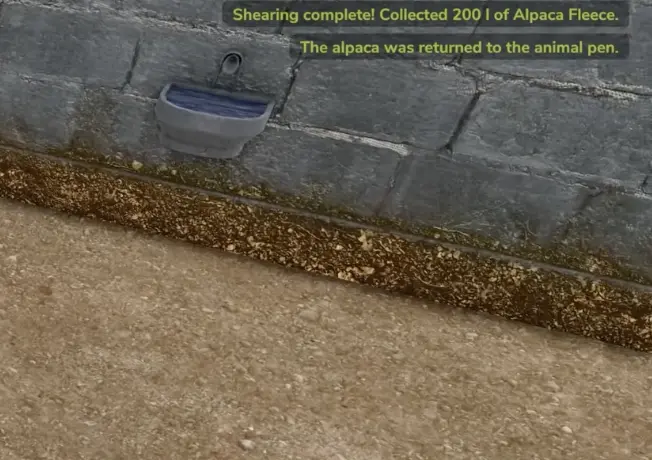
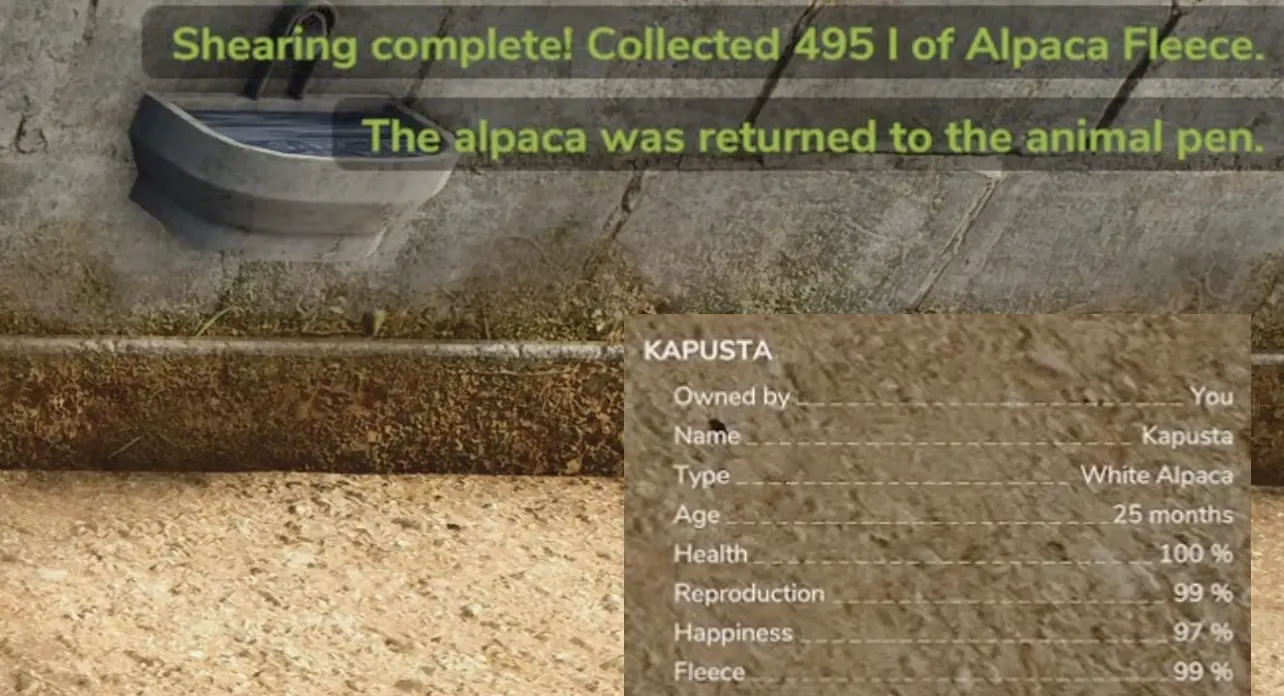
One completed manual shearing produced 200 L of Alpaca Fleece. The completion message displays the collected amount before the alpaca returns to its enclosure.
After shearing, the animal’s appearance becomes noticeably shorter-haired, and its Fleece growth returns to the beginning of another cycle.
The animal can be returned directly through the completion prompt or led back manually.
What If the Leash Keeps Breaking?
The leash can detach when the animal falls too far behind. Some alpacas also hesitate before following, especially when their movement becomes awkward around enclosure gates.
Avoid sprinting away from the animal. Reattach the leash after a break and use a clear route to the shearing area.
If the animal will not enter the shearing area smoothly, approach it from a different angle instead of repeatedly pulling against a fence or corner.
The shearing action itself is straightforward once the animal reaches the correct location. Most wasted time comes from handling an alpaca that has lost its leash connection or trying to shear outside the shed.
How Much Fleece Does Each Alpaca Produce?
Fleece yield increases with the amount grown before shearing.
Several manual shearing operations produced the following results under their respective animal conditions:
- Around 45% Fleece: Approximately 205–225 L collected.
- 54% Fleece: 270 L collected.
- 99% Fleece: 495 L collected.
- 100% Fleece: 500 L collected.
The percentage is therefore a much better indicator of the available harvest than the animal’s age alone.
The difference becomes significant across an entire shed.
A flock of 12 adult alpacas at 100% Fleece produced 6,000 L when the annual shearing worker completed the job.
That is 500 L per alpaca, collected during one annual cycle. It does not mean 12 animals produce 6,000 L every in-game month.
Should You Shear Early or Wait for 100%?
Once manual shearing becomes available, collecting fleece early gives you material immediately but resets that animal’s growth. The difference becomes substantial when several animals are sheared before reaching full Fleece.
For a farm short of cash, an early harvest can provide something to sell without waiting for the entire growth cycle. When immediate income is not necessary, allowing fleece to approach 100% makes each shearing operation and subsequent pallet collection more productive.
Annual worker shearing follows its own schedule. On Catuaí, an automatic shearing operation occurred in November, and the animals that had reached full fleece growth produced the expected 500 L each.
The schedule should not be confused with an individual animal’s maturity date. A newly purchased adult may not have accumulated enough fleece when the next automatic shearing period arrives.
Check the worker notification and the Fleece value before relying on a full annual harvest.
Where Does Alpaca Fleece Go After Shearing?
Alpaca Fleece appears as palletized material at the shed’s output area.
Move the pallets with a suitable pallet fork or other compatible loading equipment. A tractor and pallet-handling attachment are sufficient for smaller operations; buying a large loader only for occasional fleece collection may be unnecessary.
You can sell fleece directly at an accepting selling point, including locations such as the Warehouse, Supermarket, Logistics Center, or Goldcrest Valley.
Selling the raw fleece avoids buying a production facility, making it practical when the shed produces only a modest amount each year.
The more involved alternative is processing fleece into Alpaca Wool.
Turning Fleece Into Alpaca Wool at a Spinnery
Deliver Alpaca Fleece to a Spinnery, own the production facility as required, and activate the Alpaca Wool recipe.
The displayed production ratio is:
10 Alpaca Fleece → 11 Alpaca Wool
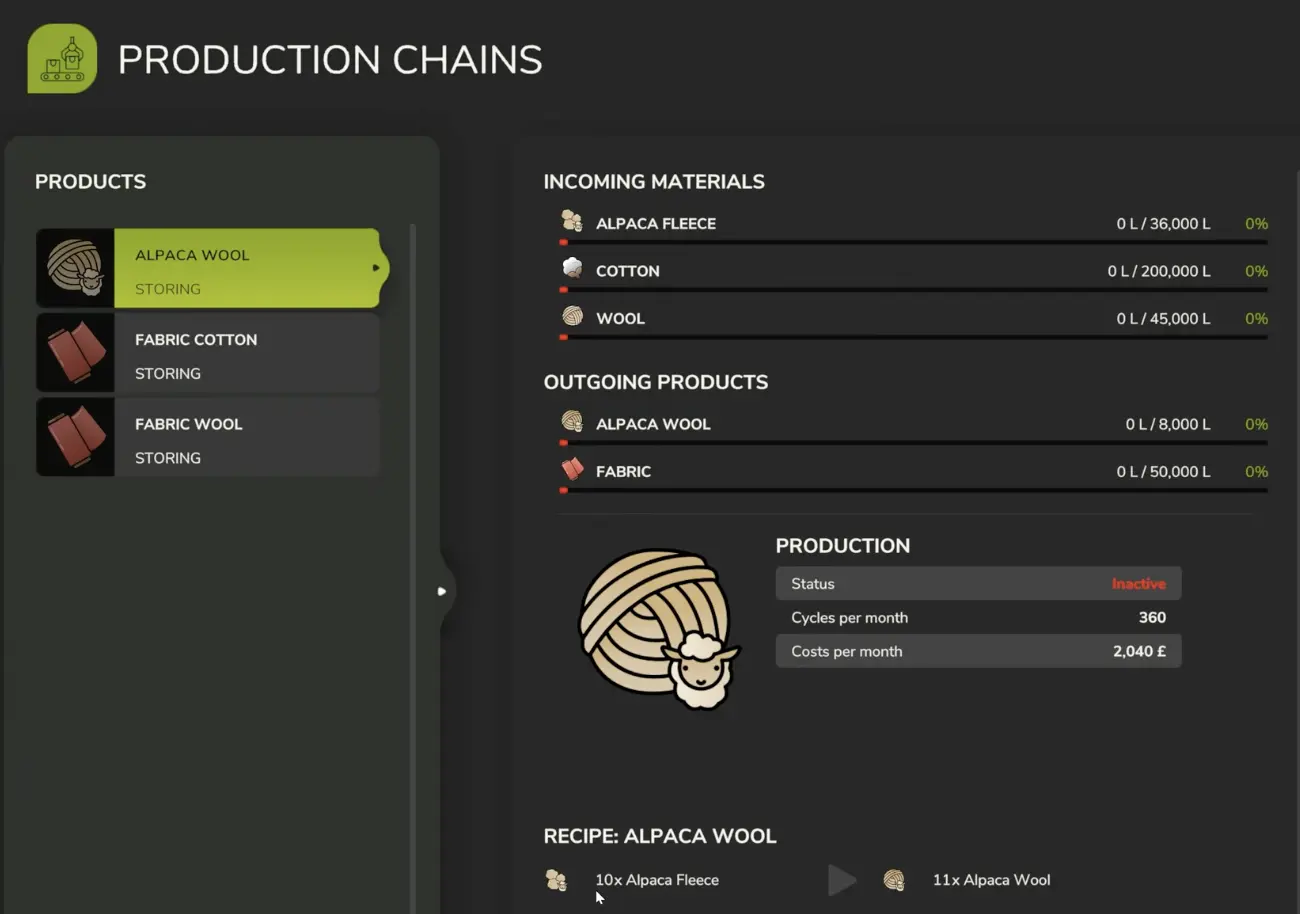
This differs from production chains where processing reduces the volume of the input.
For every 1,000 L of Fleece consumed by this recipe, the output ratio corresponds to 1,100 L of Alpaca Wool, before considering the time needed for processing.
In one easy-economy price comparison, Alpaca Fleece was worth approximately $5,100 per 1,000 L, while Alpaca Wool was worth approximately $7,000 per 1,000 L.
Using those particular prices, 1,000 L of Fleece would have a gross selling value of $5,100, whereas the corresponding 1,100 L of Wool would have a gross value of $7,700.
That makes the wool route attractive when the production facility is already available. It is not a net-profit guarantee: owning the Spinnery, operating it, and transporting the products introduce additional costs.
A single shed may not produce enough fleece to justify purchasing a Spinnery immediately, despite the higher selling value of Alpaca Wool. A farm already running several animal products through the same building can make much better use of the facility.
On Catuaí, the map of production facilities helps locate the existing Spinnery before transporting your fleece.
What Can You Produce With Alpaca Wool?
Fleece does not need to be converted into wool before every possible use, but the processed wool recipes can be more material-efficient.
Two main facilities offer further products.
Tailor Shop: Pillows, Plushies, and Socks
The Tailor Shop can use Alpaca Fleece or Alpaca Wool to produce:
- Alpaca Pillows
- Alpaca Plushies
- Alpaca Socks
Both input routes are available, but the recipes using processed wool generally require less material for the finished products.
The choice depends on whether your farm already owns a Spinnery and how much finished material you can produce.
With a Spinnery already operating, compare the Tailor Shop’s Alpaca Wool recipes against its direct-fleece options. Choose the recipe that makes better use of your available material before activating production.
If the Tailor Shop is your first production purchase, inspect the exact input recipe before activating it. Possessing Alpaca Fleece does not automatically mean the facility is configured to consume that particular input.
Carpentry: Alpaca Furniture
The Carpentry facility can turn Alpaca Fleece or Alpaca Wool into products such as:
- Alpaca Armchairs
- Alpaca Stools
These offer another use for animal products beyond the clothing-related items produced at the Tailor Shop.
The wool versions can use less material than the fleece versions, but finished furniture requires its own production time and selling arrangements.
Building several separate facilities solely to process the output of a small alpaca flock can consume more capital than the flock generates in its early years.
A reasonable progression is to establish steady fleece production, decide whether to process it into wool, and only then consider furniture or tailored products.
Can Alpacas Reproduce, and Is Breeding Worth It?
Alpacas reach puberty at 14 months and have an 11-month gestation period. Breeding therefore requires a longer investment than simply purchasing another adult.
Reproduction also requires available space in the pen. An enclosure already holding 16 alpacas cannot accommodate more animals until space becomes available.
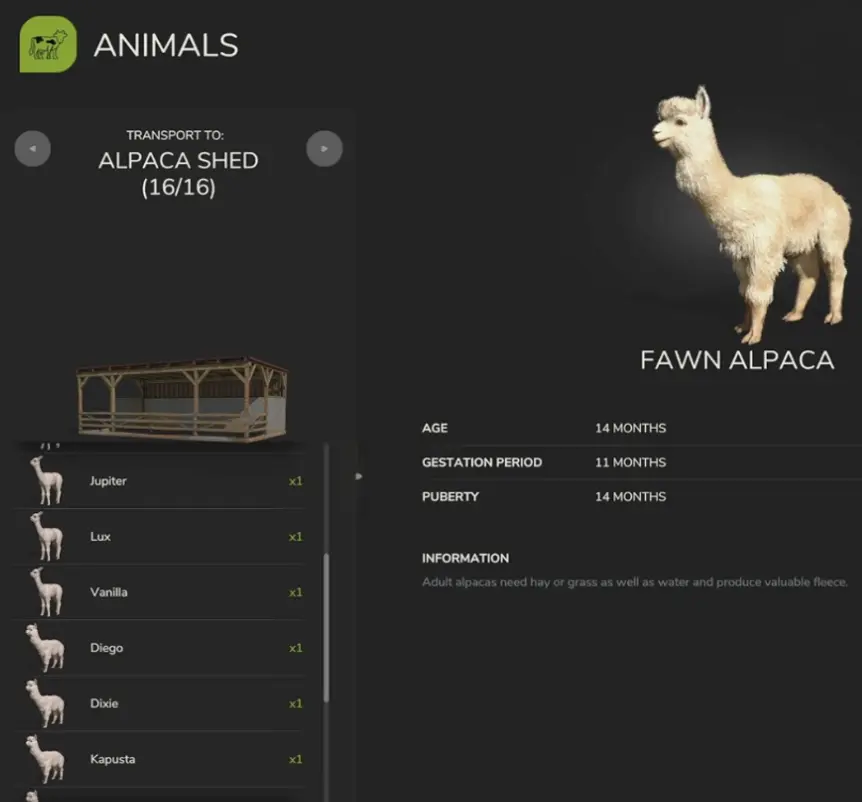
An operating flock with free slots produced young alpacas as the reproduction progress advanced. The new animals entered the herd as young stock and still needed to grow before contributing fleece.
Buying newborns is cheaper than buying adults, but they do not produce material during their early growth period. They also occupy space that could otherwise hold an adult currently generating fleece.
For a breeding-focused farm, keep some capacity available and allow the younger animals to mature alongside the established flock.
Filling every slot with adults favors immediate fleece production, but leaves no space for newborn alpacas. Keep at least one slot open when breeding is the priority.
When Is It Worth Selling Adult Alpacas?
Adult alpacas can also increase in resale value as they age.
One farm purchased 14-month-old animals for $2,638 each. Their value initially fell, then recovered as the animals matured.
After approximately five more months, the animals were worth about $2,655, slightly above their original purchase value.
Their market value continued rising over a longer period, eventually reaching a plateau of approximately $4,900 per animal around 38 months of age.
These figures describe the displayed prices in that farm’s economy. Selling for more than the original purchase price does not automatically mean the animal was profitable once feed, workers, and time are included.
The same alpacas can also provide fleece while their resale value increases. Keeping productive adults can therefore be worthwhile when the shed is feeding them efficiently and you have enough processing or selling capacity for the annual fleece.
Selling becomes more attractive when you need to free enclosure slots, replace older animals, or recover capital for a different farming activity.
The useful distinction is between a breeding herd and a fleece-production herd. A full shed of adults maximizes the number of currently productive animals, while a smaller group with open slots allows the next generation to grow without purchasing another shed.