Start Farming Simulator 25: Beans & Alpacas on Catuaí, choose your first farming activity, build the Research Centre, find dinosaur bones, and make paint.
Grow and harvest bananas in Farming Simulator 25 with the right plantation layout, connected rails, washing stations, and workers before ripe crops are lost.
Grow coffee in FS25 with the right plantation layout, fertilizer, fungicide, harvesters, and processing facilities. Learn how to turn coffee cherries into bags, capsules, and other products.
Learn how to raise alpacas in Farming Simulator 25, including feeding, happiness, manual shearing, animal workers, fleece yields, breeding, and wool production.
Find the starting farms, coffee fields, banana plantations, production buildings, warehouse, train, museum, and Research Centre on the Catuaí map in FS25.
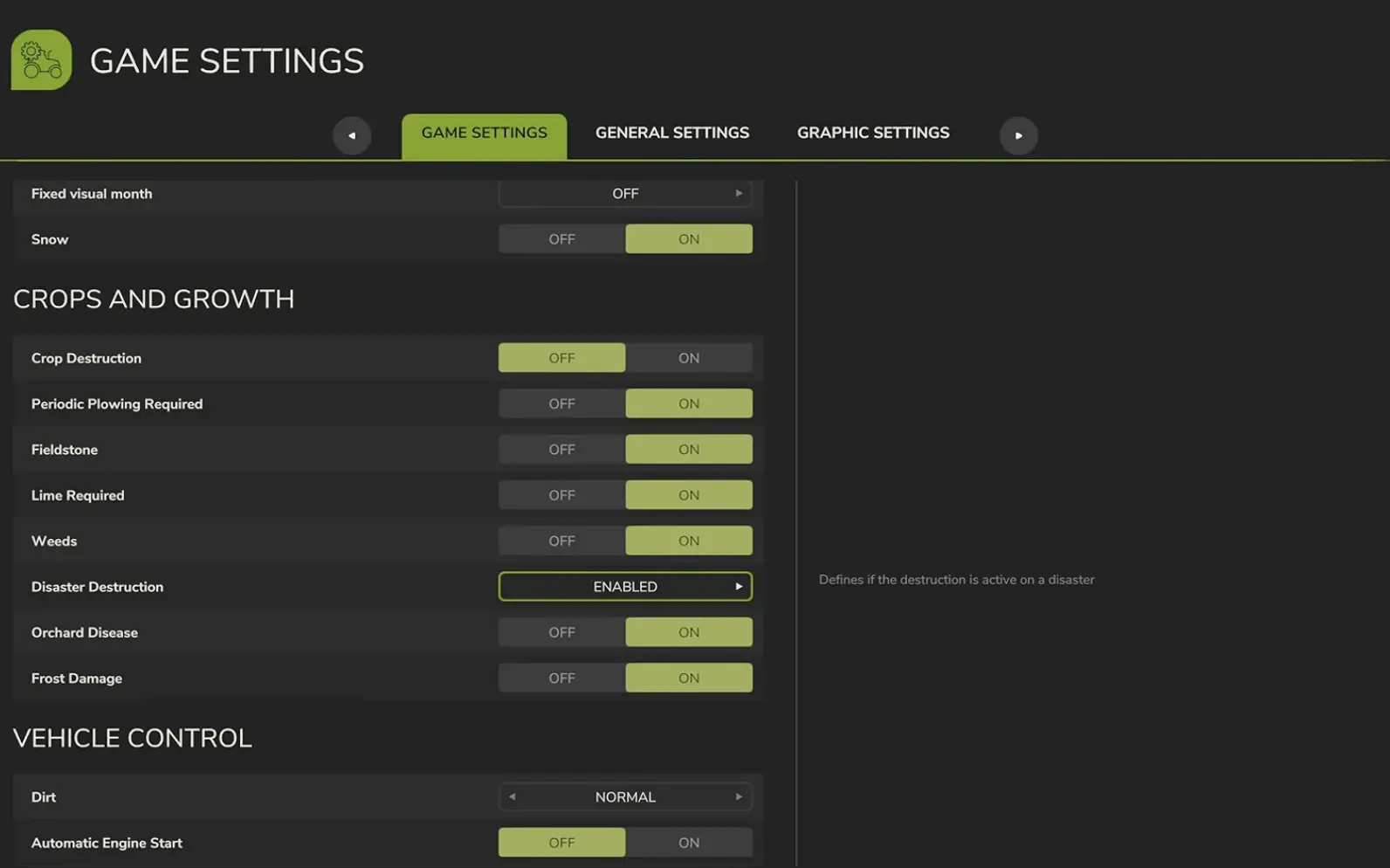
Start on Catuaí in New Farmer mode and open the PDA to inspect your owned fields and existing equipment. Complete any harvests your machinery already supports before buying specialized equipment. Check Orchard Disease and Frost Damage in the game settings before expanding into coffee or bananas.
The most expensive mistake at the beginning of Beans & Alpacas is treating every new activity as something that needs to be purchased immediately. Catuaí already has established crop fields, farm buildings, and several production facilities. Some of those buildings are available to visit or buy, while other activities require machinery or materials that a new farm cannot afford all at once.
There are also two activities that do not require establishing another agricultural business: rebuilding the rainforest Research Centre and searching for the dinosaur bones hidden across Catuaí. Both give you something to work toward while crops mature, and collecting bones can provide money toward your next purchase.
The expansion adds more than a new landscape. Coffee, bananas, alpacas, paint production, and construction projects place different demands on your farm. The best opening depends on whether you want a recurring crop, an animal business, or a project that can be advanced alongside ordinary fieldwork.
What Should You Check Before Spending Money on Catuaí?
The New Farmer start gives you an established farmyard beside Field 36, ordinary field equipment, and nearby land that can be worked immediately.
Open the PDA and inspect your owned fields before purchasing another property. Then check which crops are ready for harvest and whether your current machinery can complete the work.
A new property may look close on the map but require a longer road journey around the river. Check the actual parcel boundary and vehicle access before buying. The Catuaí farm and facility locations show the starting area, nearby plantations, and production sites.
Use the first available fieldwork to establish some income before committing to a specialized plantation or animal operation.
Should You Start With Bananas, Coffee, or Alpacas?
Your first investment depends on what is already available to harvest and how much work you want to handle yourself.
Bananas: Use the Plants You Already Have
The New Farmer property includes banana plants, making them a convenient place to begin without purchasing another field. First inspect the existing transport rails and confirm whether the fruit can reach a washing station.
Ripe bananas left on the plants can eventually wither, even when workers are employed. Start with the area you can reliably harvest, then follow the banana planting and harvesting steps before expanding the plantation.
Coffee: Wait Until the Crop Justifies the Machine
Existing coffee fields provide a shorter path to harvesting than planting an entirely new orchard, but you still need a dedicated coffee harvester. A machine purchased too early can remain unused while the crop matures.
Check the field’s growth state and available funds first. The coffee harvesting and processing instructions explain which machine to use and how to handle the Coffee Cherries after collection.
Alpacas: Build Income Around the Growth Cycle
An alpaca operation requires less specialized harvesting machinery, but its first meaningful return may take longer. Adults can arrive with no fleece ready to collect, and younger animals must mature before becoming productive.
Begin with a flock you can afford to feed while waiting for fleece growth. The alpaca feeding and shearing instructions cover the animal conditions and collection process.
Bananas favor immediate hands-on work, coffee requires a seasonal equipment commitment, and alpacas reward patience with recurring fleece production. Choose the activity your current farm can sustain rather than attempting all three purchases at once.
Catuaí follows a Southern Hemisphere crop calendar, so planting and harvesting windows familiar from other FS25 maps may not apply. Check the in-game calendar before buying a coffee harvester or expanding seasonal crop production. Bananas and alpacas follow different production rhythms, so prioritize equipment for the next job your farm can actually complete.
Which Expansion Settings Should You Check Before Farming?
Beans & Alpacas introduces two settings that can change how much attention your plantations need: Orchard Disease and Frost Damage.
Open the game settings and find them under the crop damage and destruction-related options.
Check Orchard Disease and Frost Damage before deciding how much crop maintenance your farm needs.
Orchard Disease allows orchard crops such as coffee and bananas to become diseased. Affected plants require fungicide treatment, and the field information can indicate when fungicide is needed.
Keeping the setting enabled creates an additional maintenance task. Turn it off if you prefer to concentrate on harvesting and production without managing orchard disease.
Frost Damage affects frost-sensitive crops under sufficiently severe weather conditions. Bananas are particularly relevant because hard frost can cause them to wither.
These are separate systems. Disabling Frost Damage does not prevent ripe bananas from being lost when they remain unharvested for too long. Likewise, supplying fertilizer does not replace the fungicide needed to treat disease.
For a first attempt at the expansion, choosing the settings before establishing a large plantation is easier than discovering their effects after several fields are already growing.
You can also check the PDA’s field-status filters for plants needing fungicide. That provides a more reliable maintenance check than judging every plant from its appearance alone.
When Should You Start Building the Research Centre?
The Research Centre is a 28-step construction project in Catuaí’s rainforest. You can begin by delivering 500 L of Long Planks, but completing the building requires much larger quantities of Wood Beams, Long Planks, Straw, regular Planks, and Furniture.
Construction pays for accepted material deliveries. However, buying all the supplies from the Warehouse still ties up money and requires repeated trips across Catuaí.
If your farm has limited funds, complete an available harvest and secure the transport equipment you need before committing to the larger construction stages. You can deliver the first materials early and continue the project alongside ordinary farming.
Follow the Research Centre construction guide for all 28 work steps, the complete material requirements, delivery strategy, and the Alpaca Hat reward.
Should You Collect Dinosaur Bones While Farming?
Catuaí has 40 dinosaur bones to collect. Some are visible around roads, buildings, and wooded areas, while others appear when agricultural fields are cultivated or plowed.
Each collected bone earns 10,000 in your farm’s currency, making the collection useful for earning extra money while exploring or preparing fields.
Collect exposed fossils whenever you encounter them, and inspect freshly worked soil for buried bones. There is no need to purchase specific farmland solely for the collection.
The bones gradually complete the Giganotosaurus skeleton at the village Museum. For the surface collection route, buried-bone mechanics, and missing-bone checks, follow the Catuaí dinosaur bones guide.
How Do You Make Paint and Repaint Houses?
Paint is a separate production activity introduced with Beans & Alpacas. It uses materials from different facilities rather than coming directly from one crop.
The chain has three important parts:
Pigments, produced at the Pigment Factory.
Resin, produced through the Sawmill.
Paint, created by combining the required materials at Paint Production.
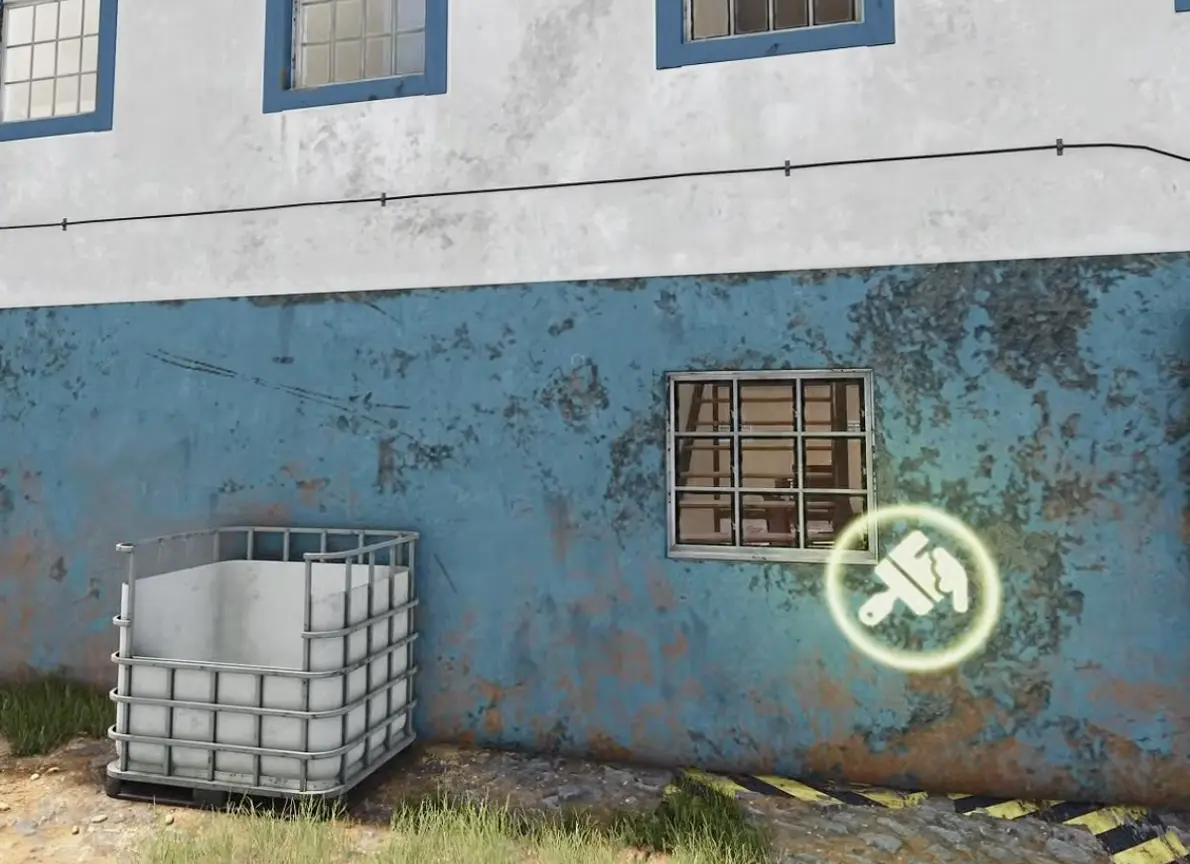
Once you have the finished paint, it can be delivered to houses that offer a repainting interaction.
The process is not part of harvesting coffee or raising alpacas, although some agricultural products can become ingredients for Pigment production.
How to Produce Pigments
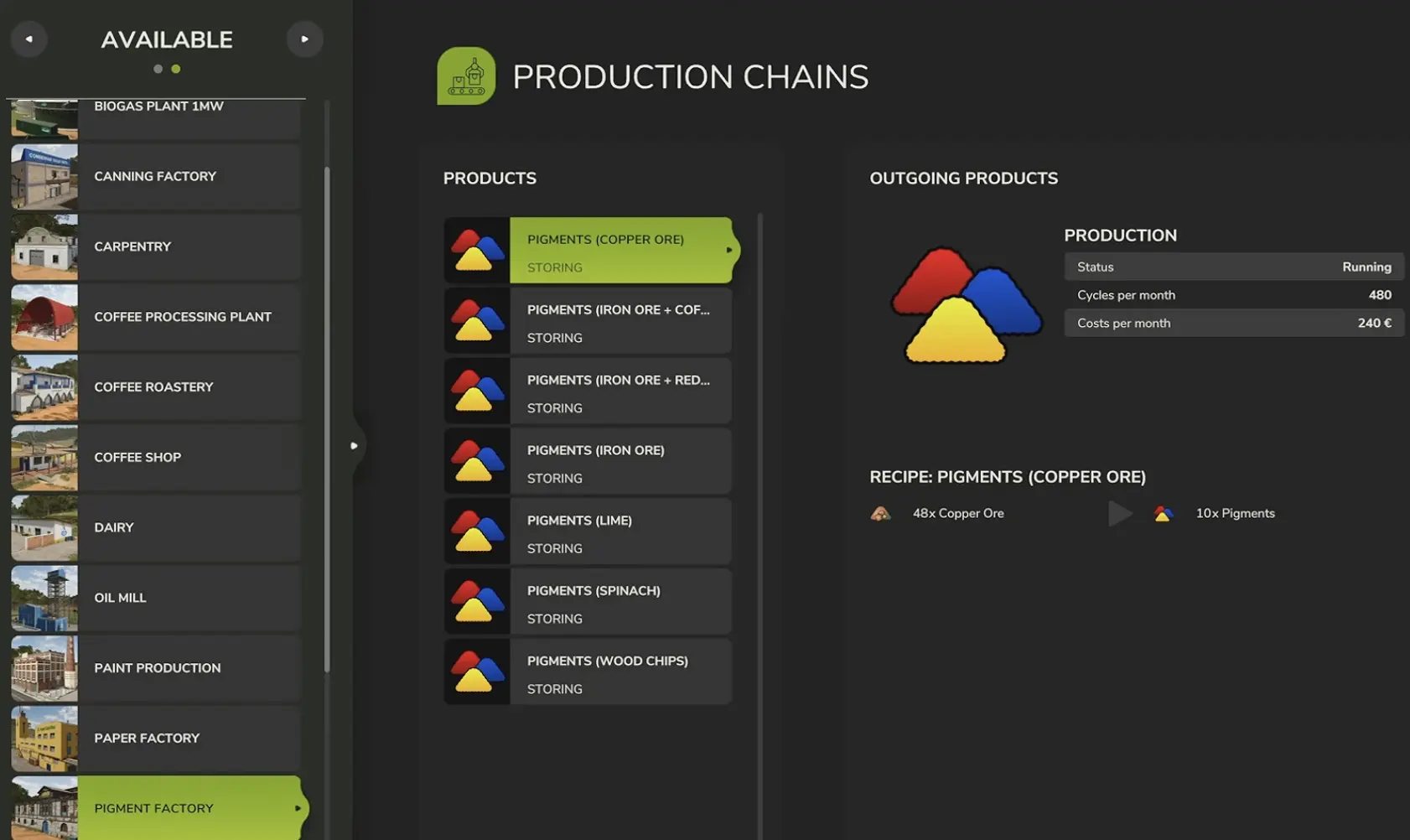
The Pigment Factory accepts several different material combinations.
Available recipes use resources such as:
Copper Ore
Iron Ore
Coffee Bags
Red Beet
Lime
Spinach
Wood Chips
Some recipes combine multiple materials rather than using a single input.
Check the selected Pigment recipe before delivering materials; different recipes require different inputs.
The Pigments (Wood Chips) (300%) recipe consumes 31 Wood Chips to produce 10 Pigments per cycle. At the selected production setting, the factory shows 1,440 cycles per month and $720 in monthly production costs.
Wood Chips are a practical choice if you already operate a Sawmill, since its resin production also generates Wood Chips. Other Pigment recipes use combinations of Copper Ore, Iron Ore, Coffee Bags, and agricultural materials.
Before purchasing inputs, compare the available recipes with what your farm already produces. Establishing a new coffee or mining operation solely to supply Pigments may cost considerably more than using an existing resource stream.
Where Do You Get Resin?
Resin is produced at the Sawmill.
The Sawmill’s expanded production options include a resin process using wood. The facility also produces Wood Chips, which can be useful elsewhere in the production network.
If you do not own a Sawmill, Resin can also be purchased through the Warehouse.
The main decision is how frequently you intend to make paint. Buying a few pallets may be easier when you only want to repaint one property, while regular production is more attractive if you already operate forestry equipment and have a steady wood supply.
Do not confuse Resin with Pigments. Both are needed for Paint Production, but they come from different processes.
Making Paint and Delivering It to a House
Bring Pigments and Resin to Paint Production and activate the Paint Buckets recipe.
The Paint Buckets (300%) recipe consumes 50 Pigments and 10 Resin to produce 20 Paint Buckets per cycle. The selected production setting shows 288 cycles per month and $360 in monthly production costs.
Once production begins, monitor the outgoing Paint Buckets storage rather than checking the ingredient levels alone.
Why Does Paint Production Say Out of Space?
Paint Production can stop even when Pigments and Resin are available.
In one production setup, the factory showed Out of space with 5,000 / 5,000 L of Paint Buckets stored. Pigments and Resin were still available, so supplying additional ingredients would not have resumed production.
Move or sell the finished Paint Buckets to clear output storage. Check the production status again after space becomes available.
This matters when producing Paint for several properties or accumulating stock for a later sale: leaving the output full prevents additional production.
How Do You Deliver Paint to a House?
Once you have enough finished Paint Buckets, visit the property you want to repaint and find its dedicated delivery interaction.
Deliver Paint Buckets to the house's repainting interaction, not an ordinary factory unloading point.
Check the house’s Required Materials for Next Step before transporting a full trailer of Paint Buckets. Different construction interactions should not be assumed to share the same material quantity.
Bring the required Paint Buckets to the indicated interaction and confirm that the material is accepted. The repainting process is treated as a construction task, so check its work-step progress rather than expecting an ordinary selling-point transaction.
For a single repaint, buying the necessary materials may be more practical than purchasing a Pigment Factory, Sawmill, and Paint Production building. Establishing the complete chain makes more sense when you already have the supporting facilities or intend to produce Paint regularly.
Which Equipment Should You Buy Before Expanding?
Check the equipment required for the next job you can actually complete. A coffee harvester has little immediate value before the crop is ready, while another large tractor will not fix missing banana rail connections.
Pallet-handling equipment has broader uses when you are working on construction deliveries or transporting finished products. A compatible trailer and loader can move materials between the Warehouse, factories, and Research Centre without committing the same money to a specialized harvesting machine.
Before buying a new vehicle, open the owned-equipment list and confirm whether an existing machine can do the work. Then compare the purchase cost with the crop, delivery, or production task it will enable.
Once your first activity is generating a regular harvest or product, the next machine purchase can be judged by the amount of work it will actually remove.