How Do You Grow and Harvest Bananas in FS25?
Grow and harvest bananas in Farming Simulator 25 with the right plantation layout, connected rails, washing stations, and workers before ripe crops are lost.
Updated:
Quick Answer
Open Construction → Productions → Cultivation → Bananas and place a small plantation with transport rails between the rows. Connect those rails to a Banana Washing Station if you want to produce banana boxes or hire harvesting workers. Once the fruit is ripe, use the machete to cut the bunches and load them onto the rails.
Bananas in Farming Simulator 25 are more hands-on than an ordinary field crop. You plant them in organized rows, cut the fruit with a machete, move it along a rail system, and process it at a washing station. Harvesting the bunches is only half the job: the remaining plants also need to be cut back so they can grow again.
The arrangement becomes much more important when you hire workers. A plantation can have healthy, ripe bananas and an active workforce while some plants remain unreachable. Even a fully connected plantation can lose fruit if the automated harvest takes too long.
A small planting area is enough to learn the entire cycle. Expanding before checking rail coverage and washing-station capacity creates considerably more work than the extra plants are worth.
How to Build a Banana Plantation
Open the construction menu, go to Productions → Cultivation, and select Bananas.
There are two ways to establish the plantation. You can define an area and let the construction tool arrange the rows, or place rows individually when working around an existing field, road, or building.
The automatic layout uses a transport rail every four banana rows by default, with the first rail positioned at the second row. This gives the rail two rows on either side to serve.
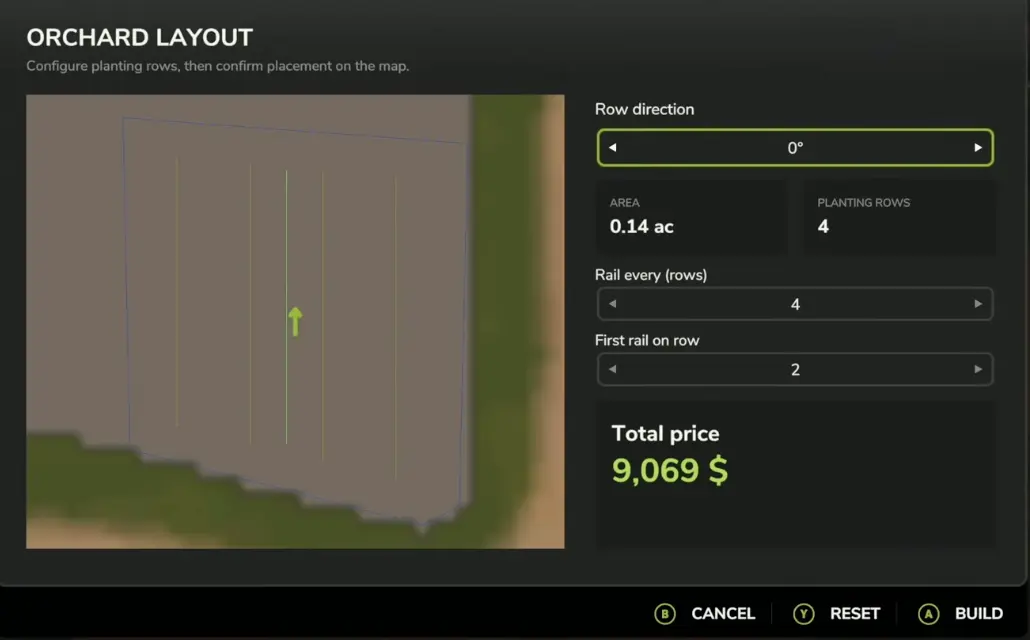
Four rows are a practical starting point because a single rail can collect fruit from both sides without requiring a complicated network. Additional rails can be placed more frequently, but that increases construction work without necessarily improving a small manual harvest.
For a first plantation, leave room at the ends of the rows for vehicles and access to the washing station. The banana plants have collision with vehicles, while the transport rails can generally be driven across. A tightly packed layout can make later fertilizing and spraying unnecessarily awkward.
Can You Use an Existing Banana Plantation?
An existing banana plantation saves the cost of placing new rows, but the plants still need a working transport connection before hired workers can collect the fruit. Inspect the rails on the land you already own and check whether they lead to a washing station.
Where rails are missing, you can harvest the ripe bunches manually or build a connected rail network for automatic collection. The Catuaí map shows where the existing banana farms and their facilities are located.
Fertilizing Bananas and Treating Orchard Disease
After planting, check the crop’s growth state and fertilization requirements. Banana plantations accept normal fertilizer applications, and you can work between the rows with suitable equipment.
Solid and liquid fertilizer are both usable. Manure and slurry are also possible fertilization options, so existing farm equipment may be sufficient without buying a completely separate fertilizing setup.
Bananas can grow throughout the year on Catuaí, but their condition still depends on the weather and the farming settings in use. With Orchard Disease enabled, affected plants can develop an unhealthy brown appearance and require fungicide treatment. Severe frost can also damage the crop when Frost Damage is active.
Check the field status before applying treatment. Fertilizer will not replace the fungicide needed by diseased plants, and spraying cannot recover fruit that has already withered.
How to Spray Fungicide on Banana Plants
Select the Bananas configuration on the KUHN AFS 600 before entering the plantation. The spray direction determines which neighboring rows receive treatment, so position the tractor between the affected plants and check where the fungicide is landing.
A correctly aligned pass can treat two adjacent rows. Reposition the sprayer for any plants left outside its coverage instead of driving repeatedly through healthy sections.
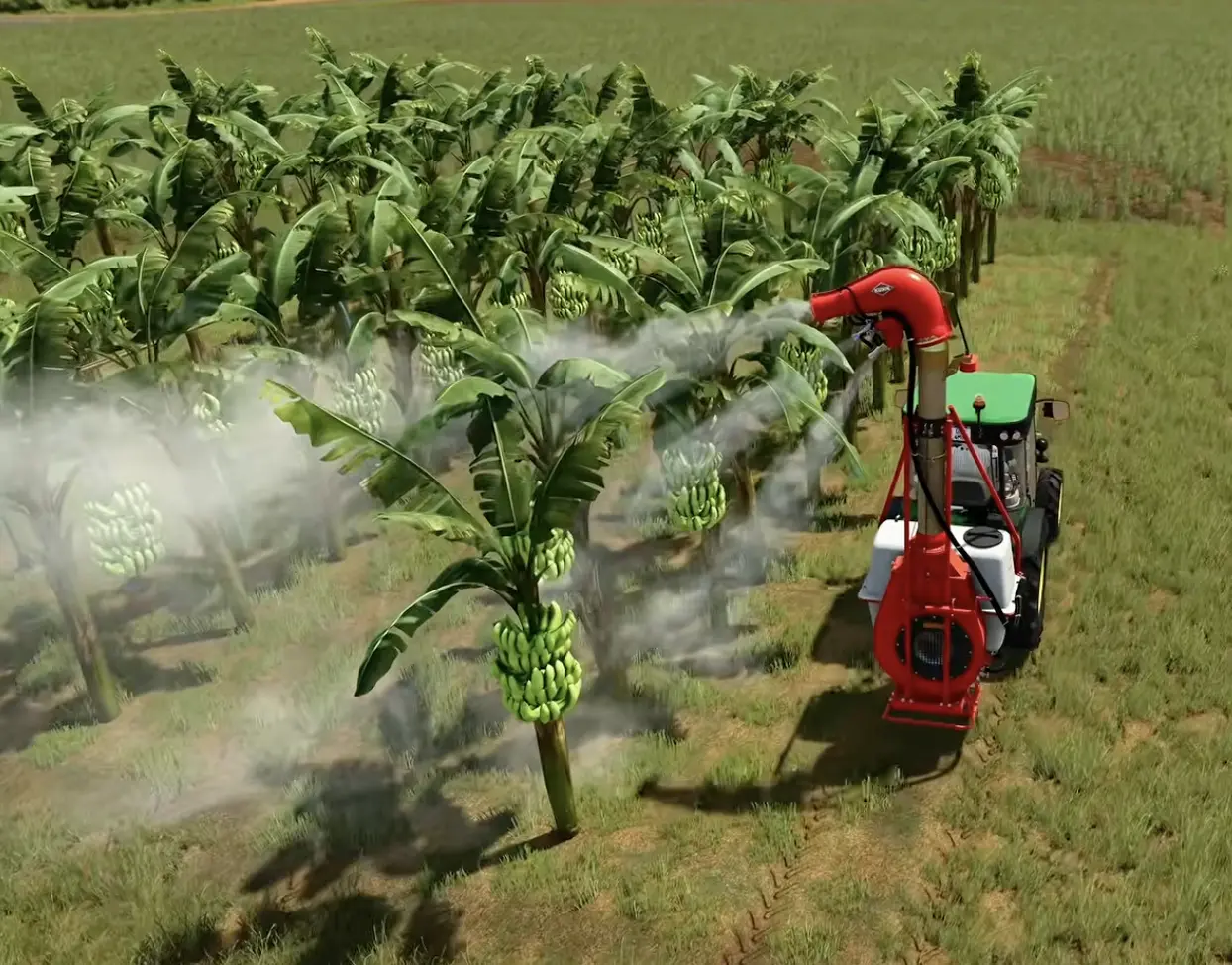
A narrow vineyard-style tractor such as the John Deere 5GF works well between banana plants, although another compatible tractor may already be available on your farm.
One small plantation treatment used roughly 14 L of fungicide across the demonstrated rows. That is an example of the limited area being treated, not a fixed consumption rate for every plantation.
Pay attention to crop condition as the plants advance through their growth stages. Waiting until the harvest is already compromised can leave you with less opportunity to recover the affected crop.
Fertilization and fungicide are separate tasks. Treating a diseased plantation does not replace its fertilizer requirements.
How to Connect Banana Rails to a Washing Station
A Banana Washing Station is the central collection and processing point for a rail-served plantation.
You can harvest bananas without building one and sell the raw crop directly, but the washing station is required for the rail-based collection and banana-box production system.
Select the Banana Washing Station from the cultivation construction options and place it close to the ends of the planting rows. The station has its own rail connection, which must join the rails serving the plants.
A rail that runs alongside banana plants but ends before reaching the station is not a complete transport route.
What Do the Red and Yellow Rail Indicators Mean?
The construction interface provides two particularly useful warnings when the transport network is incomplete.
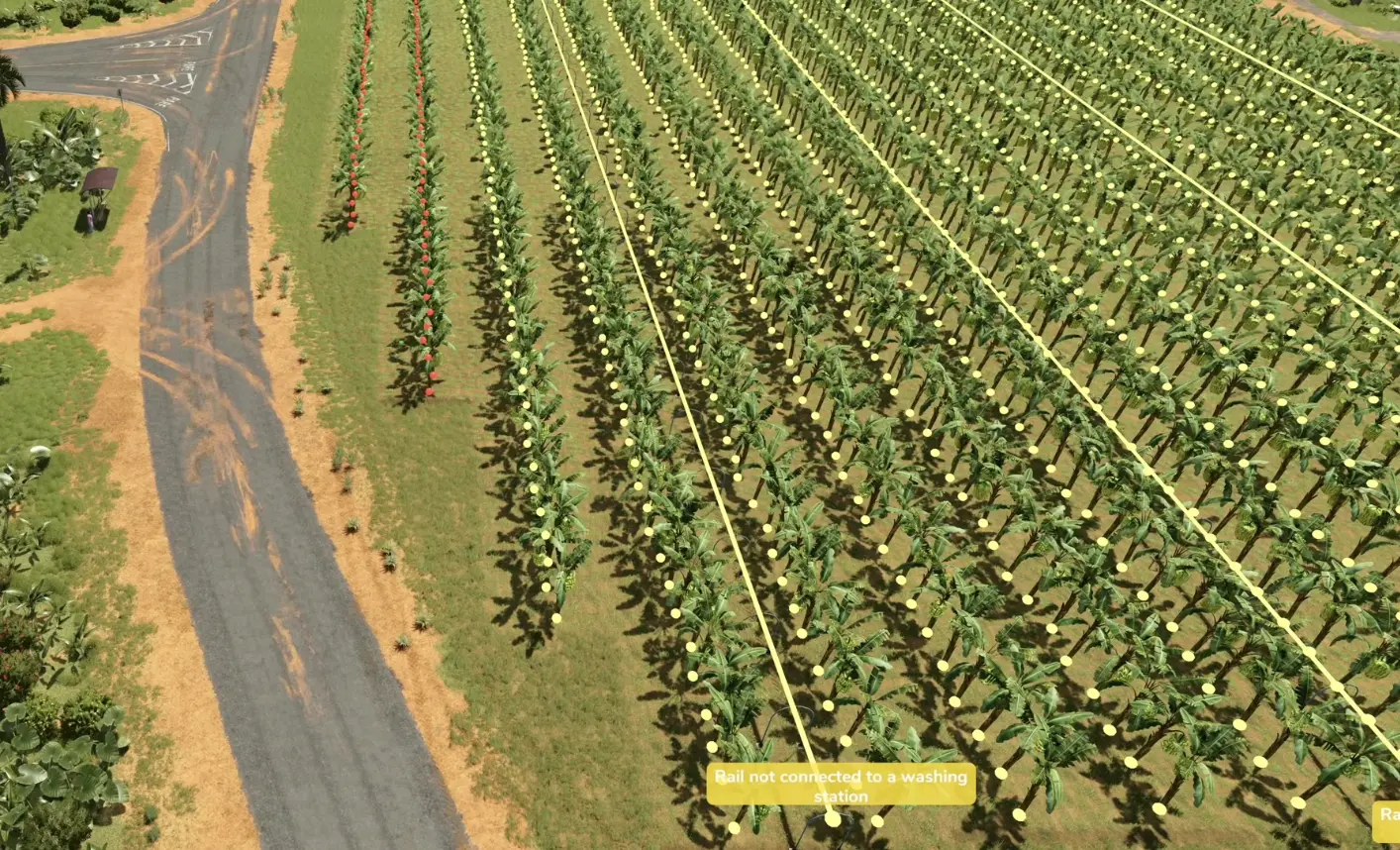
Red areas indicate banana plants that are outside the working reach of a usable rail. Workers cannot automatically collect these plants through the existing network.
Yellow areas indicate plants whose rail access does not have a completed connection to a washing station. The interface can also display “Rail not connected to a washing station.”
Check the red areas first. A transport rail normally serves up to two planting rows on either side. If additional rows extend beyond that reach, add another rail alongside them.
Once the plants are within rail coverage, connect the network to the washing station. Watch the coverage indicators change as each connection is completed.
This distinction matters because adding another washing station will not fix plants that cannot reach any rail. Likewise, building extra rails around every plant will not solve a missing connection to the washing station.
One Long Rail Network or Several Washing Stations?
A single washing station can receive bananas from several connected rails. Even a winding network can be joined into one collection system.
That arrangement has a disadvantage on large plantations: fruit from distant rows must travel along a much longer route before reaching the processing building. The extended layout may be cheaper to build than several stations, but it also concentrates incoming bananas into one processing location.
A more practical expansion is to connect nearby groups of rows to washing stations without creating unnecessarily long transport paths.
The number of stations should therefore reflect how much fruit needs to be handled, not just whether every plant has a rail connection.
Before finishing construction, open the worker management screen and confirm that the number of reachable plants matches the plantation you intended to automate.
How to Harvest Bananas With a Machete
For manual harvesting, equip the machete included with the expansion and approach a banana plant that is ready for harvest.
There are two operations to complete: removing the fruit and cutting back the plant.
First, use the machete on the ripe bunch. A short interaction cuts the bananas, which can then be carried to the nearest rail. Move close enough to the rail for the loading interaction to appear and send the bunch toward the washing station.
You can also hold the harvesting interaction while moving along a suitable row. When plants and rails are positioned correctly, this reduces the repeated actions needed to remove and load each bunch.
Once the fruit is removed, cut the remaining plant with the machete. Leaving it standing after harvesting does not complete the normal regrowth preparation.
It is possible to move down a row collecting fruit first and then make a second pass cutting back the plants. This works particularly well for manual harvesting because you are not repeatedly switching between collecting and cutting.
The plant can then begin another growth cycle instead of requiring the entire plantation to be constructed again.
What Happens at the Washing Station?
Bananas deposited onto connected rails travel into the washing station’s storage.
Open its production management and activate the banana-box process. The station converts the collected bananas into Banana Boxes, which appear as pallets for transport.
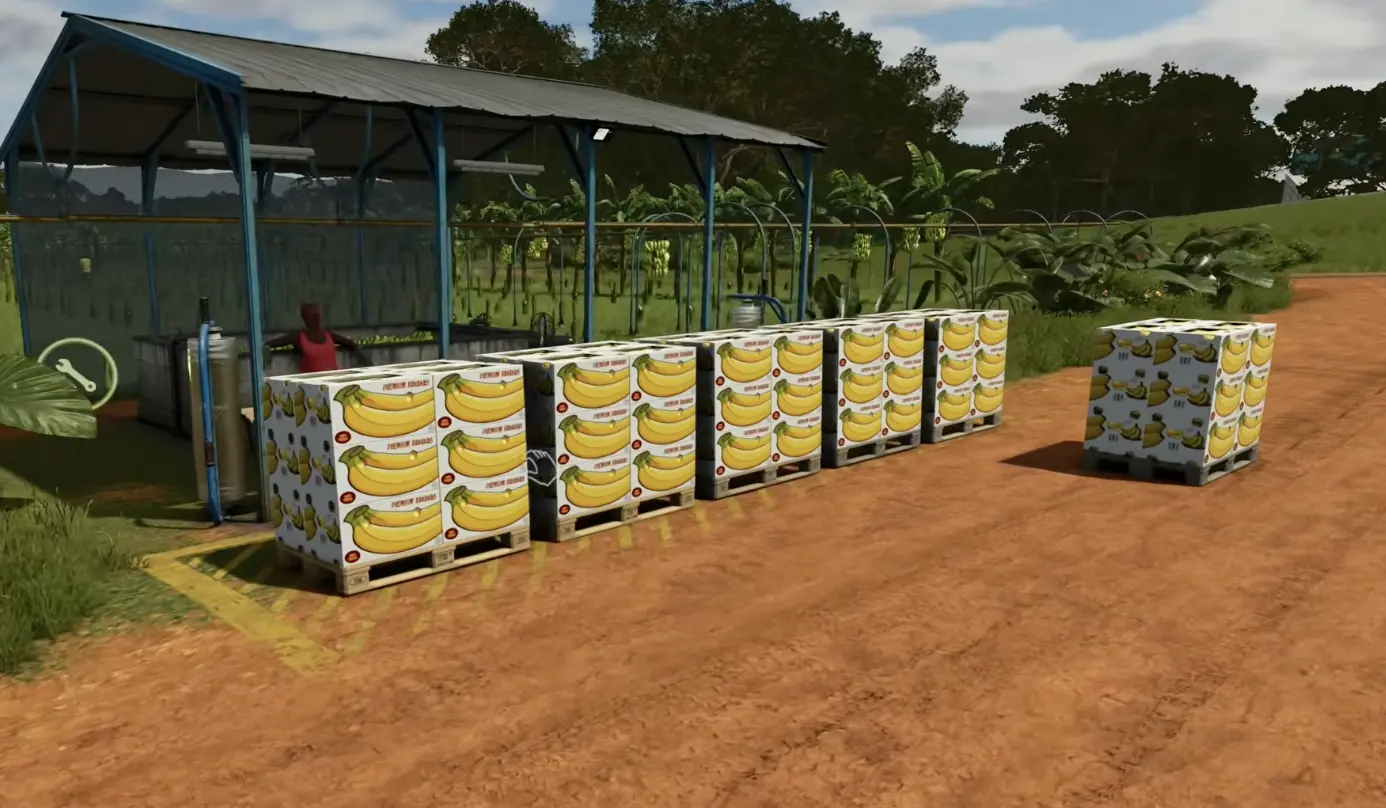
The raw fruit and boxed product are different stages of the production chain. Check which product your destination accepts before loading a trailer.
For a small plantation, doing the initial harvest by hand is a useful way to understand how many plants a single rail and washing station can handle. Once that is clear, the same transport layout can support hired workers.
How to Hire Workers for Banana Harvesting
Open the washing station’s management menu and select the worker controls.
The management screen displays the number of plants within reach, the number of washing stations, and the worker capacity available for the plantation.
Workers assigned through this system automatically tend and harvest reachable banana plants along the connected rails.
Workers are shared across the connected banana washing stations. They are not a separate full allocation for every station you build.
That is an important distinction when expanding. Adding another station may improve the transport and storage arrangement, but it does not automatically multiply the total worker capacity.
Check Plants in Reach Before Hiring More Workers
One large automated plantation had the following worker configuration:
- 20 hired workers
- 1,622 / 1,622 plants in reach
- 100% worker coverage
- 2 washing stations
- $4,000 in daily worker costs
- Approximately 232 plants ripening per day
- Worker capacity displayed as 800 plants per day
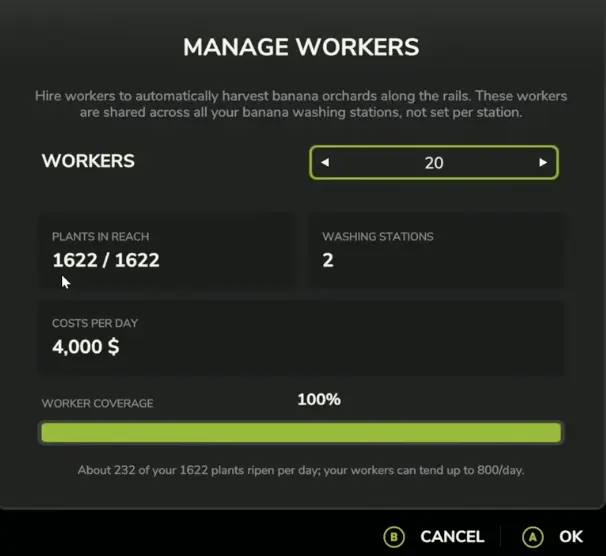
These figures describe that plantation and its worker configuration, not a fixed production rate for every farm.
The important comparison is between the number of plants becoming ripe and the amount of work the hired workers can actually finish. A displayed capacity greater than the daily ripening count is encouraging, but it does not guarantee that every bunch will be collected before its harvest window ends.
In another operating farm, three hired workers cost 600 game-currency units per day. They successfully collected bananas, but the plantation still lost unharvested fruit later in the cycle.
These are reasons to monitor the first automated harvest before extending the farm further.
Should You Harvest by Hand or Use Workers?
For a small planting area, manual harvesting avoids daily wages. Holding the machete interaction while moving alongside a rail can clear a short row relatively quickly, and there is no need to pay workers throughout the growing period.
Workers become more useful when the plantation grows beyond what you want to collect personally. They can work on connected rows while you operate machines or manage other crops, and you can still help with manual harvesting.
The strongest arrangement is often a combination of the two. Allow workers to process the regular harvest, then manually clear any remaining ripe rows before they deteriorate.
Keep an eye on the planting area rather than the walking animation of individual workers. A worker moving around the plantation is not proof that every row is being harvested.
Why Are Banana Workers Not Harvesting Everything?
When an automated harvest is running, three different problems can produce a similar result: ripe bananas remain on their plants.
The fastest way to distinguish them is to check the network status, the station storage, and the crop condition in that order.
Workers Cannot Reach Some Plants
Compare Plants in Reach with the total number of banana plants in the worker management menu. Missing plants indicate that part of the plantation lacks usable rail coverage or a completed connection to the washing station.
Return to the rail layout and correct the affected connections before hiring additional workers. More workers cannot harvest plants that the transport network cannot reach.
Banana Railway Is Out of Storage Space
A large automated plantation displayed the warning “A banana rail network is out of storage space. Consider building another washing station.” while workers were harvesting.
The washing station’s storage readout reached 10,000 L during that operation. Processing subsequently freed space and the rail resumed accepting more bananas, making the warning intermittent rather than permanently stopping the plantation.
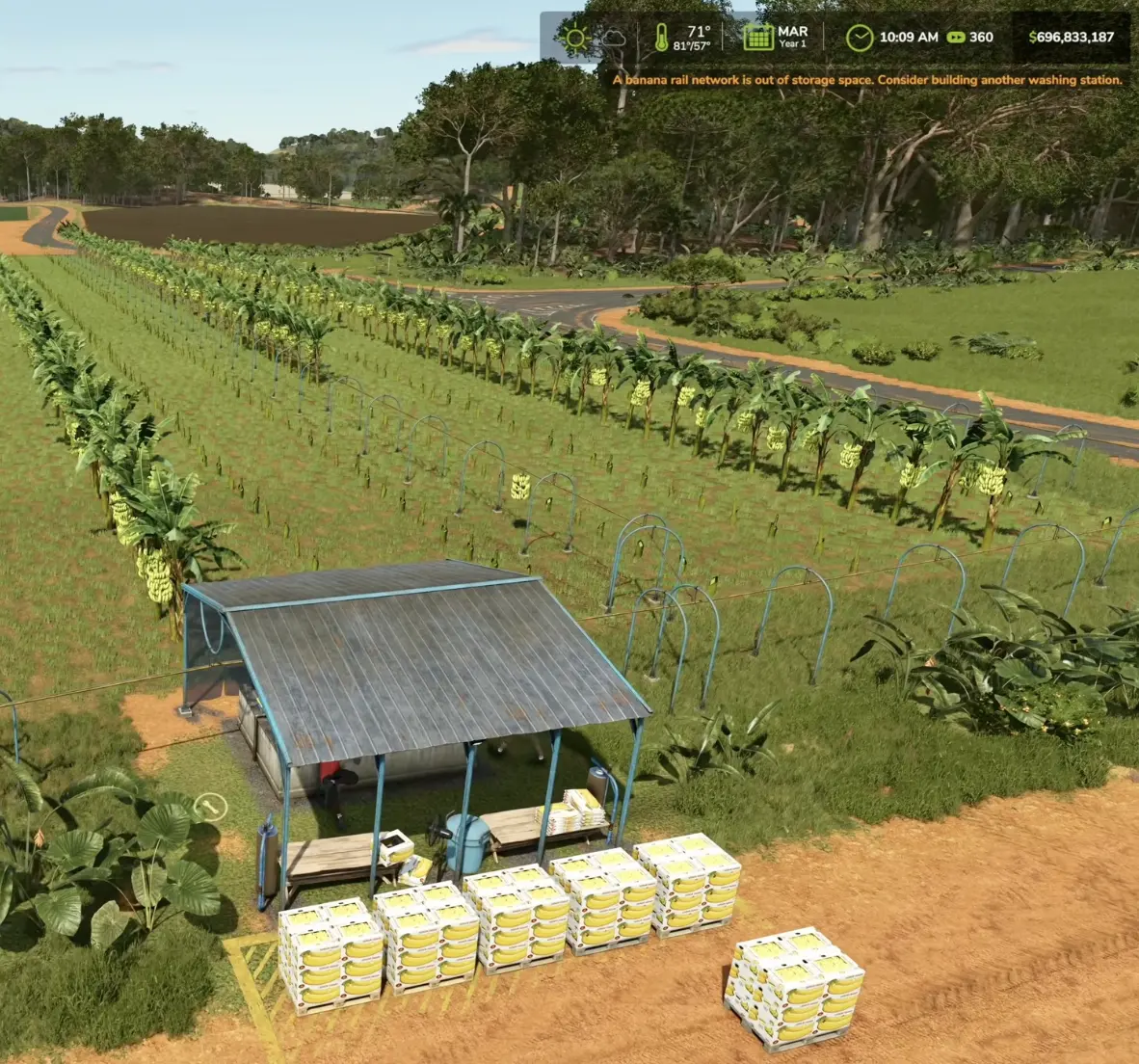
Open the station’s production menu and confirm that banana-box production is active. Check whether stored bananas are being processed and whether the station has room for further deliveries.
If the same capacity warning keeps appearing while ripe fruit accumulates elsewhere, the collection network is processing too slowly for the current plantation.
Additional washing stations may help distribute the load, but that is an expensive change to make after planting. Make sure the existing production is operating properly before purchasing more infrastructure.
Why Are Bananas Withering, and Can You Save Them?
Even with connected rails and hired workers, ripe bananas can remain unharvested long enough to wither. Full worker coverage only confirms that the plants are accessible; it does not mean every bunch will be collected before its harvest window closes.
A plantation with 1,622 reachable plants and two washing stations still experienced uneven automatic harvesting. Some rows were cleared while others remained ripe. After advancing time, part of the remaining crop withered. A smaller plantation also lost bananas despite employing all three workers available in that setup.
The warning sign is uneven progress across the field. When several rows remain full while others have already been harvested, clear the outstanding ripe bunches manually rather than advancing through more days. The harvest is only successful when the fruit has actually been collected.
Withering is not always caused by frost. Unharvested bananas have entered the Withered state even with Frost Damage, Orchard Disease, and Seasonal Growth disabled. Changing those settings will not recover fruit that has already been lost.
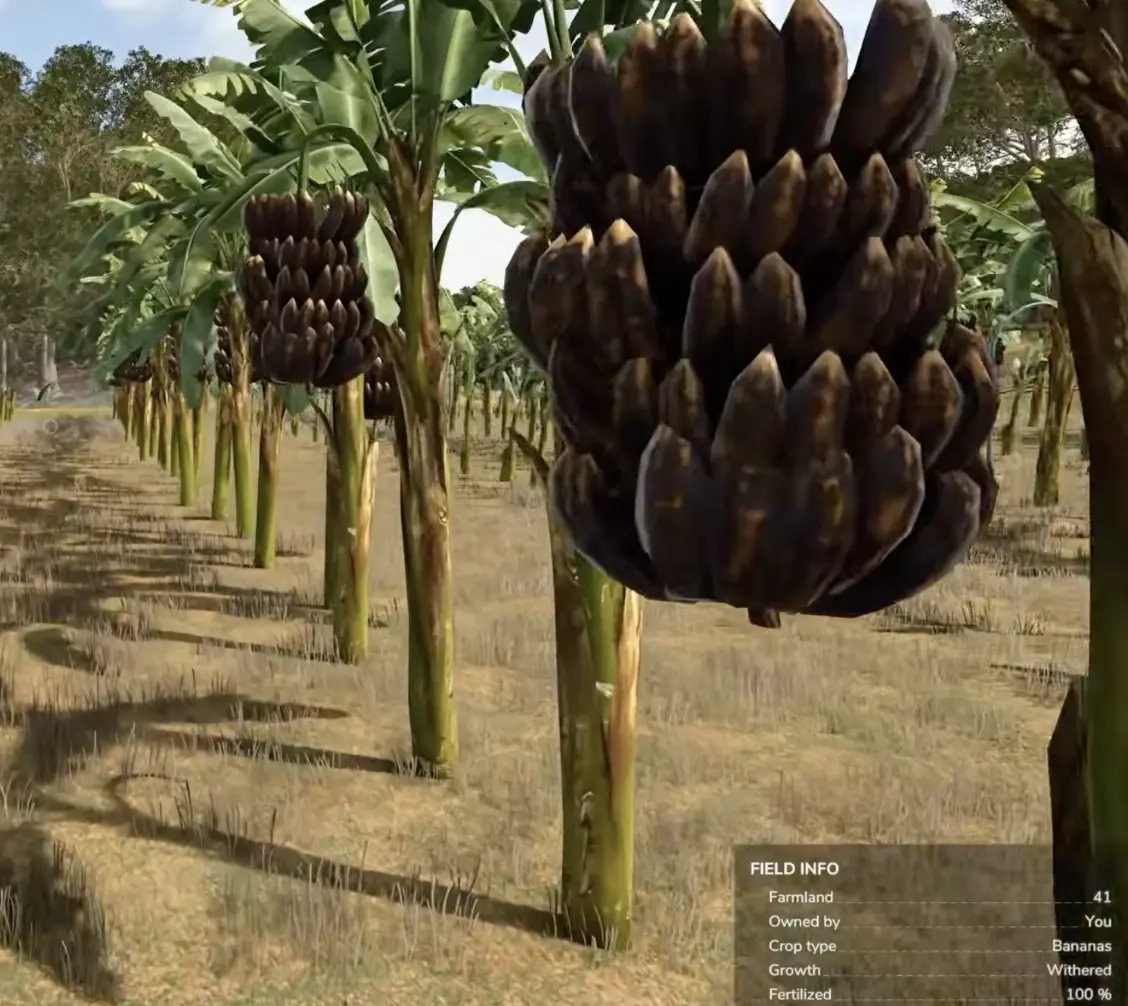
The exact number of days a ripe plant remains harvestable should not be treated as fixed without accounting for the game’s current growth conditions. The observed plantations lost fruit during the active harvest period, but the available results do not establish one universal expiration timer.
Once the fruit has withered, the lost bunches are no longer a normal harvest. The remaining plants need to be cut back so another growth cycle can begin.
Use the machete to remove the old growth. Check that the plants return to a new growth state, then resume their ordinary care and fertilization as required.
What Can You Make With Banana Boxes?
Once the washing station has produced banana boxes, they can be sold or moved into other production chains.
The available options include several different processing facilities:
Banana Drying Station: Processes banana boxes into banana chips. There is also a banana-chip recipe involving honey, making beekeeping relevant if you want to run that option.
Bakery: Uses banana boxes with other ingredients to produce banana cakes.
Canning Factory: Handles products including banana jam, banana snacks, and fried bananas. Fried-banana recipes use vegetable oils such as canola, olive, or sunflower oil, while jam requires sugar.
Dairy: Uses banana boxes with milk to produce banana milk.
These are different production choices rather than steps that every banana harvest must follow.
If you only need immediate cash and do not own the additional production facilities, raw bananas can be sold directly at the Farmers Market. That avoids building an entire processing chain before receiving income.
Banana boxes give you access to more products, but further processing introduces new ingredient requirements and facility costs. A profitable-looking finished product is not necessarily the best early investment if its additional ingredients are expensive or its production rate is slow.
There is also a transport cost in time and equipment. Banana boxes appear as pallets, so make sure you have a practical way to load and move them. A suitable flatbed trailer and pallet-handling attachment can serve this purpose without requiring a large dedicated haulage setup.
Choose one downstream product that matches the resources you already produce, and check its actual recipe and processing speed before buying another factory.
When Should You Expand Your Banana Plantation?
The first completed harvest tells you more about a plantation’s useful size than the number of rows you can afford to build. Before extending the planting area, check how much fruit was collected, how much remained unharvested, and whether the washing station kept processing throughout the harvest.
Expanding makes sense when the existing rows are consistently cleared and the station has unused processing capacity. If fruit regularly accumulates or workers leave ripe plants behind, additional rows will increase the amount of unfinished work. The investment is better directed toward improving the existing operation.
Labor costs can also change the decision. A large plantation employing 20 workers may be convenient, but the $4,000 daily wage in the earlier example creates a substantial operating expense. Extra production needs to justify that cost before the planting area grows further.
For farms already managing other crops and livestock, a smaller banana plantation can provide a recurring supply of raw material without demanding constant attention. Once the previous harvest has been cleared and the remaining plants have been cut back, the next growth cycle can proceed using the same plantation and transport infrastructure.