How I Keep Missions Moving in Yet Another Zombie Survivors
The mission route I use in 1.0: check objectives and requirements, choose the right leader, map and mode, then return to Camp after each clear.
Updated:
Quick Answer
Before every mission run, I check:
the objective
→ the required Survivor
→ the arena and mode
→ whether my account can actually perform the requirement
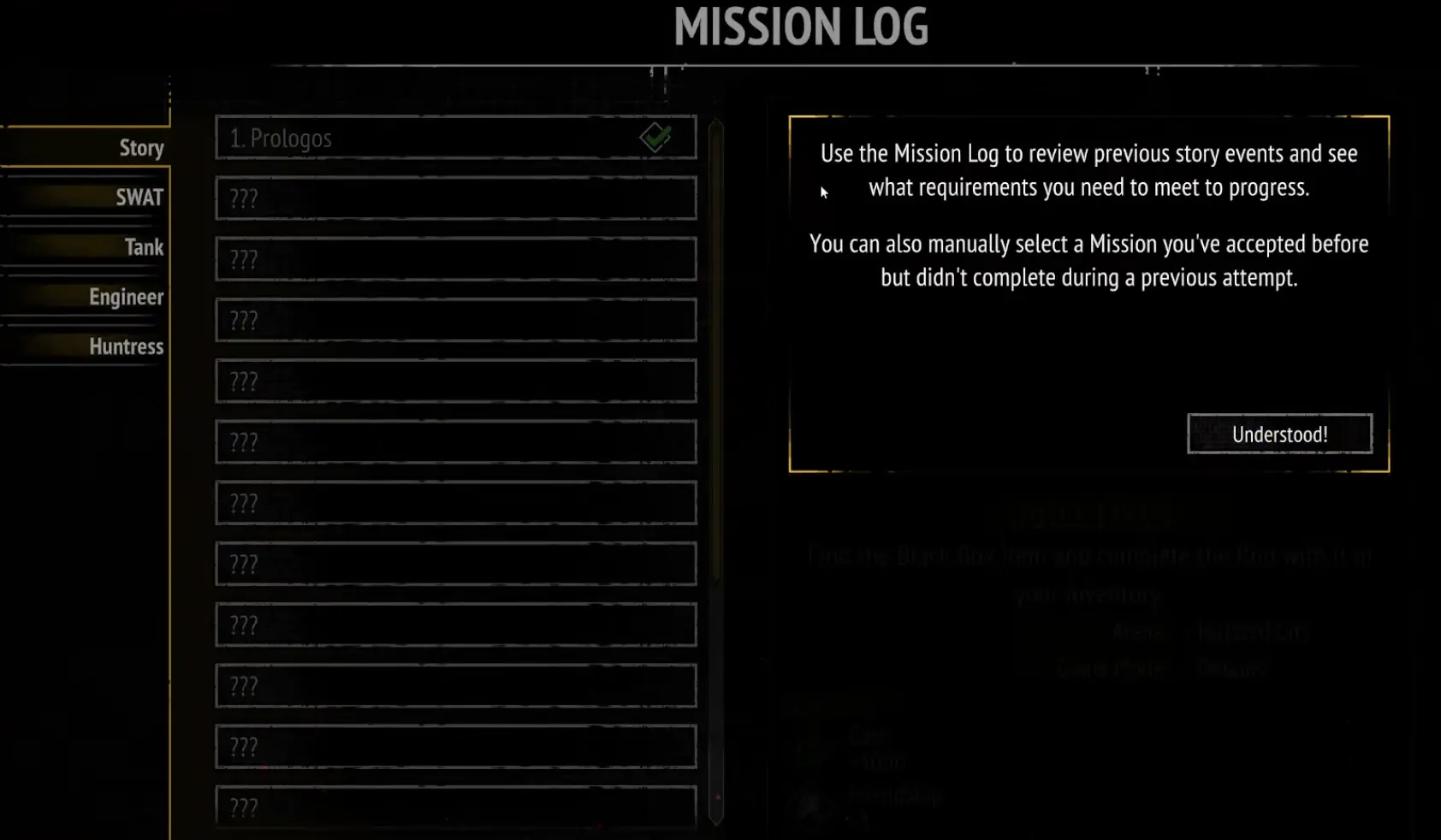
If I already accepted a mission and failed it, I check the Mission Log instead of waiting for the Briefing Room to offer it again.
After a successful mission, I return to Camp before immediately starting another run because the clear can change the next mission, available modes, weapons and other progression.
The easiest way I found to waste a run in 1.0 was pressing Play before reading the mission.
A mission can care about much more than simply surviving.
It may require:
- a specific Survivor;
- a particular arena;
- a particular game mode;
- a timed pickup;
- a mission item;
- several interactions during one run;
- an account function I have not developed enough yet.
That means I no longer build my favorite team first and hope the mission completes somewhere along the way.
I read the objective first.
Then I decide what kind of run I actually need.
I Start in the Briefing Room
The Survivors’ Camp is where I reset my plan after a run.
For missions, the important stop is the Briefing Room.
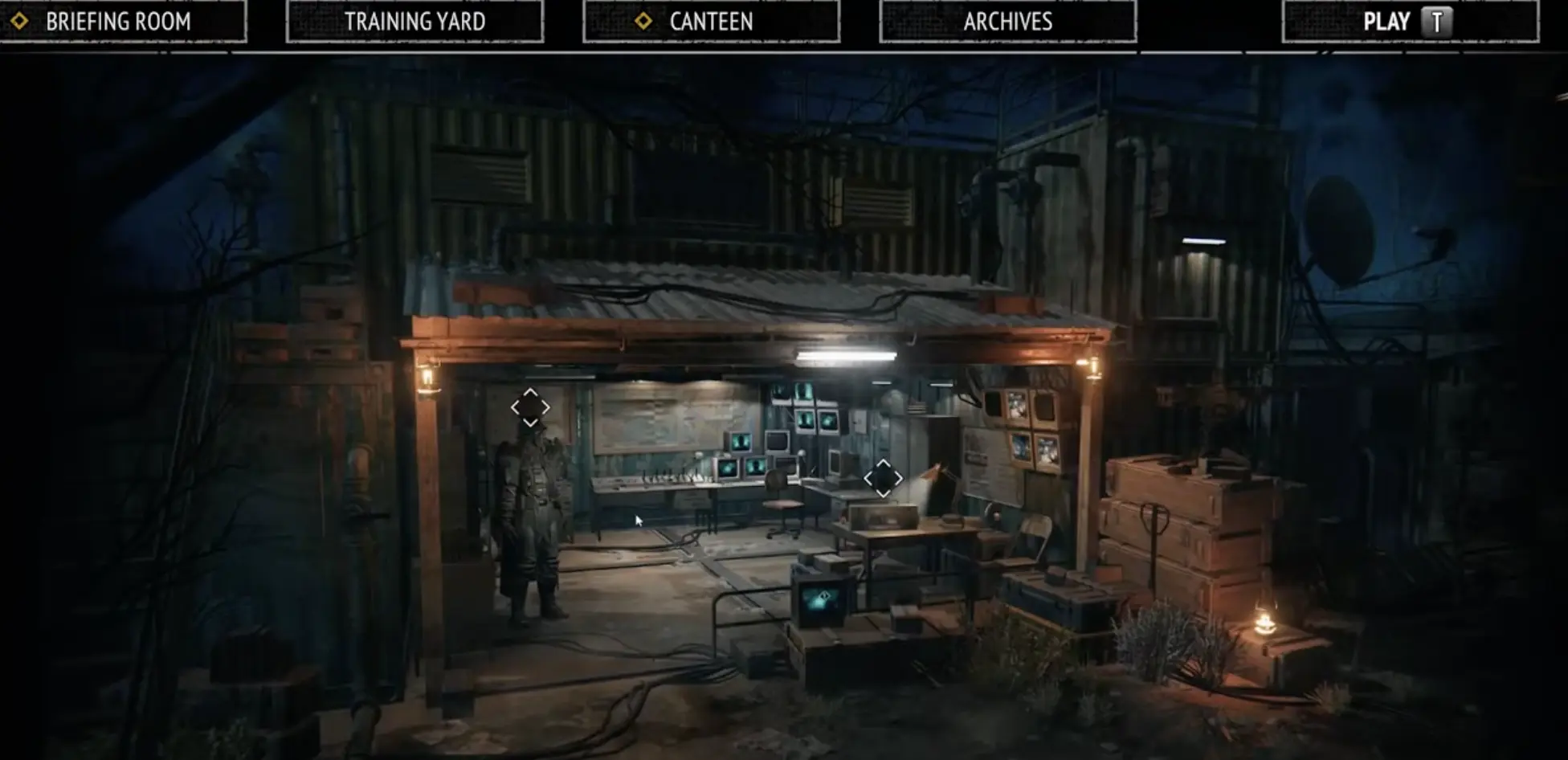
This is where I accept the mission and read the condition before spending resources or choosing the squad.
That order matters because a useful upgrade for a normal run is not always useful for the next mission.
I want to know what the game is asking before I decide what the account needs.
The Objective Changes the Run
The early Tank mission Breaking and Entering made this clear immediately.
It asks me to collect the Killing Frenzy timed power-up at least three times.
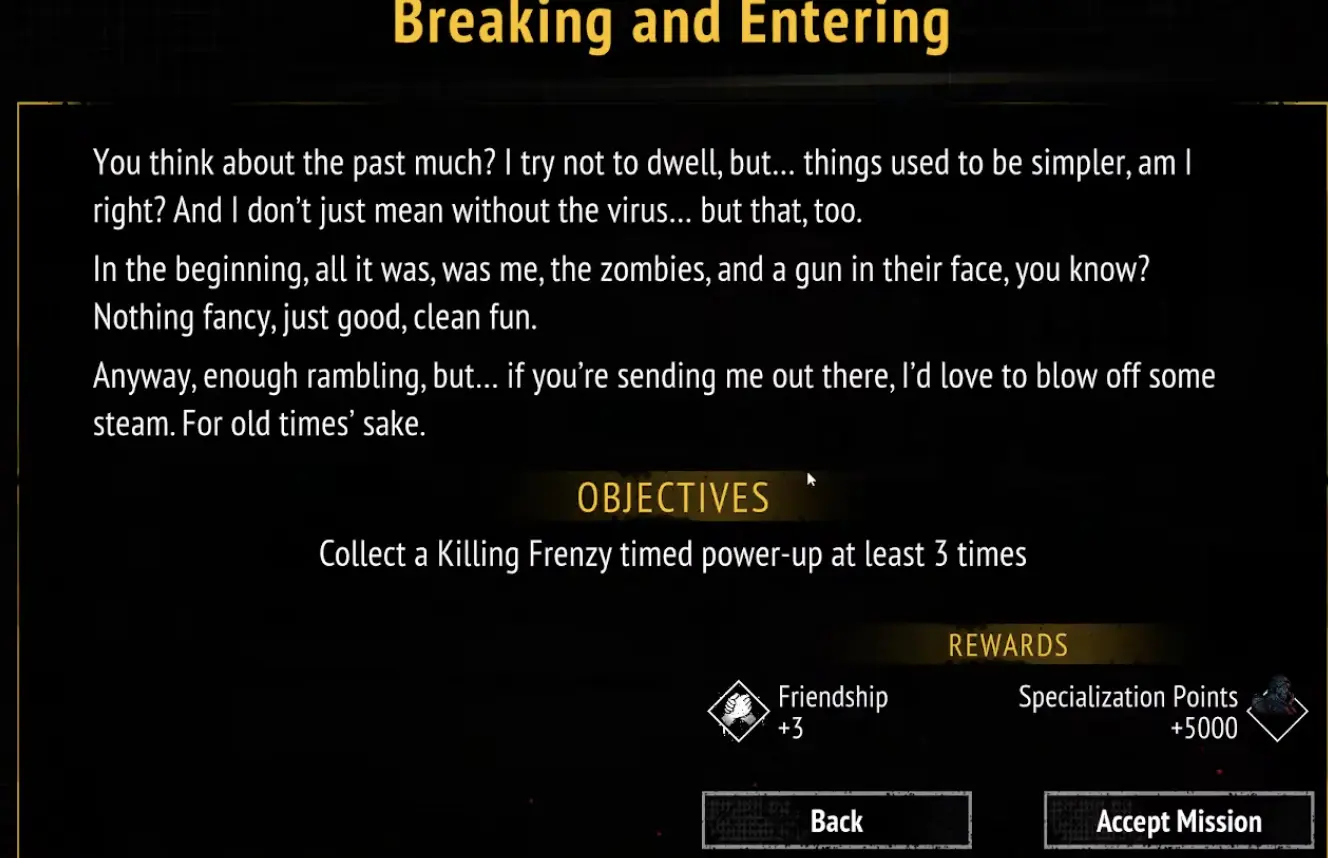
I can still build damage normally.
I can still level weapons.
I can still recruit Survivors.
But I cannot completely ignore the pickup that the mission is tracking.
A strong 20-minute run is not automatically a successful mission run.
That changed my basic order to:
accept the mission
→ read the condition
→ build the run around that condition
I Return to Camp After a Mission Clear
After completing a mission, I do not automatically repeat the same setup.
I return to Camp.
One early clear changed several parts of the account at once, including new weapons, another arena, another mode and the next mission.
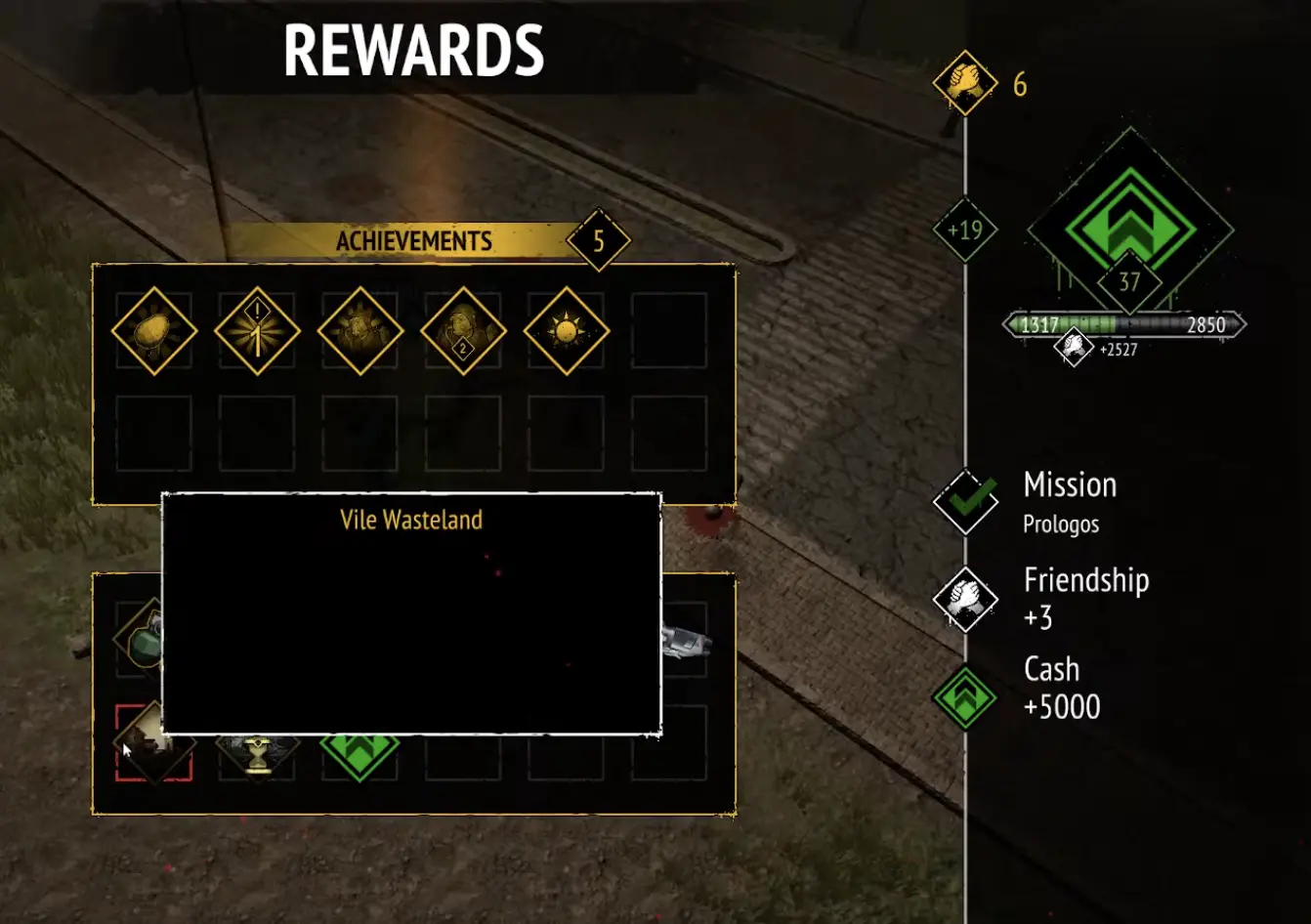
This is why I avoid planning several runs in advance.
The next mission may immediately change what I need.
A new mode might open.
A Survivor might gain access to another progression step.
A new requirement might make a utility upgrade more valuable than another damage node.
I make the next decision after seeing what changed.
The Mission Log Is More Than Story History
The Mission Log is one of the most useful parts of the Camp.
I use it when:
- I want to review a mission I already saw;
- I need to check its requirements again;
- a failed mission needs another attempt;
- I am no longer sure what progression condition comes next.
If I accepted a mission and failed it, I do not assume I have to wait for it to cycle back into the Briefing Room.
I check the Mission Log and reselect it.
That alone saves a lot of pointless runs.
I Check Arena and Mode Before Building the Team
Some missions only make sense in a specific setup.
The requirement can include:
Arena
and:
Game Mode
So before I think about weapons or synergies, I make sure I am entering the correct content.
My order is:
- read the mission;
- check the arena;
- check the mode;
- check the required Survivor;
- then build the rest of the squad.
This prevents a frustrating type of failure:
finishing a good run and realizing it was never eligible for the mission in the first place.
Survivor Missions Can Override My Normal Leader Choice
Normally I may choose a leader because:
- I want their starting weapon;
- I want to level them;
- they make the opening safer;
- they fit the team I want to build.
A Survivor-specific mission can override all of that.
If the mission requires a particular character to lead, that requirement comes first.
I do not finish selecting a three-Survivor build and then check the mission afterward.
The leader is part of the mission setup.
That is especially important when I am developing a character who is not currently my strongest option.
I may have a stronger leader available.
If the mission wants someone else, I use the required Survivor and adjust the rest of the team around that decision.
I Check Whether the Account Can Perform the Objective
Some missions are not difficult because the enemies are strong.
They are difficult because my account is missing enough utility to complete the condition efficiently.
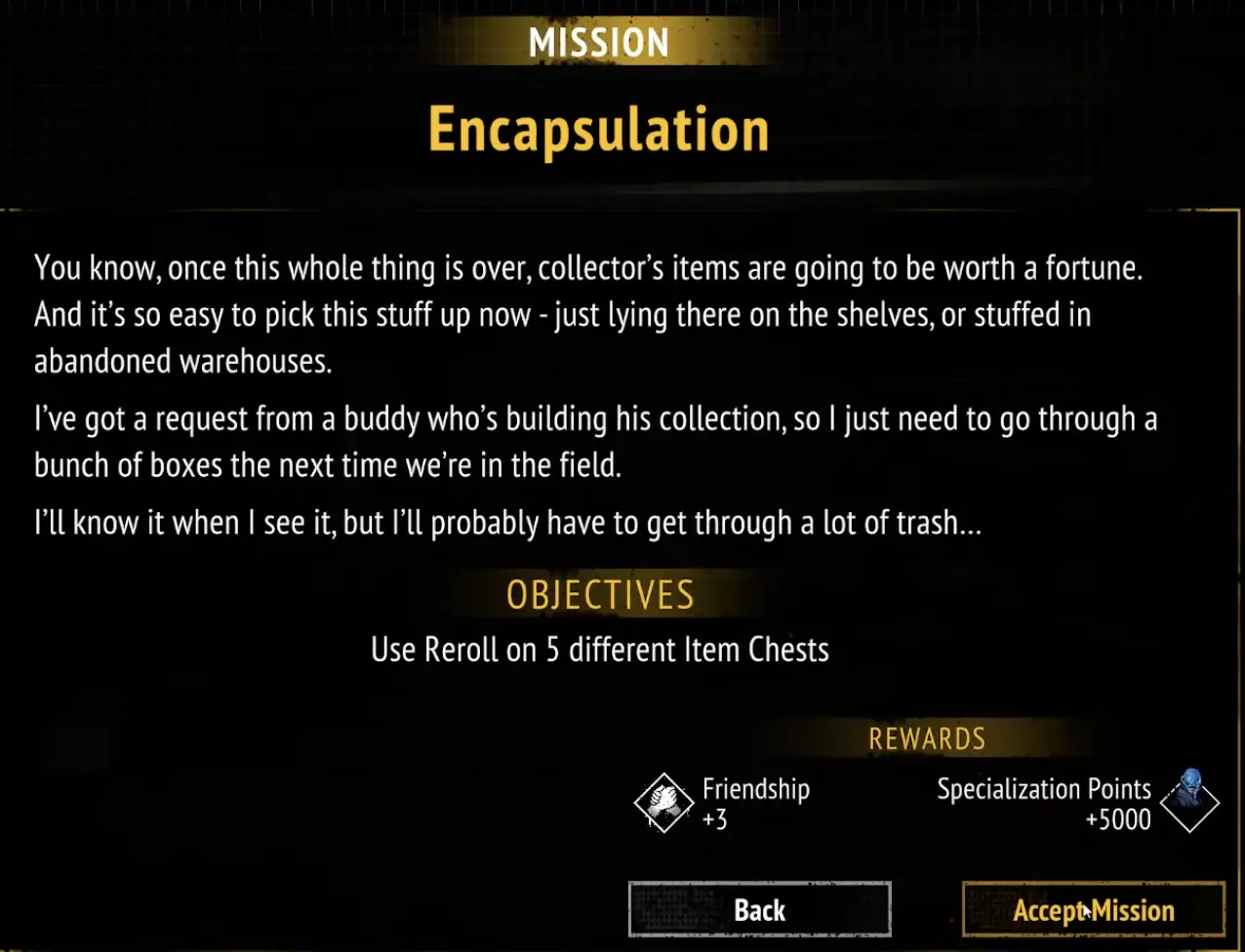
A Ghost mission gave me a clear example.
The objective required rerolling five different Item Chests.
At the time, I only had two reroll charges available.
The important lesson was not the exact mission.
It was the type of requirement.
If the objective depends on an account function, I ask:
Can my current account actually do this enough times?
If the answer is no, I solve that first.
Another Weapon Damage upgrade does not help a reroll requirement.
More Health does not create another reroll charge.
The mission tells me what type of progression is currently useful.
I Do Not Spend Everything Before Reading the Next Mission
Because of requirements like that, I am careful about immediately spending every permanent resource after a clear.
If normal runs are already stable, I prefer checking the Briefing Room before emptying my points into another small combat increase.
The next mission may reveal a more useful purchase.
There is a major difference between:
this upgrade makes every run slightly stronger
and:
this upgrade allows the next mission to work at all.
When progression is blocked by the second situation, I prioritize it.
Mission Items Change the Goal of the Run
Some missions require me to obtain an item and carry it through the rest of the attempt.
That changes how I value risk.
The Black Box mission is the clearest early example.
Finding the item is not the entire objective.
I also need to complete the run while still carrying it.
Once I have the required item, I am much less interested in taking unnecessary risks simply to increase damage a little further.
The full route for that mission is in my Prologos Black Box guide.
The general mission rule is:
if the objective requires me to finish with something, obtaining it changes the run from searching to protecting the clear.
Main Story and Survivor Missions Are Different Tracks
The mission system has more than one progression path.
There is the broader Main Story.
There are also story missions tied to individual Survivors.
I treat those separately.
The main story pushes the overall campaign forward.
Survivor missions develop individual characters and their own mission chains.
That matters when I decide who I want to focus on next.
I do not assume progressing one Survivor automatically means I am advancing every other mission track at the same pace.
Repeatable Missions Come After Survivor Story Progression
Repeatable Missions are not where I spend my attention at the beginning.
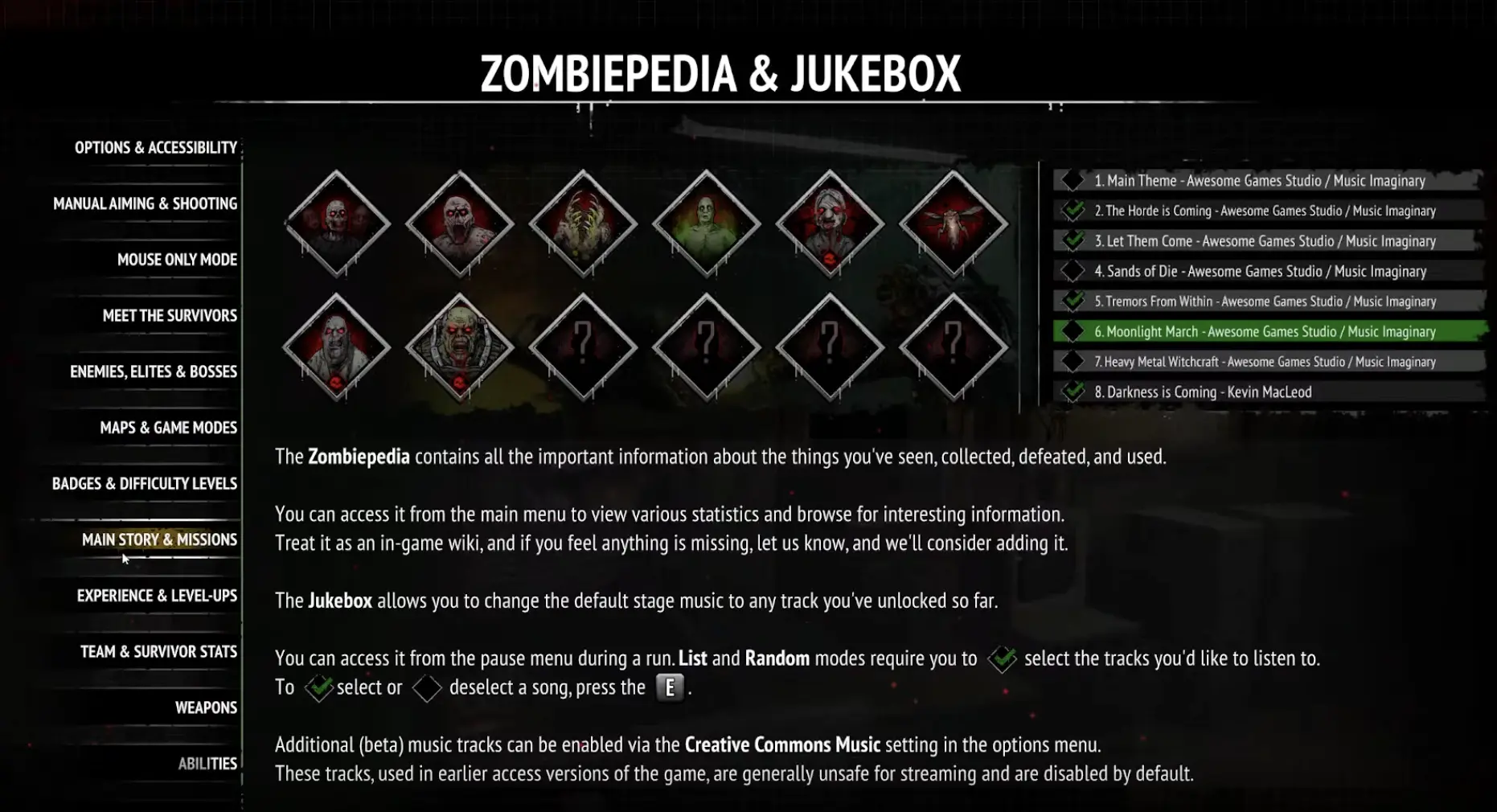
The game introduces them after the relevant Survivor story progression has been completed.
So early on, I focus on:
main progression
and:
Survivor story chains
instead of wondering why I do not have a large repeatable-mission loop yet.
Once a Survivor’s story sequence is complete, repeatables become another reason to keep using that character and returning to the Camp.
Missions and Achievements Naturally Overlap
Many 1.0 achievements follow the mission structure.
That means I do not chase the achievement separately when completing the mission already awards it.
If the objective belongs to:
- the main story;
- a Survivor mission;
- a Repeatable Mission milestone;
I focus on completing the mission correctly.
The achievement arrives as part of that progression.
I keep the actual achievement cleanup strategy in my achievements guide.
For mission progression, I do not need a second checklist for the same objective.
I Read Numbers in Mission Objectives Literally
A mission requirement such as:
collect Killing Frenzy three times
or:
interact with five different Item Chests
is something I track during the run.
I do not treat the number as flavor text.
If the condition says different chests, repeating the same interaction on one chest does not become five separate objectives just because I spent five charges.
If the condition asks for three pickups, I keep paying attention until all three have counted.
These are small details, but they are exactly the kind of thing that can turn an otherwise successful run into another attempt.
I Do Not Let the Mission Destroy a Working Build
Building around the objective does not mean I ignore survival.
If the mission needs five interactions but my team cannot control the Horde long enough to reach them, I still need enough damage.
If a required Survivor is underdeveloped, I support them with a stronger squad.
If the objective is already complete but the run must still be finished, I switch back toward reliability.
The mission tells me what must happen.
The build still has to keep me alive long enough to make it happen.
For weapon paths and team composition, I use my builds and synergies guide.
My Pre-Run Mission Check
Before I press Play, I want five answers.
What is the actual objective?
I read the complete requirement, including the number of times something must happen.
Is a specific Survivor required?
If yes, I put that Survivor in the correct role before building the rest of the squad.
Is there a required arena or mode?
I select those before thinking about optimization.
Can my account perform the objective?
If the requirement depends on something like rerolls or another utility function, I make sure I have enough access to it.
What makes this run fail after the objective is complete?
If I still need to survive afterward, I do not weaken the build just to complete the first half of the condition.
Only after those checks do I start the run.
When Mission Progression Still Looks Wrong
If I have checked the objective, leader, arena and mode but the mission still does not appear or progress correctly, I stop treating it as a normal mission-planning problem.
That is when I use my mission progression troubleshooting guide.
For a normal mission, my route stays simple:
Briefing Room
→ read the objective
→ check leader, arena and mode
→ check whether the account can perform the condition
→ complete the run
→ return to Camp
That loop keeps mission progression much cleaner than pressing Play first and trying to remember the objective after the Horde is already on screen.