A practical MECCHA CHAMELEON beginner guide covering the first match, hide time, hiding spot selection, painting order, too-buried warnings, hider score, seeker basics, and common early mistakes.
A practical MECCHA CHAMELEON seeker guide for players who keep missing tiny hiders, wasting health on missed shots, walking past good spots, and struggling with score clues, whistles, curtains, shelves, ceilings, Indoor Country, and room sweeps.
Use this MECCHA CHAMELEON guide hub as the route map for the whole cluster. Start with the Beginner Guide for controls, paint mode, hide time, crouch, climb, and first match setup. Move to the Hider Guide if you keep getting found, the Seeker Guide if you walk past tiny hiders or lose health on missed shots, and the Maps & Hiding Spots Guide for the current five maps: Hide-and-Seek Mansion, Indoor Country, Sewer, Backrooms, and Penguin Hotel.
What This MECCHA CHAMELEON Guide Hub Covers
MECCHA CHAMELEON looks simple at first: hide, paint, and hope nobody sees you.
Then the real game starts.
A bad paint job can survive if the spot is believable. A perfect color match can fail if your body still reads as a player. Seekers can look straight at someone and still miss them. Hiders can gain score because a seeker looked near them without understanding what they were seeing. Seekers also need to protect health, because missed shots are not free.
This hub points you to the guide that solves your current problem instead of forcing you to read every page in order.
The first skill is not painting perfectly. It is understanding the role, timer, map, controls, and what seekers can actually see.
Round flow, core mechanics, guide routing, and common problem diagnosis
Round Flow in 60 Seconds
A normal round has two roles.
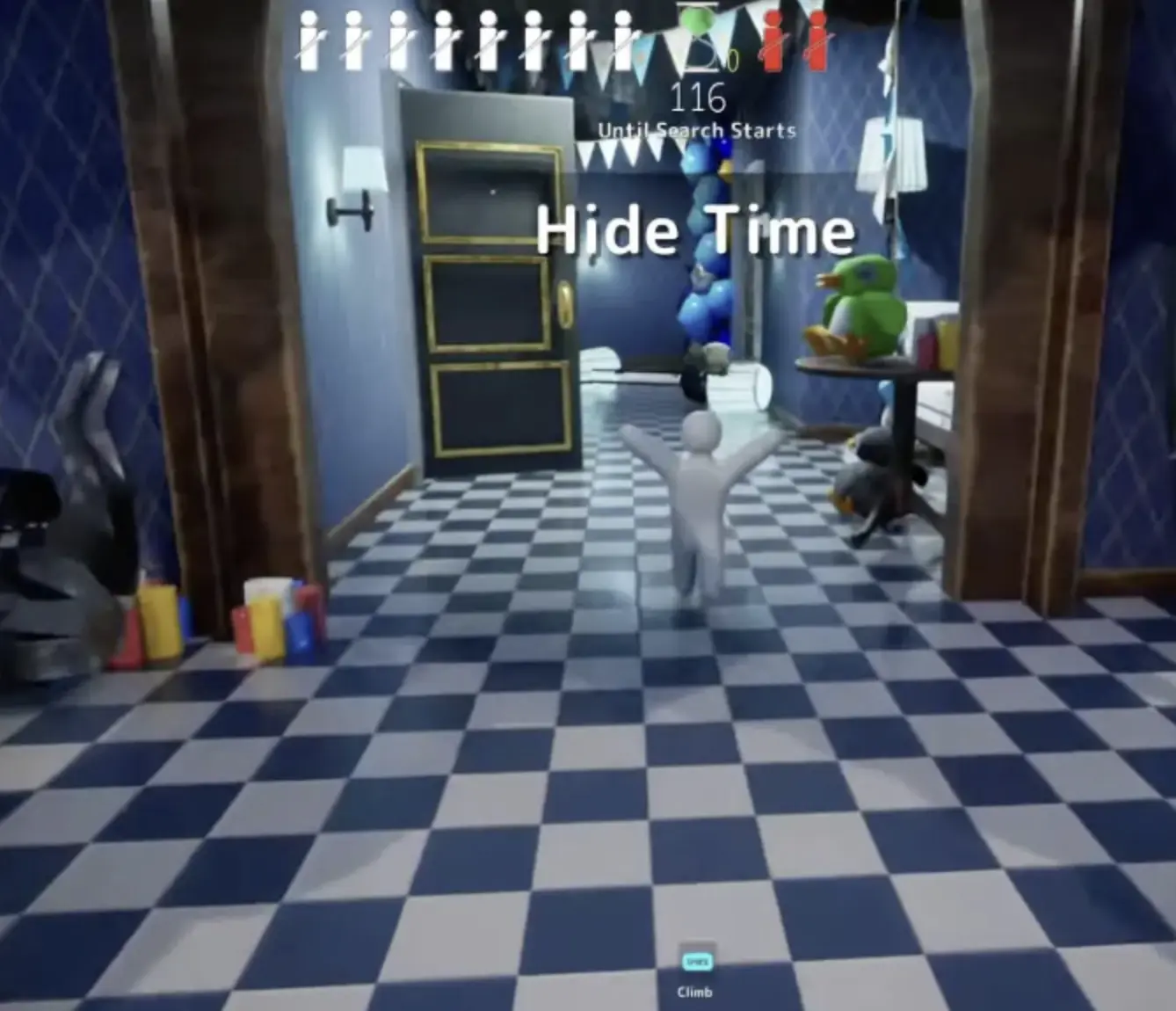
Hiders get setup time first. They choose a spot, paint their body, adjust pose, avoid bad geometry, and decide whether sound is worth the risk. Seekers enter later and search the map with movement, score clues, sound direction, visual suspicion, and limited health.
Round part
What happens
What new players usually miss
First match setup
You join a public room or private lobby
Small public rooms are easier to learn than chaotic large lobbies
Hide time
Hiders pick a spot, paint, pose, and adjust angle
The timer disappears quickly if you paint before choosing a spot
Paint and pose
Hiders use paint mode, color sampling, crouch, climb, and poses
Shape, light, and pattern matter as much as color
Search start
Seekers begin sweeping rooms
Hiders are smaller, lower, higher, and more object-like than expected
Seeker shots
Seekers shoot to confirm suspicious shapes
Missed shots cost health, so random spraying is a bad habit
Score gain
Hiders can gain points when seekers look near them and fail to find them
Score is an attention clue, not an exact radar
Whistles and taunts
Hiders can use sound to bait or misdirect seekers
Sound can waste seeker time or reveal the exact room
Too-buried warning
The game warns if a hider is pushed too deep into geometry
A greedy spot can reveal itself before seekers even arrive
Core Mechanics You Should Understand First
You do not need to master every map before having fun, but you should understand these mechanics early.
Mechanic
Why it matters
Detailed guide
Controls
Paint, crouch, climb, shoot, and camera control decide whether you can use a spot at all
Beginner Path: Controls, Paint, and First Mistakes
If you are new, the biggest blocker is not strategy. It is the basics.
You need to know how to enter paint mode, sample colors, crouch, climb, pose, shoot as seeker, and read the timer before you can judge whether a spot is actually good.
Hider Path: Pose, Light, Pattern, and Plain-Sight Score
A good hider does not only “match the color.”
Most hiders who keep getting found have a pose, angle, lighting, or pattern problem before they have a pure color problem. The MECCHA CHAMELEON Hider Guide starts there: how to make your body read as a cushion, hay edge, wall patch, curtain fold, statue piece, ceiling shape, shelf object, sign detail, or shadow.
Plain-sight hiding works when the seeker looks near you but still reads your shape as part of the room.
Too-Buried, Flashing, and Legal Spots
Some spots look strong because they hide most of your body. That does not mean they are safe.
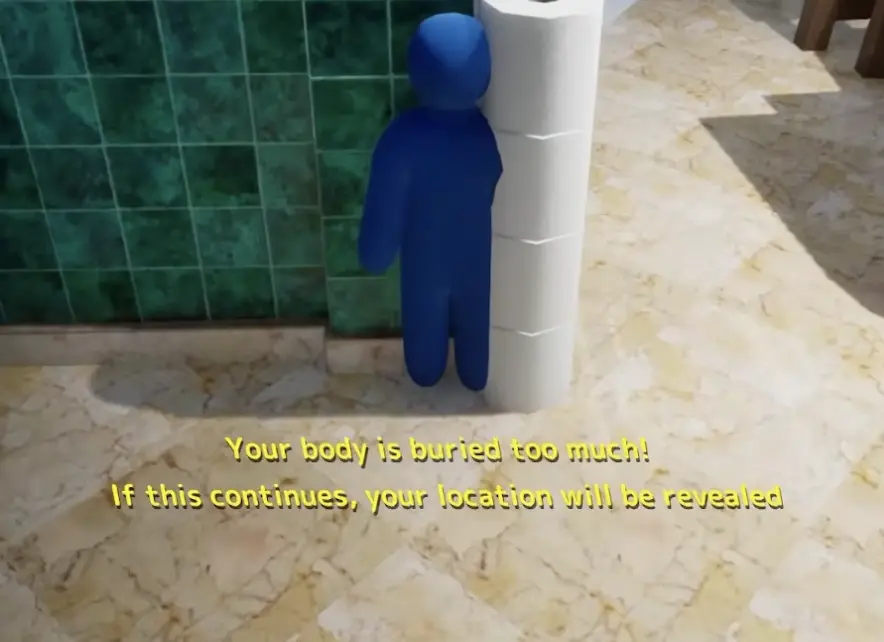
If you push too deep into a wall, object, curtain, shelf, ceiling piece, bathroom prop, or map edge, the game can warn that your body is buried too much. If you keep forcing it, your location can become obvious.
A too-buried warning means the spot is unstable. Move outward and repaint instead of forcing the same position.
Warning sign
What it usually means
Better move
Body is too buried
You are too deep inside geometry or an object
Move slightly out, then repaint the exposed area
You start flashing
The game may be revealing your position
Leave or fix the spot immediately
Only a head or limb sticks out
The spot may be funny but easy to confirm
Rotate or crouch so the visible part matches the prop
You cannot move cleanly
The spot may be trapping your body
Choose a simpler location before search starts
You are outside the playable area
The spot may break the round
Do not build your strategy around out-of-bounds hiding
Seeker Path: Sweep First, Shoot Second
As a seeker, the biggest mistake is treating the gun as your search tool.
Missed shots cost health, so your shot should confirm suspicion rather than replace observation. The MECCHA CHAMELEON Seeker Guide focuses on how to clear rooms without wasting health: fast first sweep, slow second pass, score clues, sound cones, curtain checks, ceiling checks, too-perfect spots, and object comparison.
Five Maps and What They Teach
MECCHA CHAMELEON maps do not all hide the same way.
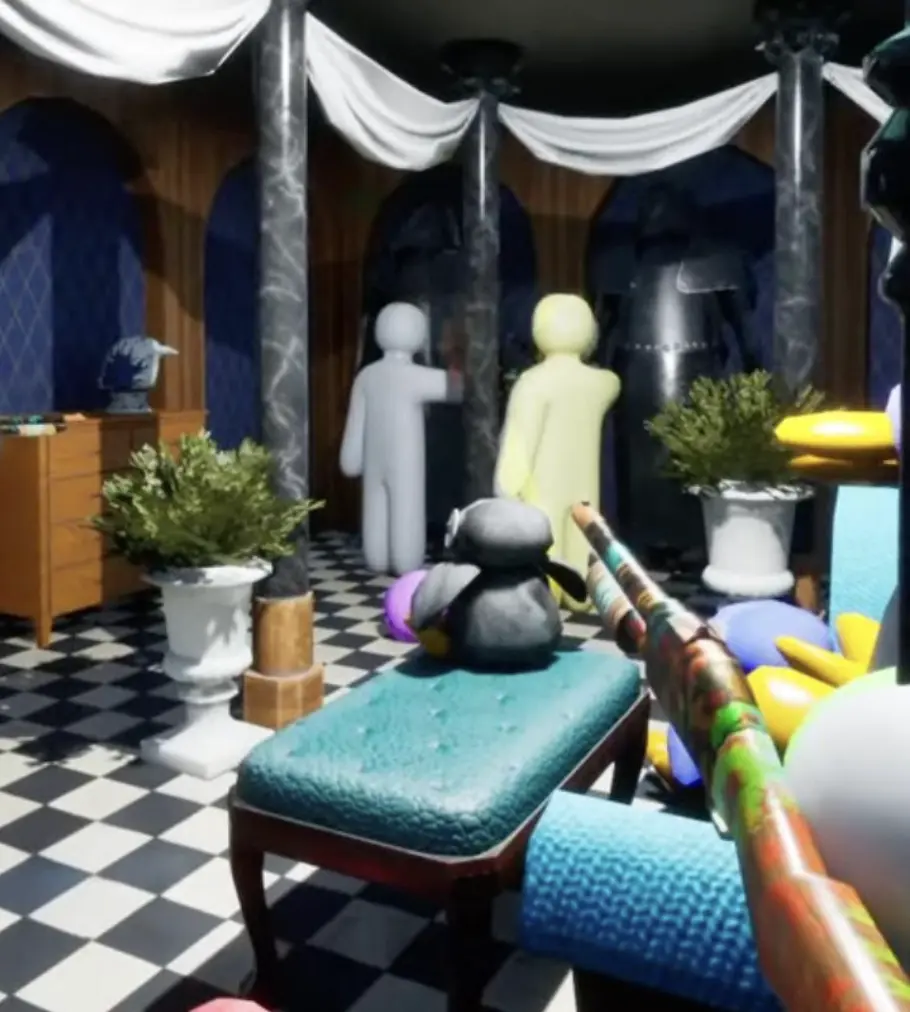
Mansion teaches furniture and curtains. Indoor Country teaches hay, animal props, bright walls, and open sightlines. Sewer teaches noisy textures. Backrooms teaches clean wall alignment. Penguin Hotel teaches themed object disguises and ceiling jokes.
Penguin Hotel is strong for themed props, ceiling fan spots, bathroom jokes, and risky plain-sight object disguises.
Use the Maps Guide’s spot reuse and lobby learning section
After Your First Few Rounds
After a few rounds, do not ask only whether you won or lost. Ask what kind of problem you actually have.
Getting found early usually means the doorway angle, pose, or spot choice failed before the paint mattered. Walking past hiders usually means your seeker route is too shallow. Losing health too fast means you are shooting before the room gives you a real clue. Struggling on one map means you need map identity, not more generic hiding tips.
Once you can name the problem, jump to the matching guide:
Beginner Guide for controls, first match setup, paint mode, hide time, crouch, climb, and basic scoring.
Hider Guide for pose, lighting, pattern matching, plain-sight hiding, sound bait, and too-buried fixes.
Seeker Guide for health-safe shots, room sweeps, score clues, whistles, too-perfect spots, and tiny hider detection.
Maps & Hiding Spots Guide for Hide-and-Seek Mansion, Indoor Country, Sewer, Backrooms, Penguin Hotel, spot difficulty, and seeker counters.
The House Always Wins FAQ
What is MECCHA CHAMELEON?+
MECCHA CHAMELEON is a hide-and-seek party game where hiders paint and pose their tiny bodies into the map while seekers sweep rooms, read score and sound clues, and shoot suspicious shapes.
Which MECCHA CHAMELEON guide should I read first?+
Start with the Beginner Guide if you need controls, paint mode, hide time, crouch, climb, and first match setup. Use the Hider Guide if you keep getting found, the Seeker Guide if you cannot find anyone, and the Maps & Hiding Spots Guide when you need map-specific spots.
How do you hide better in MECCHA CHAMELEON?+
Choose a believable spot, set your pose first, paint around light and shadow, copy major patterns, avoid too-buried warnings, and stay calm when seekers look near you.
How do you find hiders as a seeker?+
Sweep quickly first, then slow down around score changes, whistles, curtains, shelves, ceilings, hay, object clusters, and spots that look too clean or too smooth for the room.
Do missed shots cost health in MECCHA CHAMELEON?+
Yes. Missed shots cost seeker health, so do not spray every object. Build suspicion from shape, shadow, score, sound, movement, pattern breaks, or object placement, then shoot to confirm.
How many maps are in MECCHA CHAMELEON?+
This guide cluster covers the current five-map pool players search for: Hide-and-Seek Mansion, Indoor Country, Sewer, Backrooms, and Penguin Hotel.
What does too buried mean?+
Too buried means your body is pushed too far into geometry or an object. The game can warn you, make you flash, or reveal your location if you keep forcing the spot.
Are perfect paint jobs required?+
No. A rough paint job can still work if the pose, lighting, pattern, and object logic make seekers read you as part of the room instead of a player.