Echoes of Aincrad Weapon Upgrade & EX-Mods Guide
Learn how to upgrade weapons, use same-type EX-Mod synthesis, choose effects for bosses or farming, read ACV, and decide what to keep or sell.
Updated:
Quick Answer
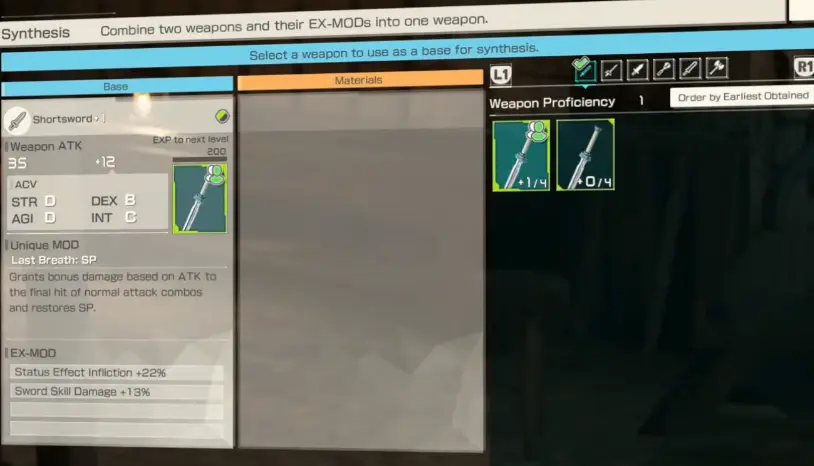
To upgrade weapons in Echoes of Aincrad, use the Smithy: enhance your main weapon, synthesize same-type weapons to pool up to four EX-Mods, forge new gear when recipes and materials allow, and sell only after checking donor value. The best weapon is not always the newest one. Read upgrade level, Weapon ATK, ACV, scaling, Unique MOD, EX-Mods, required materials, and Weapon Proficiency before replacing anything.
How to Upgrade Weapons at the Smithy
The Smithy is the center of weapon progression.
Do not treat it as a shop you visit only when damage feels low. The Smithy handles four important actions: enhance weapons, synthesize weapon abilities, forge new equipment, and sell items. Your first goal is to keep one reliable main weapon strong enough for the next route instead of spreading early materials across every new drop.
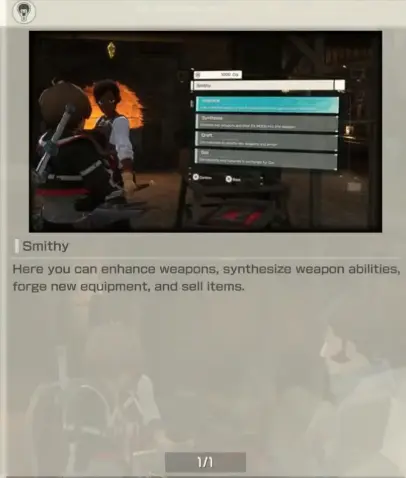
| Smithy action | What it does | How to use it |
|---|---|---|
| Enhance weapons | Raises the weapon’s level and improves its parameters | Upgrade the weapon you actually use |
| Synthesize weapon abilities | Combines weapon effects through synthesis | Preserve useful EX-Mods before selling old weapons |
| Forge new equipment | Creates weapons or armor from recipes and materials | Build toward a weapon path that fits your playstyle |
| Sell items | Converts unwanted gear into value | Sell only after checking MODs, EX-Mods, and donor value |
Weapon level and Weapon Proficiency are separate. Weapon level belongs to the specific weapon you enhance at the Smithy. Weapon Proficiency grows from using a weapon type. That is why constantly swapping weapon categories makes your upgrade path messy: you split materials, timing practice, and proficiency growth at the same time.
| Before upgrading | Check this |
|---|---|
| Current weapon level | Is the weapon already carrying your route? |
| Required materials | Can you pay the upgrade cost now? |
| Col budget | Will the upgrade leave you short on items or other gear? |
| Weapon Proficiency | Are you actually using this weapon type enough? |
| ACV and scaling | Do your Growth Points support this weapon? |
| EX-Mods | Do the effects solve your current combat problem? |
Reported Early Crafting Material Routes
These are practical early routes for materials that appear in Smithy crafting recipes. They are not a complete weapon-enhancement cost list. Before farming, open the exact Smithy recipe and check whether the requirement is a crafting material, another weapon, Col, or a separate enhancement resource.
The drop rates and route notes in this table are compiled from current online material databases and walkthrough references, then organized here as early-route planning notes. Use the enemy and route first; treat the percentage as a planning aid, not a guaranteed result on every run.
| Material | Early target | Reported drop rate | Quest / route | Where to look | Best use | Farming note |
|---|---|---|---|---|---|---|
| Crude Weapon Fragment | Shrewman | 25% | Within the Shadows | Follow the northwest quest route and investigate the marked wind gusts. The route includes several Shrewman encounters before and around the Northwest Temple Ruins Safe Area. | Early armor and heavy weapon recipes, including Soldier’s Mail, Bronze Axe, Wild Edge, Bronze Rod, and Steel Hammer | Best treated as a first-clear material route until you confirm repeat access in your save |
| Lustrous Carapace | Filthy Wasp | 8.33% | Within the Shadows | Reach the Megalith Forest: North Safe Area, then head southwest toward the next quest waypoint. Filthy Wasp can appear along this section. Wind Wasp encounters earlier in the quest are also worth checking. | Early dagger, rapier, and footwear recipes, including Annealed Dagger, Iron Tooth, Bronze Rapier, Steel Rapier, Ranger Boots, and Bronze Boots | Use this as the early wasp route when the Smithy asks for carapace materials |
| Smooth Hide | Dire Strife Wolf | 33.33% | The Violet Fencer I | Follow the quest route toward Teardrop Cave and defeat the Dire Strife Wolf before activating the cave’s Warp Terminal. | Early sword and glove recipes, including Shortsword, Bronze Sword, Annealed Blade, Steel Sword, Greatsword, Bandage Guards, and Iron Bangles | This is the cleanest early target to check when the Smithy asks for Smooth Hide |
Source note: the material drop rates and route notes in this section are compiled from current public material databases and walkthrough references, including SAOEoA Wiki, Gaming News, GameTrek, Sportskeeda, and AllThings.How. They are used here as online planning references and rewritten into early-route farming notes, not as guaranteed in-game drop results.
Additional Smooth Hide Route
One public Within the Shadows route also reports Glenspore Grizzly as a possible Smooth Hide source after leaving the Megalith Forest: North Safe Area and heading southwest toward the sealed boss area.
Use Dire Strife Wolf as the cleaner early target because database sources tie Smooth Hide directly to Dire Strife Wolf, while route sources tie Dire Strife Wolf to The Violet Fencer I and the path toward Teardrop Cave. Treat Glenspore Grizzly as a secondary Smooth Hide check when you are already progressing through Within the Shadows.
If your damage is acceptable but you die before completing attacks, check armor before spending more weapon materials.
How Synthesis and EX-Mod Pooling Work
Synthesis is why low-attack weapons can still matter.
The rule is simple: combine weapons of the same type to pool EX-Mods onto one weapon, up to four EX-Mods. A weak sword with a strong EX-Mod is not trash if you are building a sword path. A weak rapier with a good EX-Mod belongs in a rapier plan, not a sword plan.
| Inventory situation | Best action | Why |
|---|---|---|
| Low ATK, useful EX-Mod, same weapon type | Keep as donor | It can feed your active weapon path |
| High ATK, weak EX-Mods | Use now, improve later | Raw power helps, but the effect plan is unfinished |
| Duplicate weapon with different EX-Mods | Compare both | The best donor is not always the best main weapon |
| EXP-gain weapon | Use for farming | Swap before bosses or dangerous routes |
| Status EX-Mod without status setup | Hold only if building status | Status damage needs reliable status application |
| No useful MODs and no future role | Sell | Clear inventory after checking the Smithy preview |
Best EX-Mods for Bosses, Farming, and Status Builds
These are practical early-game priorities, not a universal tier list. The exact value of each EX-Mod depends on its roll, your weapon type, and how often you trigger its effect.
Boss fights, farming routes, and status builds do not want the same setup. A farming effect is useful on a farming route, but it becomes dead weight when a boss is punishing your stamina, healing, or damage windows.
Best EX-Mods for Boss Fights
| Priority | EX-Mod type | Why it works |
|---|---|---|
| High | ATK bonus | Improves general damage and shortens dangerous fights |
| High | Sword Skill Damage | Strong when you spend SP after guard breaks, parries, or boss recovery |
| High | Stamina Consumption reduction | Helps longer exchanges, shield pressure, dodging, and recovery |
| Medium | Slash Window | Good when your weapon plan actually uses slash timing |
| Conditional | Status Effect Infliction | Strong only when status is part of the fight plan |
| Low for bosses | Experience Gained | Farming value does not help a hard boss window |
Best EX-Mods for Farming Routes
| Priority | EX-Mod type | Why it works |
|---|---|---|
| High | Experience Gained | Best when the goal is leveling or route farming |
| High | ATK bonus | Faster kills make farming smoother |
| Medium | Stamina Consumption reduction | Helps long routes with repeated fights |
| Medium | Sword Skill Damage | Good if you use skills to clear packs quickly |
| Conditional | Status effects | Useful only if enemies live long enough for status to matter |
Best EX-Mods for Status Builds
Status builds need both sides of the setup.
Status Effect Infliction helps apply status. Damage to Enemies w/ Status Effects rewards you after status lands. One without the other is incomplete. If your weapon applies status but has no payoff, damage may feel delayed. If your weapon has status damage but does not apply status reliably, the bonus stays inconsistent.
| Status setup | Verdict |
|---|---|
| Status Infliction + Damage to Statused Enemies | Complete basic status package |
| Status Infliction only | Useful setup piece, but needs a damage payoff |
| Damage to Statused Enemies only | Reliable only when another source applies status |
| No reliable status source | Do not spend a slot on conditional status damage |
Keep, Upgrade, Synthesize, or Sell
Use this table when your inventory starts filling up.
| Situation | Best action | Why |
|---|---|---|
| Your upgraded weapon still clears fights faster | Keep using it | Do not downgrade during active progress |
| A new weapon has better future scaling but weak current value | Prepare it, do not switch yet | It needs Smithy investment before replacing your main weapon |
| A low-ATK weapon has a strong same-type EX-Mod | Keep as donor | Synthesis can make old weapons valuable |
| The Unique MOD rewards actions you never use | Do not invest rare materials | A good panel still fails if the playstyle does not fit you |
| ACV and scaling do not match your Growth Points | Pause the upgrade | Your attributes affect weapon power through ACV |
| The weapon has no useful MODs, effects, or future role | Sell it | Clear inventory only after checking the full panel |
| You die before finishing combos | Check armor before more weapon spending | A damage upgrade does not fix weak survival |
How ACV Affects Weapon Upgrades
ACV is not flavor text.
The Growth Points tutorial explains that attributes affect weapon power. The higher a weapon’s Ability Correction Value, the more your attributes affect ATK. That means weapon upgrades and Growth Points must be judged together.
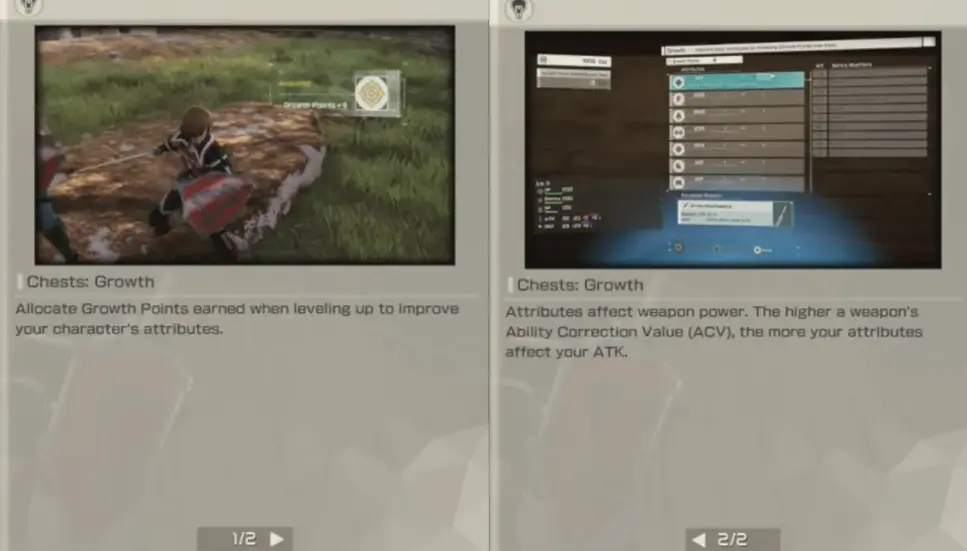
| Panel check | What it tells you | Upgrade decision |
|---|---|---|
| Weapon type | How the weapon defends and attacks | Do not upgrade a weapon rhythm you dislike |
| Upgrade level | Why an older weapon can still win now | Compare current value, not only base potential |
| Weapon ATK | Raw damage baseline | Useful, but never enough alone |
| ACV letters | How strongly stats affect ATK | Match upgrades to your Growth Points |
| Unique MOD | What action the weapon rewards | Upgrade only if you use that action |
| EX-Mods | What extra value the weapon carries | Keep effects that support the route |
| Required materials | Whether the upgrade can happen now | Do not plan around upgrades you cannot afford |
Unique MOD Examples
Unique MODs change how a weapon should be played.
For example, Bronze Sword has Leaps and Bounds, which grants bonus damage based on ATK to both Jump Attacks and Sprint Attacks. That weapon is only valuable if Jump Attacks and Sprint Attacks are part of your normal route.
Proto-Shortsword is the opposite lesson. It works as starter gear, but it has no Unique MOD and no EX-Mods, so it quickly loses the long-term upgrade argument once real Smithy options appear.
Short Sword +4 vs Steel Sword +1
This is the practical example behind the upgrade rules.
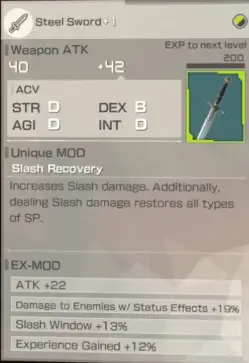
The Steel Sword +1 looks like a natural replacement because it has a stronger future direction and useful EX-Mods. The Short Sword +4 remains the better current weapon because it is already upgraded, has higher immediate weapon value, and carries combat-friendly EX-Mods.
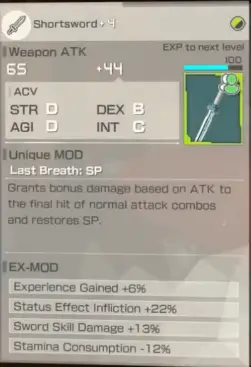
| Panel detail | Short Sword +4 | Steel Sword +1 | Decision |
|---|---|---|---|
| Current value | 65 +44 Weapon ATK | 40 +42 Weapon ATK | Short Sword wins the current route |
| Upgrade state | Already +4 | Still +1 | Steel Sword needs more investment |
| Unique MOD | Last Breath: SP | Slash Recovery | Both support SP flow in different ways |
| Best EX-Mod value | Sword Skill Damage +13%, Stamina Consumption -12% | ATK +22, status damage +19%, EXP +12% | Short Sword currently offers direct Sword Skill and stamina value |
| Current action | Use as main weapon | Prepare as future candidate | Do not switch until the Steel Sword’s upgraded panel catches up |
The replacement point is not the weapon name. Replace the Short Sword only when the Steel Sword’s upgraded panel beats it for the route you are actually clearing.
Common Upgrade Mistakes
| Mistake | Why it hurts | Better fix |
|---|---|---|
| Replacing an upgraded weapon too early | The new weapon has not caught up yet | Upgrade the new weapon before switching |
| Selling same-type EX-Mod donors | You lose future synthesis value | Keep useful effects until you check the Smithy |
| Ignoring ACV and Growth Points | Your stats do not support your weapon | Match upgrades to ACV and scaling |
| Bringing farming EX-Mods into difficult fights | Farming value replaces combat value | Swap to damage, stamina, or survival effects |
What to Read Next
Use the rest of the Echoes of Aincrad cluster based on what is blocking you now.
- Read the Beginner Guide if you still need help with the Town of Beginnings, Horna, safe areas, stamina, Sword Skills, Iori, Growth Points, or early boss prep.
- Read the Weapon Types Guide if you are choosing between Sword and Shield, Mace, Rapier, Dagger, Two-Handed Sword, or Two-Handed Axe.
- Read the Best Weapons Guide if you want practical early weapon recommendations.
- Read the Best Builds Guide if you want a safer stat and weapon direction for the opening hours.
- Read the Prologue and Early Boss Guide if Sentry Golem, Illfang the Kobold Lord, Snowcap Boar, Glenspore Grizzly, Dire Stife Wolf, or Wrathful Shreman blocks your run.
- Return to the Echoes of Aincrad Guide Hub if you want the full guide route.
FAQ
How do I upgrade weapons in Echoes of Aincrad? +
Use Enhance at the Smithy, then spend the required Col and materials. Focus on one main weapon first instead of spreading early resources across several weapon types.
Can EX-Mods be combined across different weapon types? +
No. Build around same-type synthesis. Weapons of the same type can be combined to pool EX-Mods, so sword EX-Mod donors belong in sword paths, rapier donors belong in rapier paths, and so on.
How many EX-Mods can one weapon hold? +
A weapon can pool up to four EX-Mods through same-type weapon synthesis.
What are the best EX-Mods to keep? +
For boss fights, prioritize ATK, Sword Skill Damage, stamina comfort, and effects that support your actual punish windows. For farming, Experience Gained is useful. For status builds, Status Effect Infliction and Damage to Statused Enemies need to work together.
When should I replace an upgraded weapon? +
Replace an upgraded weapon only when the new weapon's upgraded panel beats it for the route you are clearing. A fresh Steel Sword +1 is not automatically better than a Short Sword +4 until it receives enough Smithy investment.
What is the difference between weapon level and Weapon Proficiency? +
Weapon level is the upgrade state of a specific weapon at the Smithy. Weapon Proficiency grows as you use a weapon type and is separate from the weapon's own upgrade level.