Echoes of Aincrad Best Weapons Guide
Find the best Echoes of Aincrad weapons by progress stage, including Bronze Sword, Wind Fleuret, Iron Tooth, Iron Hatchet, Mithril Saber, Quakemaker, Unique MODs, crafting materials, and replacement timing.
Updated:
Quick Answer
The best Echoes of Aincrad weapon depends on your current stage. For beginners, keep your upgraded starter Sword until a crafted Sword clearly wins, then check Bronze Sword and Annealed Blade. For speed, check Wind Fleuret first. For mobility, check Sleek Knife early and Iron Tooth when you are ready to upgrade Dagger. For Guard Breaks, compare Iron Hatchet and Wild Edge, but read their Unique MOD tradeoffs. For heavy weapons, treat Mithril Saber as the Two-Handed Sword target to watch and Quakemaker as the standout Two-Handed Axe target once its materials become realistic.
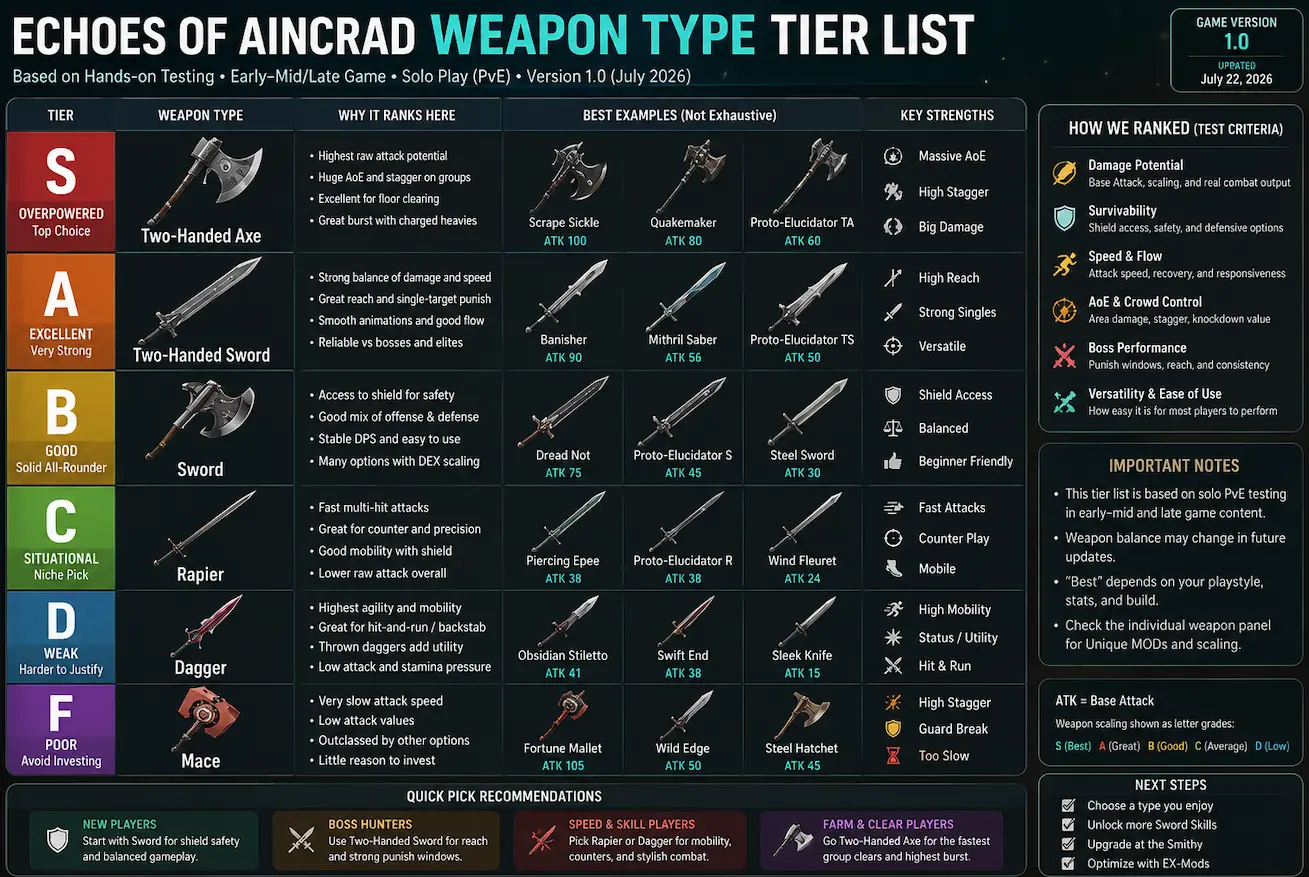
Echoes of Aincrad Weapon Type Tier List
How This Best Weapons Guide Works
This page ranks specific weapon candidates, not only weapon types.
The Weapon Types Guide answers whether you should play Sword, Rapier, Dagger, Mace, Two-Handed Sword, or Two-Handed Axe. This page answers the next question: which named weapons should you check, craft, upgrade, compare, or avoid over-investing in?
Data snapshot: July 11, 2026, after the Day 1 Patch Ver.1.0.3 launch window. Weapon lists can expand as more blueprints, later-floor equipment, drops, and Unique MOD panels are documented. This guide prioritizes weapons with clear role value, visible panel value, known crafting materials, or strong current-list relevance. Always read your own Smithy panel before spending rare materials.
| Ranking factor | Why it matters |
|---|---|
| Progress stage | A late or material-heavy weapon does not help if you cannot craft it yet |
| Current upgrade level | An upgraded old weapon can beat a fresh weapon with better base potential |
| Weapon ATK | Important baseline, but never enough by itself |
| ACV letters | Shows how your Growth Points affect the weapon’s attack value |
| Unique MOD | Can make or break a weapon, especially when it has a tradeoff |
| EX-Mod rolls | Good EX-Mods can make an ordinary weapon worth keeping |
| Shield rules | Sword, Rapier, and Mace can use shields; Dagger and heavy weapons cannot |
| Current route problem | Boss safety, Guard Breaks, mobility, groups, and stamina pressure favor different weapons |
Best Weapons by Progress Stage
Use this table before chasing the biggest number.
The key is stage separation. Bronze Sword and Quakemaker should not be treated as the same kind of decision. One is an early Smithy craft check; the other is a later-material heavy Axe target.
| Progress stage | Best weapons to check | Type | Why they matter | Best action |
|---|---|---|---|---|
| Current main weapon | Upgraded starter Sword / upgraded Shortsword | Sword | Upgrade level and EX-Mods can keep it ahead of a fresh craft | Do not replace until the new weapon’s upgraded panel wins |
| Early Sword craft check | Bronze Sword | Sword | Leaps and Bounds rewards Jump Attacks and Sprint Attacks | Craft or compare if you use movement attacks |
| Early Sword upgrade check | Annealed Blade | Sword | Natural Sword replacement candidate after Bronze Sword | Compare Smithy cost, ATK, ACV, and EX-Mods |
| Early Rapier recommendation | Wind Fleuret | Rapier | Vengeful Dodges rewards clean dodging and counter damage | Best early Rapier to check first |
| Early Rapier alternative | Bronze Rapier | Rapier | After-Attack supports Sword Skill into attack rhythm | Use if your Rapier plan spends SP into openings |
| Early Dagger movement option | Sleek Knife | Dagger | Sprinter’s Rage supports movement after Sword Skill use | Good for testing Dagger mobility |
| Early Dagger upgrade check | Iron Tooth | Dagger | Fast Master increases normal attack speed | Good upgrade check if you accept no-shield play |
| Early Mace control check | Iron Hatchet / Wild Edge | Mace | Strong control candidates, but both have real tradeoffs | Use only if the tradeoff fits your route |
| Higher-list Sword targets | Dust Devil / Corundum Saber | Sword | Joint high-ATK Sword candidates in the current snapshot | Watch for later recipe and panel value |
| Higher-list Dagger target | Corundum Dagger | Dagger | Current high-list Dagger ATK target | Use as a later replacement check |
| Higher-list heavy Sword target | Mithril Saber | Two-Handed Sword | High-list Two-Handed Sword target for single-target punishment | Watch for later blueprint and material access |
| Later-material Axe target | Quakemaker | Two-Handed Axe | 80 ATK plus Mental Enrichment gives it a clear stamina-based identity | Strong heavy AoE target once materials become realistic |
| Bonus gear | Proto-Elucidator Series | All types | Convenient starter or comparison weapons if your account has access | Compare like normal gear, not automatic best-in-slot |
Best Early Craft Targets and Materials
These are the first named weapons worth checking because their role, materials, and Unique MOD direction are clear enough to make a real decision.
| Weapon | Type | Stage | ATK / ACV | Unique MOD | Crafting materials | Best use |
|---|---|---|---|---|---|---|
| Bronze Sword | Sword | Early Smithy craft check | 30 ATK / DEX B | Leaps and Bounds: bonus damage based on ATK to Jump Attacks and Sprint Attacks | Iron Ingot ×1, Smooth Hide ×3, Iron Chunk ×2 | Best early Sword check if you actually use Jump or Sprint Attacks |
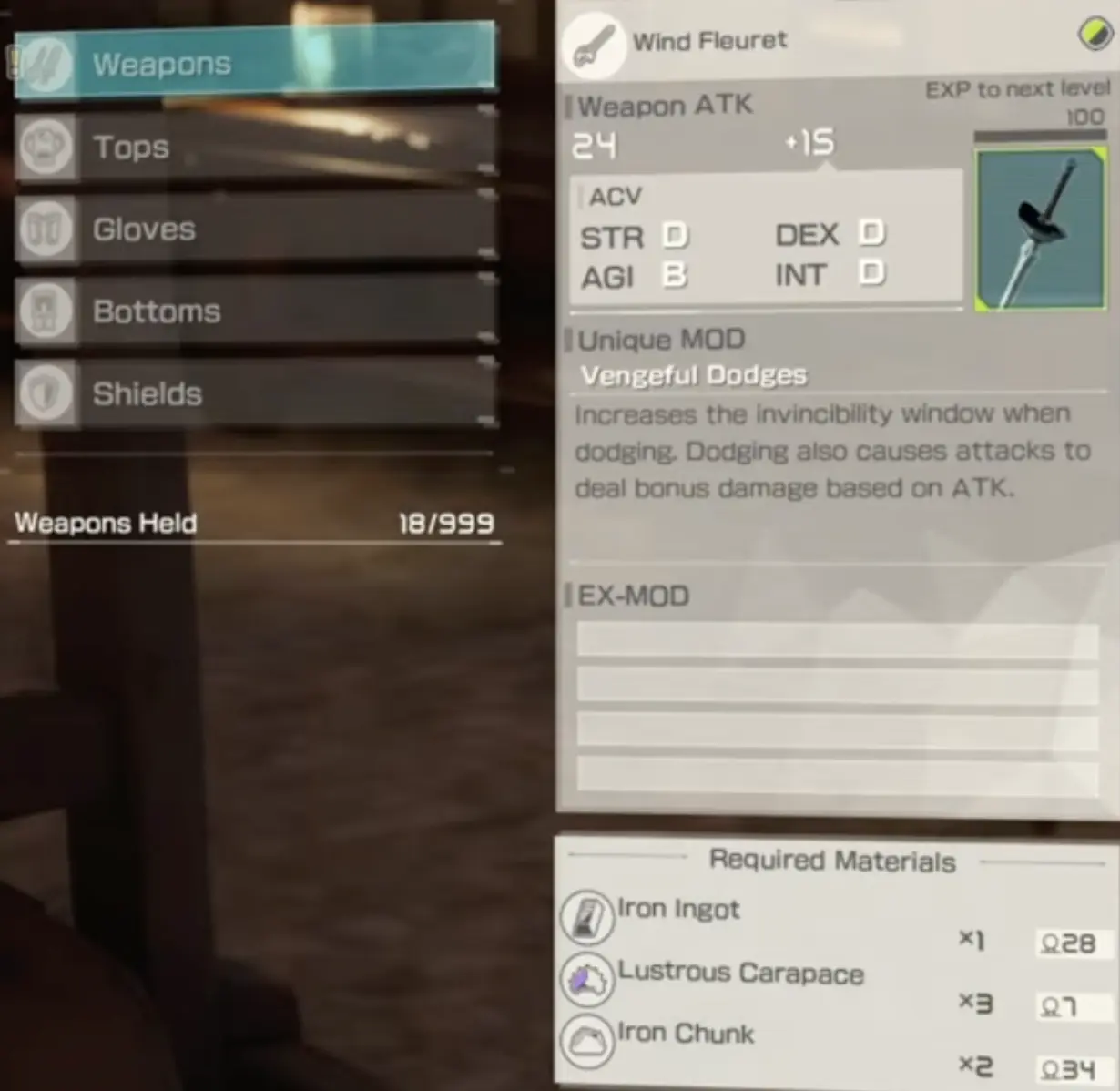
| Wind Fleuret | Rapier | Early Rapier craft check | 24 ATK / AGI B | Vengeful Dodges: increases dodge invincibility and adds ATK-based bonus damage after dodging | Iron Ingot ×1, Lustrous Carapace ×3, Iron Chunk ×2 | Best early Rapier recommendation for dodge-focused speed |
| Iron Tooth | Dagger | Early Dagger upgrade check | 21 ATK / AGI B | Fast Master: increases normal attack speed but makes guarding impossible | Iron Ingot ×1, Lustrous Carapace ×3, Iron Chunk ×2 | Strong Dagger upgrade check if you accept no-shield risk |
| Iron Hatchet | Mace | Early Mace control check | 55 ATK / STR B | Isolation: lowers Support SP gain | Iron Ingot ×1, Crude Weapon Fragment ×3, Iron Chunk ×2 | High-ATK Mace option for Guard Break players who can accept weaker partner SP flow |
| Wild Edge | Mace | Early Mace control check | 50 ATK / STR B | Stamina Recession: lowers maximum stamina | Iron Ingot ×1, Crude Weapon Fragment ×3, Iron Chunk ×2 | Strong Mace option, but risky if stamina already feels tight |
| Quakemaker | Two-Handed Axe | Later-material Axe target | 80 ATK / STR B | Mental Enrichment: grants ATK based on maximum stamina while above 50% stamina | Selenite Ingot ×1, Rare Cloth Scrap ×3, Red Core ×2 | Standout heavy AoE target if you can manage stamina well |
Best Sword Candidates: Bronze Sword, Annealed Blade, Dust Devil, and Corundum Saber
Sword remains the safest weapon route for most players because it can use a shield and teaches the full combat loop.
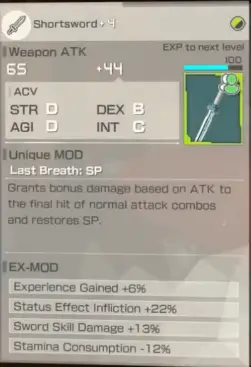
For early named Sword choices, start by comparing your current upgraded weapon against Bronze Sword and Annealed Blade. Bronze Sword matters because Leaps and Bounds rewards Jump Attacks and Sprint Attacks based on ATK. Annealed Blade is the natural next Sword candidate to check when its recipe appears.
| Sword candidate | Stage | Why to check it | Best use | Replacement rule |
|---|---|---|---|---|
| Upgraded starter Sword / Shortsword | Current main | Can stay relevant if already upgraded and carrying useful EX-Mods | Opening route and early boss learning | Replace only when the new Sword’s upgraded panel wins |
| Bronze Sword | Early craft check | Leaps and Bounds rewards Jump Attacks and Sprint Attacks | Sword players who use movement attacks | Good only if you trigger its Unique MOD |
| Annealed Blade | Early upgrade check | Natural next Sword candidate after Bronze Sword | Early Sword replacement planning | Check Smithy cost before switching |
| Mithril Blade | Higher-list check | Higher listed Sword option than Annealed Blade | Mid-list Sword comparison | Do not assume it beats a better MOD panel |
| Dust Devil | Higher-list target | Joint high-ATK Sword candidate | Future Sword target | Compare with Corundum Saber and your actual panel |
| Corundum Saber | Higher-list target | Joint high-ATK Sword candidate | Future Sword target | Needs recipe, availability, and MOD comparison |
Best Rapier Candidates: Wind Fleuret and Bronze Rapier
Rapier is the safest speed route because it combines fast chains, long reach, counter-friendly rhythm, and shield access.
Wind Fleuret is the best early Rapier recommendation if you like dodge-based play. Its Vengeful Dodges Unique MOD improves dodge value and turns clean dodges into bonus damage. That gives it a clear action plan instead of just a number.
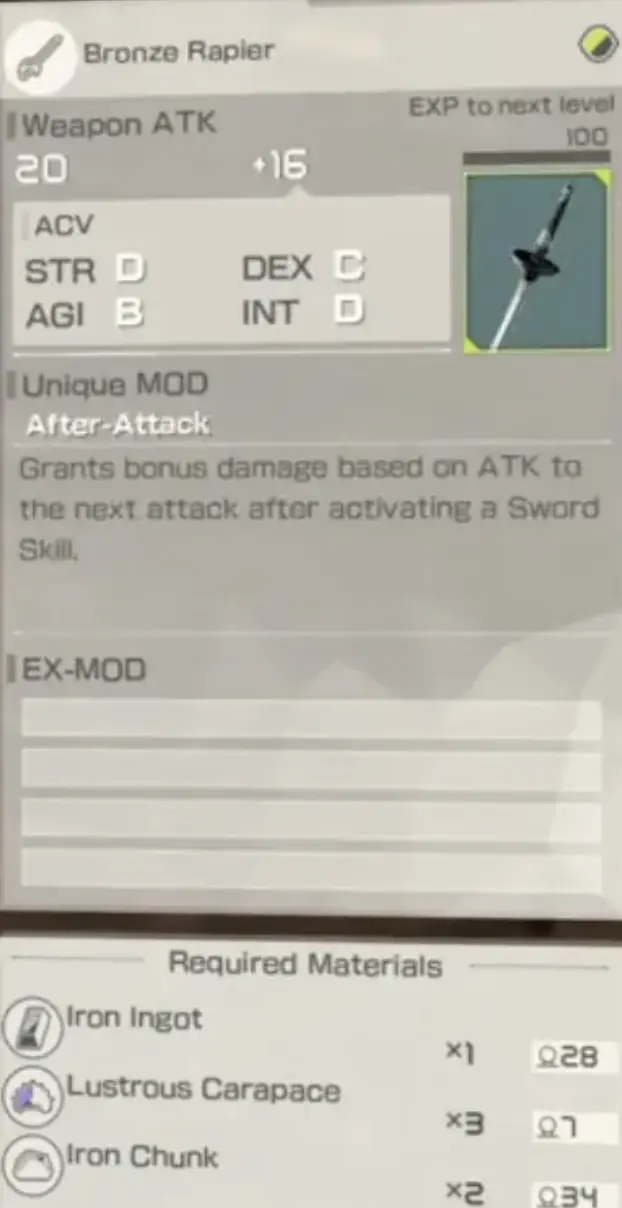
Bronze Rapier is the best early alternative if your Rapier plan uses Sword Skills before follow-up attacks. Its After-Attack rhythm is different from Wind Fleuret: choose Bronze Rapier for skill-to-attack flow, and Wind Fleuret for dodge value.
| Rapier candidate | Stage | Why to check it | Best for | Caution |
|---|---|---|---|---|
| Bronze Rapier | Early craft check | After-Attack supports Sword Skill follow-up play | Players who spend SP into clean openings | Lower listed ATK than later Rapiers |
| Wind Fleuret | Early craft check | Vengeful Dodges supports dodge and counter value | Dodge-focused Rapier players | Worse if you rarely dodge cleanly |
| Annealed Foil | Early upgrade check | Higher listed Rapier option | Rapier upgrade planning | Check recipe, MOD, and EX-Mods |
| Piercing Epee / Valkyrie’s Sabre | Higher-list check | Stronger listed Rapier candidates | Later Rapier comparison | Use only after their panel beats your current Rapier |
| Proto-Elucidator R | Bonus gear | Convenient Proto Rapier candidate | Players with pack access | Not automatic best-in-slot |
Best Dagger Candidates: Sleek Knife and Iron Tooth
Dagger is the best mobility route, but it is also a no-shield route.
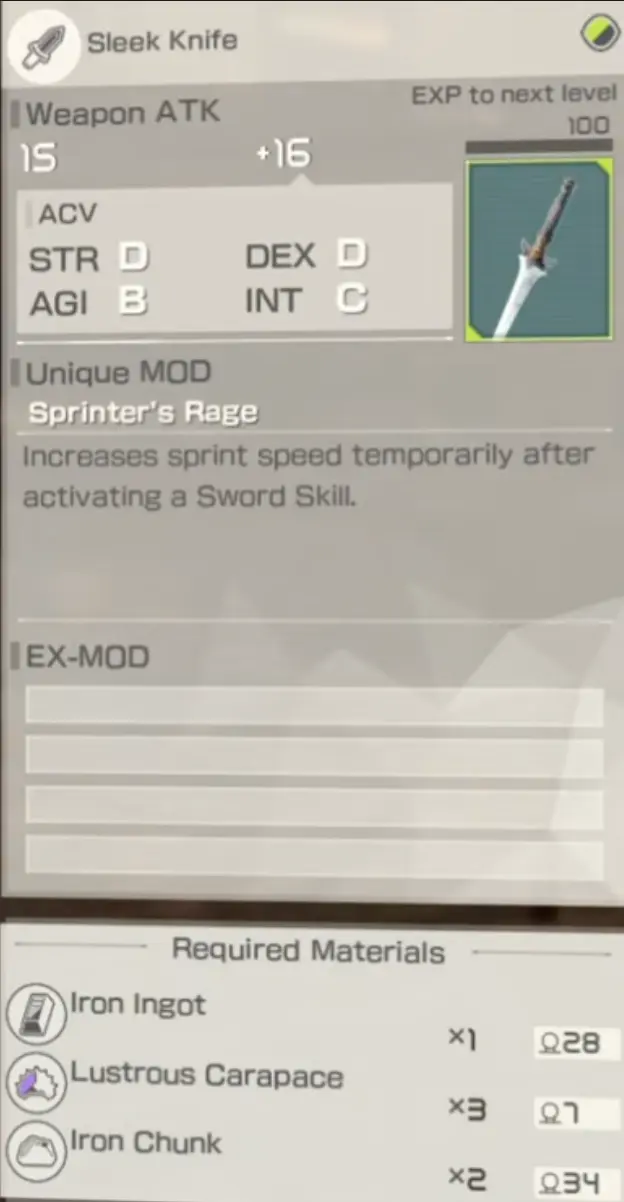
Sleek Knife is the cleanest early Dagger movement example because Sprinter’s Rage increases sprint speed after activating a Sword Skill. It is a good weapon for understanding what Dagger wants to do: move, reposition, and avoid staying in front of enemies.
Iron Tooth is the stronger early Dagger upgrade check because Fast Master increases normal attack speed. The tradeoff matters: Fast Master makes guarding impossible. Since Dagger already cannot use shield safety, Iron Tooth should be treated as a committed speed weapon, not a defensive comfort weapon.
| Dagger candidate | Stage | Why to check it | Best for | Caution |
|---|---|---|---|---|
| Sleek Knife | Early movement option | Sprinter’s Rage supports movement after Sword Skill use | Mobility-first Dagger play | Low listed ATK |
| Annealed Dagger | Early comparison | Useful Dagger progression check | Players testing Dagger upgrades | Needs panel comparison |
| Iron Tooth | Early upgrade check | Fast Master increases normal attack speed | Committed Dagger players | No guard comfort; positioning matters |
| Assassin’s Knife | Higher-list check | Later Dagger option | Mobility route planning | Check Unique MOD before investing |
| Ambusher | Higher-list check | Higher mid-list Dagger candidate | Late Dagger comparison | Not the highest Dagger target |
| Corundum Dagger | Higher-list target | High-ATK Dagger target in this snapshot | Future Dagger replacement planning | Availability and MOD matter |
| Proto-Elucidator D | Bonus gear | Convenient Proto Dagger option | Players with pack access | Compare before spending rare materials |
Best Mace Candidates: Iron Hatchet and Wild Edge
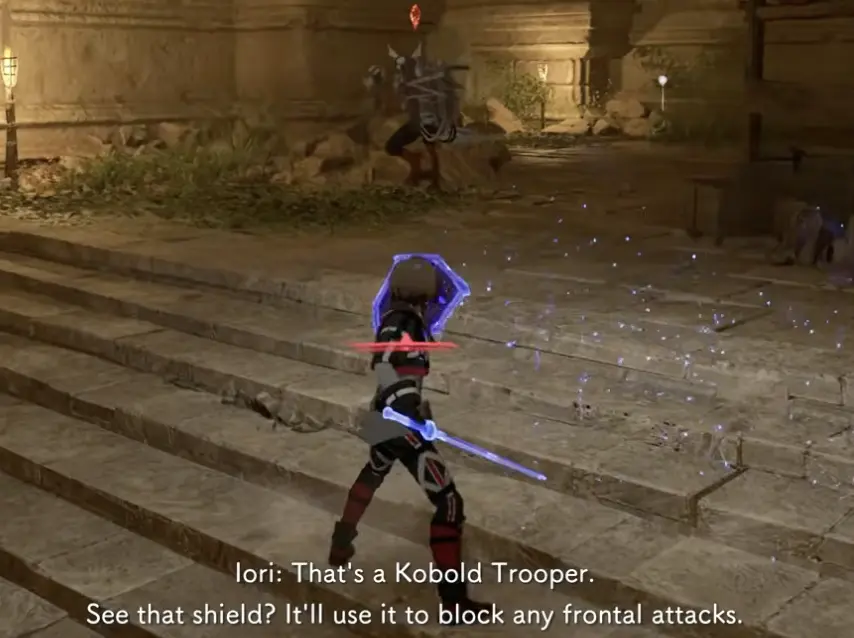
Mace is the best weapon direction when enemies keep guarding, blocking, or resisting normal pressure.
This is also the weapon category where ranking by ATK alone is most dangerous. Iron Hatchet and Wild Edge both look strong, but their Unique MODs have real costs. Iron Hatchet has Isolation, which lowers Support SP gain. Wild Edge has Stamina Recession, which lowers maximum stamina.
| Mace candidate | Stage | Unique MOD / tradeoff | Best for | Verdict |
|---|---|---|---|---|
| Bronze Rod | Starter Mace check | Baseline Mace option | First Mace tests | Useful mainly as a comparison |
| Iron Hatchet | Early control check | Isolation lowers Support SP gain | High-ATK Mace players who can accept weaker partner SP flow | Best Mace check if you want power and can manage the support cost |
| Wild Edge | Early control check | Stamina Recession lowers maximum stamina | Guard Break players who can play around stamina loss | Strong, but risky if stamina already feels tight |
| Annealed Rod | Alternative Mace check | Different correction profile to compare | Players who want a different Mace panel | Lower ATK, but worth checking if the MOD fits |
| Steel Hatchet | Alternative Mace check | Compare panel before switching | Mace route testing | Do not switch by name alone |
| Proto-Elucidator M | Bonus gear | Proto convenience | Players with pack access | Compare against crafted Maces before investing |
Best Two-Handed Sword Candidates: Mithril Saber, Decapitator, and Annealed Longsword
Two-Handed Sword is the heavy single-target punish route.
Mithril Saber is the high-list Two-Handed Sword target to watch because it currently sits above many named heavy Sword options by listed base ATK. Decapitator and Annealed Longsword remain important comparison weapons because players moving into heavy single-target play will naturally compare them.
| Two-Handed Sword candidate | Stage | Why to check it | Best for | Caution |
|---|---|---|---|---|
| Greatsword | Baseline heavy Sword | Teaches the heavy rhythm | First Two-Handed Sword tests | Lower listed ATK than later options |
| Bastard Sword | Baseline comparison | Alternative early heavy panel | Comparing heavy Sword feel | Needs full panel value |
| Annealed Longsword | Heavy Sword check | Stronger named heavy Sword candidate | Long reach and charge timing | Slow recovery punishes greed |
| Decapitator | Heavy Sword check | Popular named punish weapon to inspect | Single-target openings | Do not overvalue it if the MOD does not fit your play |
| Proto-Elucidator TS | Bonus gear | Strong Proto heavy Sword candidate | Players with pack access | Not the highest listed heavy Sword target |
| Mithril Saber | Higher-list target | High-list Two-Handed Sword target | Future heavy Sword replacement | Needs recipe, material, and panel comparison |
Best Two-Handed Axe Candidates: Quakemaker and Sledgehammers
Two-Handed Axe is the heavy area-pressure route.
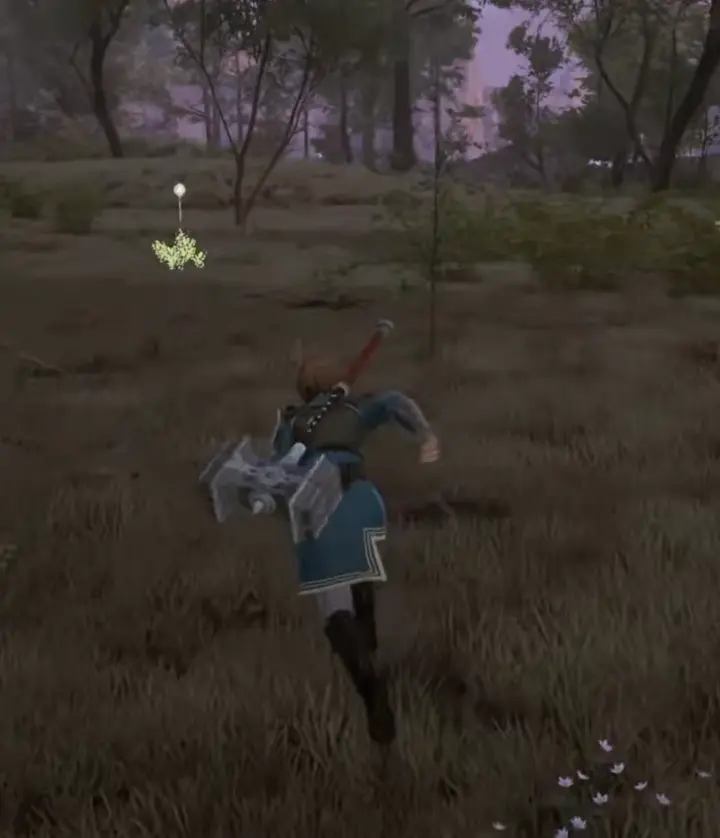
If Two-Handed Sword is the heavy duel weapon, Two-Handed Axe is the heavy group weapon. Quakemaker is the standout target because it has both a very high listed ATK and a clear Unique MOD identity. Mental Enrichment grants ATK based on maximum stamina while stamina is above 50%, which fits a stamina-aware heavy weapon plan.
Annealed Sledgehammer and Battlewise Sledgehammer are also important high-ATK Axe comparisons. Noxious Malice should not be treated as a poison weapon just because of its name. Its known identity is Enraged Blow, which supports Slash and down-rate style play.
| Two-Handed Axe candidate | Stage | Why to check it | Best for | Caution |
|---|---|---|---|---|
| Steel Axe | Baseline Axe | First Axe comparison | Learning Axe rhythm | Lower listed ATK |
| Bronze Axe | Early Axe check | Early area-pressure test | Learning AoE timing | Check panel and materials |
| Taurus Axe | Axe route check | Named Axe comparison | Axe players comparing upgrades | Do not judge by name alone |
| Noxious Malice | Alternative Axe check | Enraged Blow supports Slash and down-rate style play | Slash / knockdown synergy | Not a confirmed poison weapon |
| Annealed Sledgehammer | Higher-list Axe | High-ATK Axe comparison | Heavy AoE pressure | Slow recovery and stamina risk |
| Battlewise Sledgehammer | Higher-list Axe | High-ATK Axe comparison | Heavy AoE pressure | Compare MOD and materials |
| Quakemaker | Later-material target | 80 ATK plus Mental Enrichment identity | Future AoE target and stamina-based ATK planning | Strong only if you manage stamina well |
| Proto-Elucidator TA | Bonus gear | Proto Axe comparison | Players with pack access | Compare against Quakemaker and Sledgehammer options |
Are Proto-Elucidator Weapons Worth Using?
Proto-Elucidator weapons are worth using as starter or comparison gear if your account has access to the pack.
They are not automatic best-in-slot weapons. The pack is useful because it gives you a weapon option for each weapon direction, plus blueprint support for crafting additional copies. That is convenient when you want to test several weapon types early.
But convenience is not the same as long-term value. A normal weapon with stronger EX-Mods, better upgrade level, better ACV fit, or a Unique MOD that matches your playstyle can beat a Proto-Elucidator weapon in practice.
| Proto weapon | Type | Best use | Worth upgrading? |
|---|---|---|---|
| Proto-Elucidator Sword | Sword | Starter Sword comparison | Only if its panel beats your upgraded Sword |
| Proto-Elucidator R | Rapier | Safer speed comparison | Good to test if you want Rapier and have pack access |
| Proto-Elucidator D | Dagger | Mobility comparison | Useful only if you accept no-shield play |
| Proto-Elucidator M | Mace | Control comparison | Compare against Iron Hatchet and Wild Edge first |
| Proto-Elucidator TS | Two-Handed Sword | Heavy single-target comparison | Strong, but compare against Mithril Saber later |
| Proto-Elucidator TA | Two-Handed Axe | Heavy AoE comparison | Compare against Quakemaker and Sledgehammer options |
How to Get the Best Weapons
Most weapon decisions eventually go through the Smithy.
You can craft weapons through the blacksmith once the recipe, blueprint, Col, and materials are available in your save. Do not plan around a weapon name alone. Open the Smithy, check whether the recipe is visible, then decide whether the material cost is worth paying now.
| Weapon | Where to check | Materials to prepare | Earliest practical use | Recommendation |
|---|---|---|---|---|
| Bronze Sword | Base Town Smithy once the recipe appears | Iron Ingot ×1, Smooth Hide ×3, Iron Chunk ×2 | Early Sword craft check | Best early Sword craft if you use Jump or Sprint Attacks |
| Wind Fleuret | Base Town Smithy once the Rapier recipe appears | Iron Ingot ×1, Lustrous Carapace ×3, Iron Chunk ×2 | Early Rapier craft check | Best early Rapier recommendation for dodge-focused players |
| Iron Tooth | Base Town Smithy once the Dagger recipe appears | Iron Ingot ×1, Lustrous Carapace ×3, Iron Chunk ×2 | Early Dagger upgrade check | Strong normal-attack speed option, but no guard comfort |
| Iron Hatchet | Base Town Smithy once the Mace recipe appears | Iron Ingot ×1, Crude Weapon Fragment ×3, Iron Chunk ×2 | Early Mace control check | Strong high-ATK Mace if lower Support SP gain does not hurt your route |
| Wild Edge | Base Town Smithy once the Mace recipe appears | Iron Ingot ×1, Crude Weapon Fragment ×3, Iron Chunk ×2 | Early Mace control check | Strong Mace, but stamina loss is a real cost |
| Mithril Saber | Check later Smithy / blueprint progress | Confirm in your Smithy before farming | Higher-list heavy Sword target | Do not plan early route around it until the recipe appears |
| Quakemaker | Check later Smithy / heavy Axe blueprint progress | Selenite Ingot ×1, Rare Cloth Scrap ×3, Red Core ×2 | Later-material Axe target | Strong AoE target once the materials become realistic |
| Proto-Elucidator Series | Account / edition bonus access | Uses pack access and blueprint support | Bonus gear comparison | Useful if available, but not automatic best-in-slot |
When Should You Replace Your Current Weapon?
Replace a weapon only when the new panel solves your current problem better than your old one.
A fresh weapon with higher base ATK can still feel worse than your upgraded main weapon. This is especially true if your current weapon already has useful EX-Mods, a good Unique MOD, or enough Smithy investment to carry the route you are clearing.
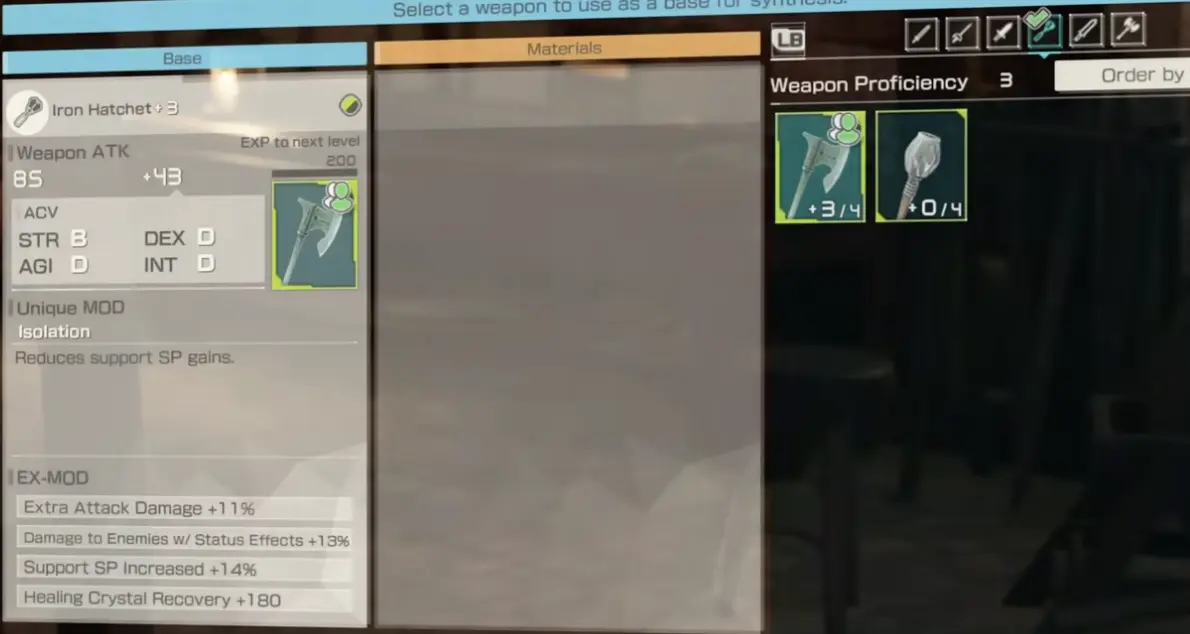
Use a simple replacement rule: switch only when the new weapon wins on current upgraded value, route fit, Unique MOD value, EX-Mod value, and material cost. Keep old weapons with useful same-type EX-Mods until you check whether they have donor value.
For detailed enhancement, same-type synthesis, EX-Mod pooling, donor weapons, and material planning, use the Weapon Upgrade Guide.
Best Weapon Mistakes to Avoid
| Mistake | Why it hurts | Better habit |
|---|---|---|
| Only comparing base ATK | Unique MODs, EX-Mods, ACV, upgrade level, and tradeoffs can change the result | Read the full panel |
| Ignoring Unique MOD costs | High-ATK weapons such as some Maces can reduce stamina or Support SP gain | Treat negative MOD effects as real costs |
| Ignoring acquisition stage | A late or blueprint-locked weapon does not help your current route | Check whether you can craft or obtain it now |
| Replacing an upgraded weapon too early | The new weapon may need Smithy investment before it wins | Compare the upgraded panel, not just the name |
| Selling donor weapons too fast | Same-type EX-Mod synthesis can make weak weapons valuable | Check donor value before selling |
What to Read Next
Use the rest of the Echoes of Aincrad cluster based on what blocked you.
- Read the Weapon Types Guide if you want the full comparison of Sword, Rapier, Dagger, Mace, Two-Handed Sword, and Two-Handed Axe.
- Read the Beginner Guide if you still need help with waypoints, stamina, Sword Skills, Iori, the Inn, safe areas, Smithy, or early route planning.
- Read the Weapon Upgrade Guide if you reached the Smithy and want to understand enhancement, synthesis, Unique MODs, EX-Mods, Col, materials, and proficiency.
- Read the Best Builds Guide if you want stats, ACV, Sword Skills, EX-Mods, partner flow, and early survival planning.
- Read the Prologue Boss Guide if Illfang the Kobold Lord, Glenspore Grizzly, Dire Stife Wolf, or another early boss is blocking you.
- Return to the Echoes of Aincrad Guide Hub if you want the full guide route.
FAQ
What is the best weapon for beginners in Echoes of Aincrad? +
For most new players, the best beginner route is a Sword with shield. Check your upgraded starter Sword first, then compare Bronze Sword and Annealed Blade when their Smithy recipes are available.
What is the best early Sword in Echoes of Aincrad? +
Bronze Sword is the cleanest early Sword candidate to check because Leaps and Bounds rewards Jump Attacks and Sprint Attacks. Annealed Blade is the next early Sword upgrade candidate to compare once its recipe and materials are available.
What is the best Rapier in Echoes of Aincrad? +
Wind Fleuret is the strongest early Rapier recommendation to check because Vengeful Dodges improves dodge value and adds bonus damage after dodging. Bronze Rapier is a useful alternative for Sword Skill follow-up play.
What is the best Dagger in Echoes of Aincrad? +
Sleek Knife is the best early movement example, while Iron Tooth is the better early Dagger upgrade check because Fast Master increases normal attack speed. Dagger is still a no-shield route.
What is the best Mace in Echoes of Aincrad? +
Iron Hatchet and Wild Edge are strong Mace checks, but both have real Unique MOD tradeoffs. Iron Hatchet lowers Support SP gain, while Wild Edge lowers maximum stamina. Pick Mace when you need Guard Breaks and knockdowns, not just high ATK.
What is the best heavy weapon? +
Mithril Saber is the high-list Two-Handed Sword target to watch for single-target punishment. Quakemaker is the standout Two-Handed Axe target because Mental Enrichment can add ATK while stamina is above 50%.
Are Proto-Elucidator weapons worth using? +
Proto-Elucidator weapons are useful starter or comparison weapons if your account has access to the pack, but they are not automatic best-in-slot. Compare their ATK, ACV, Unique MODs, EX-Mods, shield rules, and upgrade cost before spending rare materials.
Should I replace my upgraded weapon when a new weapon has higher ATK? +
Not immediately. Compare upgrade level, ACV, Unique MODs, EX-Mods, shield access, Smithy cost, and whether the new weapon solves your current route problem.