Dune Awakening Single Player Guide: Settings & Solo Differences
Choose Dune Awakening Single Player settings, understand Solo Deep Desert, Landsraad and Exchange rules, and avoid current 1.5 known issues.
Updated:
Quick Answer
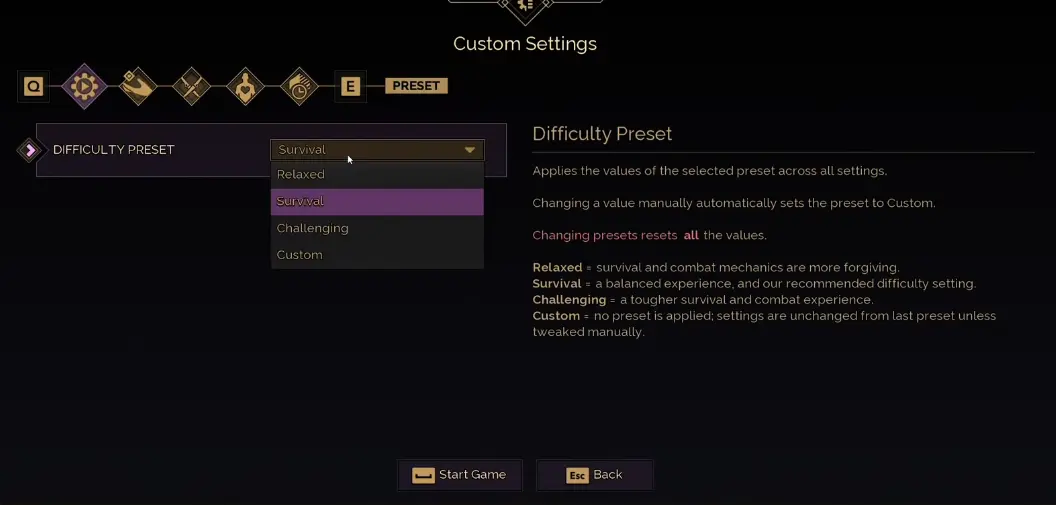
For a first Single Player run, start with Survival and reduce repetitive work before removing the hazards that shape travel.
Mining, crafting and water production are good settings to speed up. Keep Sandworms and Sandstorms enabled if you still want routes, shelter and vehicle safety to matter.
Before changing several settings at once, know the current issues: custom settings can fail to sync between devices, some settings can interfere with missions, Max Durability Decay does not currently affect vehicle parts, and Funcom recommends avoiding base relocation while Base Reconstruction problems are being investigated.
Single Player contains the full Dune Awakening experience without other players occupying the world. The story, Hagga Basin, cities, Trials, Deep Desert and later progression remain available, while resource rates, survival pressure and several multiplayer-dependent systems are adjusted for one player.
Solo also changes the late game in important ways. The Deep Desert keeps its progress instead of resetting, the Landsraad simulates other guilds, and the Exchange works as a vendor instead of relying on listings from other players.
The most useful setup is usually not the easiest possible one. Reduce the parts of survival you find repetitive, then leave enough environmental pressure that water, storms, worms and preparation still affect how you move through Arrakis.
Start With Relaxed, Survival or Challenging
A new Single Player character begins with three presets:
- Relaxed
- Survival
- Challenging
Choose the preset before changing individual values.
Changing the main preset can reset values you already customized, so finish that choice before tuning mining, crafting, XP or environmental rules.
Survival is the strongest starting point for a first playthrough. It preserves the normal relationship between water, heat, travel and progression while still allowing specific sources of grind to be reduced later.
Relaxed is useful when survival friction is already the reason you chose Solo. Challenging works better if removing other players leaves the world feeling too forgiving.
Recommended Single Player Settings by Playstyle
| Playstyle | Change First | Keep Near Default |
|---|---|---|
| First playthrough | Slightly faster mining, crafting and water production | XP, Sandworms, Sandstorms, death penalties |
| Less grind, normal danger | Mining, crafting, water and moderate stamina reduction | Environmental hazards and combat |
| Returning for story content | Mining, crafting, XP, Intel and Faction Standing | Sandworms and Sandstorms |
| Building-focused run | Resource yield and building costs | Building Stability unless you specifically want it disabled |
| Low-frustration survival | Reduce death drops and gathering repetition | Normal environmental hazards |
A faster refinery or mining rate mainly removes repetition. Disabling a Sandworm changes which stretches of desert are dangerous and where a vehicle can safely travel.
Those settings have very different effects even if both make the game easier.
A Fast Returning-Player Setup
For a run focused on reaching later content quickly, one setup I used was approximately:
- 0.5× Stamina Drain
- 2× Faction Standing
- about 4.5× Global XP
- increased Intel Point gain
- faster mining
- faster crafting
- faster water production
This is deliberately aggressive. Around 4.5× XP, levels and research can arrive much faster than the normal equipment and material curve, so it is better suited to a returning player than a first run.
For a lighter setup, leave XP closer to normal and start by increasing mining, crafting and water production.
Keep Sandworms and Sandstorms if You Want Travel to Matter
Sandworms change how you cross open sand, where you leave vehicles and which rock formations become safe stopping points. Sandstorms affect departure timing and whether exposed equipment can survive where you parked it.
Speeding up crafting does not alter those decisions. Removing the environmental hazard does.
A good middle ground is therefore to make production faster while keeping the systems that force route planning.
Death drops can be treated separately. If corpse recovery is the part of survival you dislike, reduce that penalty directly instead of lowering every combat or environmental setting around it.
Guided Journey or Open Research?
Single Player also lets you decide how closely research follows the normal Journey.
For a first character, the guided setup is easier to follow.
Opening more recipes early does not remove their material or equipment requirements. A recipe from a later tier can appear long before the character has a reason to spend resources on it.
Returning players already know why the Sandbike matters, where Iron and Steel enter the run and which machines lead into Aluminum. Earlier access to research can therefore shorten familiar progression without removing the underlying resource requirements.
The Progression Guide covers that material and vehicle sequence.
You Can Change Settings After Starting
The initial configuration is not permanent.
Open the menu during the run and return to the custom Single Player settings whenever one system is creating more friction than you want.
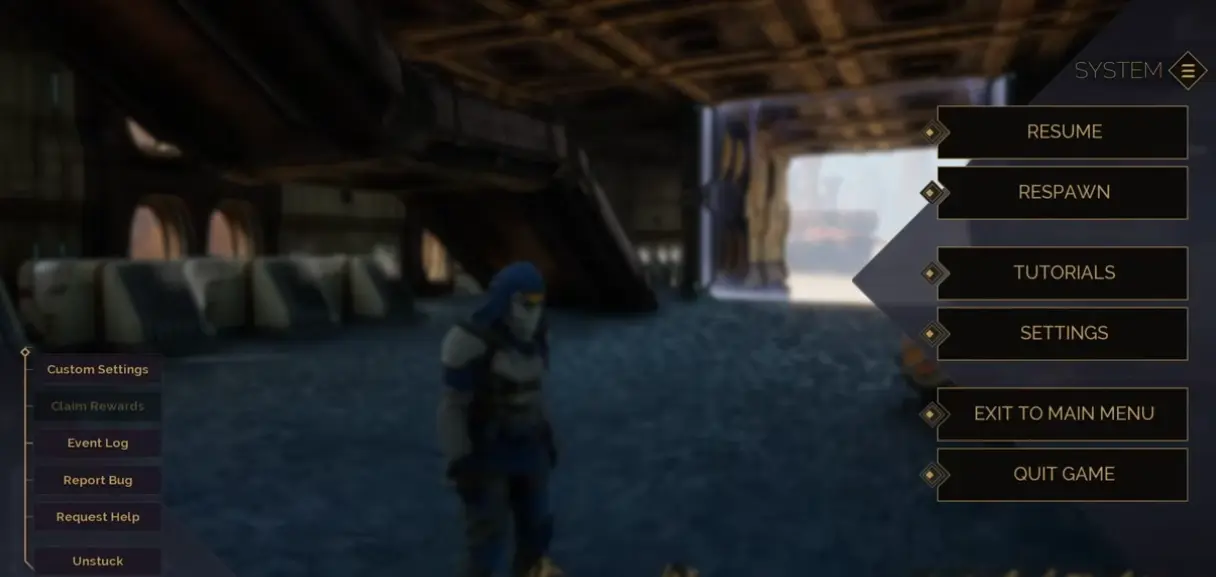
If gathering is consuming too much time, increase harvesting. If crafting queues are slowing every project, change crafting speed. If combat feels right but recovering items after death is discouraging exploration, reduce the death penalty.
Change the specific problem instead of rebuilding the entire difficulty profile around one frustrating session.
Current Custom Settings Problems to Know About
Several current Single Player settings have known problems.
Settings Can Interfere With Missions
Some custom settings can prevent certain missions from progressing normally. A few story areas may also temporarily override custom values so the required sequence can run correctly.
If an objective appears genuinely stuck after changing gameplay rules, restore the relevant settings to their defaults, relaunch the game and try the objective again.
This is especially worth checking before spending time searching for a hidden trigger that may not actually be missing.
Custom Settings Do Not Reliably Sync Between Devices
Single Player custom settings currently do not synchronize correctly across multiple devices.
This becomes dangerous if Sandworms or Building Stability have been disabled. Loading the save on another device can cause those settings to become enabled again, potentially damaging a save that was built around the disabled rules.
Console game settings and Single Player settings may also need to be reapplied when the same account and save are used on another device.
Max Durability Decay Does Not Affect Vehicle Parts
The Max Durability Decay custom setting currently does not change vehicle-part durability.
Lowering that value may affect the systems you expect elsewhere, but do not use it as protection for Ornithopter, Sandbike, Buggy or other vehicle components.
Keep normal repair materials available for the vehicles you actually use.
Building Limits Can Display the Wrong Value
Changing Sub-fief Console or building-piece limits in the custom settings does not currently update the number shown in the UI.
The displayed limit can therefore look unchanged even after the setting itself has been modified.
If you increased one of those limits and the interface still shows the previous number, the stale UI value alone does not prove the setting failed to change.
Single Player Characters Stay Separate From Multiplayer
Single Player uses its own character progression.
An official or private-server character cannot be transferred into Single Player, so starting Solo means creating a separate run with its own inventory, bases, vehicles, research and story progress.
The character-transfer system supports transfers between certain multiplayer environments, but Single Player is not one of the available transfer destinations.
For a returning player, higher gathering, crafting or progression rates can make that new start substantially faster without changing the order in which the major material tiers appear.
Single Player Is Different From a Private or PvE Server
A Solo world contains no other players.
That means another player cannot claim the building site you wanted, clear the nearby resource loop first or place a base over the terrain you planned to use.
A private or self-hosted server remains a multiplayer environment. It can be controlled more closely than an official world and can be used with friends, but it is not the same thing as playing alone in Single Player.
Official multiplayer likewise remains a shared environment even when you choose PvE-oriented content.
If the goal is the complete game with nobody else occupying the world, Single Player is the mode that provides that setup.
Avoid Base Relocation With the Reconstruction Tool for Now
Funcom is currently investigating reports of missing or misplaced building pieces associated with the Base Reconstruction Tool and recommends avoiding base relocation for the time being.
New characters that need to complete the associated Journey step can build a small second base instead of packing the established home.
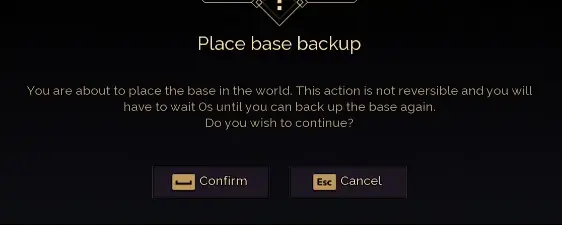
There is also a separate problem where the Reconstruction Tool can create overlapping building extensions.
If that has already happened, demolish one of the overlapping pieces before continuing construction.
Until these issues are fixed, use normal secondary bases for staging instead of repeatedly backing up and restoring a large structure.
For actual terrain, resource access and regional building choices, use Best Base Locations & When to Move.
The Deep Desert Does Not Reset in Single Player
The full Deep Desert remains available in Solo, including its normal locations and challenges, but the map does not reset and your buildings there are not wiped by the Coriolis cycle.
The Coriolis Storm still exists as dangerous weather. It no longer instantly kills the player and clears Deep Desert progress in Single Player.
That changes how long-term infrastructure can be used there. A structure can support repeated trips instead of being treated as temporary construction that will disappear with the next reset.
Water, fuel, repairs and combat preparation still matter. Persistence removes the wipe cycle; it does not make the Deep Desert harmless.
The Landsraad Simulates Other Guilds
The Landsraad remains functional even though no real guilds are competing around you.
Single Player simulates the progress of other guilds in the faction conflict, allowing the cycle to continue even when the player does nothing for a period.
You still participate through the available Landsraad activities and faction progression, but there is no need to reproduce the workload of an actual multiplayer guild by yourself.
The Exchange Works as a Vendor
The multiplayer Exchange normally depends on an economy created by other players.
In Single Player, it instead works as a vendor with a large selection of purchasable items.
That means components and other goods do not depend on another player listing them for sale.
Arrakeen and Harko Village also remain accessible, so Solo retains the larger city, faction and story progression instead of reducing the game to Hagga Basin survival.
Single Player Includes the Full Story
Single Player contains the complete story experience rather than a reduced survival sandbox.
The Fremen Journey, all eight Trials of Aql and the later Book One storyline can be completed without another player being required to advance them.
For the Fremen sequence, use the All 8 Trials of Aql Walkthrough. The later story continues through the Great Convention Parts I–III / Acts 3–5 Walkthrough.
Dune Awakening Single Player FAQ
Is Dune Awakening Single Player fully offline?
Do not assume that Single Player guarantees completely offline play.
Funcom describes it as a full Single Player experience, but the current PC requirements still list a broadband Internet connection. Unless Funcom explicitly documents a fully offline mode, treat “Single Player” and “no Internet required” as separate claims.
Is Dune Awakening Single Player on Game Pass?
Yes.
Dune Awakening is available through Xbox Game Pass on supported Xbox, PC and Cloud plans, and Single Player is included in the full game rather than sold as a separate mode.