WARDOGS Best Weapons & Tier List: Best Guns & M4 Build
Compare the best WARDOGS weapons by fight, with a tier list, M4 attachment choices, recoil tradeoffs, sniper breakpoints, shotguns and current TTK.
Updated:
Quick Answer
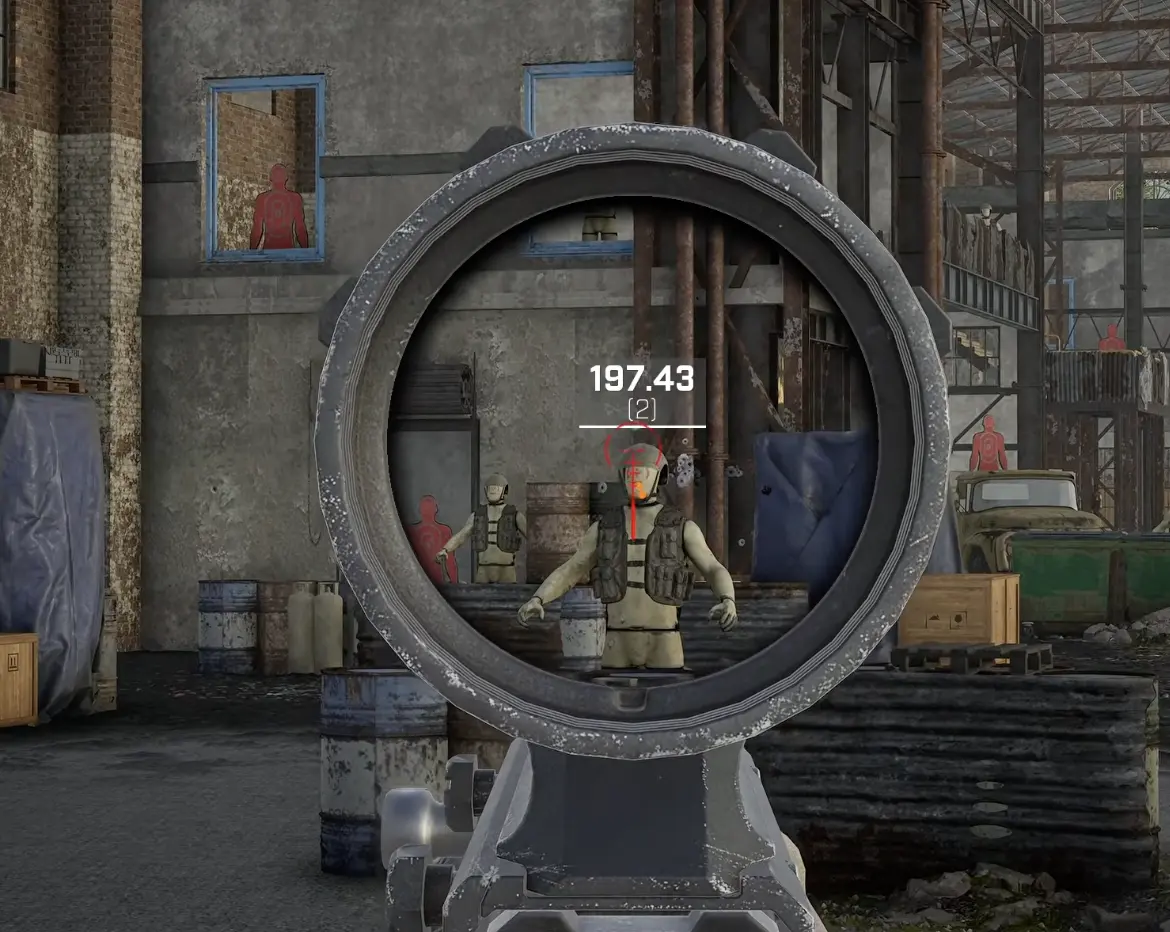
For a normal infantry life, the M4 is still the gun I trust most overall. It gives up raw kill speed to the FAL, but recoil, handling and usable range make it much easier to carry through a match that keeps changing.
I move to the FAL for controlled mid-range fights, the SUPER-45 for close interiors, the SVD when I want range without a painfully slow follow-up, and the PKM when enemies have to enter a lane I can hold. The M500 is a real point-blank threat with buckshot, while the Compound Bow is a quiet specialist that becomes much less forgiving once Level 2–3 armor is common.
The gun that looks strongest on paper is often not the one that survives an entire WARDOGS life. A clean firing-range calculation assumes that every required shot lands. An actual match adds recoil, changing sight lines, armor, moving objectives and a second enemy faction that can turn a comfortable mid-range fight into a doorway fight without warning.
That is why I care about two separate things when I buy a weapon: how quickly it can finish the fight it wants, and how badly it falls apart when the fight becomes something else. The FAL wins several clean damage races. The M4 wins far more of my uncertain purchases because it asks less from the situation around it.
WARDOGS Weapon Tier List
This is the tier list I use for actual infantry lives rather than for one perfect firing-range scenario.
| Tier | Weapons | Why I put them here |
|---|---|---|
| S | M4, FAL | M4 handles mixed fights exceptionally well; FAL rewards controlled rifle engagements with much faster raw kill speed |
| A | SUPER-45, SVD, PKM | Excellent when the range and movement suit the weapon |
| B | T-21, AK74, Galil | Useful rifle alternatives with different handling strengths, but none has displaced the M4 or FAL as my default general-purpose choices |
| Specialist | AMR 50, M500, Compound Bow | Can be brutal in the correct fight, but each loses a lot when range, armor or positioning changes |
The Specialist row is not a lower-quality bucket. An AMR 50 overlooking a long approach can decide fights that an M4 cannot reproduce. An M500 inside a room can end a fight before a rifle gets comfortable. The Compound Bow can clear lightly armored players without announcing every shot across the area.
What separates them from the S-tier rifles is how much has to remain true for that advantage to continue.
M4: Best Overall Gun for an Uncertain Match
The M4 does not win the clean chest-damage comparison against the FAL. With standard FMJ, its no-armor chest TTK is about 218 ms, and Level 4 protection pushes the result much higher.
I still reach for it constantly because the second, third and fourth rounds are easier to keep where I intended them to go.
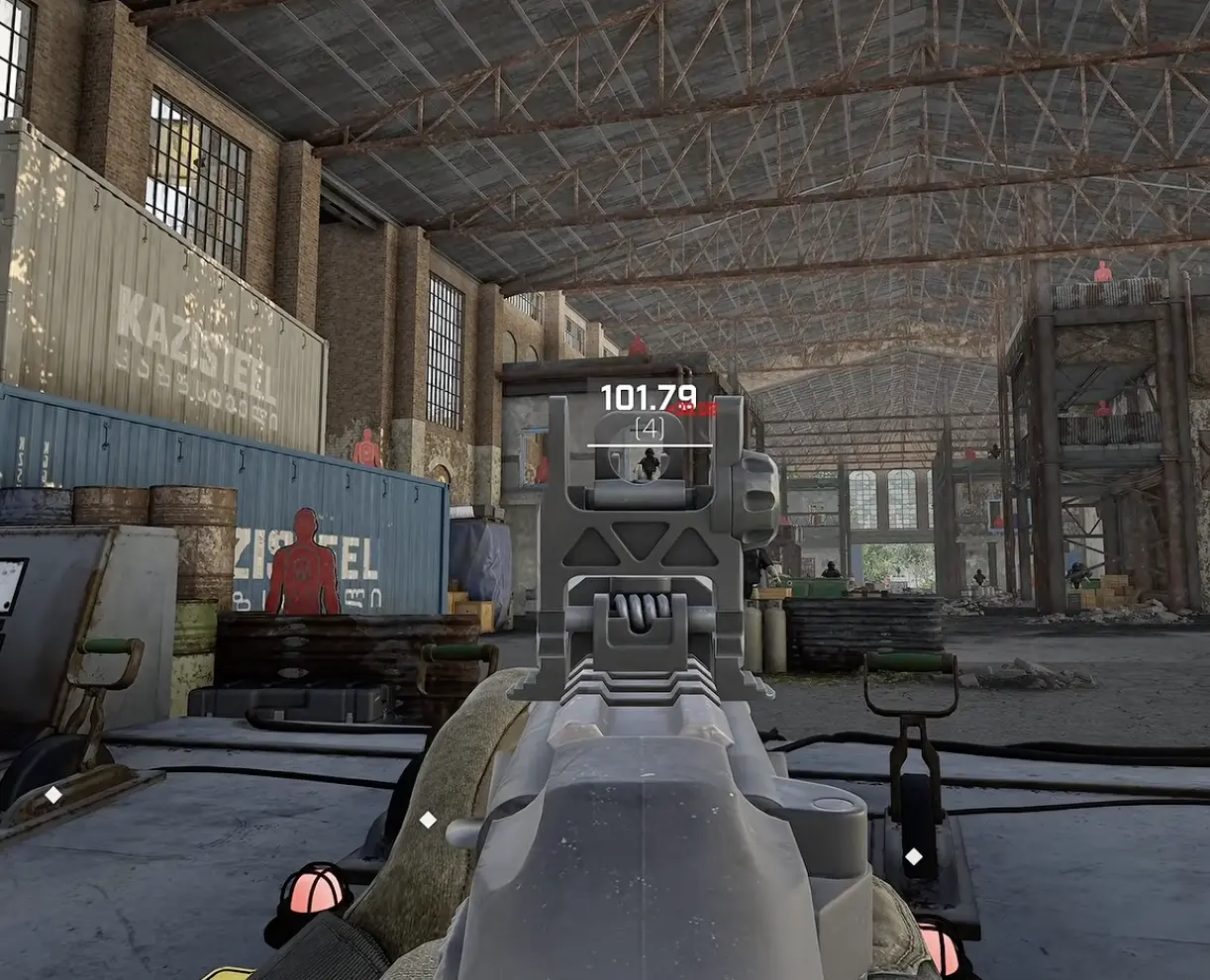
That becomes valuable as soon as a life stops following the plan. A medium-range approach can turn into a compound push, then a Hot Zone move can drag the fight into open ground, and another faction can arrive from a flank that removes the comfortable range entirely. The M4 rarely becomes the perfect weapon in any one of those situations, but it also rarely becomes a serious liability.
For the exact damage, shots-to-kill and TTK combinations against different armor and ammunition, I use the WARDOGS TTK Calculator. The weapon choice here is about what happens after the clean calculation meets recoil and movement.
Best M4 Build: Fix Horizontal Recoil Before Chasing the Smallest Pattern
My M4 builds start with a simple rule: vertical recoil is easier to correct than random horizontal movement.
I can pull the mouse down against a predictable climb. A burst that keeps stepping left and right is harder to repair while I am also tracking a moving player. That is why I do not automatically choose the attachment with the largest vertical-recoil reduction.
The clearest comparison came from putting several grips on the T-21, which exaggerates the differences because the rifle already has a lot of recoil. The same attachment logic is what I use when setting up a general-purpose rifle such as the M4.
| Grip | What changed | When I would use it |
|---|---|---|
| Mini Angled Foregrip | Strong horizontal recoil reduction, better spread, faster ADS and equip speed without a major handling penalty | My first look for a mobile rifle |
| Shift Foregrip | Strong horizontal control and spread reduction while also improving ADS and equip speed | Excellent when sideways movement is the main problem |
| 45° Angled Foregrip | Makes the pattern more vertical and predictable while improving handling | Good balance when I want a faster-feeling rifle |
| TDG Vertical Grip | Very large vertical reduction plus useful horizontal control | Strong for deliberate fire, but slower ADS and equip speed matter |
| RVG Vertical Grip | Good vertical control with some horizontal help and little downside | Solid when vertical climb is the main issue |
| RK6 Tactical Grip | Compresses vertical recoil but leaves much of the horizontal movement | Cheap, but I avoid stacking it with other attachments that already slow ADS |
The RK6 is the easiest one to overvalue. The pattern becomes shorter vertically, yet the sideways movement is still there. Add a high-zoom optic and another attachment with an ADS penalty and the finished rifle can feel much slower without becoming proportionally easier to keep on target.
The Mini Angled and Shift grips solve the problem I care about more often: the burst becomes straighter, so the remaining vertical climb can be corrected with a consistent downward pull.
M4 Muzzle and Optic Choices
The same trade continues at the muzzle.
A Hexagon Brake gives strong horizontal-recoil help and tighter spread without adding vertical recoil, but the ADS penalty is real. A Ballista Brake also reduces horizontal movement and spread while adding only a small amount of vertical recoil, although handling slows slightly.
A suppressor gives recoil and spread benefits while reducing the weapon’s report, but I do not treat it as free recoil control. The ADS penalty stacks with the rest of the build. A rifle carrying a slow grip, slow muzzle and high-magnification optic can end up solving recoil while creating a new problem every time someone appears close.
Flash hiders move in the opposite direction by improving ADS speed while reducing flash, so they make more sense when the rifle already feels stable enough.
For optics, I rarely force high magnification onto a general-purpose M4. Low zoom preserves the reason I chose the rifle in the first place. A heavy long-range optic makes more sense once I have already decided that most of the life will be fought from distance, and at that point I am also asking whether the FAL or a marksman rifle fits the job better.
FAL: The Rifle I Want When the Fight Is Already Readable
The FAL earns its place beside the M4 for almost the opposite reason.
At 706 RPM, standard FMJ reaches roughly 85 ms against an unarmored chest and about 340 ms through Level 4 chest protection. That is a large advantage over the M4 when the required shots land cleanly.
Roads between compounds, ridges, exposed approaches and window-to-window fights are where I feel the difference most. The FAL gets time to convert its damage before the engagement becomes chaotic.
Doorways and sudden flanks punish the weapon more. Missing an important follow-up throws away much more of the theoretical advantage, so I do not choose the FAL simply because its TTK number is lower. I choose it when the map is already giving me the kind of shot that lets the number matter.
That creates a simple split for me: M4 before I know the fight, FAL after I understand it.
T-21, AK74 and Galil: Recoil Can Matter More Than the Unlock Order
The T-21 sits close enough to the M4 statistically that handling becomes a large part of the decision. Its recoil also makes attachment choice unusually important. With a grip that mainly compresses vertical recoil, the sideways movement can remain irritating; an angled or Shift-style setup produces a much more predictable pattern.
That makes the T-21 a weapon I would rather tune than judge completely stock.
The AK74 is also usable, but nothing about reaching it later automatically makes it a stronger rifle. Its standard FMJ chest numbers in my comparison trail both the M4 and FAL. I would use it because I prefer the feel or the specific build, not because I expect the progression order to guarantee a damage upgrade. Unlock requirements are covered in the WARDOGS Progression Guide.
The Galil stood out for a different reason: its automatic fire stayed remarkably flat, so keeping a burst centered required less correction than I expected. That makes it attractive when consistency matters more than squeezing the fastest possible kill out of the rifle.
I still keep it behind the M4 and FAL overall. The Galil’s strongest case here is controllability; I have not seen a damage or armor breakpoint that gives me the same reason to prioritize it over those two rifles. When recoil control is the part of the fight I keep losing, though, the Galil becomes a much more serious alternative than its place in the unlock order suggests.
SUPER-45: Best Pick When the Fight Collapses Into Close Range
The SUPER-45 is much easier to justify once the route stops asking for rifle distances.
Its very high fire rate produces excellent clean TTK inside the range where I can keep the burst on target. In the FMJ comparison, it was around 96 ms against an unarmored chest and remained competitive into Level 4 armor.
That matters around interiors, short alleys, FOB fighting and packed objectives. The target fills more of the sight picture, the fire rate is easier to exploit, and a missed round is quickly followed by another.
Open ground exposes the weakness. Nothing changes in the weapon’s theoretical damage, but distance causes more of the rounds required for that theoretical result to miss. Once the fight keeps opening beyond the weapon’s comfortable range, the M4 or FAL starts buying me far more useful pressure.
Ammo can also change how the SUPER-45 feels. FMJ, AP and HP behave very differently once armor and exposed flesh enter the equation, so I do not blame the weapon until I know where the rounds are landing. The WARDOGS Armor & Ammo Guide covers those matchups in detail.
M500: Buckshot for Point Blank, Slugs When the Range Opens
The M500 is much less complicated once I stopped expecting buckshot to behave like a rifle.
One early buckshot hit landed in the foot and produced roughly six pellet hits for about 40 total damage, which would have needed several pumps to finish the target. That looked weak until the engagement distance and hit location were taken into account.
At point-blank range, buckshot is a different weapon entirely. It becomes extremely dangerous when most pellets land together. Once the target is beyond roughly 20 yards, the spread starts taking too much away from that advantage.
That gives me a straightforward choice:
Buckshot is for rooms, corners and targets that are already close enough that the pattern stays concentrated.
Slug is what I move toward when I need the shotgun to keep doing meaningful damage after the target has left that point-blank envelope. Slug headshots can produce one-shot kills when protection allows it, but the weapon is no longer relying on a cloud of pellets to do the work.
Chokes make buckshot much more consistent
A choke is one of the few shotgun attachments that changes the result in an immediately visible way. The full choke tightened the pattern enough that all eight pellets were landing far more consistently at the same range than with no choke.
That does not turn buckshot into a long-range rifle. It simply makes the close-to-medium transition less random.
For an M500 life built around buckshot, I care more about tightening the pattern than stacking attachments that do nothing for the reason I brought the shotgun.
SVD: My Practical Sniper Pick When I Still Need to Move
The SVD is the ranged weapon I prefer when I want to keep participating in a moving battle.
The clean chest numbers are strong, but the real advantage is the follow-up. A first round can hit the chest instead of the head, the target can survive behind armor, or a second player can appear immediately after the first shot. The SVD gives me another meaningful round without turning the entire engagement into a long reload or bolt cycle.
That flexibility matters when the objective shifts. I can leave one sight line, move with the team and rebuild the angle somewhere else without carrying a rifle whose whole value depended on one perfect nest.
In actual ranged play, I would take the SVD over the Mosin when I expect the battle to keep moving.
SV-98 vs MK22: The Higher-Caliber Rifle Does Not Cross the Important Helmet Breakpoint
The MK22 looks like it should be the obvious step up from the SV-98. It brings slightly more damage and better bullet velocity.
The important armor result is less exciting.
With standard ammunition, both rifles can one-shot a Level 2 helmet, and neither one-shot a Level 3 helmet. That means the MK22’s numerical improvement does not cross the breakpoint that matters most once better helmets become common.
The practical consequence is large. During long-range fights, repeated MK22 headshots against Level 3 helmets still failed to produce the instant kill I wanted. At that point the extra price and slower follow-up were difficult to justify over the SV-98.
For closer or more mobile sniper work, I prefer the SV-98. The MK22 makes more sense when the extra velocity and long-distance handling are part of the reason I took the position in the first place.
AP ammunition can change those helmet breakpoints, but that becomes an ammo-and-armor decision rather than proof that one rifle is automatically stronger. I use the WARDOGS Armor & Ammo Guide when that is the actual problem.
AMR 50: The Headshot Is the Reason to Carry It
The AMR 50 is not a normal TTK weapon.
At only 55 RPM, a required second shot takes roughly 1.09 seconds to arrive. Against a Level 4 chest, that makes it look terrible beside automatic rifles.
The headshot changes the entire purpose of the gun.
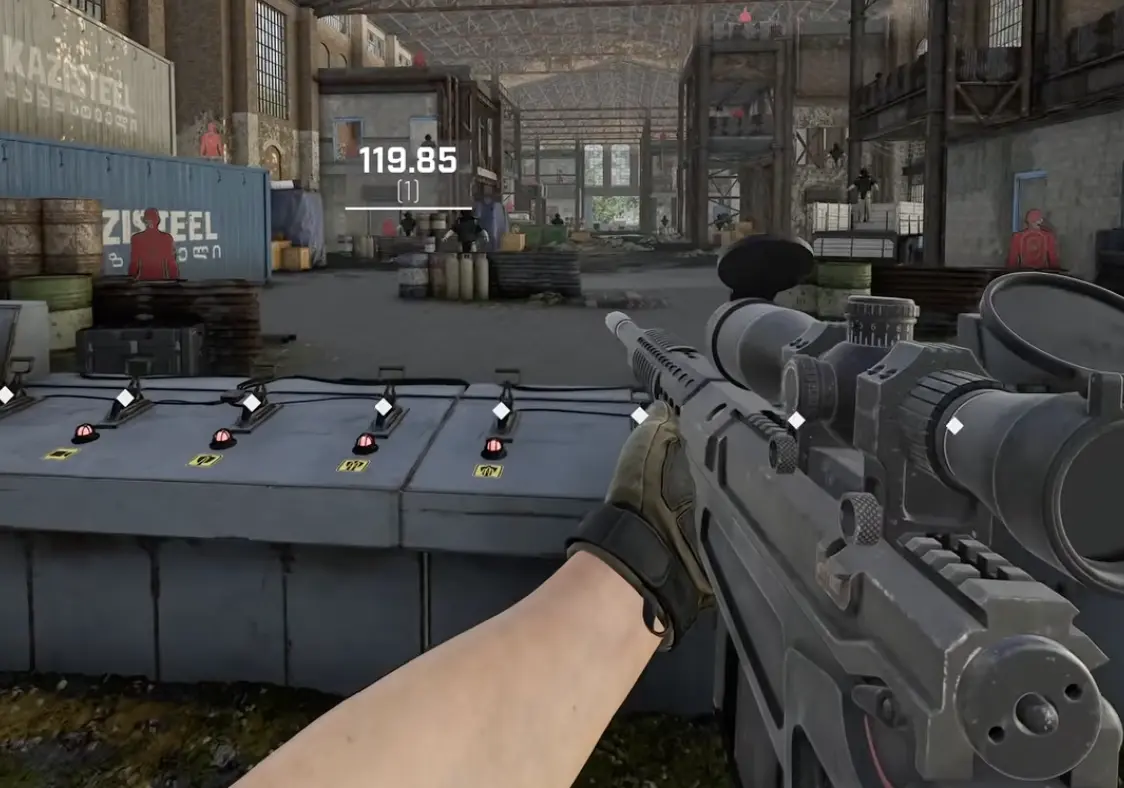
With roughly 119–120 damage getting through Level 4 head protection in that shot, the first round can still finish the fight.
So I do not buy the AMR because I expect to win chest-shot races. I buy it when the terrain gives me enough distance, a stable position, an escape after firing and targets that will remain outside immediate rifle range.
A Hot Zone that moves into dense buildings can destroy that plan without changing a single weapon stat. When the fight no longer offers a deliberate first shot, I would rather leave the AMR behind.
Compound Bow: Quiet and Strong Early, but Armor Changes the Weapon
The Compound Bow creates a very different ranged life.
Its biggest advantage is noise. It lets me attack around a FOB or treeline without every shot broadcasting my position like a rifle. The current arrow flight is also extremely flat, with very little visible drop across normal engagement distances.
It is easier to use close than a full sniper setup because I do not need a long scope or a slow rifle to take the shot.
Armor is what stops the bow from becoming an automatic recommendation.
Against no armor and Level 1 protection, it can be extremely punishing. Level 2 already changes the result to roughly two body hits or one headshot. Against Level 3, I am looking at about two headshots or three body hits instead.
That means the weapon can feel spectacular early in a server where light armor is common, then become noticeably worse as better protection spreads through the match.
There is another practical limit: arrows disappear quickly during sustained fighting. I have burned through 40 arrows during a long series of FOB engagements. A quiet weapon is not much help once the last arrow is gone and the only remaining option is whatever I can take from a body.
The bow is therefore a Specialist pick for me rather than an all-purpose replacement for a sniper rifle. It excels at silent pressure against lighter targets and becomes increasingly demanding as armor improves.
PKM: Strong Damage When the Position Lets the Gun Settle
The PKM produces much better clean kill-speed numbers than its heavy handling initially suggests. On standard FMJ chest hits, it sits much closer to the hard-hitting rifles than I expected.
The weapon becomes less attractive when I have to snap between targets while moving. Sustained fire climbs, the heavier handling makes quick corrections slower, and the theoretical damage starts disappearing as rounds stop landing on the same target.
Put the PKM behind useful cover and the calculation changes.
A road, a gate, an FOB approach or another lane that forces enemies to move through a predictable area lets the weapon build pressure without constantly resetting the aim. A bipod can reduce recoil and spread dramatically when I actually have a surface and enough time to deploy it.
That is where I want the PKM: the enemy comes through my sight line rather than me chasing them through theirs.
The Attachment Trap: Too Much Recoil Control Can Make the Gun Worse
It is easy to build a rifle that looks fantastic on a wall and feels terrible when somebody appears unexpectedly.
A TDG-style vertical grip, suppressor and high-magnification optic can all contribute useful recoil or range benefits, but several of those choices also slow ADS or equip speed. Stack enough of them and the gun becomes noticeably slower to bring into a close fight.
WARDOGS makes that cost particularly obvious because weapons are not the only things I switch to. RPGs, binoculars, wrenches and other equipment all compete with handling time.
I therefore build around the weakness I can actually feel.
Sideways recoil sends me toward Mini Angled, Shift, 45° Angled or a suitable muzzle. Excessive vertical climb can justify a stronger vertical grip. A rifle that already feels stable does not need another recoil attachment simply because the slot is empty.
The same logic applies to magnification. A 3–6x or other long optic can be useful when the rifle is staying at range, but variable and sniper optics carry meaningful ADS penalties. On the M4, I would rather keep the weapon fast unless the route has already given me a reason to turn it into a heavier long-range build.
Why Raw TTK Alone Gives the Wrong Tier List
TTK answers one narrow question: how much time passes when every required shot lands.
The match decides whether those shots actually happen.
A rifle with a mathematically faster result can lose its second round to horizontal recoil. A close-range gun can spend an entire life staring across open terrain. A sniper can dominate one ridge and become dead weight when the Hot Zone crosses into buildings. A bow can tear through light armor and then run into a squad full of Level 3 helmets.
TTK is still useful because it shows the reward when the weapon gets the fight it wants. The missing part is frequency: the number cannot tell me how often the match will actually produce that range, angle and hit sequence.
For any exact weapon/ammo/armor combination, the WARDOGS TTK Calculator gives the damage, shots-to-kill and time result without turning this weapon choice into another giant statistics table.
Best Weapon for Each Fight
| Fight I expect | Weapon I prefer | Why |
|---|---|---|
| I have no idea what happens next | M4 | Recoil, handling and range stay useful across the widest set of fights |
| Controlled mid-range rifle fight | FAL | Excellent raw damage when the opening hits remain accurate |
| Short interiors and packed objectives | SUPER-45 | High fire rate becomes much easier to exploit |
| Point-blank room clearing | M500 Buckshot | Pellet damage is devastating when the entire pattern stays on target |
| Shotgun but the target may leave point-blank range | M500 Slug | Gives up the buckshot pattern for more useful distance |
| Ranged fight that keeps moving | SVD | Fast follow-up without abandoning the marksman role |
| Mobile bolt-action sniper life | SV-98 | Reaches the important standard-ammo helmet breakpoints without the MK22’s heavier commitment |
| Very long first-shot position | AMR 50 | Level 4 head protection can still be defeated by one accurate shot |
| Defensive lane with good cover | PKM | Sustained output matters when targets must enter the same angle |
| Silent attack against lighter armor | Compound Bow | Low report and flat arrow flight make repeated hidden shots possible |
| Alternative rifle that needs recoil help | T-21 | Becomes much easier to manage with horizontal-control attachments |
| Accuracy-first automatic rifle | Galil | Very flat automatic fire makes staying on target easier |
The terrain narrows that table faster than another damage statistic. A SUPER-45 purchase should pull me toward cover and short lanes. A FAL wants enough distance to make the opening shots count. An SVD can follow movement without demanding a permanent nest. The AMR needs a real long sight line before its slow follow-up becomes an acceptable trade.
The same check works after death. A weapon only needs changing when the same limitation keeps appearing. Repeatedly losing open-ground fights with a SUPER-45 tells me something useful. One awkward death does not. An M4 that keeps reaching enemies too late across the same long lane may finally have a reason to become a FAL or SVD.
Which WARDOGS Weapon Should You Use?
For a normal infantry spawn, I still start with the M4 when I do not know what the next ten minutes will look like. If the map has already settled into longer, cleaner rifle angles, I switch to the FAL. Tight interiors push me toward the SUPER-45 or M500, while moving ranged fights make the SVD much easier to live with than a slower bolt-action setup.
The PKM becomes worthwhile when I have cover and a lane worth holding. The AMR 50 needs a position where the opening headshot can decide the engagement. The Compound Bow works best while lighter armor is common and the ability to stay quiet is actually helping me hold the position.
If I die and the weapon choice still feels wrong, I check the same thing again: was the gun outside its useful range, was recoil causing the misses, or did armor change the number of hits I needed? That tells me whether the next change should be the weapon, the attachment setup or the ammunition.