What Are the Best Builds in Shroom and Gloom?
The strongest builds I have tested for Paperboy, Lunch Lady and Janitor, from Food loops and Hot Poker to Machine and Gunk engines.
Updated:
Quick Answer
For the first reliable progression runs, Paperboy Food / healing is the build I would trust most. Lunch Lady works best when I establish healing and Food first, then let Hot Poker become the finisher instead of forcing a burst deck from the opening reward.
In the Facility, Machine / Cover Fire Janitor is easier to pilot. Gunk / Sparkling Clean Janitor has a higher ceiling, but I only commit once the run has both deliberate Gunk generation and reliable cleaning.
The strongest Shroom and Gloom runs I have played did not begin with a perfect card reward. They reached a point where several effects started feeding one another, and from there every new card had an obvious job.
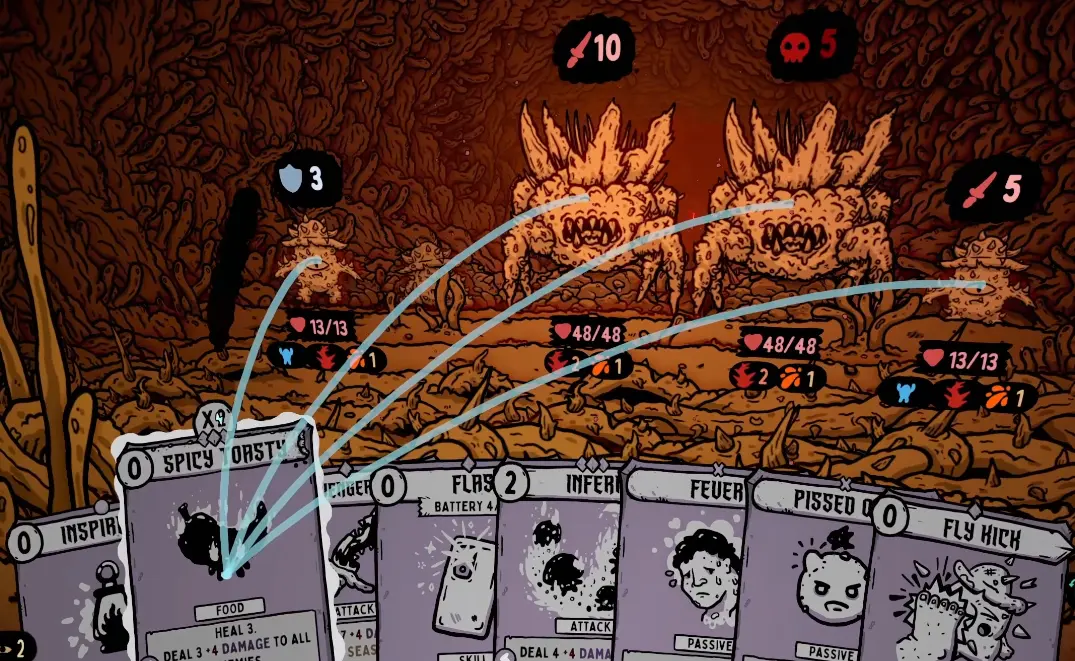
Paperboy gave me the clearest example. Healing began creating energy, eating improved permanent damage, card growth triggered more draw, and that extra draw found more Food to restart the process. By the end of that run, the result screen showed 3,500 damage in a single hit and 303 Toasties consumed.
Janitor reached the same kind of power in a completely different way. One version relied on Machines and Cover Fire; another deliberately loaded cards with Gunk, cleaned them, and turned that cleanup into extra damage.
That is why I would not choose a build from a tier list before the run starts. I watch for the first real engine, then stop drafting cards that ask the deck to become something else.
One other system matters here: Foresight. Shroom and Gloom still has two active decks, Combat and Explore, but Foresight adds a persistent passive layer on top of them. A good Foresight can reinforce the deck for the rest of the run, while the wrong one can tempt me into supporting a second archetype I never needed.
Paperboy: The Food Loop Can Become Effectively Infinite
My strongest Paperboy run started looking broken once four effects began talking to each other:
Cell Overdrive turned healing into energy and card movement. Scavenger Blade gained permanent damage when I ate. Vicarious Mace gained damage when a card grew. Fever drew another card whenever a card grew.
Toasties and Spicy Toasties kept those triggers moving.
The important moment was not drawing one especially powerful attack. It was realizing that healing no longer meant only recovering HP.
A heal could trigger Cell Overdrive. The extra energy let me continue the turn. Eating could grow Scavenger Blade, which could then cause another growth interaction through Vicarious Mace. Fever converted that growth into another draw. If the new cards included more Food or another healing trigger, the cycle continued.
In one fight the loop was already online almost immediately. After making another Toasty, the deck began cycling again with Rage 20 already active.
That is the point where I stop shopping for generic damage.
What I want before calling this a real Paperboy build
The engine needs action economy, not merely healing.
A run with lots of Food can survive for a long time and still fail to become powerful. What changed the winning run was gaining something useful every time I healed, ate or grew a card.
Cell Overdrive was the biggest signal. Fever was another. Once those were supporting permanent damage growth, ordinary filler attacks became much less valuable because every weak draw interrupted a loop that could otherwise keep going.
I also liked Hard-Headed when the run was using Bash often enough to justify it. That Foresight heals after Bash and starts the next combat with Pissed Off, which gives the build another way to turn exploration decisions into combat momentum.
I would not take it automatically, though. A Foresight only deserves that commitment when the actions that trigger it are already part of the run.
The failure case is a loop with nothing worth looping
This archetype can become very good at generating cards, healing and energy without actually ending the fight.
The late game still needs a payoff.
Scavenger Blade and Vicarious Mace solved that problem in the strongest version because the loop was permanently increasing real damage. Without that kind of finisher, the deck can spend a long turn doing impressive things while the enemy remains alive.
So the order that worked for me was:
stability first → engine second → permanent damage payoff third
Trying to reverse that order made Paperboy much less reliable.
Lunch Lady: Build the Kitchen Before You Build the One-Shot
Lunch Lady gave me a different lesson.
Hot Poker is an obvious card to get excited about, but my best Lunch Lady runs did not begin by throwing everything into a one-shot plan. They became strong because the Food and healing shell worked even when Hot Poker was not in hand.
Cards such as Fatten Up gave the run a way to Plump and recover. Comfort Food improved the low-HP turns. Toasties, Inferno and other Food interactions kept the deck producing enough material to survive long encounters.
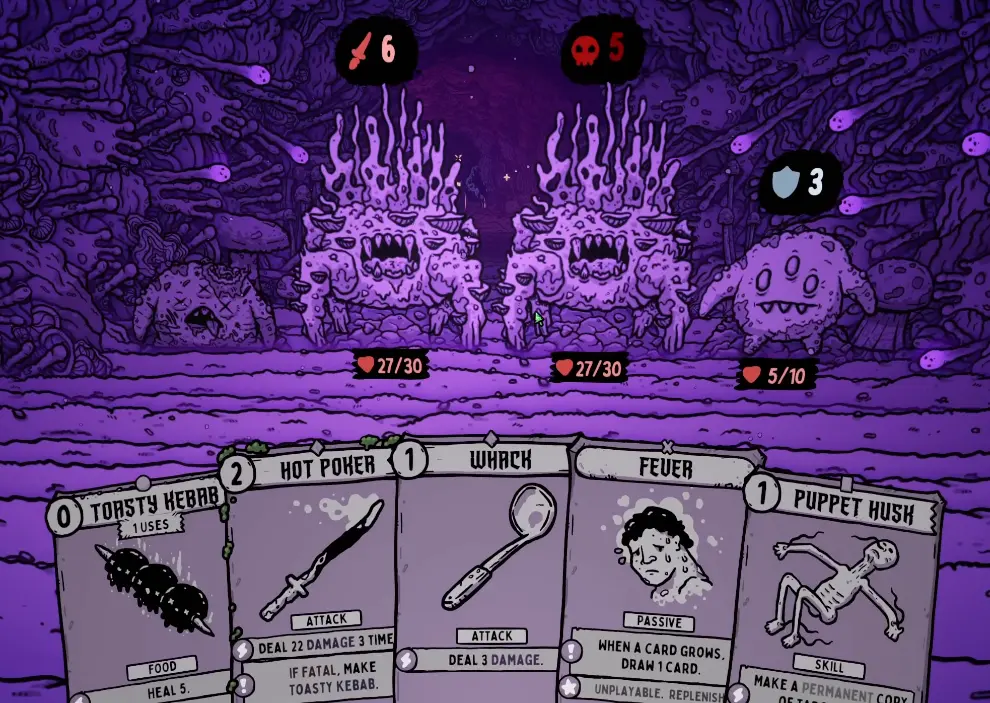
Hot Poker then gave that stable shell somewhere to send all of its scaling.
That distinction matters because I have also seen Lunch Lady runs where I kept waiting for the perfect damage package and weakened the deck in the process. A Hot Poker build that cannot survive until Hot Poker matters is not really a Hot Poker build yet.
I commit to Hot Poker when the support is already visible
Vulnerable is an obvious partner because it multiplies the value of one large hit. Permanent damage growth is another reason to center the card. Strong healing also matters more than it sounds, because it lets me preserve the setup instead of spending every turn solving the immediate health problem.
Once those pieces appear, I become selective with attacks.
The deck does not need five alternative finishers. A medium attack that is merely efficient can be worse than another source of Food, draw or Vulnerable if those cards make the actual kill turn arrive sooner.
The exact boss sequencing belongs in the Forgotten Path final boss guide. For the build itself, the useful decision happens much earlier: does the run already support one large finishing hit, or am I forcing Hot Poker because I want it to be the plan?
Lunch Lady Sustain Is a Real Build, Not a Failed Hot Poker Run
Not every Lunch Lady run needs to become a burst deck.
I have had runs where healing and Food were so consistent that I stopped caring whether the perfect one-shot package appeared. Those decks cleared more slowly, but they could absorb bad draws and recover from mistakes that would have ended a thinner burst build.
That is when cards such as Fatten Up, repeated Food generation and healing triggers become the actual core rather than support for something else.
The choice between sustain and burst usually happens naturally.
If Hot Poker is scaling and Vulnerable support is showing up, I let the run move toward burst. If the rewards keep offering healing, Food and reliable long-fight value instead, I would rather finish a coherent sustain deck than carry half of a one-shot build for the next hour.
That flexibility is the main reason Lunch Lady felt so forgiving compared with a more rigid combo character.
Janitor Machine: The First Facility Build I Would Learn
Machine Janitor is much easier to understand while learning the Facility because the feedback is immediate.
Clunker, Cover Fire, turret effects and Machine triggers start creating repeatable damage, and once that loop is working I can judge new rewards against a very clear question: does this make the Machines happen more often or hit harder?
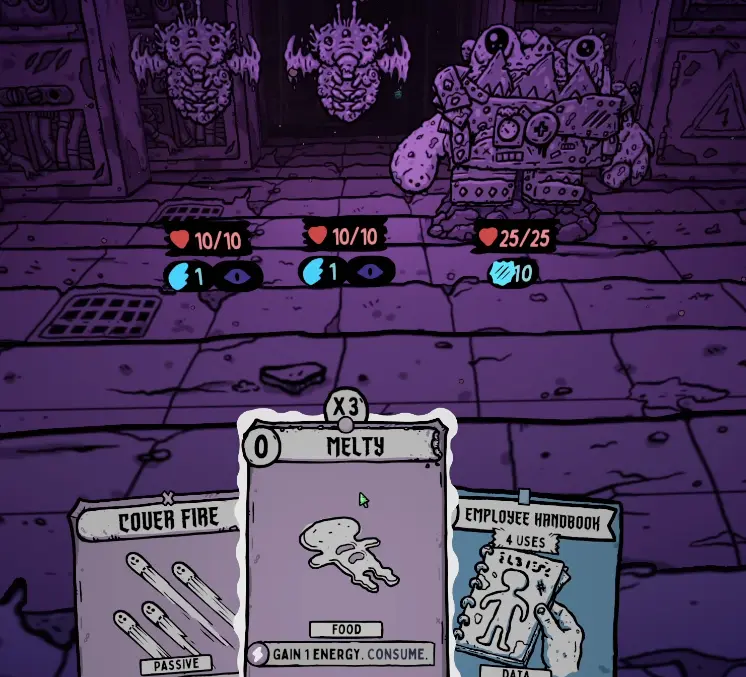
Data also fits this plan naturally.
At one Foresight choice, I was offered Data Miner, a passive Gunk option and Clean Freak. The deck was not built around Gunk, so Data Miner was the obvious pick. It supported the direction the run already had instead of asking me to start another one.
Later, Decay became another useful layer. A Foresight such as Filthy, which adds more Decay when I apply it, can turn repeated Machine damage into a much more serious scaling plan when Decay is already part of the deck.
The difference between those choices is important. Clean Freak is a strong Foresight, but it was the wrong Foresight for that Machine run.
Cover Fire works until the fight attacks Cover Fire itself
This archetype felt extremely safe through normal Facility encounters. Machines were doing enough repeated work that I could spend the rest of the hand on survival and setup rather than repeatedly drafting more direct attacks.
The weakness did not appear until the final stretch.
Forced discard can dismantle a Cover Fire engine before the health bar looks remotely dangerous. In one boss attempt, several Cover Fires disappeared from the hand and the damage plan suddenly had far less redundancy than it had during ordinary combat.
That does not make Machine Janitor a bad build. It changes what I want before the end.
I now prefer a Machine deck that has a second meaningful damage line rather than a run where every strong turn assumes Cover Fire will remain available. The Facility walkthrough covers that forced-discard problem in the context of the route and final encounter.
Janitor Gunk: The Build Starts When Cleaning Becomes a Payoff
Gunk Janitor was harder for me to understand because the same mechanic can look like both a penalty and a resource.
Gunk Shot showed that contradiction clearly: it could gain damage for every Gunk on the card, but additional Gunk also pushed the energy cost higher. Loading the card indefinitely was therefore not a real plan. I needed a point where the buildup could be converted into something useful.
That point was Sparkling Clean.
Cleaning three Gunk from a card could turn it Sparkling Clean, allowing the card to deal damage twice.
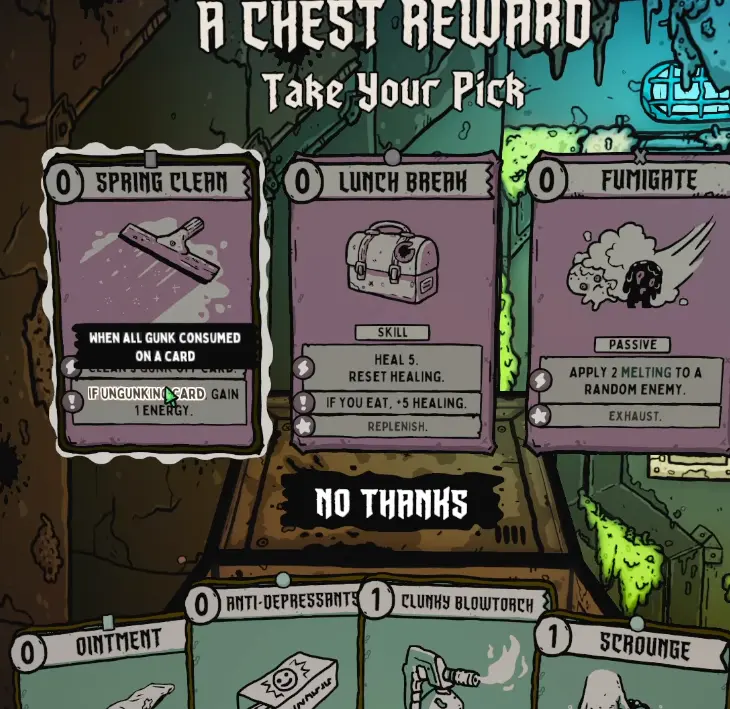
That changed the sequencing completely.
Instead of cleaning the first dirty card I saw, I could deliberately build Gunk on a card that benefited from it, then clean that card once the payoff justified spending the action.
The build becomes real when three parts exist at the same time:
- a reliable way to add Gunk;
- a reliable way to remove it;
- a card that becomes meaningfully stronger because that cycle happened.
If one of those pieces is missing, I stay cautious.
Clean Freak is the Foresight that tells me the run can go deeper
Clean Freak is especially useful here because it rewards a hand that already has multiple Gunked cards by drawing a cleaning card.
That is a very different signal from Data Miner.
When I see Clean Freak while the combat deck is already intentionally creating Gunk, I am happy to lean harder into the archetype because the passive helps solve the exact bottleneck the deck creates for itself.
If I see it during a Machine/Data run with almost no deliberate Gunk generation, I pass.
That is the larger role Foresight plays in builds: it is strongest when it amplifies an established direction, not when it creates an excuse to abandon one.
Do Not Mix Machine Janitor and Gunk Janitor Too Early
Janitor has enough interesting mechanics that a run can accidentally become two unfinished builds.
This usually happens when Machines are already functioning, then several attractive Gunk cards appear. Or the reverse: the deck has Sparkling Clean potential, but a powerful Machine package tempts me to start adding another set of setup cards.
Some overlap is fine. A Machine run still needs cleaning. A Gunk run can still use a good Machine.
The problem begins when each half needs several more cards before it works.
At that point every draw contains a higher chance of producing the wrong half of the deck. Janitor is especially vulnerable to this because Gunk itself can already make key cards more expensive. Adding deck bloat on top of that turns manageable awkwardness into dead turns.
Foresight Should Change Drafting, Not Replace It
Foresight can be strong enough to shape a run, but I do not treat it as a substitute for the Combat deck.
Hard-Headed works because a build is already using Bash. Data Miner is attractive when Data and Machines already matter. Clean Freak belongs in a hand that expects to carry Gunk. Filthy becomes exciting once Decay is already doing real work.
The pattern is consistent: the passive rewards something I was already happy to do.
That is much more reliable than taking a powerful Foresight and spending the next several rooms searching for cards that make it relevant.
It also gives me a better way to judge close choices. If two cards are individually similar, I take the one that triggers the passive I already have or benefits from it. That small alignment compounds over a long run.
The Builds I Would Use for Different Goals
For a fresh progression file, Paperboy Food / healing is still my safest recommendation because it has room to recover from imperfect hands and can grow into an absurd late-game engine.
For the Forgotten Path with Lunch Lady, I start from healing and Food, then let the rewards decide whether the run stays sustain-heavy or graduates into a Hot Poker finisher.
In the Facility, I would learn Machine / Cover Fire Janitor first. The plan is easier to read, Data fits naturally and ordinary fights give immediate feedback on whether the engine works.
I move into Gunk / Sparkling Clean Janitor when the run has already shown both deliberate Gunk generation and enough cleaning to control it. That build can produce some of the most satisfying turns I have played, but it punishes half-commitment harder than the Machine route.
I have not run Concerned Parent or Activist enough to give either one a build recommendation I would trust. I would rather leave them out than turn a few card descriptions into a pretend tested build.
The common thread across the builds that did work was not one overpowered card. It was reaching the point where the next draw was likely to continue the same plan rather than ask the deck to start a new one.