How Do You Find and Open Buried Treasure in Nomad Drive?
Find buried treasure in Nomad Drive using the metal detector, dig up hidden chests with a shovel, and open them with keys without wasting time at roadside stops.
Updated:
Quick Answer
Find a Metal Detector, keep a Shovel available, and search the ground around roadside locations. Move toward the strongest detector signal, dig at that spot, then use a Key to open the buried chest. Check nearby containers for keys before leaving.
A metal detector can lead you directly to buried treasure in Nomad Drive, but finding the chest and opening it are separate jobs. The detector helps narrow down a hidden location, the shovel exposes the container, and a locked chest still needs a key.
The most frustrating part is often the search itself. A detector may start beeping near a building, yet moving a few steps in the wrong direction makes the signal weaker. Even after finding the chest, you can discover that the key is sitting back in your vehicle—or that another buried container was left behind when you departed.
There is no need to dig up an entire roadside area. Reading the detector’s response, checking the available tools, and searching a promising spot thoroughly are enough to turn treasure hunting into a manageable part of a road trip.
Where Do You Find the Metal Detector, Shovel, and Keys?
Treasure hunting works best once you have three items available:
- Metal Detector: Helps locate buried objects by producing an audible signal that changes as you move.
- Shovel: Used to dig at the suspected treasure location.
- Key: Opens a locked chest after you have uncovered it.
These items can turn up while looting roadside locations, abandoned buildings, vehicles, and containers. They are not tied to one permanent starting coordinate.
One roadside stop can provide several of the necessary tools. A metal detector was found among the available loot, with a shovel and key collected during the same stretch of exploration. At other stops, keys appeared inside containers and among supplies gathered from buildings.
This makes ordinary roadside exploration useful even when you are not immediately searching for treasure. A key found during a fuel stop can save a return trip when the next detector signal leads to a locked chest.
Should You Keep a Shovel and Spare Keys in the Vehicle?
Keep at least one shovel accessible once you begin checking locations for treasure. It is inconvenient to find a strong signal and then discover that the tool needed to dig is still at an earlier stop.
Keys deserve similar attention. Store the ones you find somewhere easy to reach, rather than scattering them among furniture and spare parts.
You can keep them in your vehicle and retrieve one when a chest requires it. A locked chest may appear well away from the exact place where you stored your supplies.
There is little reason to carry several shovels while walking around a single stop unless you actually need replacements. Your available carrying space is more useful for the detector, a shovel, and items you intend to bring back from the area.
How to Locate Buried Treasure With the Metal Detector
The detector’s changing sound is more useful than the visual appearance of the ground.
At a roadside location, begin by walking around the accessible outdoor area with the metal detector. Once it starts beeping, slow down and compare the signal from different directions.
A successful search follows this pattern:
- Move into the area where the detector begins responding. Do not dig at the first beep.
- Walk a short distance in one direction. Listen for whether the beeping becomes more frequent or intense.
- Turn back when the signal weakens. You have probably moved away from the strongest part of the detection area.
- Sweep the nearby ground from another angle. Narrow the area by comparing how the detector responds as you approach from different directions.
- Use the shovel at the strongest location. Once the buried chest is exposed, inspect it before attempting to open it.
During one search, the signal became noticeably stronger within a small part of the roadside area. Moving farther away caused it to weaken again. After narrowing down the position, the hidden container appeared.
The useful lesson is that you should search the area around the strongest response, rather than continuing in one direction simply because the detector is beeping.
Can Treasure Be Buried Beside Trees?
Yes. A buried container was located directly at the base of a tree during roadside exploration.
That makes trees and the ground around nearby buildings worth checking whenever the detector starts responding. The chest does not have to sit in the middle of an obvious open patch.
However, a tree is not a guaranteed treasure location. Search there when the signal leads you toward it; otherwise, keep following the detector rather than examining every tree along the road.
The environment can look ordinary even when a buried container is close enough to detect.
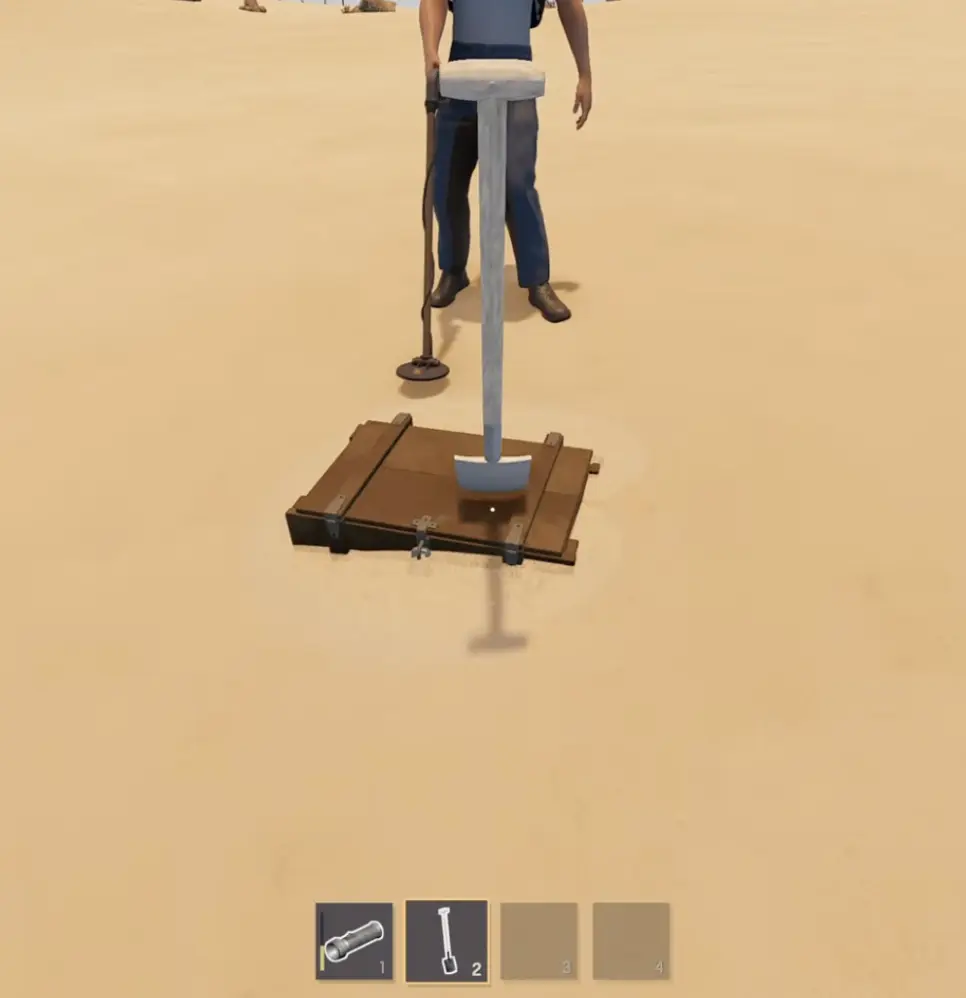
How Do You Dig Up a Treasure Chest?
Once you have narrowed down the position, retrieve your shovel and approach the suspected spot.
Aim at the ground around the strongest detector response and use the shovel’s available digging interaction. When you reach the correct location, the buried container becomes accessible.
After the chest appears, you can inspect it, move it, or attempt to open it. Those actions are not interchangeable.
A chest can be physically exposed and still remain locked. Digging completes the search for the container; it does not automatically grant access to its contents.
In a cooperative game, one player can search using the detector while the other prepares the shovel or brings a key from the vehicle. This is convenient when a treasure location is found some distance from your supplies.
Avoid moving the chest unnecessarily before checking the lock. It is easier to work out which action you need while the container is accessible and unobstructed.
How Do You Open a Locked Treasure Chest?
Some buried chests require an ordinary key.
The lock requirement appears when you try to open the container. If you do not have the required key available, the chest will remain closed even though it has already been dug out.
Before spending more time searching the same patch of ground, check the nearby location for a key. Useful places to inspect include containers, shelves, and other loot that you may have passed over while concentrating on the detector.
If you already collected a key, return to wherever you stored it in the vehicle.
One treasure hunt ended with the players realizing that the needed key had already been placed inside their van. The search itself was finished; the remaining obstacle was retrieving the stored item.
Another chest found later required a common key even after it had been unearthed and picked up. Moving the chest did not remove the lock requirement.
Can You Take a Locked Chest Back to Your Vehicle?
Treasure containers can be moved after they are found. During one road trip, an uncovered crate was carried closer to the vehicle to make unloading easier.
This is useful when you have already located the treasure but need to organize your supplies or retrieve a key.
Be aware that moving the container can change how easily you can interact with it. If you keep picking up or repositioning the chest when you intend to open it, put it somewhere accessible, approach its opening area, and check the available interaction again.
The lock and its key requirement remain the important part of opening the chest.
Why Is the Metal Detector Beeping but You Cannot Find Anything?
There are several different situations to distinguish before abandoning a search.
The Signal Gets Weaker or Never Leads to a Chest
If the detector’s response becomes weaker after several steps, return to the last strong reading rather than continuing in the same direction. Search the nearby ground from another angle, especially around trees and objects that make a straight approach difficult.
Before making another full sweep, look carefully at the suspected spot. A small container may already be visible among the surrounding objects. Continuing to scan an exposed chest will not help you open it.
The Game Says “Something’s in the way”
This message can appear when another object blocks the interaction you are attempting. One roadside attempt was obstructed by equipment occupying the nearby space; moving that equipment cleared the problem.
Check the objects immediately around your character and move anything interfering with the action. The message does not by itself establish that the treasure requires another key or that the buried chest has failed to appear.
The Chest Is Visible but Nothing Opens
First check whether it requires a key.
If you are picking the chest up instead of opening it, reposition the container and approach its opening area again. A chest moved into a cramped vehicle interior can be less convenient to interact with than one sitting in a clear space.
A shovel will not replace a key once the buried container has been found.
Can There Be More Than One Buried Treasure at a Stop?
Yes. More than one treasure container can be found during a single roadside visit.
In one cooperative search, a second crate was discovered after the players had already been working with keys and nearby loot. On another occasion, the players left a stop and later realized that a second buried container had never been collected.
That makes one final detector sweep worthwhile before departure.
After finding and opening the first chest, return to the surrounding outdoor area and check whether another distinct strong signal remains. Pay particular attention to ground that you skipped while collecting items from the building.
There is a practical limit to how long this is worth doing. If you have already searched around the location and no convincing signal remains, continuing to comb the same ground is unlikely to be the best use of your time.
Your next roadside stop may offer more supplies, another key, and another chance to find treasure.
What Rewards Can You Find in Treasure Chests?
Buried containers can provide a mixture of useful supplies and items for your vehicle.
Treasure searches have yielded items such as:
- Bobbleheads and other decorative objects.
- Food and drink supplies.
- Soundtrack cassettes and miscellaneous loot.
For example, one opened chest provided a bobblehead and water. Another opened container yielded food and other objects.
These examples are not fixed rewards for every chest. The contents of one container should not be used to predict exactly what another will hold.
Whether you keep everything depends on what your vehicle already has. Food and water are valuable during a poorly supplied trip, while decorations may be less urgent when storage space is limited. Soundtrack cassettes and other collectibles become more interesting when you are working toward completion objectives.
Treasure hunting also contributes to the game’s digging and locked-chest achievements. If you are clearing the full set of objectives, the Nomad Drive achievements checklist helps distinguish those tasks from other long-term goals.
When Is It Worth Searching for Treasure?
The most convenient time to search is when you are already stopped to loot a building, collect fuel, or inspect abandoned vehicles.
With a metal detector and shovel ready, an extra sweep around the location can reveal buried containers that ordinary indoor looting would miss.
Keys are worth collecting even when you have no immediate chest to open, because the next buried container may require one. Keeping the tools organized also prevents a short treasure hunt from becoming an unnecessary trip back to your vehicle.
There are situations where leaving is the better decision. Running low on fuel, food, or water makes repeated searches less attractive, particularly after the detector has stopped giving you a useful direction. Finish the supplies you actually need and continue driving rather than spending an entire stop pursuing an uncertain signal.
Before leaving a promising location, make one last pass around the outdoor area. Check whether you have left behind an uncovered chest, a useful key, or a second strong detector response.
A successful treasure hunt ends with the chest opened and its useful contents collected—not merely with a hole dug in the ground.