Lost Castle 2 Builds Guide
A practical Lost Castle 2 builds guide for v1.0, covering weapon types, rune colors, Hunter's Gear, Inscription Resonance, Devouring Beast, Bow, Musket, Staff, Rune Bullet, summon builds, and Nightmare 4-5 prep.
Updated:
Quick Answer
A strong Lost Castle 2 v1.0 build starts with a weapon category, then connects Hunter’s Gear, rune colors, treasures, inscriptions, resonance, upgrades, and alchemy. For early solo clears, use safer weapons such as Shields / single-handed weapons, Bows, or Staffs. For deeper Nightmare, start planning around Inscription Resonance, especially second-layer and third-layer chains.
What Changed for Builds in v1.0
The biggest mistake is treating a build as just “good weapon + good treasures.”
That works early, but it falls off when you reach Ethereal Nightmare, Memory Shards, Mage Tower routes, and Nightmare 4-5.
In v1.0, a serious build needs these layers to point in the same direction:
| Build layer | What it controls |
|---|---|
| Weapon type | Your attack rhythm, range, risk, and boss windows |
| Hunter’s Gear | Your extra safety, burst, utility, or emergency recovery |
| Rune colors | Your damage, skill, MP, defense, or survival direction |
| Treasures | The main effects that make the run scale |
| Inscription Resonance | Extra power from matching inscription keywords |
| Upgrades | Whether your best weapon actually keeps scaling |
| Alchemy | Your answer to mistakes, boss phases, and dangerous rooms |
| Route goal | Normal clear, weapon achievement, Nightmare, Memory Shards, or Mage Tower |
Start With the Six Main Weapon Types
Lost Castle 2 builds are easier to understand if you start with the main weapon category first.
Specific weapons such as Katana, Turbo Lance, and Phantom Lantern matter for achievements or special builds, but the broader build plan should still start from the core weapon type.
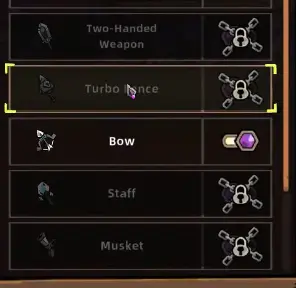
| Weapon type | Build identity | Good early direction |
|---|---|---|
| Shields / single-handed weapons | Safer melee, blocks, steady damage | Green Parati + red Akhil support |
| Bows | Safer ranged pressure and pattern learning | Projectile, multishot, attack speed |
| Staffs | Skill timing, MP, magic pressure | Blue Nairu, MP recovery, Rune Bullet |
| Muskets | Ranged burst and spacing discipline | Crit, projectile damage, emergency safety |
| Dual-Blades | Fast melee, hit triggers, close pressure | Red Akhil damage + enough green survival |
| Greatswords | Heavy hits, big punish windows | Burst damage, defense, boss-window value |
Choose Hunter’s Gear Before the Run
Hunter’s Gear is part of your build, not a side button you forget about.
Before starting a serious run, decide whether your gear is solving survival, burst, recovery, or utility.
| Hunter’s Gear role | Examples to look for | Best for |
|---|---|---|
| Emergency recovery | Emergency HP Bottle, banana-style recovery tools | New players, boss learning, fragile builds |
| Extra damage | Portable magic turret or cannon-style gear | Builds that already survive but need faster clears |
| Room safety | Tools that create space or reduce pressure | Ranged builds, Staff builds, Nightmare routes |
| Boss backup | Healing, burst, or emergency survival | Demon Lord, Nightmare bosses, Mage Tower |
| Cleanup utility | Gear that supports one achievement route | Weapon clears, cursed routes, special goals |
Rune Colors: Akhil, Parati, and Nairu
Rune colors are the base direction of your build. They are not just small stat bonuses.
The English UI uses three core rune names: Akhil Rune, Parati Rune, and Nairu Rune. Use these names as your first build language before reading deeper treasures, armor, and inscription chains.
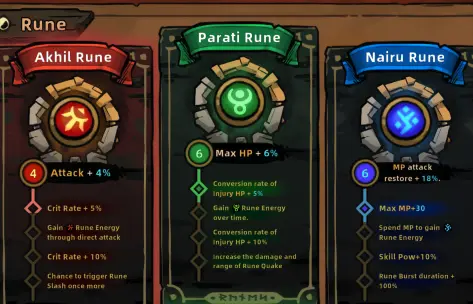
| Rune color | Rune name | Main direction | Trigger / payoff | Best build fits |
|---|---|---|---|---|
| Red | Akhil Rune | Attack, crit, direct damage, burst pressure | Rune Slash-style damage payoff when the build reaches the right threshold | Greatswords, Muskets, Dual-Blades, boss damage |
| Green | Parati Rune | Survival, HP, defense, toughness | Rune Quake / defensive-style payoff when the build reaches the right threshold | Shields, beginner builds, Nightmare survival |
| Blue | Nairu Rune | MP, skills, magic pressure, charging | Rune Bullet-style projectile payoff through weapon skill and MP usage | Staffs, skill builds, MP builds, Rune Bullet setups |
Nairu Rune and Rune Bullet Builds
Nairu is not just a blue stat bonus. It can change how you time weapon skills.
Rune Bullet works best when you build marks, keep MP available, and use the weapon skill during a safe window instead of firing it into bad positioning.
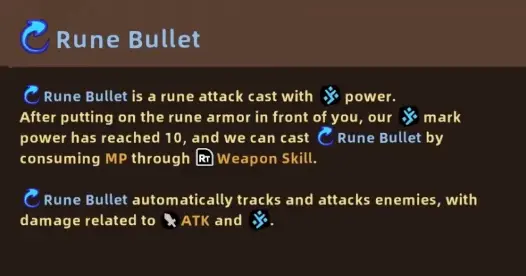
| Rune Bullet step | What to do |
|---|---|
| 1 | Build blue Nairu support through rune armor, rune choices, or treasure direction |
| 2 | Let Nairu marks build toward the required trigger point |
| 3 | Keep enough MP instead of spending every weapon skill instantly |
| 4 | Wait for a boss recovery window or grouped enemies |
| 5 | Use weapon skill when Rune Bullet can connect |
| 6 | Rebuild MP and repeat instead of spamming randomly |
Inscription Resonance: The v1.0 Build Check
This is the biggest system a v1.0 build guide cannot skip.
Inscriptions are keyword-style build tags attached to weapons, armor, and treasures. Resonance happens when your pieces stop being random strong items and start sharing the same build language.
You do not need to memorize every possible keyword at the start. But you do need to understand the three layers.
| Layer | What it means | Why it matters |
|---|---|---|
| First layer | The item works by itself | Good early, but not enough for deep Nightmare |
| Second layer | Two pieces share or support the same inscription keyword family | This can create a major power jump once the build direction is clear |
| Third layer | Weapon, armor, and treasure-style pieces all connect through the same build chain | This is one of the key v1.0 checks for Nightmare 4-5 and endgame routes |
How to Read a Third Layer Chain
Think of Third Layer Resonance as a build sentence.
A single strong item is only one word. Two matching items start a phrase. A weapon, armor, and treasure that all support the same keyword family become the full sentence.
| Example build direction | Weapon piece | Armor piece | Treasure piece | What you are looking for |
|---|---|---|---|---|
| Greatsword burst build | Heavy weapon or burst-focused Greatsword | Defensive armor that lets you survive slow punish windows | Burst, boss-window, or direct-damage treasure | A chain where heavy hits, survival, and burst timing support the same plan |
| Shield survival build | Shield or single-handed weapon | Armor with defense, recovery, or guard value | HP, damage reduction, or short-cooldown defensive treasure | A chain where blocking, survival, and steady damage all reinforce each other |
| Staff / Nairu build | Staff or skill-focused weapon | Armor that supports MP, skill use, or blue rune value | MP recovery, skill trigger, or Rune Bullet support | A chain where skill usage, MP economy, and blue Nairu value all connect |
| Summon build | Devouring Beast or summon-style weapon | Armor that helps survival while summons attack | Ivillia’s Inspiring Gem or summon-type scaling treasure | A chain where creatures, summon attack speed, and player survival all work together |
| Fast melee build | Dual-Blades or Katana-style weapon | Armor that helps close-range safety | On-hit, crit, attack-speed, or hit-frequency treasure | A chain where fast hits trigger damage often without making you too fragile |
| When reading inscriptions, ask… | Example decision |
|---|---|
| Does this keyword family match my weapon? | A slow Greatsword does not want the same trigger logic as Dual-Blades |
| Does this keyword family match my treasure triggers? | On-hit treasures want fast attacks; burst treasures want clear damage windows |
| Can I create a second-layer match now? | Two connected pieces are usually better than two random strong pieces |
| Can this become a third-layer chain later? | Keep weapon, armor, and treasure compatibility in mind before Nightmare 4-5 |
| Does the resonance help my route? | Boss routes, shard routes, and weapon clears may need different chains |
| Am I forcing a keyword that does not fit? | Do not keep a weak weapon only because one inscription looks exciting |
Read Treasures as Build Pieces
A treasure is not only a reward. It is a vote for the build you are trying to make.
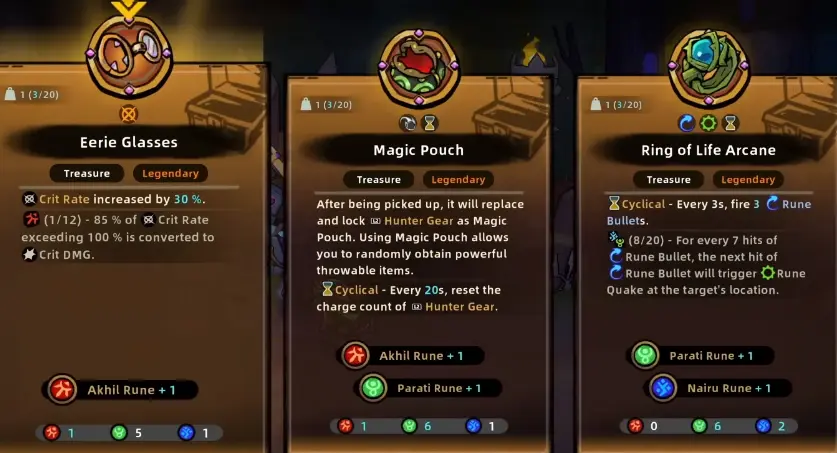
Use this decision table before taking a treasure:
| Question | What it tells you |
|---|---|
| What weapon does this treasure want? | Fast hit, ranged, skill, summon, heavy burst, or shield play |
| What rune color does it support? | Red damage, blue skill/MP, or green survival |
| What trigger does it need? | On-hit, crit, skill use, summon attack, boss kill, low HP, or cooldown |
| Does it help my current route? | Normal clear, Nightmare, weapon clear, Memory Shards, Mage Tower, or achievement cleanup |
| Does it match my inscription direction? | Helps decide whether it can become part of second or third-layer resonance |
| Does it solve my current weakness? | Damage, defense, MP, room clear, boss pressure, or survival |
Starter Shield Build
This is the safest general-purpose beginner build.
Use Shields / single-handed weapons, green Parati support, and enough red Akhil damage so bosses do not take forever.
| Build piece | What to look for |
|---|---|
| Weapon type | Shields or single-handed weapons |
| Rune direction | Green Parati first, red Akhil second |
| Hunter’s Gear | Emergency HP Bottle or recovery-style gear |
| Alchemy / charm examples | Forest Guardian’s Bud for HP value, Crystal Core Fragment for damage reduction |
| Treasure direction | Shield, recovery, direct damage, crit, short cooldowns |
| Inscription goal | Survival keyword + damage keyword instead of pure defense clutter |
| Route fit | First clears, boss learning, Normal, early Nightmare |
Ranged Builds: Bow vs Musket
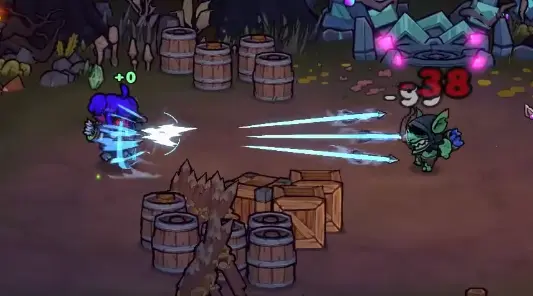
Bow and Musket are different builds, not variations of the same plan.
Bow is better for steady ranged pressure, pattern learning, and repeated projectile value. Musket is more about burst windows, spacing discipline, crit value, and making each shot count. If you treat both weapons the same way, one of them will feel weaker than it should.
| Build piece | Bow | Musket |
|---|---|---|
| Main rhythm | Repeated ranged pressure | Burst and spacing |
| Rune direction | Red damage, green safety, some blue if skill-based | Red damage, crit, emergency safety |
| Treasure direction | Multishot, projectile support, attack speed, on-hit effects | Burst damage, crit, projectile damage, boss-window value |
| Hunter’s Gear | Safety or extra projectile pressure | Emergency recovery or burst support |
| Inscription goal | Projectile / hit-frequency chain | Burst / crit / ranged damage chain |
| Watch out for | Getting cornered while attacking | Firing during bad angles or unsafe reload windows |
Staff, Nairu, and Skill Builds
Staff builds care about MP, skill timing, and blue Nairu support more than raw basic attacks.
The build starts to feel much better when your treasures, inscriptions, and Hunter’s Gear all support skill uptime.
| Build piece | What to look for |
|---|---|
| Weapon type | Staffs |
| Rune direction | Blue Nairu first, red or green depending on damage or survival needs |
| Hunter’s Gear | Safety if fragile, burst if MP economy is stable |
| Treasure direction | MP recovery, weapon skill triggers, cooldown value, Rune Bullet support |
| Inscription goal | Skill / MP / blue-rune keyword chain |
| Route fit | Normal clears, Rune Bullet routes, boss fights with predictable windows |
| Watch out for | Running out of MP before the fight that matters |
Greatsword and Heavy Damage Builds
Greatsword builds are about patience.
You do not win by swinging constantly. You win by waiting for the boss or elite enemy to finish a dangerous move, then using one strong punish window.
| Build piece | What to look for |
|---|---|
| Weapon type | Greatswords |
| Rune direction | Red Akhil damage, green Parati survival |
| Hunter’s Gear | Emergency recovery or burst support |
| Alchemy / charm examples | Blood of Mutation-style boss-scaling value if your route supports boss kills |
| Treasure direction | Burst, direct damage, defense, boss-window value |
| Inscription goal | Heavy damage / burst / survival keyword chain |
| Watch out for | Panic swings during unsafe boss patterns |
Dual-Blades and Fast Melee Builds
Fast melee builds want frequent triggers.
They work well when your treasures care about hits, crits, attack speed, or repeated pressure. They fall apart when you play them like a tank.
| Build piece | What to look for |
|---|---|
| Weapon type | Dual-Blades, Katana-style fast melee routes |
| Rune direction | Red Akhil pressure with enough green Parati safety |
| Hunter’s Gear | Emergency recovery, mobility safety, or extra burst |
| Treasure direction | Attack speed, crit, on-hit damage, hit-frequency triggers |
| Inscription goal | On-hit / crit / attack-speed keyword chain |
| Route fit | Weapon clears, fast Normal clears, boss fights with short openings |
| Watch out for | Staying close after the safe window ends |
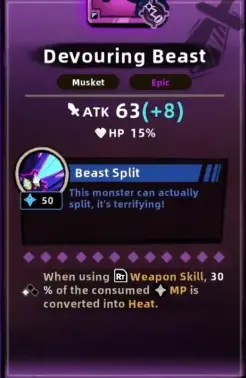
Devouring Beast and Summon Builds
This is one of the most interesting build routes because the damage does not only come from your own attacks.
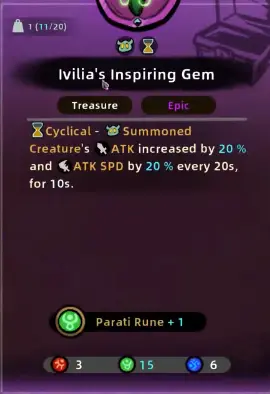
Devouring Beast can create strong pressure if you support it with summon scaling. The important part is not simply finding the weapon. The important part is making the rest of the build feed the summon plan: summon attack speed, extra creature pressure, survival while summons deal damage, and inscription keywords that actually support the summon route.
| Build piece | What to look for |
|---|---|
| Core weapon | Devouring Beast |
| Rune direction | Red for pressure, green for survival, blue only if the route supports skill usage |
| Treasure direction | Summon attack, summon attack speed, extra creatures, survival while summons work |
| Representative support | Ivillia’s Inspiring Gem, summon-type scaling treasures, summon attack speed, extra creature pressure |
| Hunter’s Gear | Survival if summons already deal damage, burst if clear speed is falling behind |
| Inscription goal | Summon / attack-speed / creature keyword chain |
| Route fit | Safer boss pressure, room control, mid-to-late build routes |
| Watch out for | Damage falling off if summon scaling stops appearing |
Alchemy and Charm Choices
Alchemy should support the build’s weakness.
Do not pick the same charm setup every run. A shield build, summon build, and Musket build may need different safety tools.
| Alchemy / charm direction | Best use |
|---|---|
| Forest Guardian’s Bud | HP value for safer routes and beginner clears |
| Crystal Core Fragment | Damage reduction for fragile builds or boss learning |
| Blood of Mutation | Boss-kill scaling when the run can reliably reach and defeat bosses |
| Emergency recovery tools | Good when one mistake usually ends the run |
| Burst tools | Good when your build survives but bosses take too long |
| Charm slots | Stronger once Alchemist Hut upgrades and charm options improve |
Upgrade Only Weapons With a Future
Upgrades are strongest when they go into the weapon that already matches your run.
| Upgrade check | Upgrade? |
|---|---|
| Weapon matches your chosen category | Good sign |
| Rune colors support it | Good sign |
| Treasures already trigger from it | Good sign |
| Inscription direction can connect later | Good sign |
| It helps your current route goal | Good sign |
| It only looks stronger on raw stats | Be careful |
| It breaks your current build direction | Usually skip |
Build Readiness for Nightmare 4-5
Nightmare 4 and 5 punish clutter.
A build can clear normal routes while still being too messy for deeper Nightmare. Before pushing these routes, check whether your build has real layers.
| Readiness check | Why it matters |
|---|---|
| Weapon category is clear | You know what your attacks and boss windows are |
| Hunter’s Gear solves a real weakness | It is not just a random extra button |
| Rune colors are not scattered | Red, blue, and green should support the plan |
| Treasures trigger often enough | Good effects are useless if they rarely happen |
| Second-layer resonance exists | Matching keywords add real strength |
| Third-layer resonance is possible | Weapon, armor, and treasure chain can support endgame scaling |
| Alchemy is planned | Deep runs need emergency answers |
| Boss damage is real | Long fights create too many failure points |
| Defense or recovery exists | One mistake should not end the run |
For difficulty routes, use the Ethereal Nightmare Guide.
Common Build Problems
This is the short version of what usually breaks a run.
| Problem | Why it happens | Fix |
|---|---|---|
| Copying one build blindly | Your drops, runes, and inscriptions do not match the guide build | Use the template, then adapt to the current run |
| Entering Nightmare with clutter | The build has strong pieces but no connected plan | Narrow weapon, rune, treasure, and inscription direction |
| Confusing weapon categories with special weapons | Achievement goals get mixed with build planning | Start from the six main weapon types |
| Ignoring resonance until too late | Normal runs hide weak inscription planning | Start matching keywords before Nightmare 4-5 |
| Forcing a summon build without summon scaling | The weapon appears, but the support pieces do not | Only commit when treasures and inscriptions support summons |
| Picking alchemy that solves the wrong problem | You bring damage when you need survival, or survival when damage is missing | Match alchemy to the route that keeps killing you |
What To Read Next
| Next goal | Guide |
|---|---|
| Still learning weapons and camp systems | Lost Castle 2 Beginner Guide |
| Pushing Nightmare 4-5 | Ethereal Nightmare Guide |
| Working on Memory Shards or Mage Tower | Hidden Mage Tower and Memory Shards Guide |
| Boss fights are blocking the build | Lost Castle 2 Boss Guide |
| Planning weapon clears and rare cleanup | Lost Castle 2 Achievements Guide |
FAQ
What are the main weapon types in Lost Castle 2 v1.0? +
The main weapon types to plan around are Greatswords, Bows, Dual-Blades, Staffs, Shields, and Muskets. Specific weapons such as Katana, Turbo Lance, and Phantom Lantern can matter for achievements or special builds, but they should not replace the main weapon-category plan.
What do red, blue, and green runes mean in Lost Castle 2? +
Red Akhil usually supports damage and pressure, blue Nairu supports MP, skills, and Rune Bullet-style play, and green Parati supports survival, defense, and safer clears.
What is Inscription Resonance in Lost Castle 2? +
Inscription Resonance is a build layer based on matching inscription keywords across gear and treasures. First layer is the item's own effect, second layer comes from matching two related pieces, and third layer in v1.0 needs a stronger chain across weapon, armor, and treasure-style pieces.
Why does Third Layer Resonance matter? +
Third Layer Resonance is one of the big v1.0 power checks for Ethereal Nightmare 4 and 5. If your weapon, armor, and treasures do not form a real chain, deeper Nightmare runs can feel underpowered even with good basic damage.
What is a good beginner build? +
A safe beginner build is Shield or single-handed weapon with green Parati survival and red Akhil damage support. It gives enough safety to learn bosses while still keeping damage high enough.
Is Devouring Beast good in Lost Castle 2? +
Devouring Beast can be strong when you support it with summon scaling, attack speed, and survival. It is not a free win; it needs treasures such as Ivillia's Inspiring Gem or other summon-support pieces to stay strong in harder routes.
Should I copy one build exactly? +
No. Use build templates as direction, then adjust based on your weapon, rune colors, treasures, inscriptions, Hunter's Gear, alchemy, and the route you are actually pushing.