Funnel Runners Tornado & Weather Survival Guide
Read Doppler reports, recognize F1–EF5 threats, survive tornado pull, use weather gear correctly, and leave before the route collapses.
Updated:
Quick Answer
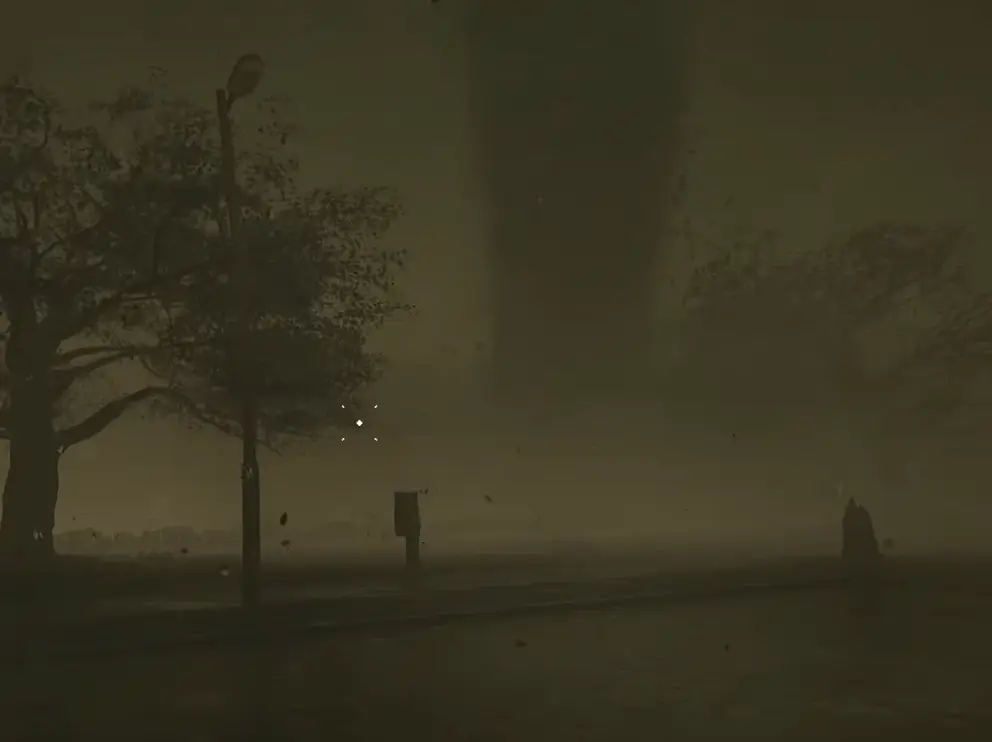
Weather changes the route, not just the health bar. Before leaving the Van, I retrieve a Weather Report for the Doppler Radar, then watch the street because the report does not reveal every nearby funnel. Smaller F1–F4 tornadoes can form before the final Category 5 or EF5 arrives and may already damage the buildings I planned to search. I move away from tornado pull early, crouch only while I am still grounded, use an Umbrella for active Acid Rain or Hail, and carry a Portable Conductor only when Lightning threatens a required trip. Around 0.7 miles, I stop opening new routes. Near 0.2 miles, I only return, repair, or leave.
How to Recognize Each Weather Hazard
Funnel Runners includes numerous weather variations, but I do not need to memorize every possible combination while carrying a Battery or Fuel Can.
I focus on the signals that change my next action.
| Hazard | How I recognize it | First response | Useful equipment |
|---|---|---|---|
| Normal Rain | Rain without continuous exposure damage | Continue the route and preserve inventory space | None required |
| Acid Rain | Health drains while I remain exposed | Enter intact shelter or open an Umbrella | Umbrella |
| Hail | Visible impacts and repeated outdoor damage | Move beneath a roof or Umbrella | Umbrella |
| Lightning | Thunder, bright strikes, electrified objects, or nearby impacts | Leave open ground and check anything I was carrying | Portable Conductor |
| Forming Tornado | Funnel callout, rotating debris, changing wind, or an F1–F4 report | Identify its direction before crossing another street | Doppler information and team callouts |
| Tornado Pull | Character begins sliding and debris moves toward the funnel | Move across the pull early; crouch while still grounded | Nearby intact cover |
| Changed Road | Fallen wires, fire, open manholes, debris, or missing fences | Stop sprinting and choose another crossing | Flashlight at night |
The table gives me the first action, not a complete safety guarantee.
I still check:
- what repair item I am carrying;
- how far I am from the Van;
- whether the current building remains intact;
- whether another funnel is forming nearby;
- whether the road I used earlier has changed.
F1–F4 Tornadoes and the Final EF5
The run does not remain calm until one final giant tornado arrives.
Smaller tornadoes can appear first and are reported with classifications such as:
- F1;
- F2;
- F3;
- F4.
The mission also tracks the final Category 5 or EF5 threat approaching the town.
I treat the classification as an intensity warning, not a substitute for distance and position.
An F1 far east of the Van may not change my current garage route. An F3 or F4 forming one block from the Van can become the immediate threat even while the final EF5 remains much farther away.
A forming tornado also deserves attention before it fully crosses the street. During tested runs, teams changed cover and return routes as soon as an F3 or F4 was reported beside the Van.
That is the useful distinction:
The final EF5 controls the overall mission window.
Nearby F1–F4 funnels control the next street.
I never keep searching merely because the large final storm still looks distant.
How to Read the Doppler Radar and Weather Report
The Doppler Radar and Pocket Radar serve different jobs.
- The Doppler Radar uses a Weather Report and tracks major storm information.
- The Pocket Radar is carried through the map and helps locate nearby items.
I do not use the terms interchangeably.
Before the first search trip, I retrieve a Weather Report from the equipment inside the Van. I check it again after returning with a part or after a major weather change.
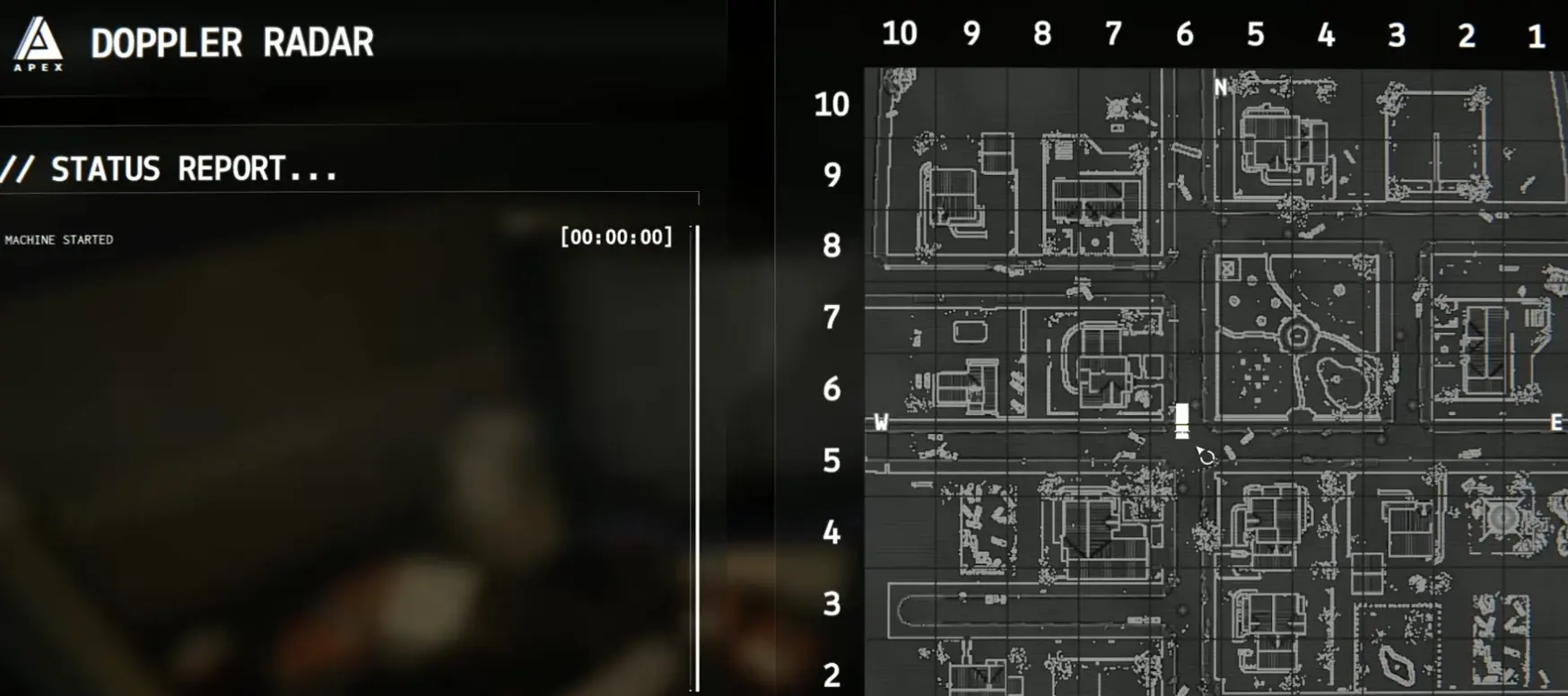
The displayed distance tells me how the tracked final threat is moving:
- a decreasing number means the main storm window is closing;
- an increasing number means that storm is moving farther away;
- neither result guarantees that my current street is safe.
I combine the report with local evidence:
- rotating debris;
- tree movement;
- roof damage;
- sirens;
- changing wind;
- F1–F4 team callouts;
- objects beginning to slide.
The Doppler report helps plan the larger route. The environment decides whether I cross the next road.
How to Survive Tornado Pull
A tornado becomes dangerous before I leave the ground.
My best escape window is when the wind and debris begin changing but normal movement still works.
Read the Direction Before Moving
I look at:
- which way loose objects are travelling;
- whether trees lean toward a funnel;
- whether my character is sliding;
- whether the visible tornado is crossing or approaching;
- whether the Van lies in the same direction as the pull.
I do not run toward the Van automatically.
In one run, an F4 formed north of the truck while another player was returning through the park. The team used the radar and voice callouts to tell that player they were heading toward the tornado and needed to turn around.
The objective marker gives me the destination. It does not promise a safe path.
Move Before Relying on Crouch
The developer describes crouching as giving the player a little more resistance to the wind while still holding onto the ground.
That matches my experience.
I crouch when:
- sliding has just started;
- I am already behind partial cover;
- the tornado is crossing rather than moving directly toward me;
- I need a few seconds before changing position.
I still move away while normal running works.
Once the tornado lifts me into the air, crouching is too late.
Choose Cover by Its Current Condition
A bathroom or low interior room can be safer than an open street, but the room name is not a guarantee.
I prefer:
- a low interior room;
- an intact roof;
- intact exterior walls;
- few windows;
- more than one usable exit.
I avoid:
- an open garage;
- an upper floor in a shaking building;
- a room already exposed to the sky;
- a house losing major wall sections;
- a fenced park with limited exits.
A partially damaged house may still provide a brief shelter window. A structure actively coming apart is no longer dependable cover.
I leave when I can identify a safer route, not because the wind becomes quiet for one second.
Warn the Team Before Attempting a Rescue
In co-op, a clear tornado callout can save more players than immediately running toward the person in danger.
I keep callouts short:
“F4 north of the Van, moving west.”
or:
“You are running toward it. Turn south.”
A useful warning includes:
- tornado class when known;
- direction from the Van;
- nearby landmark;
- whether it is forming, crossing, or moving away.
When a teammate begins sliding or gets thrown, I do not run into the same pull and try to follow them.
I first:
- Warn them over the in-game radio or team voice.
- Mark their last visible direction.
- Take cover until the funnel passes.
- Ask for a landmark once they land.
- Decide whether a Defibrillator rescue still has a safe route.
One player was thrown far enough to describe their location using a playground and crosswalk before the team could approach.
Communication preserves the rescue route. Chasing the airborne player usually creates a second victim.
Acid Rain, Hail, and Umbrella Use
I handle Acid Rain and Hail with the same route priority:
- Reach nearby intact shelter.
- Confirm whether a required outdoor trip remains.
- Use or buy an Umbrella when I must cross exposed ground.
- Heal after reaching cover.
The nearest safe building is often more useful than running farther to find an Umbrella.
I use an Umbrella when:
- outdoor damage is already occurring;
- I am carrying or retrieving a required part;
- the Van or next shelter is on a known route;
- waiting would consume too much of the remaining storm window.
I do not carry one throughout clear weather because it competes with Oil, Fuel, Coolant, Fuses, tools, and healing.
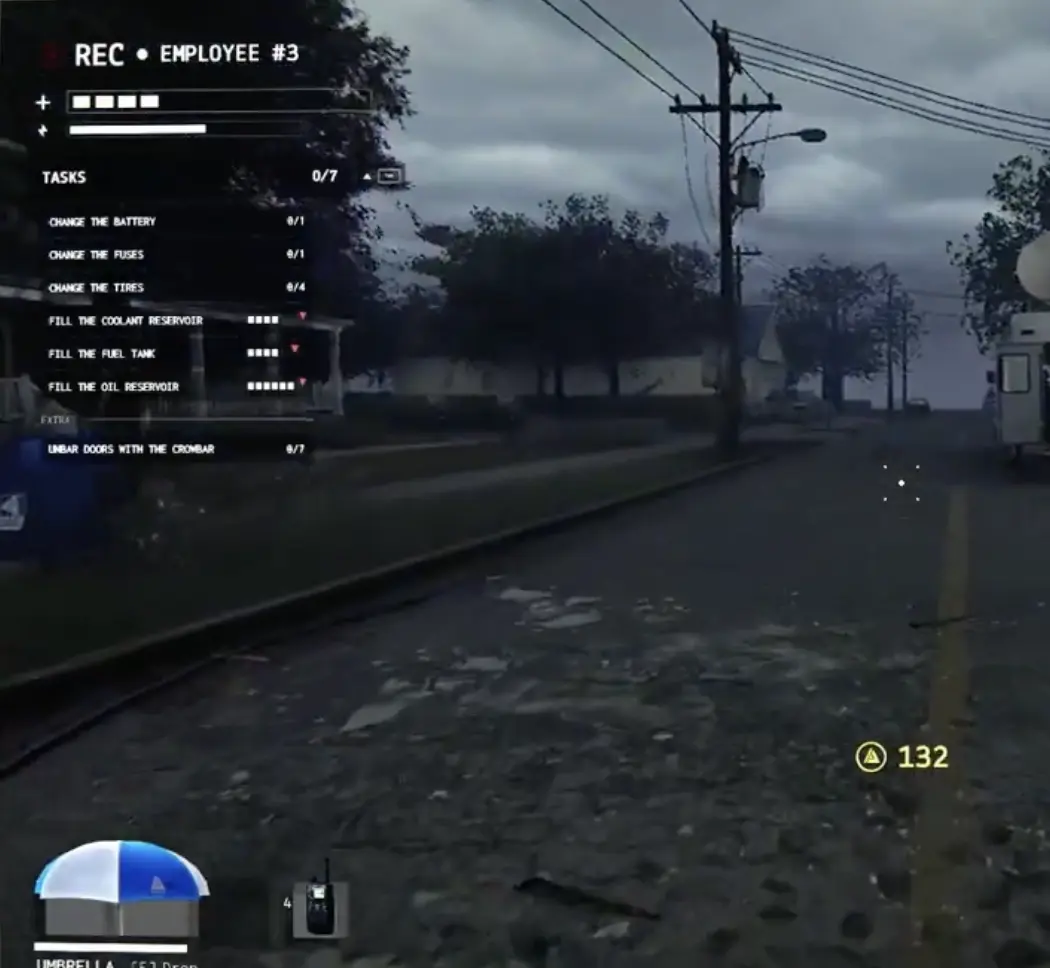
In one run, Acid Rain started while the tracked storm displayed around 0.7 miles. The player had already lost enough health to use a Medkit before finding an Umbrella and continuing the Oil search.
The Umbrella helped recover the run, but it did not remove the cost of staying out too long:
- health had already been spent;
- the loadout became tighter;
- nearby buildings were damaged;
- Oil still had to reach the Van.
When I Buy an Umbrella
I buy one from the Vitastation when:
- Umbrella stock is unlocked;
- Acid Rain or Hail is active;
- a required outdoor trip remains;
- both the Umbrella and repair item fit.
I do not buy one once every repair is complete.
Shared Umbrella in Co-op
One player can hold the Umbrella while another carries a Tire, installs a Battery, or completes a repair interaction.
This keeps the repair carrier’s inventory focused on the task.
In solo, I cannot split those roles. I either make room for the Umbrella, wait under cover, or leave optional equipment behind.
Lightning and the Portable Conductor
Lightning can ruin a required trip without killing the player.
A strike can knock the item out of my hands.
This happened with Fuel and Coolant during tested runs. The players survived but had to search dark ground while the map continued changing.
After a strike, I:
- Stop moving.
- Check my hands and inventory.
- Look at the impact point.
- Search behind and beside my position.
- Follow the white pickup outline.
- Confirm the item label before leaving.
The dropped part may blend into:
- dark pavement;
- grass;
- debris;
- a damaged room;
- other loose objects.
Running away first makes the impact point difficult to relocate.
When I Carry the Portable Conductor
The Portable Conductor is the dedicated Lightning utility item.
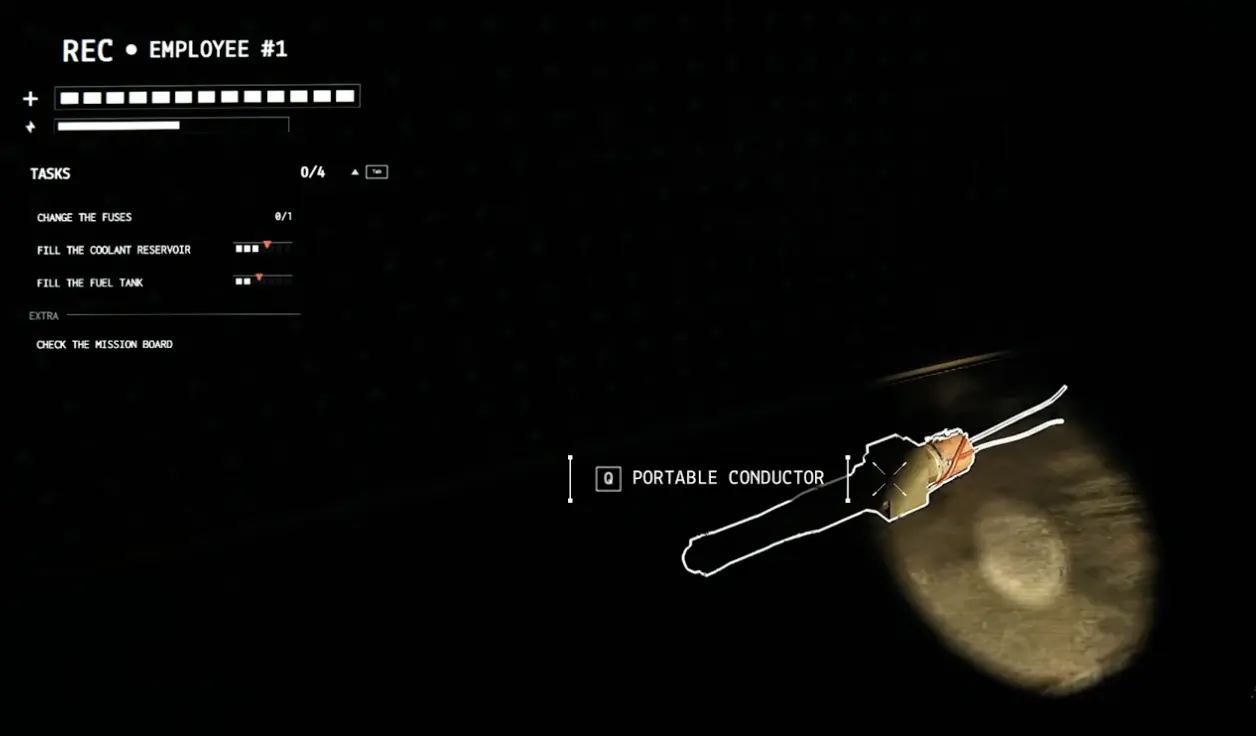
I take it when:
- Lightning is active;
- repeated strikes are landing near the route;
- I must cross exposed roads;
- another player can carry the bulky repair part;
- inventory space remains.
I leave it when:
- the weather is clear;
- the final repair item consumes most of the loadout;
- intact shelter provides a reasonable alternative;
- the Van is ready to leave.
I do not treat an Umbrella, Crowbar, or another metal object as a replacement for the dedicated conductor.
Fire, Burning Players, and Group Spacing
Fire can appear around:
- burning trees;
- damaged buildings;
- barrels;
- storm debris;
- road hazards.
I do not run through it simply because the route beyond it is short.
In one co-op run, a player crossed beside a burning tree and caught fire. The teammate immediately behind also ignited and died.
That test does not fully separate two possibilities:
- the burning state transferred at close range;
- both players touched the same active fire area.
The safe response is the same in either case:
Do not stack on a burning teammate or follow directly through their path.
When someone catches fire, I:
- give them space;
- avoid the same ground they crossed;
- move away from the original fire source;
- use healing only after reaching a safe area;
- do not group around them to attempt a repair.
A burning player should call out the source rather than sprinting through the rest of the team.
Roads and Buildings After a Tornado
The route back is not permanent.
Weather and environmental destruction can create:
- downed power lines;
- open manholes;
- fire;
- debris;
- missing fences;
- collapsed shelter;
- a tornado crossing the original street.
These are often consequences of the weather and destruction system, not unrelated traps placed on a fixed map.
Downed Power Lines
I take another crossing.
I do not test whether I can sprint or jump across while carrying the item needed to escape.
Open Manholes
I watch the road surface, especially after a strong tornado or during a dark run.
Fire and Debris
I leave a burning pickup area unless the required item is already visible and safely reachable.
When debris or a destroyed fence blocks the old path, I look for a different entrance instead of forcing the route I used earlier.
Partially Damaged Buildings
Items may remain visible on surviving floors after walls or parts of the roof disappear.
That is different from a completely collapsed area.
I re-enter only when:
- the required item is visible or marked;
- the floor remains intact;
- the entrance is usable;
- the tornado is moving away;
- I know how I will exit.
I do not search unstable rubble because a part may theoretically still be inside.
When to Stop Searching
The mission provides roughly a 20-minute escape window, but the full window is not safe search time.
I use two observed decision points.
Around 0.7 Miles: Stop Opening New Routes
At approximately 0.7 miles, I:
- finish the current room;
- take a required item already visible;
- stop entering new streets;
- begin moving toward the Van or known shelter.
This is a personal decision point, not a guaranteed safe distance.
Acid Rain, Lightning, fire, building damage, or a nearby F1–F4 can close the route earlier.
Around 0.2 Miles: Return, Repair, or Leave
Near 0.2 miles, I do not begin another search.
In one attempt, the team still needed a Battery installation. Normal movement, tool handoffs, and the repair interaction were already becoming unreliable.
The remaining useful actions were:
- bring back the final part;
- complete the repair;
- enter the Van;
- use Leave City.
I abandon Tokens, Documents, spare gadgets, and unknown rescue routes.
A late rescue is reasonable only when the body, Defibrillator, and return route are already known.
Final Weather Exit Rule
Once every repair clears:
- Call surviving players back.
- Check whether a funnel or changed road blocks the Van.
- Use another crossing when the original street is unsafe.
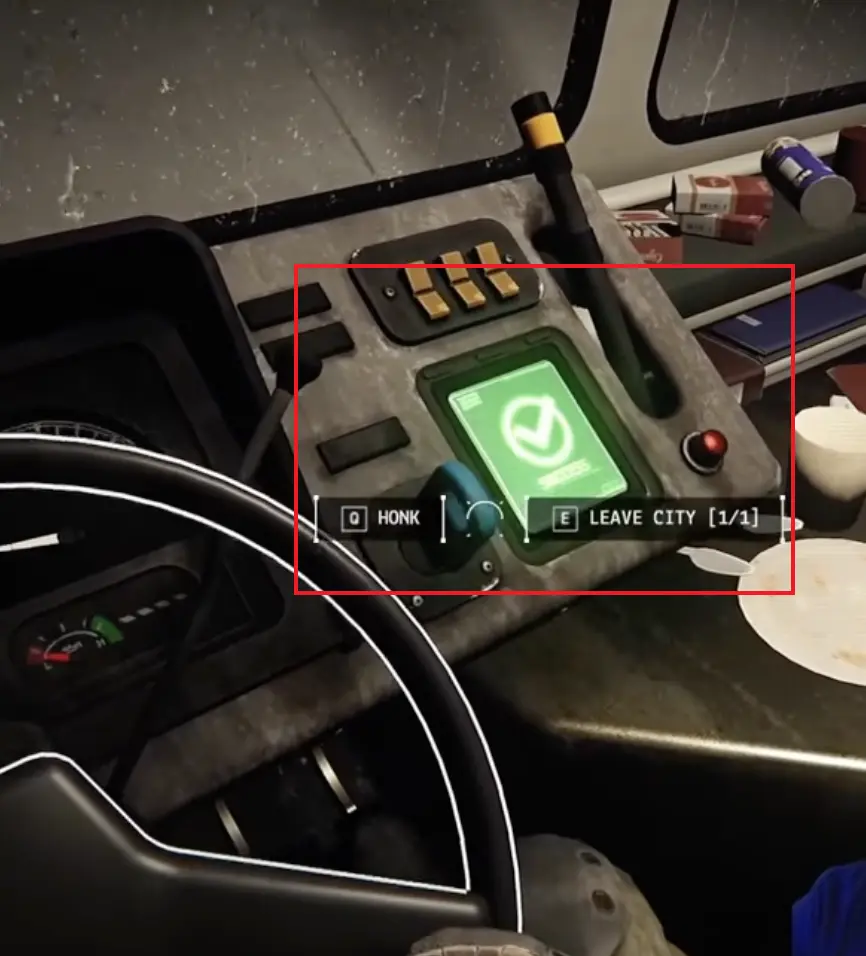
- Enter without waiting in the doorway.
- Confirm the green success state.
- Use Leave City immediately.
I do not wait for:
- one more Token;
- a spare gadget;
- another collectible;
- a teammate beginning a new unknown route;
- proof that the Van can survive the full EF5.
The goal is not to survive the weather indefinitely.
It is to stay alive long enough to finish the required route and recognize when the only correct decision is to leave.
What to Read Next
Use the Solo Guide for first-run mode selection, search loops, inventory priorities, Vitastation purchases, and restart decisions.
Use the Van Repair Guide for Battery, Tire, Fuse, Fuel, Oil, and Coolant installation steps.
Use the Repair Parts Locations Guide for garages, gas stations, junkyards, truck beds, and Pocket Radar item searches.
Return to the Funnel Runners Guide Hub for the complete reading order.
FAQ
Can I hide inside a refrigerator during a tornado? +
No. Refrigerators are not usable hiding places. I choose an accessible interior room with an intact floor and roof instead of searching for a hiding interaction that does not exist.
Does an Umbrella protect me from Lightning? +
I use an Umbrella for Acid Rain and Hail, not as Lightning protection. When repeated Lightning Strikes threaten an exposed route, the Portable Conductor is the dedicated utility item.
Can a teammate revive me after a tornado throws me far away? +
Yes, when the team has a Defibrillator and can relocate the body. A tornado can throw someone several streets away, so the downed player should describe the last visible landmark over the radio while surviving teammates wait for the funnel to pass.