How to Cure Heat Stroke in DayZ Badlands
Recover from heat stroke in Nasdara with timed face washing, shade, hydration, and lighter clothing, and recognize other sandstorm illnesses.
Updated:
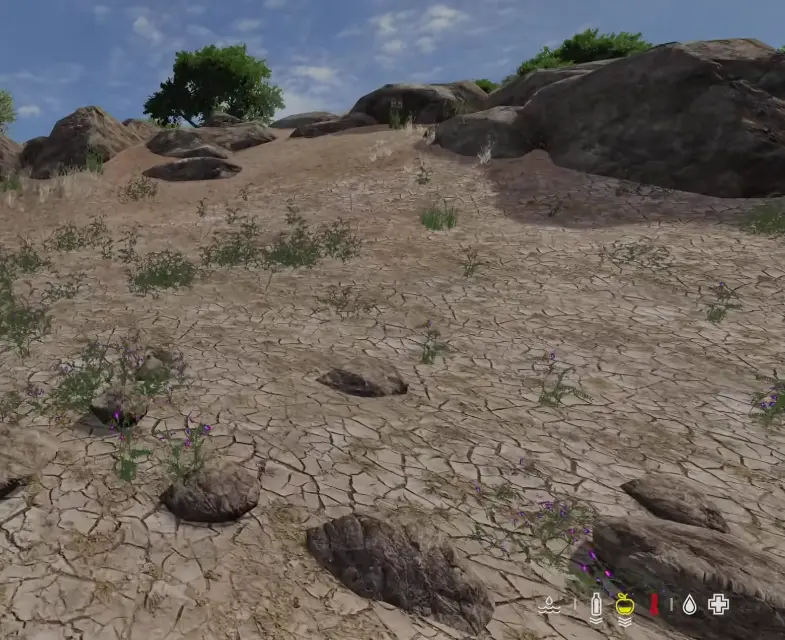
Quick Answer
To cure heat stroke in DayZ Badlands, get into deep shade or a cooler interior, drink safe water, and use Wash Face once to reduce accumulated heat. Wait slightly more than 30 seconds after that wash before repeating it; holding the action continuously can waste water. Keep cooling until your temperature icon is white, then allow time for the remaining symptoms to clear.
A red temperature icon is an urgent warning, but it is not a measure of how far heat stroke has progressed. Nasdara tracks your current temperature and the heat stress that has already accumulated separately. That difference explains a frustrating situation: you reach shelter, the temperature icon turns white, and your character is still vomiting or struggling to stay conscious.
The fastest useful response is to stop adding heat, remove some of the existing buildup with Wash Face, and preserve enough drinking water to recover. Trying to fix everything by drinking or by repeatedly soaking clothes misses part of the problem.
What to Do When Heat Stroke Starts
If heat stroke symptoms have started, deal with the conditions that are making them worse before continuing across the desert.
- Leave direct sunlight and stop sprinting. Find deep shade, a cooler building interior, an underground space, or an enclosed vehicle that actually makes your temperature trend downward.
- Use Wash Face, not Wash Hands. Complete one wash at a suitable water source, or with a water-filled container when the action is available. This reduces accumulated heat stress directly.
- Stop washing and give the effect time. Wait slightly more than 30 seconds after the completed wash before using Wash Face again if your symptoms persist. Repeated washes inside that period do not stack the direct reduction.
- Drink safe water and check your clothing. Hydration helps prevent more stress from accumulating in moderate heat. Wet clothing or replace heavy insulated layers if your temperature will not fall.
- Stay sheltered while recovering. A white temperature icon means conditions are improving; it does not mean the hidden heat buildup or every symptom has disappeared.
When health is already falling or the character is passing out, shelter comes before another exposed run to find loot or water. A few metres of shade can be more valuable than crossing another stretch of open ground with a red temperature icon.
How Often Should You Wash Your Face for Heat Stroke?
Wash Face is the important interaction, because washing your hands is a separate action. You can use it at an appropriate water source, including a functioning Water Truck, or with water in a container. Let the wash progress complete once and then release the input.
Under the DayZ 1.30 heat-stroke mechanism, one completed face wash reduces the hidden thermal-bias value by approximately 0.175 and grants 30 seconds of resistance to further changes. Washing again during that resistance window refreshes the timer but does not produce another immediate reduction. This is why repeatedly holding the action can look busy without curing the condition any faster.
A water-container wash uses roughly 50 mL per completed cycle. Because the action can repeat while the input remains held, it is easy to spend several cycles’ worth of water for no extra immediate benefit. Wash once, release, use the interval to check your temperature and hydration, and then repeat only if necessary after the resistance period has elapsed.
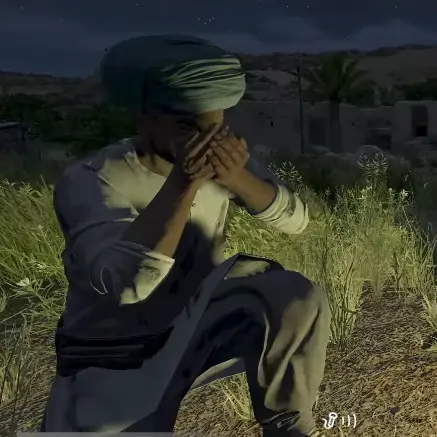
Wetting clothing is useful for a different reason. Damp or soaked garments provide less insulation, which makes it easier to keep your temperature down. When you have a water source and spare time, hold a wearable clothing item and use the Wet Clothing interaction if available. This helps control the heat load, but it should not replace correctly timed face washes once substantial heat stress has built up.
How Much Water Do You Need to Prevent Heat Stroke?
The hydration system has a maximum of 5,000, but the fullest white hydration icon appears once you pass roughly 3,500. A completely white icon does not mean your water reserve is full—you could still have plenty of room to drink more.
When your temperature is yellow and hydration is at least 3,500, the heat-stroke system does not add further thermal bias. With hydration between approximately 1,000 and 3,499, yellow heat can still cause limited buildup. Below that range, the danger grows. The key exception is a red or flashing-red temperature icon: heat stress can accumulate there even if you are fully hydrated.
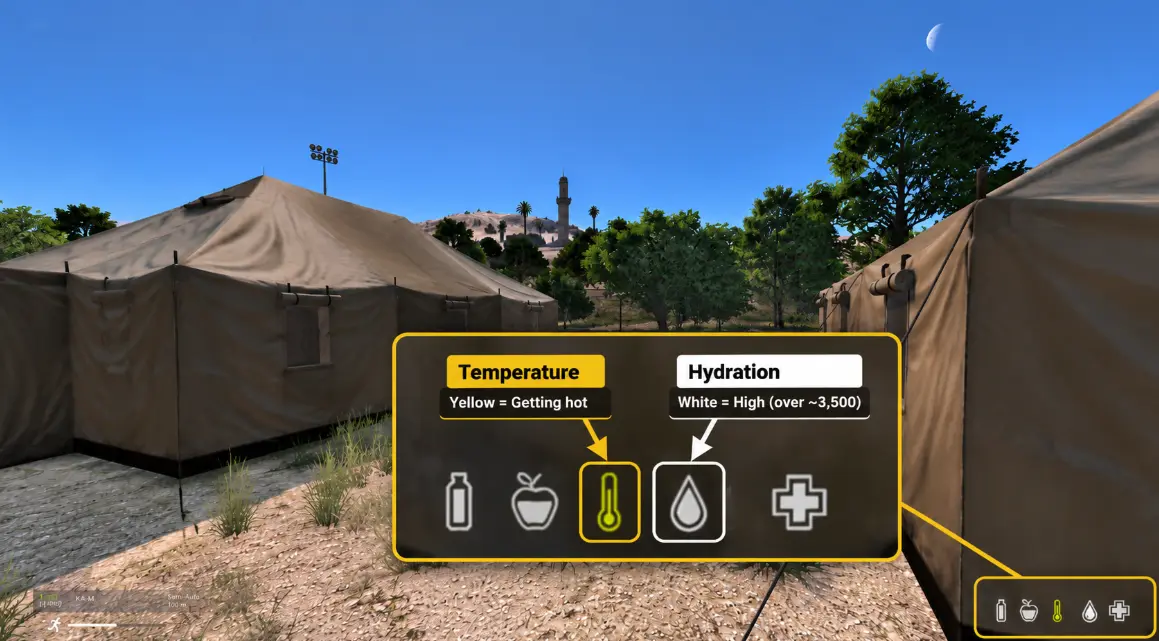
That gives you a practical rule for long Nasdara crossings: keep a reserve in the highest white hydration stage, but never treat water as permission to keep running with a red temperature icon. Drink before your reserve drops too far, look for shade when the heat indicator rises, and adjust your loadout before the next exposed section.
If you are short on drinking water, do not waste the last of it by holding Wash Face continuously. Secure a cooler position, spend one wash when needed, and protect the remaining safe water for drinking. For Water Truck use, refilling, and finding reliable supplies, follow the Nasdara water survival guide.
Why Do Heat Stroke Symptoms Continue After Cooling Down?
Your temperature icon is not your heat-stroke meter. It reflects your current thermal state, whereas illness severity also depends on accumulated heat stress. White temperature allows that stored stress to decline gradually; it does not erase it instantly. Likewise, a red temperature icon warns of dangerous conditions but does not prove you have already reached the worst illness stage.
The progression matters because each stage makes the next recovery decision harder:
- Early buildup: increased water consumption can begin before obvious visual symptoms.
- Moderate heat stroke: blurred vision, overheating behaviour, slower stamina recovery, and faster stamina drain make travel less reliable.
- Advanced heat stroke: vomiting can drain the water and energy you need to recover.
- Severe heat stroke: health damage and unconsciousness make exposed travel especially dangerous.
If your temperature is white but you are still sick, remain sheltered and consider another properly spaced Wash Face. Do not start another desert crossing just because the icon has changed colour. Continued vomiting also deserves a second check: untreated drinking water or another illness can produce overlapping symptoms, and cooling alone will not fix those causes.
Tetracycline, charcoal tablets, painkillers, and multivitamins do not directly remove heat stress. Saline may help restore fluids and blood, but it is not a substitute for getting out of the heat and reducing accumulated thermal bias. There is no single reliable time-to-recovery or time-to-death figure, because existing damage, dehydration, repeated blackouts, and renewed sun exposure all change the outcome.
What Shade, Vehicles, and Clothing Actually Help?
During a Nasdara crossing, a survivor stopped under a tree when the temperature icon turned yellow. Lying in the shade gave the indicator time to move back toward white with downward arrows, without reaching a town or using a vehicle. That is the practical test for any temporary shelter: is your temperature actually decreasing?
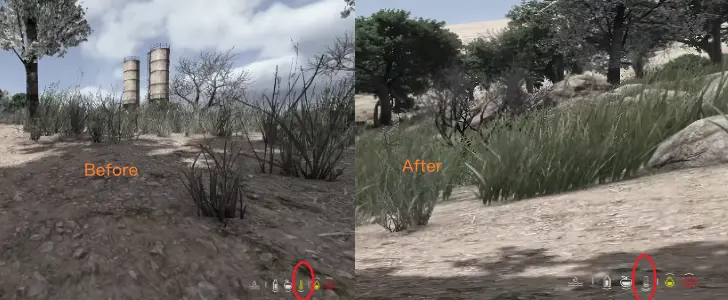
Not every indoor position is equally cool. In another settlement crossing, survivors tried to recover near an active cooking fire and remained overheated. Moving away from the fire was a better choice than staying beside a heat source simply because there was a roof overhead. An enclosed Humvee also helped during a separate journey when both survivors’ temperature indicators were red outside; entering it caused the indicators to start dropping. Use the actual temperature response to decide whether to stay or move again.
Clothing changes are most useful before the next crossing. Tops and trousers have more influence on overall clothing insulation than a backpack, so switching heavy layers for lighter options can matter more than removing one small accessory. Nasdara’s lightweight clothing offers useful choices, while some military pieces, including lighter Fishtail Night Ops or OBR variants, can still be workable depending on the rest of the outfit.
There is no need to destroy a valuable backpack just to reduce insulation. A badly damaged bag insulates less, but it sacrifices durability and risks its contents. Try a lighter shirt or trousers, wet appropriate clothing, and maintain hydration first. Even a heavily equipped survivor can avoid further buildup in yellow heat with sufficient hydration; the real problem begins when the outfit makes red temperatures too easy to reach.
Irritated Eyes and Silicosis During Sandstorms
Heat stroke is not the only reason a Nasdara survivor may experience blurred vision or sickness. Sandstorms introduce Irritated Eyes and Silicosis, which require different protective gear and should not be confused with accumulated heat stress.
How to Relieve Irritated Eyes
If blowing dust impairs your vision, get out of the storm and use Wash Face when you have access to water. Dust goggles are valuable before exposure, but putting them on after irritation starts is not an instant cure. Wait somewhere safe until you can navigate properly again.
An open patch of shade may help with heat without offering enough protection from airborne dust. For irritated eyes, favour enclosed interiors, underground rooms, or vehicles over trees and exposed porches.
How to Handle Silicosis
Silicosis is associated with inhaling dust during a sandstorm. Coughing and poor stamina after prolonged exposure point to a different problem from simply being hot. Leave the storm, use suitable respiratory protection before travelling again, and give the character time to recover in shelter with food and safe water available.
Dust goggles protect the eyes; they do not replace a dust mask or suitable respirator. A fabric face covering may be inadequate during sustained exposure, and a gas mask must have a working filter. Multivitamins may support the character’s general immune condition, but they are not an instant way to clear accumulated dust damage. Antibiotics do not make continued exposure safe.
If you start vomiting after drinking from an untreated pond, tunnel, or other questionable source, consider a waterborne illness instead of assuming every sickness icon is caused by heat or sand. What happened immediately before the symptoms is often more useful than the shared sickness symbol.
When Should You Wait Before Crossing Nasdara?
Before starting a long trip, check three things together: your temperature trend, your hydration stage, and the clothing or shelter available along the route. If the icon is already red and the next stretch has little shade, leaving immediately can turn a manageable problem into a blackout in the open desert.
Waiting until conditions improve is often worthwhile, especially when you are low on drinking water or already recovering from heat stroke. A sandstorm changes the calculation: a tree may cool you but cannot reliably shield your lungs or eyes. If you lack proper dust protection, wait inside an enclosed building or vehicle instead of trying to race across exposed ground.
The goal is not to keep washing your face throughout the journey. It is to use Wash Face when accumulated heat needs reducing, protect your hydration reserve, and make sure your clothing and route let you stay out of red heat conditions in the first place.