DayZ Badlands Guide
Featured
How to Open Radio Bunkers in DayZ Badlands
Tune into Nasdara's nighttime radio broadcasts, decode bunker coordinates and door codes, and get inside before the access window closes.
Read Guide →Game Guide Hub
Survive your first days in Nasdara, navigate the desert, decide when to repair a vehicle or build a base, and prepare for more dangerous locations.
Recommended Order
Use these guides to find the right DayZ Badlands walkthrough, solution or next step.
Guide
Tune into Nasdara's nighttime radio broadcasts, decode bunker coordinates and door codes, and get inside before the access window closes.
Guide
Find Water Trucks in Nasdara, use their drinking-water outlets, reach underground water with Rope Ladders, and avoid contaminated supplies.
Guide
Clear rubble, collect building materials, rebuild damaged houses, and secure doors and gates in DayZ Badlands.
Guide
Find the Golden KA-M, Lee Enfield, SCR16, MP-18, SCR-17, Luger, and rare wooden VSD in Nasdara, with their loot locations, ammunition, and magazines.
Guide Cluster
Tune into Nasdara's nighttime radio broadcasts, decode bunker coordinates and door codes, and get inside before the access window closes.
Read Guide →Find Water Trucks in Nasdara, use their drinking-water outlets, reach underground water with Rope Ladders, and avoid contaminated supplies.
Read Guide →Clear rubble, collect building materials, rebuild damaged houses, and secure doors and gates in DayZ Badlands.
Read Guide →Find the Golden KA-M, Lee Enfield, SCR16, MP-18, SCR-17, Luger, and rare wooden VSD in Nasdara, with their loot locations, ammunition, and magazines.
Read Guide →Recover from heat stroke in Nasdara with timed face washing, shade, hydration, and lighter clothing, and recognize other sandstorm illnesses.
Read Guide →Enter Nasdara's contaminated tunnel with NBC equipment, manage gas mask filters, search the underground passages, and escape with your loot.
Read Guide →After spawning in DayZ Badlands, search the nearest Nasdara settlement for drinking water, food, and a usable weapon. Establish your position using the map and nearby landmarks before crossing open desert.
Once you have enough supplies to travel safely, choose a destination that matches your equipment rather than heading straight for the most dangerous military location.
There is no fixed order of objectives on Nasdara. You might find a damaged house worth restoring, discover a vehicle missing only one part, hear an unusual radio transmission, or come across a military location that looks worth searching.
The difficulty is deciding which opportunity to pursue.
A long trip can end at a settlement with no usable drinking water. A vehicle may be almost operational but still require a component you cannot find nearby. A promising underground entrance may be accessible only after you collect equipment that has little value during ordinary exploration.
Nasdara gives you reasons to travel in every direction, but not every destination is worth visiting with your current character.
A practical approach is to stabilize your immediate survival needs, identify a reachable destination, and gradually take on activities that require more specialized equipment. You can change that order whenever an opportunity is close enough to justify the risk.
For a fresh character, the first objective is to leave the starting area with enough supplies to survive another journey.
Search the nearest accessible settlement before committing to a distant military location.
During the opening stage, prioritize:
An empty bottle or canteen is worth keeping. Once you encounter a working water supply, being able to carry some away can determine whether you reach the following town.
Water trucks are particularly valuable because you can drink directly at a working outlet and fill containers for the journey. Damaged wells and underground water supplies behave differently, so consult the Nasdara water survival instructions when your next refill is uncertain.
The objective is not to empty every building in your starting town. It is to collect enough useful supplies to move toward a better opportunity without putting your immediate survival at risk.
The nearest town is not always the most rewarding destination, but it can be the safest one when you have little water.
Nasdara’s settlements are separated by desert terrain, and reaching a built-up area does not guarantee that its wells or other water facilities are functional. A road that looks manageable on the map may also expose you to extreme heat for much of the journey.
Before leaving your current location, consider the purpose of the trip.
If you need supplies immediately, choose a reachable settlement where you can search buildings without spending your entire reserve getting there.
If you already have food and water, a longer journey toward better equipment or transport becomes reasonable.
If your character is struggling with the environment, delay optional exploration until your condition improves. Arriving at valuable loot with dangerously low health can make the trip pointless.
During one desert journey, survivors had enough water to continue moving but began developing serious temperature problems. Finding food became urgent, yet travelling farther through the heat only increased their difficulty.
Recognizing those warnings early matters. The heatstroke and sandstorm illness instructions cover how to respond when overheating or airborne dust makes continued travel unsafe.
A settlement that allows you to recover and prepare for the next crossing can be more valuable than a remote location offering better loot but no practical way to return.
You can navigate without GPS or a compass, but you need recognizable landmarks.
During one motorcycle journey, a survivor wanted to travel south and discovered that the compass had been left behind. The player opened the map, identified a nearby castle, and used its position to work out which direction the road was heading.
That gave the journey a usable direction without requiring additional navigation equipment.
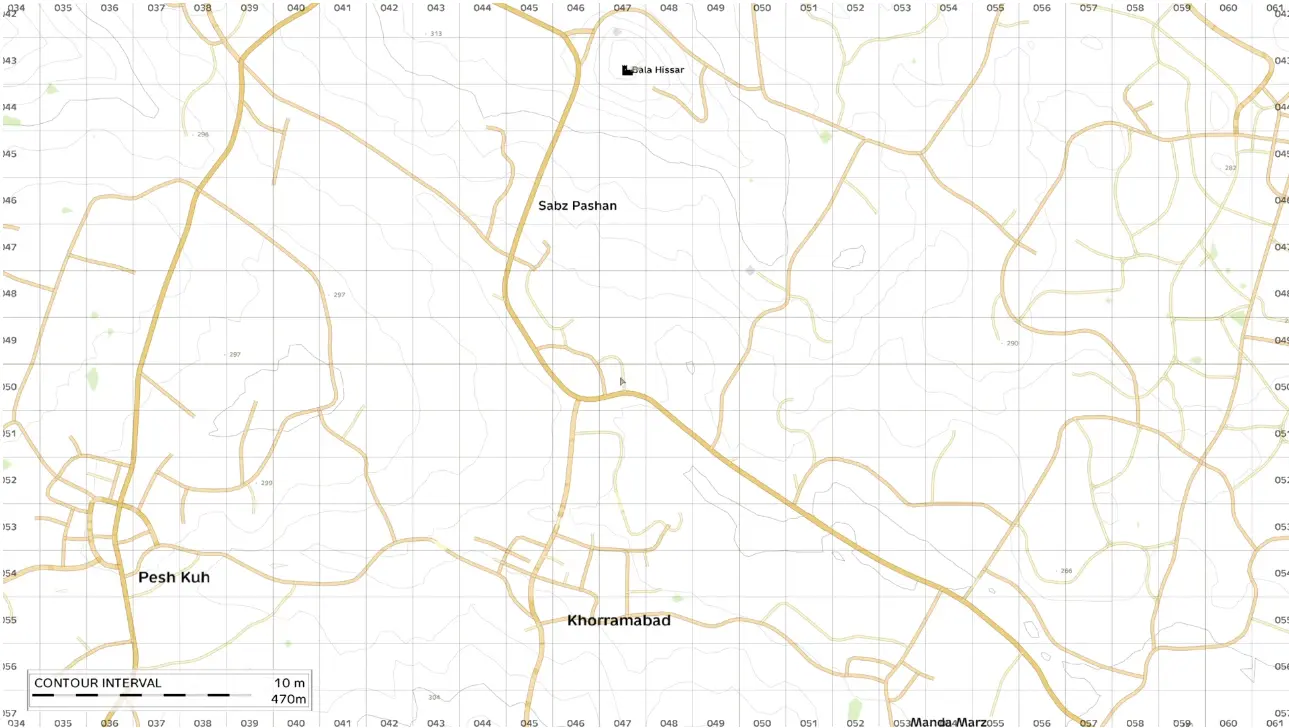
Start with the last location you recognized confidently. Look for a road intersection, bridge, castle, major settlement, or another distinctive feature that can narrow your position on the map.
When the terrain stops matching your expected route, check again rather than continuing in the same direction and hoping to find the destination.
Agree on a recognizable meeting location before separating.
Directions such as “I’m east of the airfield” may be too vague when several roads and settlements occupy the same region. A specific bridge, town, or landmark gives both players something identifiable to travel toward.
During one journey, two survivors had to reconstruct their positions using a town, a hospital, and the direction of the road between settlements.
That kind of navigation works, but it becomes harder when either player continues moving while the other is trying to identify the location.
If someone becomes separated, stop at a recognizable point and establish where both players are before beginning another long crossing.
A vehicle is valuable in Nasdara because it changes how far you can travel and how many supplies you can carry.
Motorcycles make exploration faster, while cars and larger vehicles are particularly useful for moving equipment between settlements. Transport also becomes attractive once you begin collecting bulky materials or planning repeated trips to remote locations.
However, a vehicle that is missing several components can consume more time than it saves.
During one journey, a group needed additional vehicle parts before continuing. Another survivor travelling by motorcycle had to manage spare components and decide which belongings were worth taking into a dangerous area.
The decision depends on how close the vehicle is to becoming usable.
Do not overlook the risks of driving.
Rocky trails, sharp terrain changes, and poor visibility can turn a fast journey into a crash. One motorcycle trip became particularly difficult when the player tried to follow rough tracks through unfamiliar terrain.
Transport expands your options, but it does not replace knowing where you are going.
Choose a task that benefits from the additional range or carrying capacity.
You might use the vehicle to reconnect with other players, recover equipment from a previous location, move construction materials, or visit a remote area that was impractical to reach on foot.
There is no need to drive across Nasdara simply because the vehicle is finally working.
A short supply trip followed by a safe return may provide more progress than an improvised cross-map journey without enough fuel or drinking water.
You can begin searching for better firearms before reaching the most dangerous military areas.
Nasdara offers useful weapons in rural settlements, hunting locations, and lower-tier military sites. This gives a fresh character several ways to improve equipment without immediately visiting a remote outpost or contaminated area.
The immediate goal is a firearm you can load and use.
Once you have enough ammunition and basic survival supplies, military installations and dynamic events become more attractive. They may offer stronger equipment, but reaching a location does not guarantee that its valuable items remain available.
The Nasdara weapons and locations guide covers the firearms, appropriate loot areas, ammunition, and compatible magazines.
For a character carrying only basic equipment, searching a nearby valid loot area is often more worthwhile than crossing the desert in pursuit of an exceptionally rare weapon.
You do not need a permanent base before exploring Nasdara.
Remaining mobile allows you to move between settlements without committing large quantities of materials to a building. That can be useful for solo survivors or players who are still establishing a reliable supply of food, water, and ammunition.
A base becomes more attractive once you regularly collect more equipment than you can carry.
The choice largely depends on your situation:
Nasdara’s damaged houses can be restored, but their appearance can be misleading. A building may look nearly complete while still having openings that require substantial materials or specialized tools.
The rebuilding instructions cover rubble clearing, material requirements, missing tools, and securing entrances.
A smaller usable area may be enough.
One group concentrated on restoring sections of a damaged house but could not finish the entire structure during the same session. Another group used a larger building for storage and later discovered that attackers could enter through an exposed area.
A secure entrance is useful only when players cannot simply reach the same room through another opening.
If you can enclose and protect one part of a building, that space may be sufficient while you gather the resources for additional repairs. If the remaining openings cannot be controlled, keeping valuable equipment on your character or in safer storage may be preferable.
With reliable supplies and a functioning loadout, Nasdara offers more demanding exploration opportunities.
Two of the most interesting are the nighttime radio bunkers and the contaminated underground tunnel. They are separate activities, and you can attempt either without completing the other.
The radio-controlled bunkers are a good objective when you can navigate quickly and reach locations announced during the night.
Finding a locked bunker during ordinary exploration is not enough to enter it. You need current access information and enough time to reach the relevant entrance.
A long failed attempt toward the airfield demonstrated how easily travel distance can consume the available opportunity.
If you have a working radio and can move around Nasdara reliably, the Radio Bunkers walkthrough covers the broadcasts, coordinates, passwords, and entry process.
The contaminated tunnel presents a different challenge.
You can reach the entrance before you have the equipment needed to explore safely. Inside, the underground passages are extensive, and returning with your loot requires enough respiratory protection for the journey back.
A successful expedition recovered military equipment, but the player abandoned additional exploration rather than exhaust the remaining protection.
When your equipment is ready, follow the Toxic Zone instructions for the protective loadout, underground route, and safe return.
There is no benefit in entering the contaminated environment early simply because you have discovered where it is.
No. DayZ Badlands remains an open-ended survival experience.
The bunkers and contaminated tunnel provide difficult objectives and opportunities to obtain valuable equipment, but they are not compulsory steps in a linear campaign.
You can spend an entire life exploring settlements, hunting, maintaining vehicles, fighting other players, or establishing a base without completing either activity.
The better choice depends on what you already possess.
Someone carrying a working radio and dependable transport may be ready for a nighttime bunker attempt long before collecting NBC equipment.
Another survivor may have assembled a complete protective outfit but still lack a practical way to travel across the map during a timed event.
Neither character needs to follow the other’s progression.
Choose the activity you can prepare for without sacrificing the supplies required to survive the return journey.
When several opportunities are available, prioritize the one that removes your largest current limitation.
For example:
There is no advantage in pursuing an objective solely because it appears more difficult or offers rarer equipment.
A survivor who needs drinking water gains little from finding another rifle. A well-equipped group that repeatedly travels between the same locations may benefit more from a vehicle or secure storage than another military loot run.
Progress in Nasdara is often about removing the problem that prevents you from doing what you want next.
Decide what you want to accomplish before setting out.
A trip to collect vehicle parts, a search for military equipment, and a journey toward an underground entrance each require different supplies.
Three checks are worth making before departure:
These decisions become more important as your character acquires better equipment.
A fresh survivor may only need to reach the next settlement alive. A well-equipped player can justify a longer and riskier journey, but also stands to lose much more if the return becomes impossible.
The strongest next destination is the one your current character can reach, use, and leave safely.