Crashout Crew Solo and Co-op Tips Guide
A practical Crashout Crew solo and co-op tips guide explaining how to play alone, how to divide roles with 2, 3, and 4 players, how to read orders, stack boxes, avoid wrong shipments, handle buttons, and use better callouts.
Updated:
Quick Answer
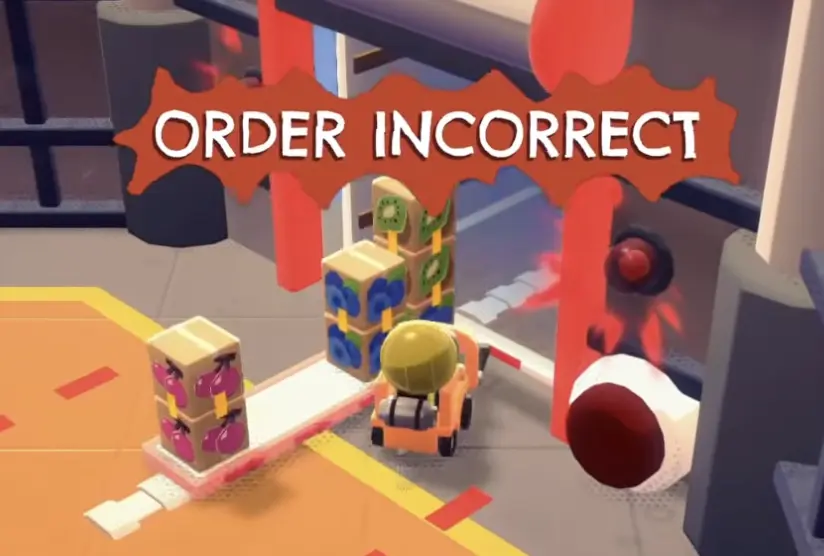
Crashout Crew gets much easier when every player has a job. Solo players should drive safely, stack cargo, and stage boxes before rushing trucks. Co-op teams should split into order reader, loader, shipper, and floater roles. The biggest mistakes are everyone chasing the same box, carrying one item at a time, pressing the button too early, and shouting vague callouts instead of exact cargo and truck needs.
Start Here
Crashout Crew is not hard because the goal is complicated. It is hard because four forklifts can turn a simple order into a warehouse disaster.
A clean run needs three things:
clear orders → useful cargo movement → one final check before sending
If your crew skips any of those, the shift usually falls apart. Players bring the wrong boxes, someone presses the button early, a stack gets knocked over, and then everyone starts rushing instead of fixing the actual problem.
Quick Role Table
| Role | Main job | Best player type | Biggest mistake |
|---|---|---|---|
| Order reader | Reads truck needs and calls exact cargo. | Calm player who can track quantities. | Reading too slowly or giving vague calls. |
| Loader | Brings boxes from input or storage. | Fast driver with good control. | Carrying one box at a time when stacks are needed. |
| Shipper | Loads final truck and presses the button. | Patient player who checks before sending. | Pressing the button early. |
| Floater | Fixes missing cargo, cleanup, hazards, and mistakes. | Flexible player who can react quickly. | Chasing random boxes instead of solving the bottleneck. |
Use this table to assign jobs before the shift becomes chaos.
Can You Play Crashout Crew Solo?
Yes, but solo is a different kind of challenge.
Solo is good for learning:
- forklift control
- drifting and boost timing
- box stacking
- truck order reading
- where cargo spawns
- how stress builds
- which upgrades actually help
The downside is that every task is yours. You read the order, move the boxes, stage cargo, load the truck, press the button, and recover from mistakes.
| Solo problem | Best habit |
|---|---|
| Too many things to do. | Stage boxes before loading the truck. |
| Orders feel rushed. | Read the order once, then move only useful cargo. |
| Routes are long. | Use shelves, Boost Pads, or route tools after learning the map. |
| Stress keeps rising. | Drive slower and buy recovery when needed. |
| You forget quantities. | Focus on one truck at a time until you are comfortable. |
Solo play rewards clean decisions more than raw speed.
Best 2-Player Strategy
Two players should avoid doing the same job.
The safest setup is:
Player 1: reads orders, loads final cargo, presses button
Player 2: gathers boxes, stacks cargo, brings missing items
This works because one player always knows what the truck still needs. The other player can focus on moving cargo instead of checking the order every few seconds.
| Player | Job | What to call out |
|---|---|---|
| Reader / Shipper | Watch truck orders, remove wrong cargo, press button. | ”Need two cherries on B,” “do not send,” “A is ready.” |
| Loader / Runner | Bring cargo, stack boxes, keep route clear. | ”Bringing two blueberries,” “need one more,” “lane blocked.” |
Use this setup when playing with one friend.
Best 3-Player Strategy
Three players should split into reader, loader, and floater.
This is often more stable than four-player chaos because the warehouse is less crowded but still has enough hands to move cargo quickly.
| Role | Job |
|---|---|
| Reader / Shipper | Calls the truck order and confirms before sending. |
| Loader | Moves the main cargo stacks from input to staging. |
| Floater | Grabs missing items, clears hazards, fixes wrong cargo, and helps whichever truck is behind. |
A 3-player team works best when the floater fixes problems before they become crash outs.
Best 4-Player Strategy
Four players can be very fast, but four players can also block every route.
The best full-crew setup is:
Order reader → calls needs
Inbound loader → brings boxes from spawn
Sorter / stager → organizes cargo near trucks
Shipper / floater → confirms orders, sends trucks, fixes mistakes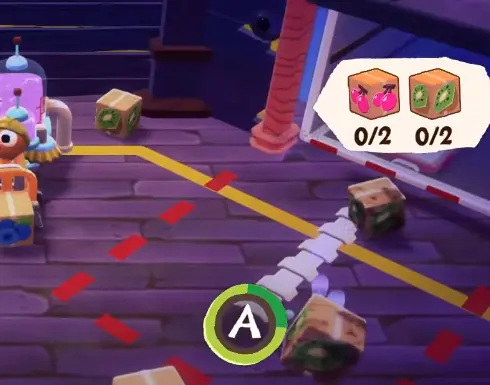
| Player | Main job | Do not do this |
|---|---|---|
| Reader | Calls exact truck needs and button status. | Chase every box personally. |
| Inbound loader | Moves useful cargo from spawn. | Bring random boxes that were not called. |
| Sorter | Builds stacks and keeps staging areas clean. | Dump boxes in truck lanes. |
| Shipper / floater | Loads final cargo, presses button, fixes mistakes. | Press button before the order is checked. |
Use this if your 4-player crew keeps getting in each other's way.
Box Stacking: Stop Carrying One at a Time
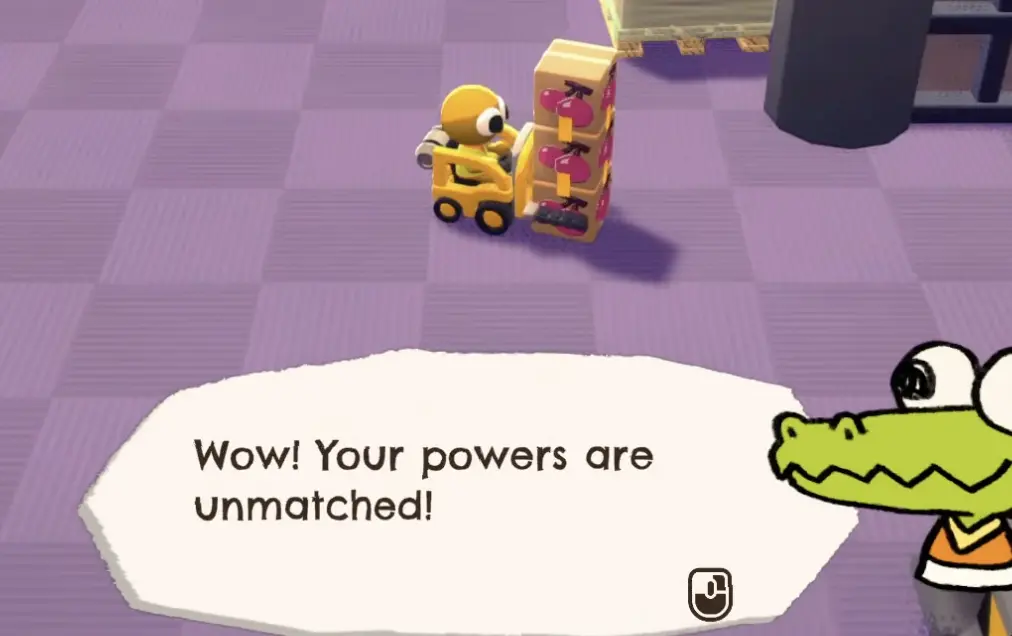
Stacking is one of the fastest ways to improve a co-op run.
If the order needs three of the same box, do not make three separate trips unless there is a good reason. Stack them, move them together, and stage them where the shipper can use them.
| Good stacking | Bad stacking |
|---|---|
| Stacking boxes the truck actually needs. | Stacking random cargo because it is nearby. |
| Calling what the stack contains. | Dropping an unknown stack near the truck. |
| Using shelves or staging zones. | Leaving stacks in traffic lanes. |
| Moving two or three useful boxes at once. | Making four separate trips for one order. |
| Unstacking when needed. | Sending an extra wrong box by accident. |
Use stacking to save trips, but keep the stack useful.
Truck Orders and Button Control
The button should not be a free-for-all.
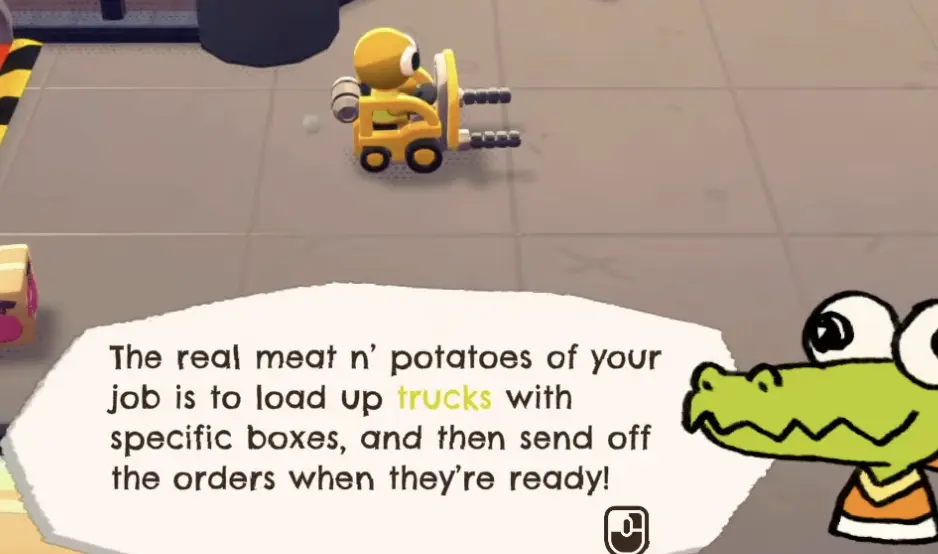
A lot of bad co-op runs happen because someone steps on the button before the order is checked. In a clean team, one player owns the final send. Everyone else helps prepare the order.
| Button check | Why it matters |
|---|---|
| Correct box types | Similar boxes can be mixed up during chaos. |
| Correct quantities | One extra or missing box can ruin the order. |
| Wrong cargo removed | Bad boxes near the truck can cause mistakes. |
| Reader confirms | The shipper should not guess. |
| No player is still loading | Prevents sending while cargo is mid-transfer. |
Use this checklist before pressing the truck button.
Best Callouts to Use
Good callouts are short and specific.
Bad callouts sound like this:
"Get stuff."
"We need things."
"Someone press it."
"No, not that one."
Good callouts sound like this:
"Two blueberries to B."
"One kiwi missing on A."
"Do not send."
"A ready."
"Main lane blocked."
"Need cleanup middle."| Situation | Good callout |
|---|---|
| Truck needs cargo | ”Two cherries to B.” |
| Truck is almost ready | ”B needs one more kiwi.” |
| Wrong cargo is loaded | ”Remove blue from A.” |
| Button is dangerous | ”Do not send.” |
| Truck is complete | ”A ready, send.” |
| Route is blocked | ”Middle lane blocked.” |
| Player is stressed | ”Give me space.” |
| Hazard appears | ”Goo on bottom lane.” |
Use these callouts to keep a co-op run readable.
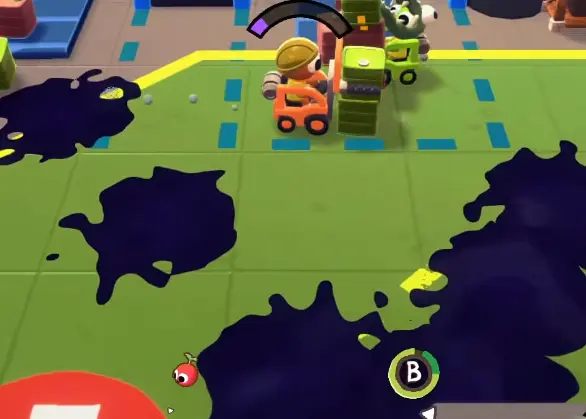
Avoiding Teammate Collisions
Most co-op collisions happen because players share the same lane without a plan.
If your team keeps ramming into each other, do not just yell at the driver. Fix the route. Use one-way lanes, separate pickup and delivery paths, and give the shipper space near the truck.
| Collision problem | Fix |
|---|---|
| Players meet head-on in narrow lanes. | Use one-way traffic. |
| Truck area is crowded. | Only the shipper enters final loading space. |
| Runners block sorters. | Create a staging zone before the truck. |
| Players cut across each other. | Call crossings or use wider turns. |
| Boost pads launch players into traffic. | Move speed tools to cleaner lanes. |
Use lane rules when players keep hitting each other.
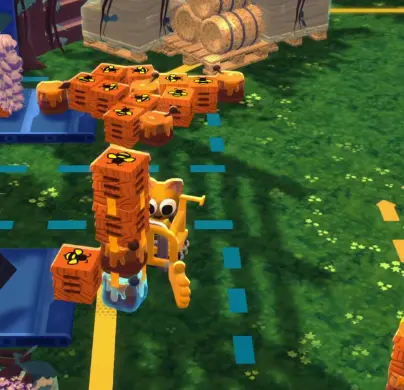
Handling Special Cargo
Some cargo needs more discipline than normal boxes.
Honey, hives, explosive cargo, barrels, and other special items can create extra pressure because they are harder to move, easier to disrupt, or more punishing when players panic.
| Special cargo problem | Better habit |
|---|---|
| Honey is needed in multiple places. | Call exact quantities before moving it. |
| Hives or bees are active. | Assign one player to handle bee-related tasks. |
| Explosives are involved. | Keep the route clear and avoid teammate bumps. |
| Cargo is easy to scatter. | Stage it away from traffic lanes. |
| Everyone is grabbing risky items. | Put one player in charge of the risky cargo. |
Use this when the shift has risky or special cargo.
Playing With Safety Violations
Safety Violations make co-op roles more important.
If the modifier creates goo, ice, ghosts, bees, meteors, or floor pressure, the team needs a cleanup or hazard plan. Otherwise, everyone spends the shift reacting instead of delivering.
| Modifier problem | Role adjustment |
|---|---|
| Goo or floor mess | Floater handles cleanup or rerouting. |
| Ice or slippery floor | Drivers slow down before turns and avoid crowded lanes. |
| Ghosts moving cargo | Sorter keeps fewer loose boxes on the floor. |
| Bees or honey pressure | One player controls bee-related cargo. |
| Meteors or falling hazards | Reader calls safer routes and staging zones. |
Use this role adjustment when Safety Violations are active.
Common Co-op Mistakes
| Mistake | What happens | Better habit |
|---|---|---|
| Everyone chases the same box. | Other orders are ignored. | Assign a loader and a reader. |
| Players carry one box at a time. | Too many trips waste the shift. | Stack useful cargo. |
| The button has no owner. | Trucks get sent early. | Assign one shipper. |
| Callouts are vague. | Players bring the wrong cargo. | Say type, number, and truck letter. |
| Loose boxes cover the floor. | Wrong orders and blocked routes happen. | Use shelves or staging zones. |
| Players boost through traffic. | Collisions create stress and scattered cargo. | Boost only on clean lanes. |
| No one handles hazards. | Every route gets worse over time. | Assign a floater. |
| Everyone argues after mistakes. | The next order starts late. | Reset roles and finish one order cleanly. |
These are the mistakes that make Crashout Crew feel harder than it needs to be.
Simple Co-op Plan
Use this before starting a shift:
1. One player reads orders.
2. One player gathers and stacks cargo.
3. One player owns final truck loading and the button.
4. One player fixes missing cargo, hazards, and messy routes.
5. Nobody presses the button until the order is confirmed.
For fewer than four players, combine jobs:
Solo: do everything slowly and cleanly.
2 players: reader/shipper + loader.
3 players: reader/shipper + loader + floater.
4 players: reader + loader + sorter + shipper/floater.
Related Guides
| If your team is failing because… | Read this |
|---|---|
| Players keep crashing out | Crash Out Stress Guide |
| You bought the wrong tools | Best Upgrades |
| Modifiers are too chaotic | Safety Violations Guide |
| You want better ranks | S Rank Guide |
| You need the full beginner route | Crashout Crew Guide Hub |
Open the guide that matches what is breaking your solo or co-op runs.
FAQ
Can you play Crashout Crew solo? +
Yes. Solo is good for learning routes, stacking, order reading, and safe driving, but every job is on you. Play slower, stage cargo carefully, and avoid risky Safety Violations until the basic loop feels consistent.
Is Crashout Crew better solo or co-op? +
Crashout Crew is faster and funnier in co-op, but only when players split jobs. Solo is cleaner for practice. Co-op is stronger when one player reads orders, one moves cargo, one handles shipping, and one cleans up mistakes.
What are the best co-op roles in Crashout Crew? +
The best basic roles are order reader, loader, shipper, and floater. The reader calls what each truck needs, the loader brings boxes, the shipper confirms and sends the truck, and the floater handles missing cargo, hazards, and cleanup.
What is the best 2-player strategy in Crashout Crew? +
For two players, one player should read orders and handle final shipping while the other gathers and stacks cargo. Both players can swap jobs when the route is long, but do not let both players chase the same box.
How do you avoid wrong orders in co-op? +
Assign one player to final truck checks and do not let everyone press the button. Call exact cargo and quantity, such as two blueberries or one honey, before sending the truck.
What callouts should you use in Crashout Crew? +
Use short callouts: box type, number needed, truck letter, route problem, and button status. Say 'two cherries to B,' 'do not send,' 'button ready,' or 'main lane blocked' instead of vague instructions.