A practical Crashout Crew guide hub covering beginner tips, crash out stress, box stacking, truck orders, best upgrades, Safety Violations, solo and co-op roles, S Rank examples, and common mistakes.
A practical Crashout Crew best upgrades guide with a tier list, confirmed prices, upgrade card thumbnails, best upgrade combos, Break Room first-buy decisions, solo and co-op upgrade routes, Teleporter placement tips, Wild Card Station notes, and Safety Violation counters.
A practical Crashout Crew Safety Violations guide with a modifier overview table, best picks, Faulty Wiring and Lights Out tips, Defective HVAC counters, Hardhat Area meteors, Ordinance Delivery explosives, modifier combos, solo and co-op advice, and upgrade counters.
A practical Crashout Crew solo and co-op tips guide explaining how to play alone, how to divide roles with 2, 3, and 4 players, how to read orders, stack boxes, avoid wrong shipments, handle buttons, and use better callouts.
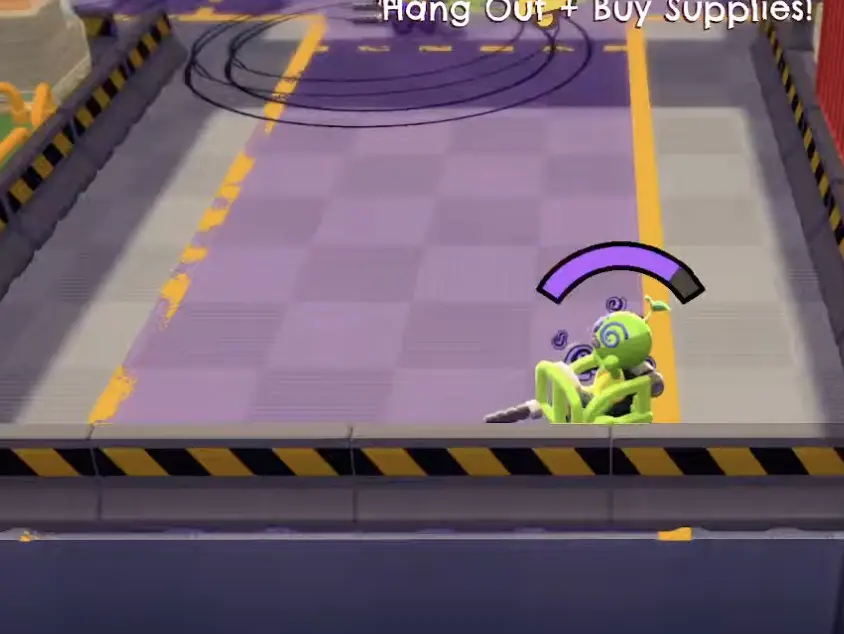
A practical Crashout Crew stress guide explaining how to reduce stress, stop crashing out, use Cup Holder and Aromatherapy, recover from stress, avoid wrong orders, handle solo and co-op stress, and survive Safety Violations.
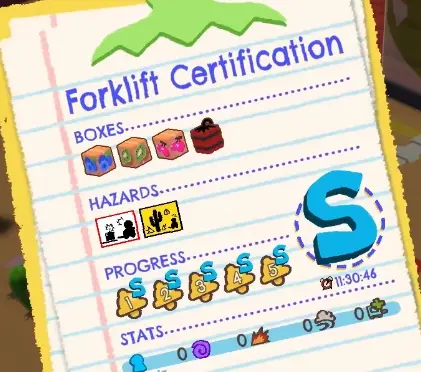
A practical Crashout Crew S Rank guide with real S Rank result examples, likely S Rank requirements, solo and co-op strategy, result-screen reading, rank-killer fixes, and route lessons for Forklift Certification, By the Barrel, and Speed Limit.
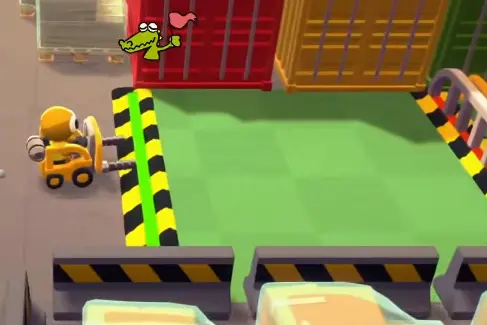
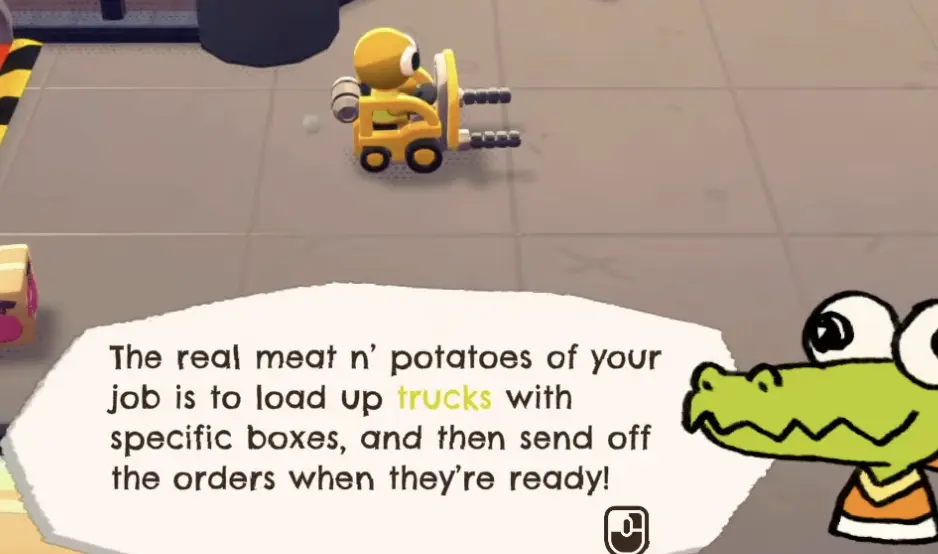
Start Crashout Crew by learning the core loop: drive cleanly, stack useful boxes, read the truck order, load only the correct cargo, send the truck only after a final check, and keep stress under control. Once that loop feels stable, improve your runs with better upgrades, smarter Safety Violation choices, cleaner solo or co-op roles, and S Rank route lessons.
Start Here
Crashout Crew looks simple at first: grab boxes, load trucks, and survive the shift.
The problem is that every small mistake stacks up fast. A wrong box can ruin an order. A teammate collision can push cargo into traffic. A messy pile can waste the last few seconds before a truck leaves. If stress gets too high, someone can crash out at the worst possible time.
The safest way to improve is to fix one part of the loop at a time:
movement → stacking → order reading → truck loading → upgrades → stress control → Safety Violations → rank pushing
If you are new, do not start by chasing S Rank. First make your runs clean enough that the team knows who is reading orders, who is moving boxes, who is pressing the button, and who is fixing mistakes.
Learn movement and drifting early, but do not drive fast just because you can. Clean control matters more than flashy turns.
Which Guide Should You Read First?
Use this table to jump to the guide that matches your current problem.
Problem
First fix
Read next
I do not know what to do first.
Learn movement, stacking, order reading, and the truck button before worrying about score.
This hub
I keep carrying one box at a time.
Stack useful cargo when the order needs multiple items of the same type.
Find the problem that is ruining your run, try the first fix, then open the focused guide for more detail.
Core Guides
Best Upgrades
Read this when you are not sure what to buy between shifts.
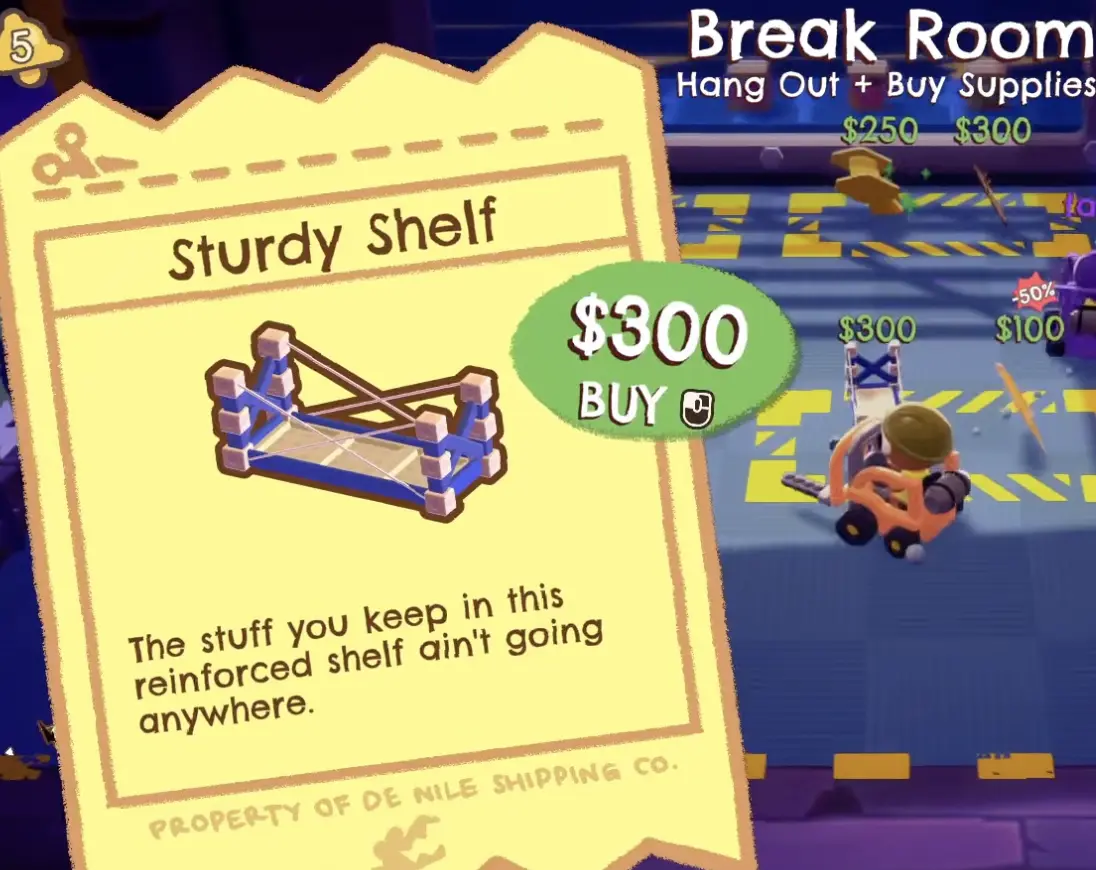
Crashout Crew upgrades should not be treated like a shopping list where the most expensive item is always best. The best upgrade is the one that fixes your current run. If cargo is scattered, Standard Shelf is often better than speed. If players keep dropping important boxes, The Grippers matter. If stress is the main failure point, Cup Holder and Aromatherapy can save a run.
The break room is where you decide what problem to solve next. Spend money on the weakness that caused the last bad shift.
Safety Violations
Read this before choosing extra modifiers for more money.
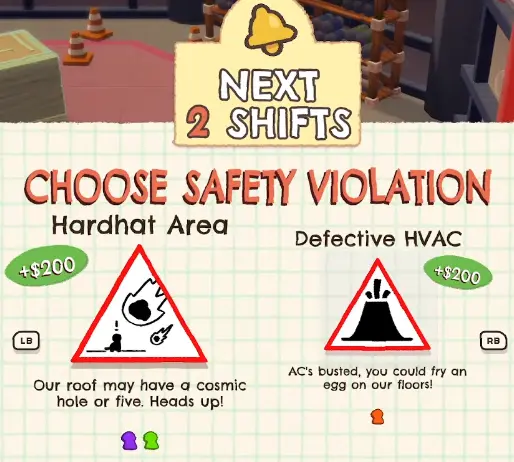
Safety Violations can make a run more rewarding, but they can also turn a normal shift into a disaster. Faulty Wiring creates Lights Out blackouts. Defective HVAC adds heat or fire-style pressure. Hardhat Area adds falling hazards. Ordinance Delivery adds explosive risk. Pick the modifier your crew can actually counter, not just the one with the biggest reward.
Safety Violations are risk-reward choices. Check the modifier, duration, reward, and counter before picking one.
Solo and Co-op Tips
Read this if you are playing alone, with two players, or with a full four-player crew.
Crashout Crew gets harder when everyone tries to do the same job. A good crew does not need four players chasing one box. It needs clear roles, short callouts, clean routes, and one player who owns the final truck button.
Co-op gets much easier when players stack cargo, call out orders, and stop crowding the same lane.
Crash Out and Stress
Read this if the run falls apart because your stress keeps spiking.
Crashing out is not just a funny failure state. It is a warning that your route, cargo handling, upgrade choices, or team movement is too messy. Cup Holder helps you take on more stress before crashing out, while Aromatherapy helps you recover faster after stress builds.
If you keep crashing out, look at what happened before the meter filled: collisions, wrong cargo, hazards, or panic driving.
S Rank Guide
Read this when your runs are stable and you want better ranks.
S Rank is not just a speed check. Real S Rank examples show that clean control, correct orders, cargo staging, crash out prevention, and safe routing matter before pure speed. The S Rank guide uses final S result examples such as Forklift Certification, By the Barrel, and Speed Limit to explain what makes a clean run work.
S Rank attempts should start with clean execution. Speed only helps after the route and order flow are stable.
How a Shift Works
Most early mistakes happen because players rush before they understand the shift loop.
The basic loop is:
Step
What to do
Common mistake
1. Read the order
Check the box types and quantities before moving cargo.
Grabbing random boxes because they are nearby.
2. Find useful cargo
Move only what the truck actually needs.
Filling the floor with mystery boxes.
3. Stack boxes
Carry multiple boxes when the order needs them.
Driving back and forth with one box at a time.
4. Keep lanes clear
Avoid blocking truck lanes, buttons, and common routes.
Parking in the middle of the path.
5. Confirm before sending
Make sure the truck order is correct.
Pressing the button too early.
6. Recover after mistakes
Clean spills, restack cargo, and reset the route.
Panicking and creating a bigger mess.
7. Buy for the next problem
Use the break room to fix the failure point from the last shift.
Buying random upgrades because they look fun.
Use this as the basic shift checklist until the flow becomes automatic.
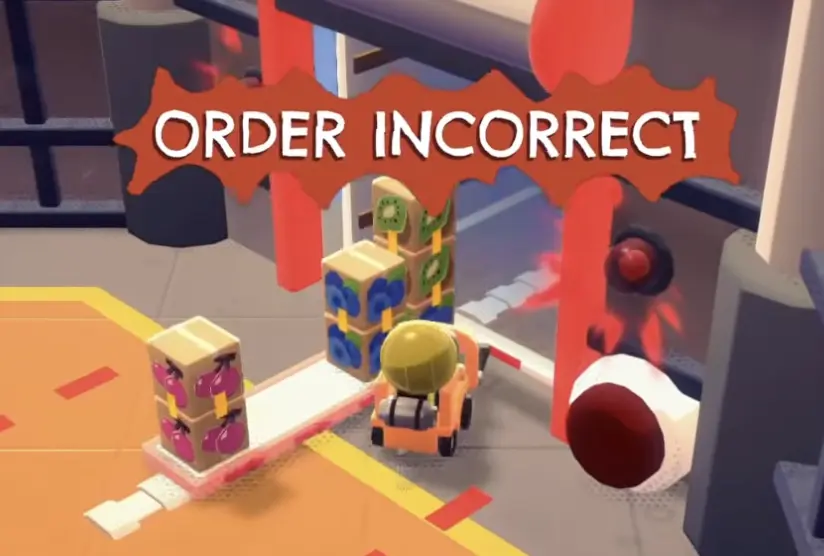
Before pressing the button, make sure the truck has the right cargo. Sending the wrong order can instantly turn a clean shift into a crash out.
Box Stacking Basics
Stacking is one of the first skills that makes Crashout Crew feel less chaotic.
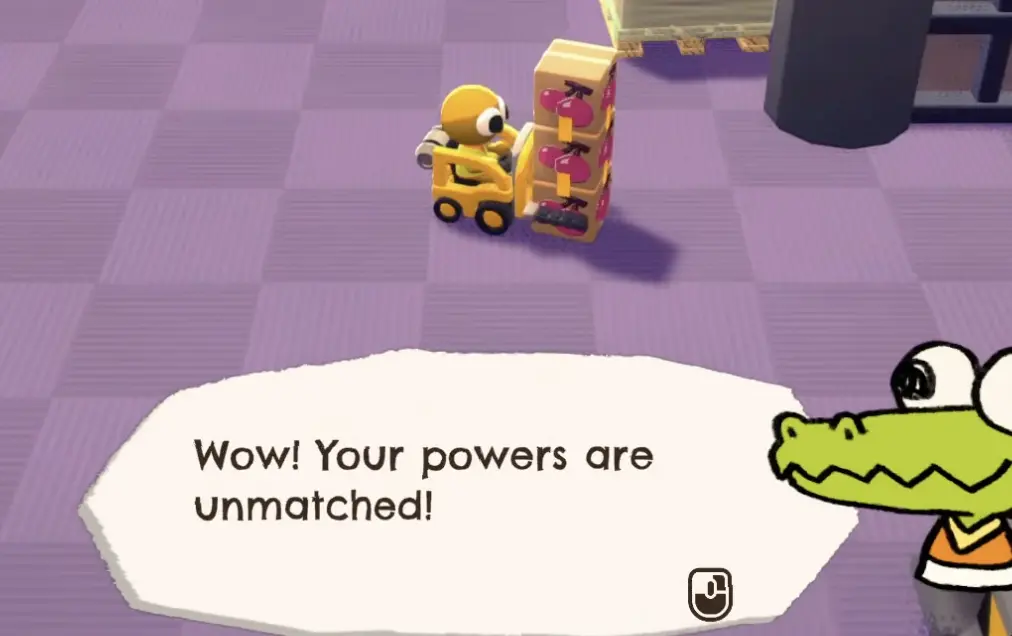
If an order needs several of the same box, do not treat every box as a separate trip. Build a stack, move it cleanly, and place it where the team can finish the order. The faster you learn stacking, the less time you waste driving empty routes.
Stacking boxes saves time, but only if you place the stack where the next player can actually use it.
Good stacking
Bad stacking
Stacking boxes the truck actually needs.
Stacking random cargo because it is nearby.
Calling what the stack contains.
Dropping an unknown stack near the truck.
Using shelves or staging zones.
Leaving stacks in traffic lanes.
Moving two or three useful boxes at once.
Making separate trips for every box.
Unstacking when needed.
Sending an extra wrong box by accident.
Use this when learning how to stack boxes.
Break Room Decisions
Between shifts, your team can spend money on items and upgrades.
The mistake is buying whatever looks fun without asking why the previous shift went badly. If you lost because cargo was slow, buy movement or routing help. If the warehouse was messy, buy cleanup or storage. If everyone crashed out, buy stress and safety tools before more speed.
Run problem
Upgrade direction
Why
Cargo is scattered.
Standard Shelf, Sturdy Shelf, better staging.
Reduces wrong boxes and wasted search time.
Important cargo keeps dropping.
The Grippers.
Protects carried boxes from simple impacts.
Players keep crashing out.
Cup Holder, Aromatherapy.
Adds stress tolerance or faster recovery.
The floor is messy.
Scrubbie, Super Scrubber, Water Balloon Pump, Leaf Blower.
Keeps routes usable.
The route is long.
Teleporter, Nitro Canisters, Boost Pad.
Reduces dead driving time after the route is stable.
The run is already clean but slow.
Racing Tires, Charge Pad, Sick-ass Spoiler.
Adds speed after mistakes are under control.
Use this upgrade logic before spending money in the break room.
Safety Violations: Do Not Pick Blindly
Safety Violations are not just bonus money. They are extra problems that test whether your team has good fundamentals.
A good modifier choice is one your crew can manage without breaking the whole shift. A bad modifier choice is one that adds chaos to a team that is already failing basic orders.
If your crew is…
Choose Safety Violations how?
Why
Still learning controls
Avoid risky modifiers.
Movement mistakes already create enough stress.
Good at stacking
Try moderate cargo or hazard modifiers.
Clean stacking makes chaos easier to manage.
Bad at communication
Avoid modifiers that require fast callouts.
Silence makes bad modifiers worse.
Trying to improve rank
Be careful with greed choices.
Extra money is not worth ruining consistency.
Comfortable with the map
Add one manageable violation at a time.
Learn what each one changes before stacking risk.
Use this early Safety Violation decision table before choosing a modifier.
Solo vs Co-op
Solo is useful for learning the basics. You can practice movement, stacking, order reading, and clean delivery without other players ramming into your route.
Co-op is faster, but only when players split jobs. If everyone chases the same cargo, the run becomes slower than solo.
Player count
Best early approach
Main risk
Solo
Drive safely, stack carefully, learn the map.
Running out of time because every task is yours.
2 players
One player reads and ships, one player gathers and stacks.
Both players chasing the same box.
3 players
Reader/shipper, loader, floater.
No one owns cleanup or final checks.
4 players
Reader, inbound loader, sorter, shipper/floater.
Too many players crowding the same lane.
Use this as a simple role map for different team sizes.
Common Mistakes
Most bad Crashout Crew runs are not lost because one player made one mistake. They are lost because small mistakes keep repeating.
Mistake
What happens
Better habit
Driving too fast everywhere
You bump players, hit cargo, and raise stress.
Drive fast on clear routes only.
Ignoring stacking
You waste too many trips.
Stack useful cargo before moving it.
Sending the truck too early
A wrong order can ruin the shift.
Confirm the order before pressing the button.
Everyone reads the order at once
No one actually moves cargo.
Assign one order reader.
Everyone grabs random boxes
The floor fills with useless cargo.
Call out what the truck still needs.
Buying random upgrades
Money does not solve the real problem.
Buy for the last failure point.
Choosing hard Safety Violations early
The team collapses before learning the map.
Pick easier modifiers first.
Chasing S Rank too soon
You play faster but make more mistakes.
Clean up B/A rank runs first.
Fix these habits early and every guide in the cluster becomes easier to apply.
Early Rank Improvement
If you are stuck around B or A, do not assume the answer is always more speed.
Better ranks usually come from fewer wasted actions:
fewer wrong boxes
fewer empty trips
fewer collisions
fewer crash outs
faster order confirmation
better upgrade choices
cleaner use of stacks
less panic near the send button
Your first goal is not a perfect S Rank. Your first goal is a run where you can explain exactly why the rank was not better.
What This Guide Cluster Covers
This is a practical guide cluster, not a full wiki database. The goal is to solve the problems players hit first.
Topic
Current guide coverage
Beginner fundamentals
Covered in this hub: movement, stacking, truck orders, break room logic, and common mistakes.
Best upgrades
Covered in the upgrade guide with prices, card effects, combos, and decision tables.
Safety Violations
Covered in the modifier guide with Faulty Wiring, Defective HVAC, Hardhat Area, Ordinance Delivery, and counter plans.
Solo and co-op roles
Covered in the solo/co-op guide by player count, roles, callouts, stacking, and button control.
Crash out stress
Covered in the stress guide with Cup Holder vs Aromatherapy, prevention, recovery, and Safety Violation examples.
S Rank improvement
Covered in the S Rank guide using real S result examples and route lessons.
Achievements and full wiki data
Not the focus of this hub unless the topic directly affects practical play.
What this hub focuses on and where to go next.
Crashout Crew FAQ
What should I read first in Crashout Crew?+
Start with this hub if you are new. Learn movement, stacking, order reading, truck sending, and crash out stress first. Then open the Best Upgrades, Safety Violations, Solo and Co-op Tips, or S Rank guide depending on what is breaking your runs.
Why do I keep crashing out in Crashout Crew?+
You usually crash out because stress builds from collisions, wrong deliveries, hazards, messy cargo handling, panic driving, or chaotic co-op movement. Slow down, keep routes clear, confirm orders, and use Cup Holder or Aromatherapy when stress is the main issue.
What should I buy first in Crashout Crew?+
Buy the upgrade that fixes the current contract problem. Standard Shelf helps messy cargo, The Grippers protect carried boxes, Cup Holder and Aromatherapy help stress, Scrubbie helps mess, and Teleporter or speed tools help only after the route is stable.
Are Safety Violations worth using in Crashout Crew?+
Safety Violations are worth using when your crew can handle the extra problem. Pick modifiers you can counter, avoid high-chaos choices while learning, and do not stack modifiers that attack the same weakness.
Can you play Crashout Crew solo?+
Yes. Solo is useful for learning routes, controls, stacking, and order reading. It is cleaner but slower than co-op because every job is yours. Co-op is faster when players split roles and communicate clearly.
How do I get S Rank in Crashout Crew?+
S Rank comes from clean execution before raw speed: correct orders, fewer crash outs, better staging, less wasted driving, safer button control, and upgrades that remove mistakes before adding speed.