Anime Shop Simulator Progression: What Should You Unlock Next?
Not sure what to buy after each shop level? This route shows which upgrades actually remove a bottleneck, when to save cash, and when a new unlock can wait.
Updated:
Quick Answer
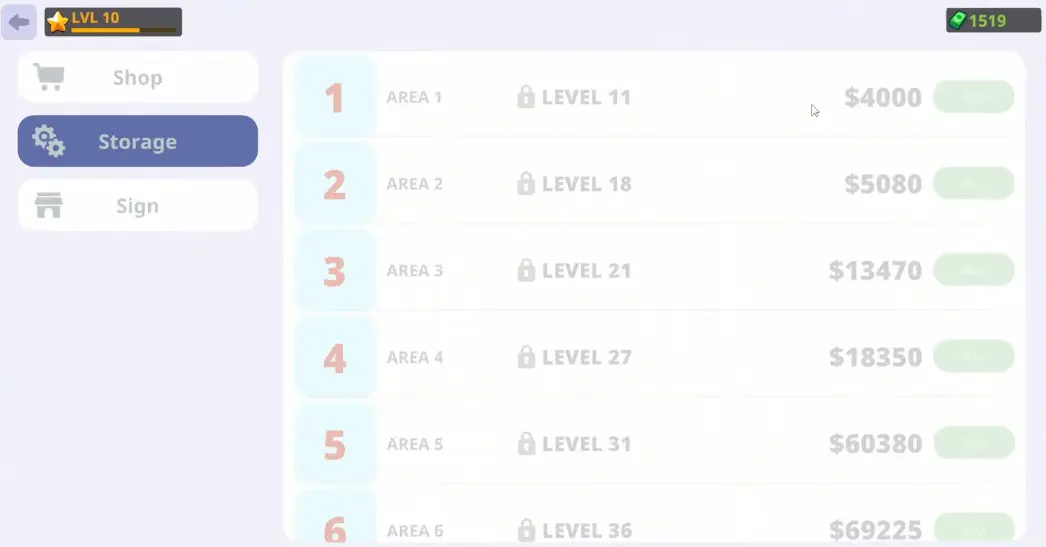
Push to Shop Level 5, buy the $730 Gaming Table when the card objective actually needs it, then make Level 11 Storage for $4,000 your first major capacity target. After Storage is working, save for the $5,135 Level 13 shop area. Hire help when checkout starts preventing you from restocking, and treat later licenses and furniture as choices rather than automatic purchases.
Level 5 Is the First Point Where Progress Splits in Two
The opening levels are mostly about getting a reliable shop loop running. I keep the starter shelves supplied, replace whatever sells through fastest and leave decorative spending alone while cash is still tight. At this stage, having enough stock to keep selling matters more than making the room look finished.
The first noticeable change comes at Shop Level 5, when the Gaming Table becomes available for $730.
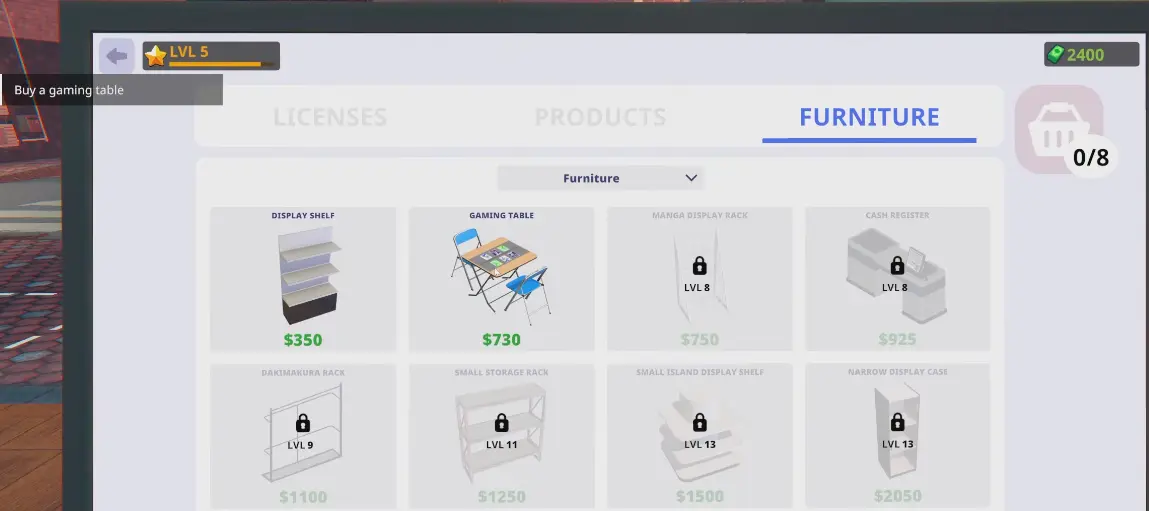
This can be confusing because the game may already be pointing me toward building a battle deck before the table is available. If that happens, I do not search the town for another interaction or assume the quest has broken; I keep the store moving until Level 5 opens the furniture I need.
Buying the table also does not mean I stop progressing the shop and spend the next several days on cards. It simply opens a second progression branch. Once I have cleared the immediate battle objective, I am comfortable returning to normal sales until I actually want to push tournament wins and the Secret Shop. The deck rules and tournament route are handled in the Card Battle guide.
An Unlock Is Not the Same Thing as a Good Purchase
The biggest early progression mistake I made was treating every newly unlocked item as an instruction to spend money.
A level requirement only tells me that something is available. The useful question is whether buying it fixes the problem currently slowing the store down. During this stretch I bought specialized display furniture that looked like an upgrade, then discovered that it held too little stock to justify how much cash it had taken out of the account. Selling it back later did not recover the full cost.
That experience changed how I read the management menus. New furniture is interesting; Storage, floor space and staffing can fundamentally change how the shop operates.
| What I see in the shop | What I do next | Why it matters | What can wait |
|---|---|---|---|
| Shelves are empty but there is still usable floor space | Reorder the products that are actually selling | The bottleneck is stock, not capacity | New display furniture |
| Boxes are taking over the sales floor | Save for Storage | Backstock needs somewhere permanent to go | Decorations and sidegrade shelves |
| Checkout repeatedly pulls me away from empty shelves | Hire a cashier | The register is now consuming productive time | Extra furniture that does not increase capacity |
| Storage works, but the selling floor is packed | Save for the next shop area | More usable floor space now has a purpose | Another license if there is nowhere to display it |
| A new license appears while cash is low | Keep the current range stocked first | A license also creates a new inventory bill | The newly unlocked product line |
| The store is stable and cash reserve is healthy | Add the next useful license or fixture | The business can absorb the extra stock | Nothing urgent |
This is the progression rule I keep using later as well: identify the bottleneck first, then spend money on the unlock that removes it.
From Level 5 to 11, Storage Becomes the Real Goal
After Level 5, the shop gradually stops feeling small because of the room itself and starts feeling small because of everything I am trying to keep inside it. More products become available, another license tier opens, the Gaming Table occupies floor space and delivery boxes begin living wherever I can squeeze them.
That is when I start working toward Storage Area 1 at Shop Level 11.
The management screen gives a clear target: $4,000.
One detail caught me out the first time. Access toward the back of the building can appear before the Storage purchase itself is available. Seeing the door does not mean I have missed a prompt. The actual purchase still waits for the Level 11 requirement.
So I use the Levels 5–10 stretch to do three things at once: keep current stock healthy, take only the licenses I can genuinely support, and protect enough cash that reaching Level 11 does not leave me staring at a $4,000 upgrade with an empty account.
Reaching the required level while broke is functionally the same as not having the upgrade yet.
Hire the First Employee When Checkout Starts Breaking the Restock Loop
Employees become valuable at a very specific moment: when the register starts deciding what I am allowed to do with the rest of the shop.
Early on, I can handle checkout myself without losing much. Customer traffic is light, the product range is narrow and the walk from shelf to register is short. Hiring somebody at that point mostly removes a task I was still managing comfortably.
Later, the same register becomes a bottleneck. A queue forms while a fast-selling shelf is empty, another delivery is waiting and stock is sitting in boxes that I cannot touch because I am processing customers.
That is when I hire.
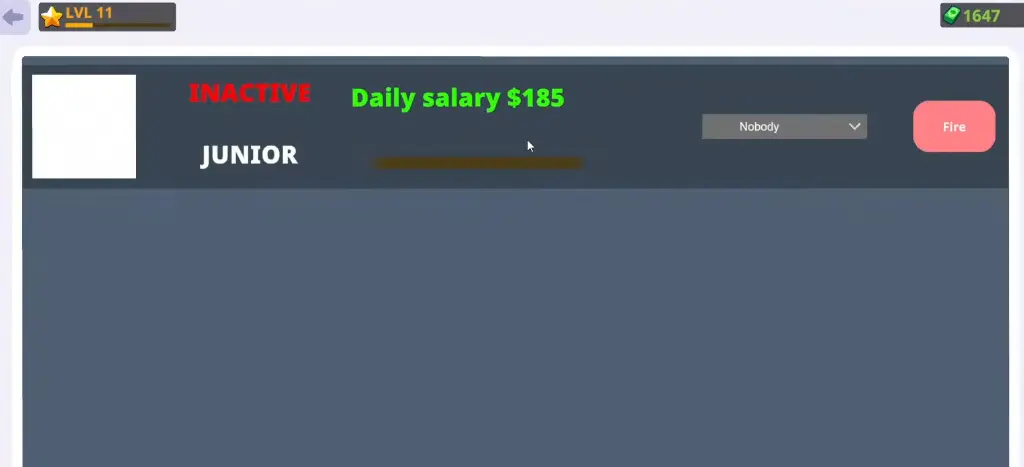
The progression value is the time I get back. If the register is already under control, I keep the cash. Once serving customers is preventing me from keeping the shop functional, delegating checkout lets me move into stock, orders and layout work instead.
I also avoid treating the first assignment as permanent. As the store changes, the useful role can change with it. The employee should remove whatever repetitive task is currently holding the rest of the shop back.
Level 11 Storage Changes How I Order Stock
Before Storage, extra inventory solves one problem and creates another. I can order enough to avoid an empty shelf, but every spare box needs somewhere to sit. That quickly turns the sales floor into a temporary warehouse.
Storage changes that.
Once Area 1 is open, I start keeping deliberate backstock rather than buying only enough to survive the next few customers. Fast sellers get replacement stock first; slower products stay lean until their actual demand justifies taking up more room.
The important distinction is that Storage is not permission to buy everything in bulk. It is capacity I use selectively.
If a shelf empties several times during a normal workday, keeping another box behind the shop saves real time. If an item is still sitting untouched at closing, filling Storage with three more boxes of it only traps cash.
The ordering and pricing side becomes a separate problem at that point, so I handle margins, delivery costs and restock efficiency in the Money and Pricing guide. Here, Storage has done its job once the shop is no longer using customer space to hold spare inventory.
Level 13 Is When More Floor Space Starts Paying for Itself
Storage removes boxes from the shop floor, but it cannot create room for customers, displays or additional product lines.
The next large target in my run was Shop Area 4 at Level 13 for $5,135.
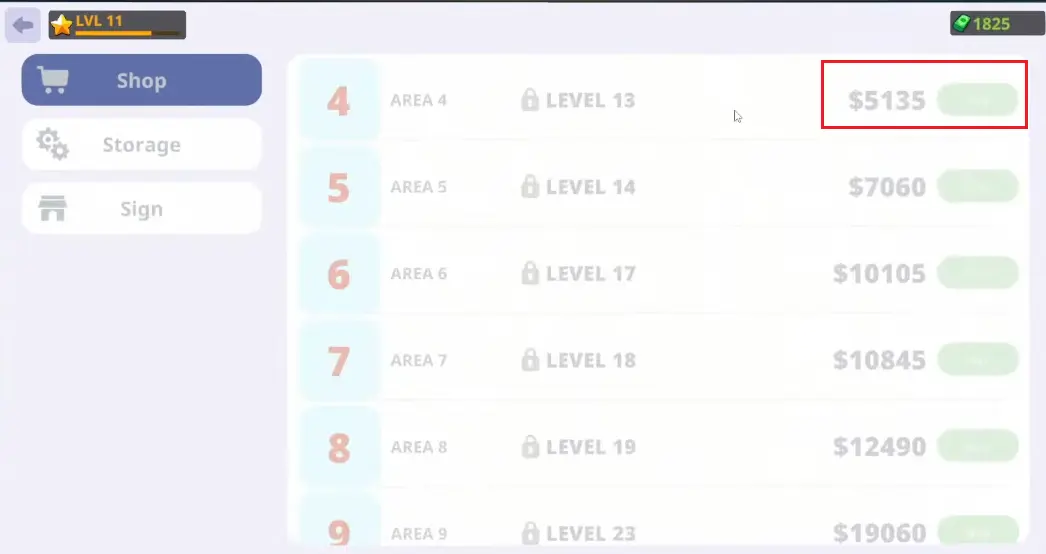
I do not buy this area just because the Level 13 requirement has been met. A larger room with understocked shelves has not improved the business; it has only converted more cash into empty space.
The purchase makes sense once the existing floor is doing real work. I want the current shelves stocked consistently, Storage holding useful backstock and enough customer or fixture pressure that opening more floor space immediately gives me somewhere productive to put another display or rearrange an awkward layout.
That timing also matters for licenses. A new product line does not end with the license fee. I still have to finance its first order, find enough display capacity and continue keeping those products stocked. Expanding the room before taking on several more SKUs gives those later licenses somewhere to go.
Level 16 Is Where Progression Stops Being a Straight Line
By Level 16, the shop already has enough systems running that another unlock no longer guarantees an obvious next move. A new license becomes available here, alongside more furniture choices, but the right purchase depends on the store I have built up to this point.
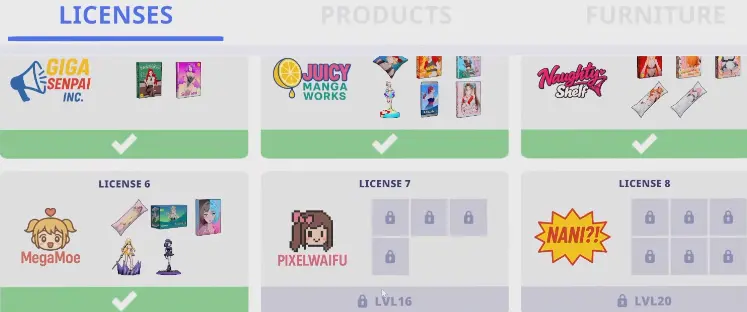
I look at three things before buying the license: available floor space, how much of the existing range is actually staying in stock, and what the purchase will leave in reserve afterward.
If another license empties the account before I can place a meaningful first order, the products technically being unlocked has not helped me. The same is true for furniture. A specialized rack is worthwhile when it carries something I need or fixes a layout problem; it is poor progression when it only replaces furniture that was already doing the job.
Normal sales still move Shop Level forward while I wait, so there is no penalty for letting an unlocked purchase sit in the menu until the store is ready for it.
Level 18 Brings the Next Storage Decision
The second Storage area becomes available at Shop Level 18 and costs $5,080.
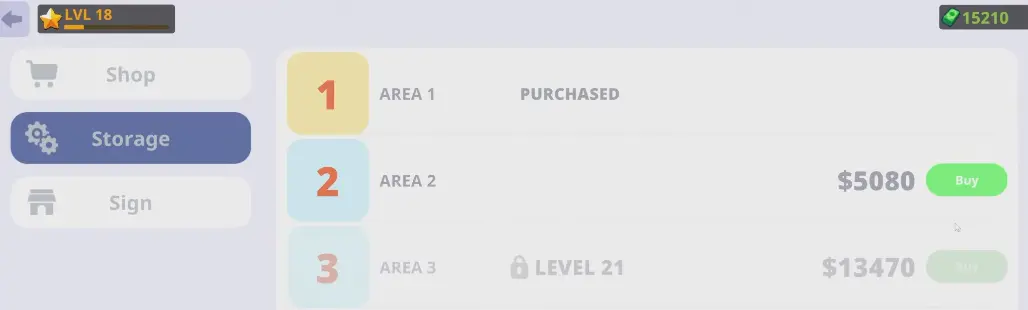
The reason I value this upgrade is different from the first Storage purchase.
Area 1 solved clutter. By Level 18, the problem is throughput. I have more categories, more backstock worth keeping and more ways for several shelves to empty during the same busy period. A larger Storage area lets me hold enough replacement inventory that the day does not turn into a chain of emergency orders.
That does not make Level 18 an automatic $5,080 purchase on the exact moment I level up. If Area 1 is half empty and the shop floor still has room, another license or selling-area upgrade may create more value first. If Storage is packed with products I am genuinely cycling through, the second area has a clear job waiting for it.
This is where the earlier rule becomes more useful than any fixed shopping list: the same unlock can be urgent in one store and premature in another.
After Level 18, Follow the Bottleneck Instead of the Level Number
By this stage, I already have several systems pulling progression in different directions: expanding product lines, larger Storage, employee help, more selling space and the card branch. Later levels continue adding choices, but they do not all deserve the same priority.
If shelves are empty faster than I can refill them, I fix inventory or staffing first. When Storage stays full because the store genuinely cycles through that stock, capacity becomes the next target. If the sales floor itself has become cramped, another shop area is more valuable than another license. When cash is healthy and there is obvious unused display space, expanding the product range becomes easier to justify.
Card progression fits around that rather than replacing it. Once the business is running without constant interruptions, I am much more comfortable spending time on tournaments and the Secret Shop instead of abandoning a store that is already struggling.
The route through the first 18 levels is therefore less about buying everything in sequence and more about reaching each important threshold with the shop ready to use it:
Level 5 opens the card branch, Level 11 fixes the first serious Storage problem, Level 13 adds meaningful selling space, Level 16 widens the product choices, and Level 18 gives backstock another major expansion.
From there, I keep leveling through normal sales and spend only when the next unlock removes a problem I can already see.