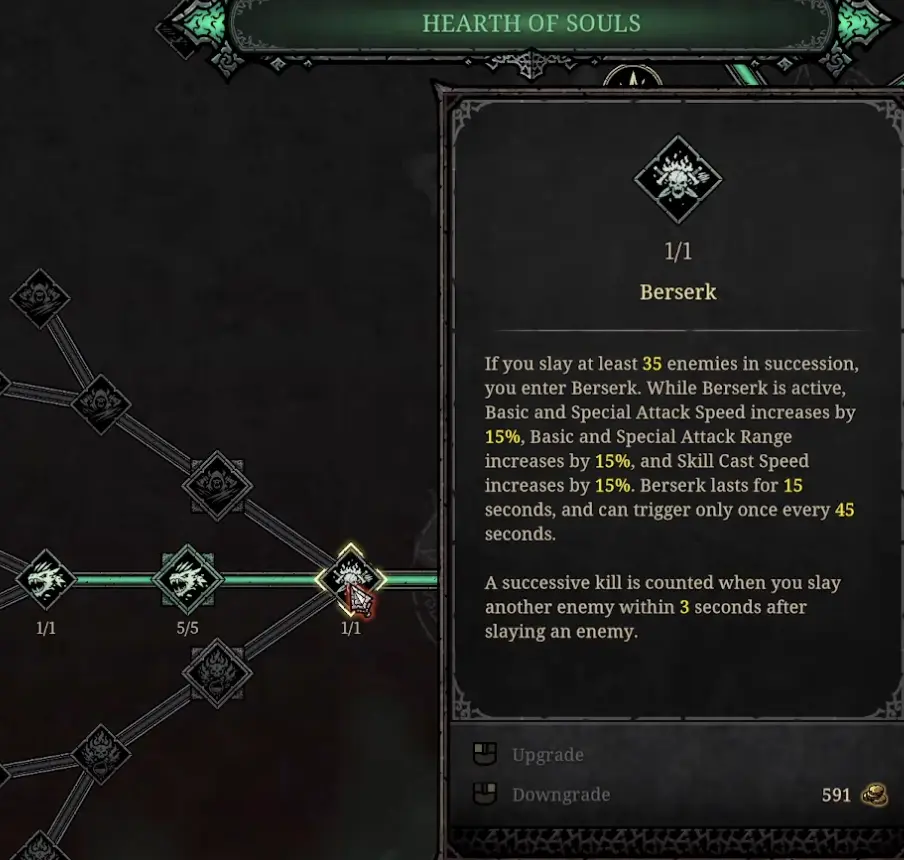
A practical Tower of Babel Survivors of Chaos best builds and classes guide covering the best early class, Skull Crusher Berserk, Wizard Lightning Strike, Phoenix, Dagger Mana, Spear of Light, Bless and Ban timing, boss safety, mana, sustain, and 1.0 build priorities.
A practical Tower of Babel Survivors of Chaos guide explaining how runes, numbered runes, gems, sockets, jewels, gem powder transmutation, the Alchemist, and the Blacksmith work, including Floor 3 socket unlocks, legendary effect transfer, and when to spend materials.
A practical Tower of Babel Survivors of Chaos progression guide explaining when to push floors, when to farm, how gold works, what to upgrade first, Altar upgrade costs, Floor 19-21 progression, the Floor 21 final boss, and how to recover when you feel stuck.
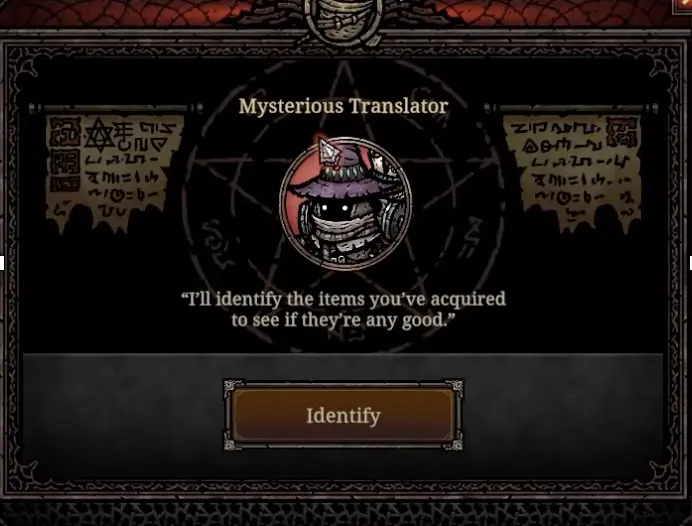
A practical Tower of Babel Survivors of Chaos gear guide explaining item level, gear slots, identifying items, legendary effects, shop prices, class restrictions, old gear, stolen items, and when equipment is worth keeping, selling, storing, enhancing, or socketing.
Use this hub to find the right Tower of Babel: Survivors of Chaos guide fast. If you are new, choose a class and stabilize your build first. If your runs feel weak, check progression, gold, and Altar upgrades. If your inventory or crafting menus are confusing, read the gear and rune guides. Chaos Dungeon is covered here as preparation for now because 1.0 expanded the mode to 150 floors and high-floor routes should be updated only after reliable player testing.
Start Here
Tower of Babel: Survivors of Chaos is not only about surviving waves. Your power comes from several systems working together:
If you are new, do not try to solve every system at once. Pick a class, make your early build stable, identify your gear after runs, spend gold on the weakness that stopped your last clear, and only invest crafting materials once an item is worth keeping.
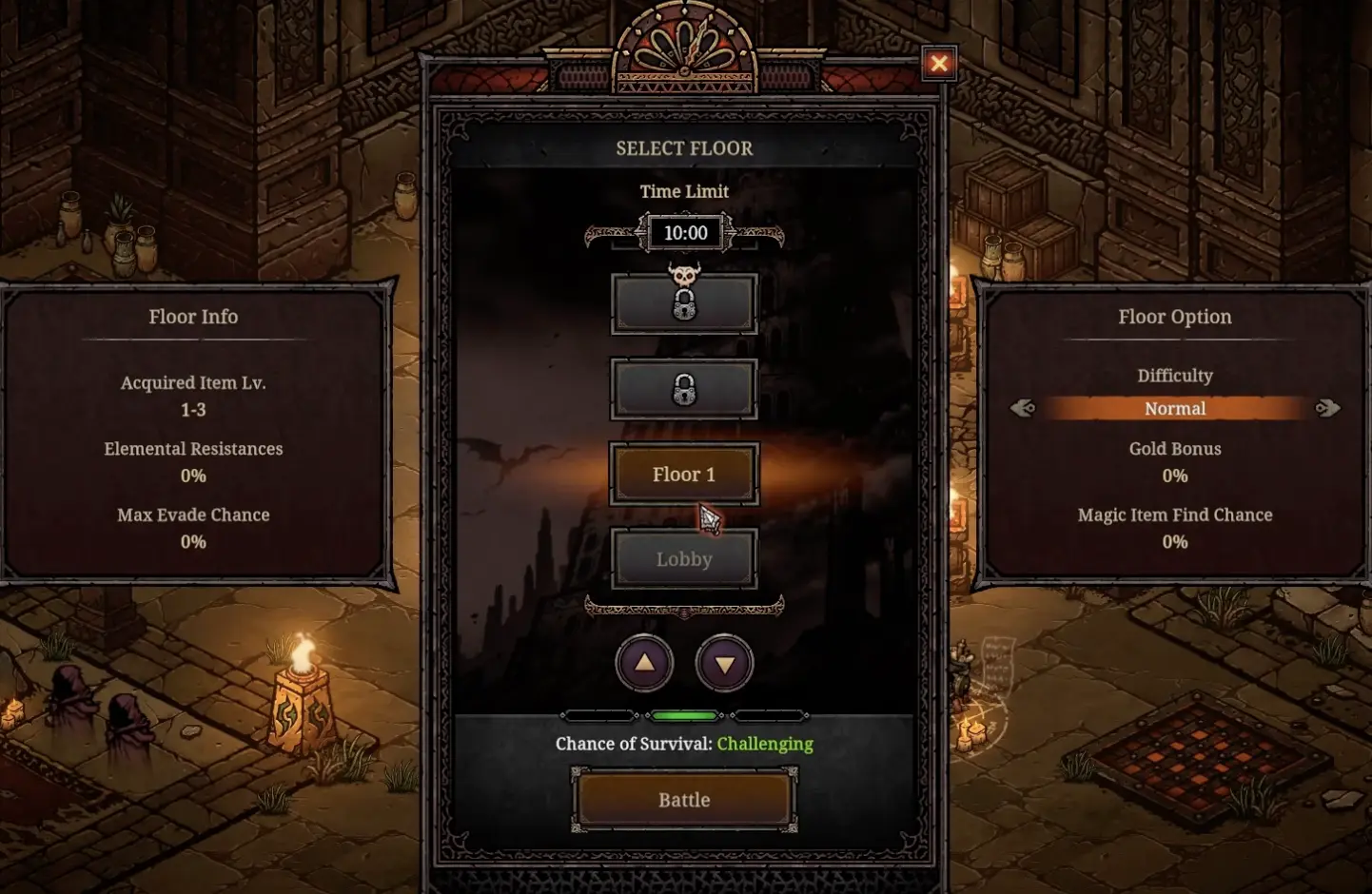
Before starting a run, check the floor, difficulty, item level range, timer, and reward modifiers. This tells you whether you are pushing progression or farming resources.
Quick Diagnosis: What Should You Fix First?
Problem
First fix
Read next
I do not know which class to play.
Start with Warrior if you want a simple first run, Wizard if you like spells, or Skull Crusher if you want the 1.0 melee berserker style.
Stabilize build, gear, Altar upgrades, and crafting first.
Chaos Dungeon preparation section below
Find the problem you have right now, try the first fix, then open the linked guide for the full explanation.
Core Guides
Best Builds and Classes
Read this if you are choosing a class, trying to make early runs stronger, or wondering whether Warrior, Wizard, Skull Crusher, Spear of Light, Spear Spin, or a Dagger Mana setup fits your current gear.
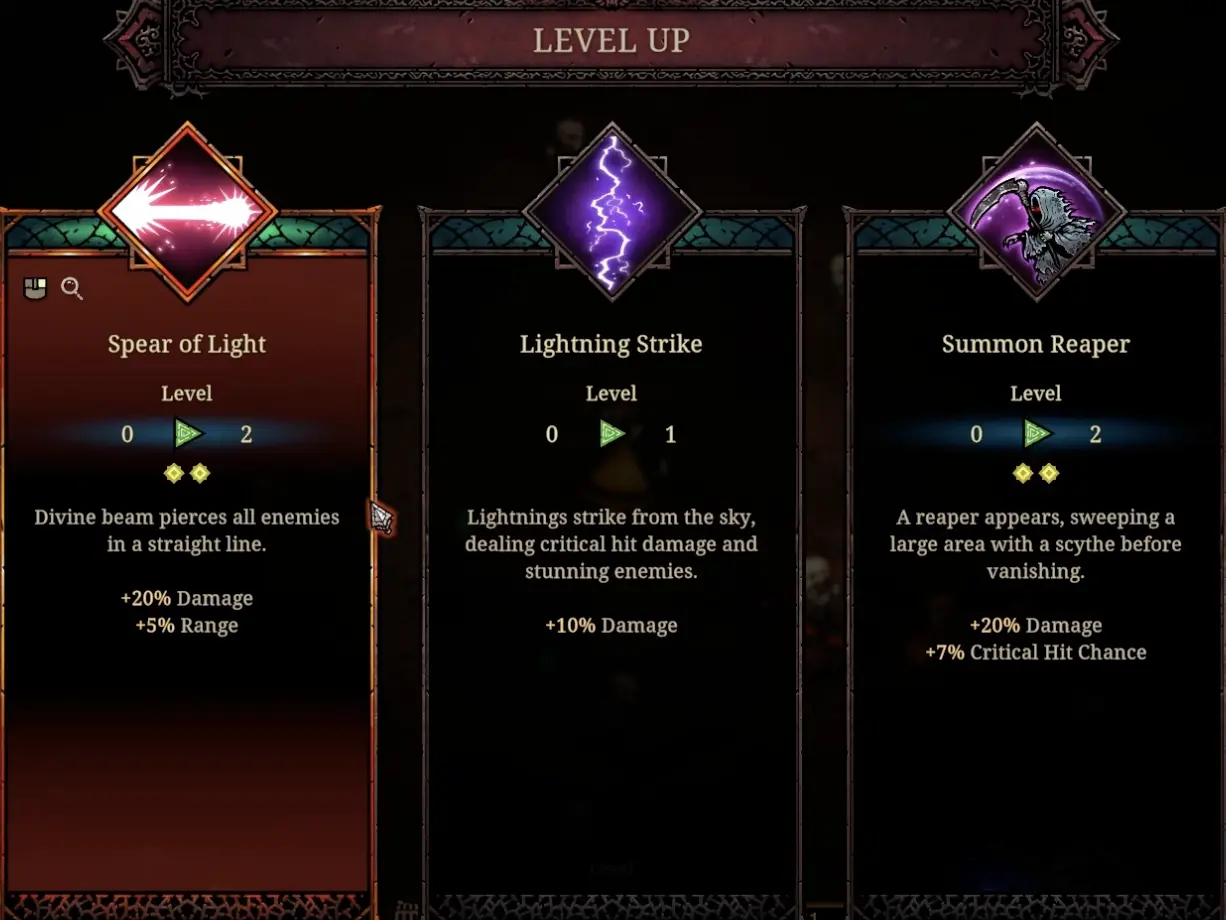
A good run usually starts with a clear damage plan. Do not pick every shiny skill at random; build around a few skills that solve waves, bosses, or survival.
Runes, Gems, Sockets, and Alchemist
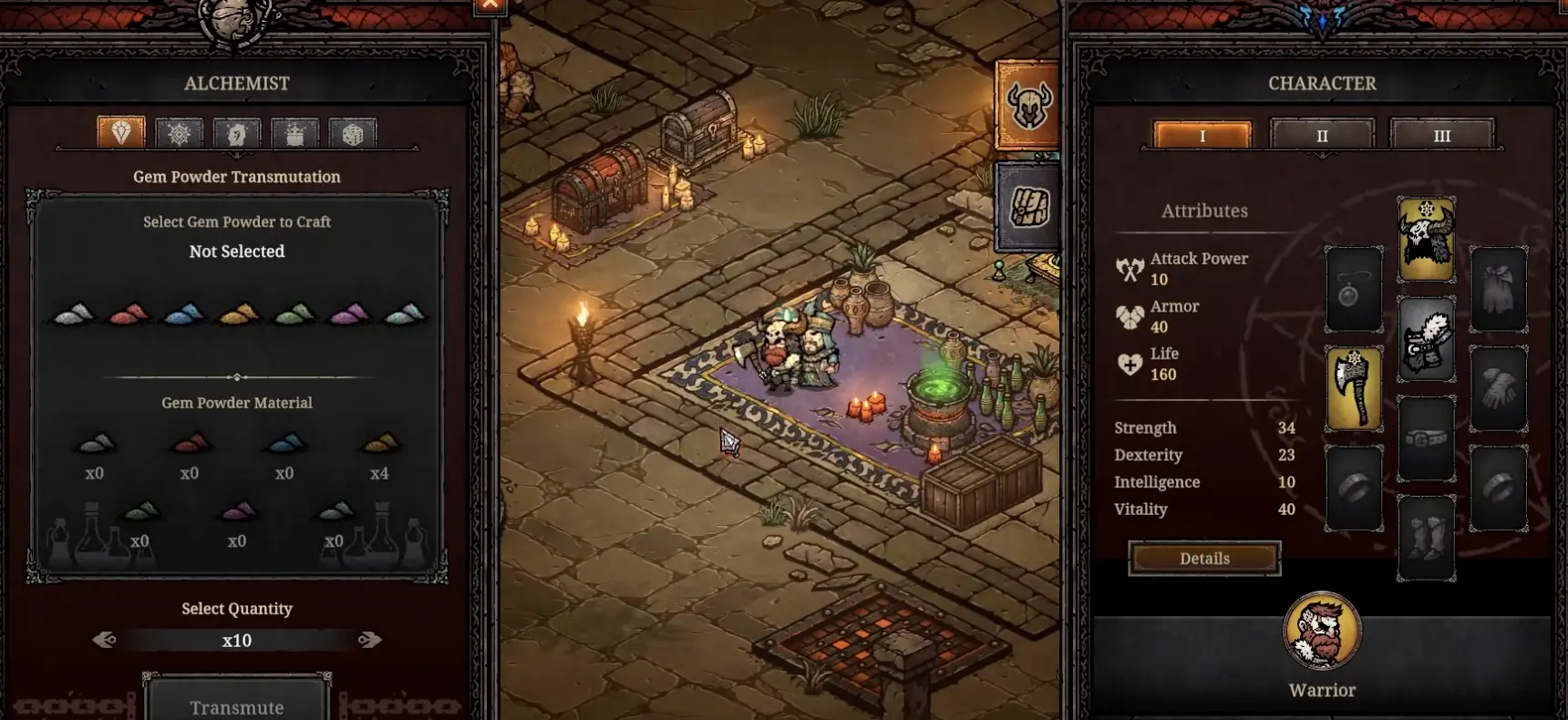
Read this when the crafting layer starts to feel confusing. This guide covers Gem Powder Transmutation, Floor 3 socket unlocks, Blacksmith functions, rune requirements, and why you should not spend rare materials on temporary gear.
If a material looks useless at first, check the Alchemist before ignoring it. Gem powder, jewels, runes, and legendary crafting all connect to longer-term gear progress.
Progression, Gold, and Altar
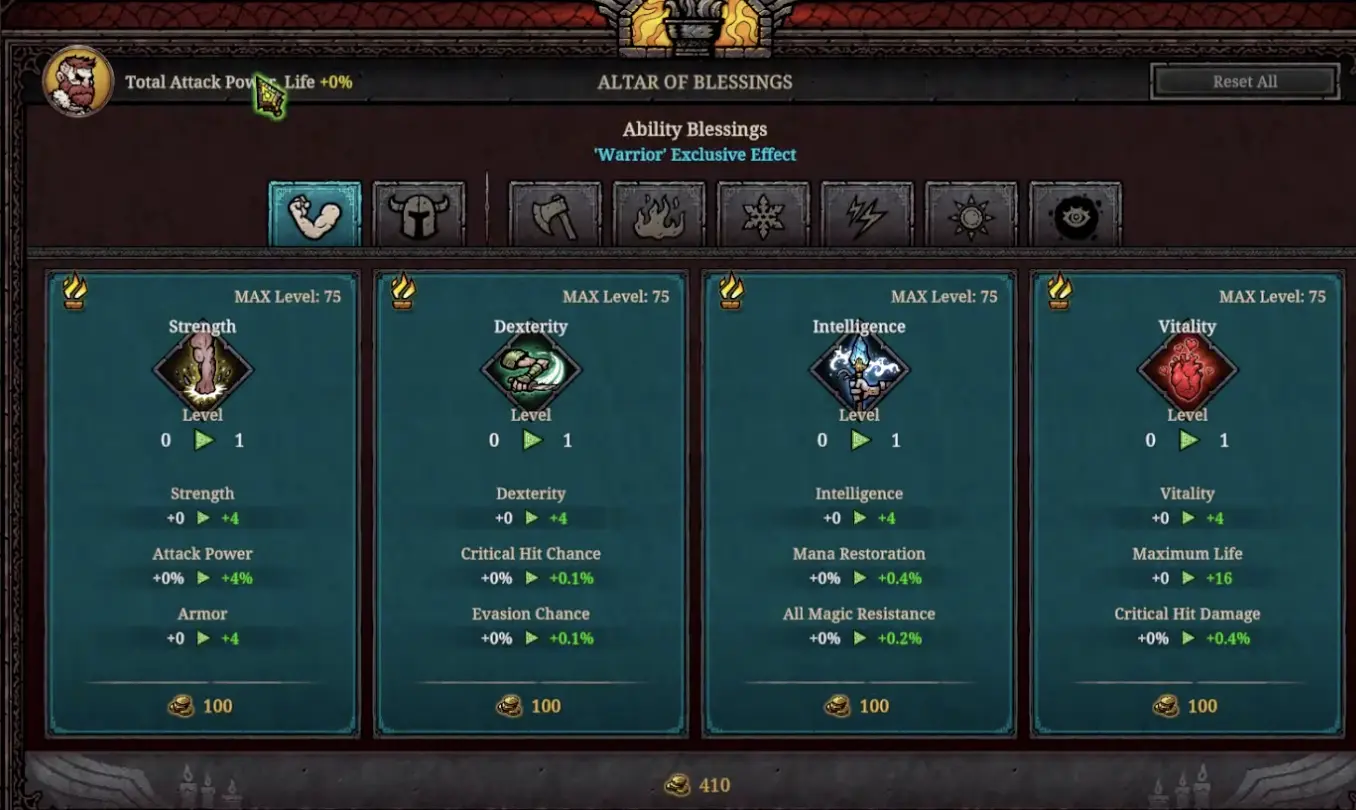
Read this when you are not sure whether to push the next floor, farm gold, buy gear, or upgrade the Altar. This guide includes early Altar cost references, gold spending logic, floor farming decisions, and result screen interpretation.
Gold is not only for shopping. The Altar turns gold into long-term power, so do not ignore it when you feel stuck.
Gear, Item Level, and Legendary Items
Read this when your inventory starts filling with unidentified items, class-specific gear, old low-level drops, and legendary effects that are hard to judge. This guide covers item level, gear slots, shop prices, lost items, and when old legendary effects are worth storing.
Do not judge gear only by color. Item level, useful stats, class restrictions, and legendary effects all matter when deciding what to keep.
What Changed in 1.0?
Version 1.0 adds enough new content that returning players should re-check their builds, gear, and upgrade priorities instead of assuming old setups still fit everything.
1.0 addition
What players should know
Current coverage
Skull Crusher
New melee berserker-style class built around Berserk, Spear Spin, Mighty Thrust, Predator sustain, and mana support.
Chaos Dungeon continues deeper after the main tower. Treat current high-floor claims carefully until you have current-version entrance, affix, reward, and result data.
Hub prep only; no standalone page yet.
Item and UI improvements
Re-check old gear, item level, tooltips, shop items, and inventory decisions after returning to 1.0.
Use this as a practical 1.0 checklist and content map.
Skull Crusher is one of the biggest 1.0 additions. He can be powerful, but he needs the right mana, sustain, and boss-damage support.
What Unlocks After Floor 21?
Floor 21 is the final boss floor of the main tower. In current 1.0 play, it is a 25-minute floor, and the final boss appears with about 5 minutes remaining.
After clearing the Floor 21 final boss, several endgame systems open up.
Unlock
What it means
Warp Floor
A special endgame floor type with warped effects and reward modifiers. Use a stable build, not a greedy farm setup.
Dual Boss Arena
A boss challenge mode where rewards scale with Chaos Level. Bring boss damage, movement, and survival.
Final Greed
A late-game system connected to final equipment enhancement and greed resources.
Final Enhancement
A high-commitment equipment upgrade that should be used only after normal upgrades, socket planning, and affix work are done.
Deeper Chaos Dungeon progression
Chaos Dungeon continues after the main tower, but current-version affix, reward, and farming data should be collected before publishing a standalone guide.
Use this as the current 1.0 endgame unlock map.
Final Greed and Final Enhancement Explained
Final Greed is not an early progression system. It unlocks after the Floor 21 final boss and belongs to the endgame equipment layer.
The key system connected to it is Final Enhancement. This is different from normal item enhancement. It is a late-game step for gear you already plan to keep.
Final Enhancement rule
What it means for players
One time per equipment piece
Do not use it casually on temporary gear.
Adds random effects
It may add one or two random effects, so the result is not fully controlled.
May add no effect
There is risk. Test on less important gear before using it on best-in-slot pieces.
Can be reverted
Check the cost and preview before relying on this.
Blocks some later changes
Enhancement reset, affix rerolling, and socketing may no longer be available after final enhancement.
Socket items still matter
Socket items can still be inserted and extracted, so socket planning is not completely dead.
Best used last
Finish normal enhancement, affix choices, and socket planning before using it.
Use this as a hub-level summary. The full gear decision belongs in the Gear guide.
Warped Floor Explained
Warped Floor unlocks after the Floor 21 final boss. Treat it as a special endgame floor type with warped effects and reward modifiers.
Current-version examples include modifiers tied to jewel and rune find chance, magic item find, skill damage changes, and enemy pressure. Because these effects can change how a run feels, do not bring a pure gold farming setup blindly.
Builds and Skill Choice
Early builds should answer three questions:
How do I clear waves?
How do I kill bosses?
How do I survive when enemies get close?
Build need
What to look for
Wave clear
Area damage, projectile count, piercing, persistent zones, fast cast speed
Boss damage
Strong single-target attacks, safe uptime, attack speed, special attack scaling
Survival
Movement speed, damage reduction, life recovery, chill, knockback, resurrection
Farming
Gold gain, rare item drop rate, stable clear speed, low-risk floors
Skull Crusher support
Mana restoration, close-range sustain, damage reduction, attack area, boss backup damage
Wizard support
Mana, cast speed, safe positioning, cold or area skills
Defensive or stat support once you have socketable gear
Jewels
Gear customization and stronger item setups
Runes
Requirement-based item improvement and build-specific upgrades
Sockets
The bridge between good gear and upgrade materials
Use this table to understand which system to check first.
Gear and Item Level
Gear is one of the main reasons Tower of Babel feels different from simpler survivor-style games.
Gear question
What to check
Is the item level much higher?
Higher item level usually means better base scaling.
Does the item fit my class?
Some items are class-specific and cannot be used by everyone.
Does it support my build?
Keep gear that boosts your main skill, damage type, sustain, or survival plan.
Does the legendary effect matter?
A strong legendary effect can be worth storing even if the base item is old.
Is it old low-level gear?
Sell or replace it unless the effect is still build-defining.
Can it be improved later?
Consider sockets, gems, jewels, runes, and enhancement potential.
Use this table when deciding whether an item is worth keeping.
Chaos Dungeon and Endgame Preparation
Chaos Dungeon is not the first thing a new player should worry about. It is the place to think about after your base progression is stable.
Version 1.0 expanded Chaos Dungeon to 150 floors, so the mode now has more room for long-term pushing and farming. For now, treat Chaos Dungeon as an endgame preparation target: build stability first, then push.
Before pushing Chaos Dungeon
Why
Have a stable main build
Random skills will fall apart when enemy density rises.
Upgrade your core progression bonuses
Altar and shared upgrades make every run safer.
Replace outdated gear
Low item level gear can make endgame floors feel unfair.
Keep useful legendary effects
Legendary effects often define whether a build works.
Prepare boss damage
Wave clear alone is not enough if bosses take too long.
Prepare survival tools
Movement speed, sustain, damage reduction, control, and resurrection all matter.
Do not copy high-floor claims blindly
1.0 high-floor rewards, affixes, and best farming routes should be tested before becoming final advice.
Use this checklist before treating Chaos Dungeon as your main farming target.
When to Wait Before Entering Chaos Dungeon
If this is happening…
Do this first
You die before the boss on normal floors.
Improve survival, movement, control, or life recovery.
Bosses take too long.
Add basic attack, special attack, or single-target scaling.
Your gear is several item levels behind.
Farm safer floors and replace outdated items.
Your build depends on one lucky skill.
Make the build more consistent with Bless, Ban, and better support stats.
You have not checked the Altar recently.
Spend gold on upgrades that fix your current weakness.
You do not understand runes, gems, or sockets yet.
Learn crafting before investing materials.
Tower of Babel: Survivors of Chaos FAQ
What should I read first in Tower of Babel Survivors of Chaos?+
Start with the Builds and Classes guide if you are choosing a class or trying to make your first runs stronger. If you are confused by crafting, sockets, runes, gems, or the Alchemist, open the Runes, Gems, Sockets, and Alchemist guide next.
What is the best early class in Tower of Babel Survivors of Chaos?+
For early runs, Warrior is the safest starting point because it is simple and forgiving, while Wizard becomes strong once you understand mana, spell choices, and positioning. Skull Crusher is powerful in 1.0 but needs mana, sustain, and better gear to feel smooth.
How do runes and gems work in Tower of Babel Survivors of Chaos?+
Runes, gems, jewels, sockets, the Alchemist, and the Blacksmith are all part of the gear improvement layer. First learn what each station does, then spend materials only on gear with good item level, useful stats, or strong legendary effects.
What should I spend gold on first in Tower of Babel Survivors of Chaos?+
Use gold to fix the weakness stopping your next clear. If you die early, buy survival. If bosses take too long, buy damage. If special attacks run dry, buy mana support. Check Altar upgrades before spending everything on shop gear.
What unlocks after Floor 21 in Tower of Babel Survivors of Chaos?+
After clearing the Floor 21 final boss, endgame systems such as Warp Floor, Dual Boss Arena, and Final Greed unlock. Final Greed connects to late-game equipment enhancement, so treat it as an endgame system after your build, gear, Altar, and crafting setup are stable.
What changed in Tower of Babel 1.0?+
Version 1.0 added Skull Crusher, Floors 19-21, the Floor 21 final boss, Warp Floor, Dual Boss Arena, Final Greed, more achievements, and Chaos Dungeon expansion to 150 floors.
Should I start Chaos Dungeon right away?+
Do not rush Chaos Dungeon before your build, gear, and upgrades are stable. Version 1.0 expanded Chaos Dungeon to 150 floors, but the safest first step is to prepare your character with better item level gear, useful legendary effects, and a build that can survive dense waves.