The Mound Sanity and Survival Guide
A full-release guide to The Mound sanity, blood rain, false horn calls, corrupted teammates, revives, Centipedes, noise, bleeding, and extraction.
Updated:
Quick Answer
To survive The Mound: Omen of Cthulhu, do not wait for a visible sanity meter or one final warning. The game can quietly add blood rain, a false horn call, altered teammate models, distorted voices, and fake companions without telling you that your perception has changed. Stay quiet early, keep the team close enough to verify one another, use the correct recovery item for each condition, and extract once noise, isolation, injuries, equipment loss, or hallucinations begin stacking together.
There Is No Visible Sanity Meter
The Mound does not show sanity as a normal red bar, percentage, warning icon, or alarm.
The jungle changes what an affected player sees and hears while presenting the hallucination as if it were part of the real environment. By the time I realize something is wrong, I may already have:
- followed a sound away from the group;
- mistaken a teammate for a creature;
- ignored a real threat because I thought it was another hallucination;
- fired at someone who looked hostile only on my screen;
- lost contact with the ox-wagon;
- entered a fight that the rest of the team did not know existed.
That is why communication is not just a co-op convenience. It replaces the missing sanity UI.
The Survival Failure Chain
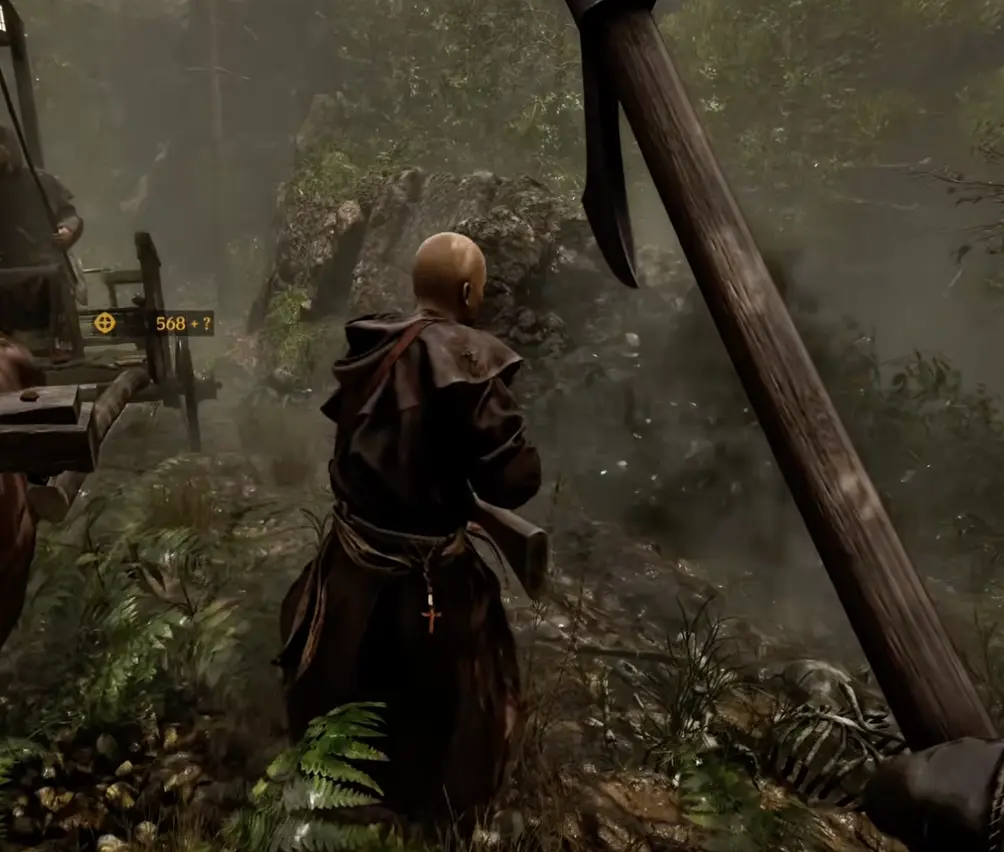
A run usually collapses because several manageable problems overlap.
| Pressure | Early warning | What it changes | Safer response |
|---|---|---|---|
| Noise | Gunfire, armor movement, creature calls, broken branches | The forest becomes more active and later fights become harder | Stop spending noise on isolated weak enemies |
| Isolation | A player cannot describe the route back | Hallucinations and rescue delays become harder to verify | Return before leaving the team’s callout range |
| Sanity pressure | Blood rain, false sounds, altered models or voices | Information from your own screen becomes unreliable | Verify with teammates and regroup at a landmark |
| Bleeding | Health continues falling after combat | A finished fight can still become a death | Use a Bandage before moving deeper |
| Equipment loss | Weapon or armor breaks | The team’s original formation no longer works | Replace equipment or shorten the route |
| Fallen ally | A player can no longer move | The run changes from looting to rescue | Clear the body and use Ammonia Salts |
| Forest awakening | Enemies and hallucinations appear more frequently | Every new detour costs more than it did earlier | Stop opening paths and begin extraction |
A gunshot by itself may be recoverable. One bleeding player may be recoverable. One hallucination may be recoverable.
A gunshot, an isolated player, a broken weapon, and a false teammate at the same time usually mean the team no longer has enough control to extend the expedition.
Confirmed Hallucination Types
The hallucination system is broader than teammates looking unusual.
Blood Rain
A player may see a localized rain of blood that nobody else can see.
In a full-release co-op run, one player asked whether it was raining blood while the others confirmed that they saw no such weather. That is exactly the kind of hallucination that can feel like a normal environmental change until the team compares screens.
Blood rain creates two risks:
- The affected player may stop or change route because the scene appears dangerous.
- The team may confuse hallucinated blood rain with real rain, which matters because actual rain can interfere with gunpowder weapons.
My response is simple:
- ask whether anyone else sees the rain;
- confirm the actual weather;
- do not leave the group to investigate it;
- use the disagreement as a warning that other perceptions may also be unreliable.
False Horn Call
The false horn is more dangerous because it uses a sound that normally feels safe or useful.
The hallucination can imitate:
- a reassuring extraction signal;
- Father Escalona or the wagon;
- a teammate calling for help;
- a distant point that appears to be the correct regroup direction.
Following it alone can lead the affected player away from the real wagon and into an ambush.
When I hear an unexpected horn:
- I ask whether another player heard it.
- I confirm Father Escalona’s last known position.
- I check whether anyone actually called the wagon.
- I move only after another player confirms the direction.
- If nobody else heard it, I return to the last verified landmark.
Altered Teammate Models
Under sanity pressure, a real teammate may appear as:
- a ghostly explorer;
- a corpse-like enemy;
- a hostile creature;
- another distorted human shape.
The visual change can be player-specific. One player may see a ghost while the rest of the group sees the normal explorer standing in the same place.
Altered Teammate Voices
A teammate’s voice may sound:
- distant;
- robotic;
- ghostly;
- distorted;
- unlike the person speaking.
The model and voice can change together, but they do not have to affect every player at the same time.
This is why clothing and voice alone are not enough to confirm identity.
How to Verify a Teammate
When someone looks wrong, I use an action test rather than asking whether they are real.
Use this sequence:
- Say the player’s name.
- Ask them to stop moving.
- Ask them to crouch once.
- Confirm their exact position.
- Ask for a second action if the figure is still suspicious.
- Only attack if the figure fails the checks and behaves like an enemy.
Useful instructions include:
- “Crouch once beside the wagon.”
- “Turn toward the fort gate.”
- “Switch to your spear.”
- “Stand on the lantern side of Father Escalona.”
- “Do not move until I reach you.”
Weak checks include:
- “Is that you?”
- “Are you real?”
- “Why do you look like that?”
- “Can everyone see this?”
A real player can intentionally answer a fresh instruction. A hallucinated figure may resemble normal movement without reliably responding to a new request.
| Panic callout | Better verification callout |
|---|---|
| “Is that you?” | “Rodrigo, crouch once beside the wagon.” |
| “You look like a monster.” | “Do not move. Switch to your current melee weapon.” |
| “Something is following me.” | “I am below the bridge; does anyone else see the figure?” |
| “Run!” | “Return to Father Escalona from the left fort path.” |
| “I see you.” | “I see the green coat on the lantern side of the wagon.” |
| “Help me!” | “I am bleeding beside the poison chest, right of the fort gate.” |
The complete identity-check process belongs on this page. The Beginner Guide only needs the short rule: do not shoot a suspicious teammate before confirming an action.
Corruption Can Break Proximity Voice
Corruption can make communication fail from one side.
An affected player may continue talking while the rest of the team hears nothing. When the state ends, the player’s voice becomes audible again.
That creates a dangerous mismatch:
- the affected player believes they are giving directions;
- the team believes the player has stopped speaking;
- both sides move in different directions;
- nobody agrees on the player’s last real location.
When a player suddenly goes silent:
- Do not immediately assume they disconnected.
- Call their name from the last confirmed position.
- Move back toward a shared landmark.
- Look for a physical response.
- Keep a verified teammate beside you.
- Do not let the silent player carry the only objective or Ammonia Salts.
This is one reason proximity voice matters more in The Mound than in a normal co-op shooter.
Isolation Is Measured by Rescue Time
I do not judge isolation by meters. I judge it by whether the team can verify and reach the player.
A player is too isolated when:
- nobody knows which path they took;
- they need more than two landmarks to explain their location;
- a bleeding wound would become dangerous before help arrives;
- they are carrying the only recovery item;
- they are the only person seeing or hearing a threat;
- they can no longer locate the wagon;
- they are following a horn or voice that nobody else confirms.
My rule is a two-callout leash:
If I need more than two clear landmarks to explain where I am, I stop scouting and return.
Examples:
- “Behind the wagon” is safe.
- “Left of the fort gate” is useful.
- “Below the broken bridge” is useful.
- “Somewhere uphill after several turns” means I have gone too far.
The role split itself belongs in the Beginner Guide. The survival-specific extension is that the scout must return before communication becomes a navigation puzzle.
Glowing Mushrooms Help, but They Are Not an Instant Reset
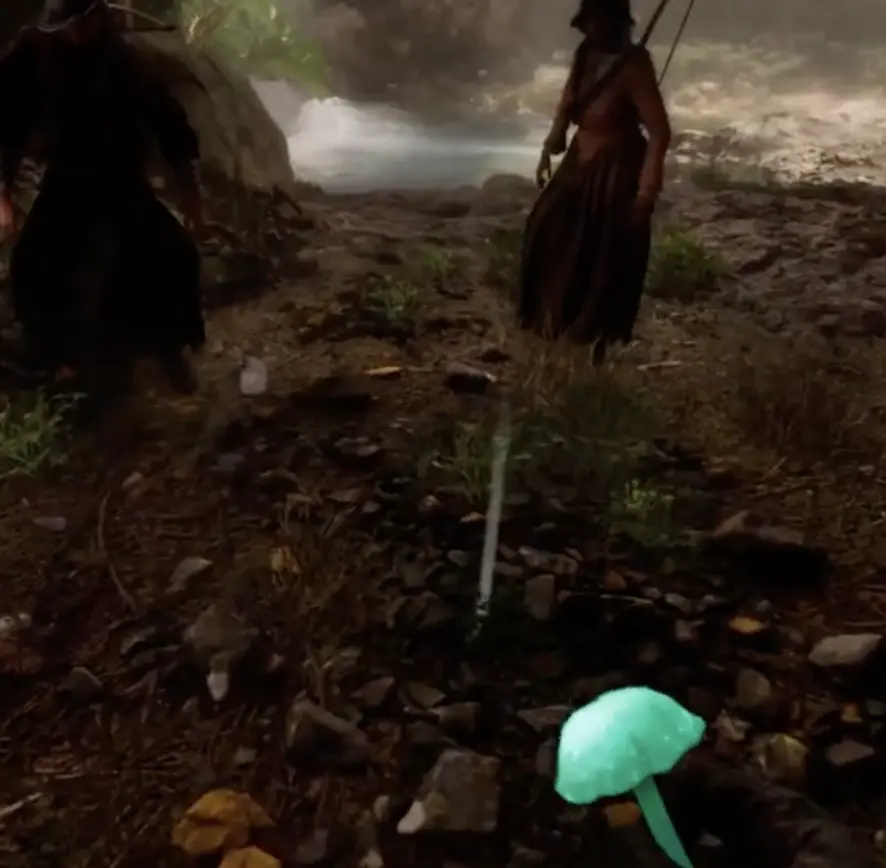
Glowing blue mushrooms are associated with isolation and sanity pressure.
They are useful, but I do not treat them as a button that immediately removes every hallucination.
In one co-op route, a player ate several glowing mushrooms and still briefly saw teammates as ghosts with distorted voices. The perception later returned to normal, but the mushrooms did not create an immediate, clearly measurable reset.
My sanity recovery sequence is:
- Stop following unconfirmed sounds.
- Return to verified teammates or the wagon.
- Use short physical callouts.
- Eat a glowing mushroom if pressure is still building.
- Wait until voices and player models become reliable.
- Decide whether the route is stable enough to continue.
Solo Sanity and the False Bot
Solo mode provides a Bot, but the sanity system can make the companion itself unreliable as a visual landmark.
A false Bot may:
- appear in an impossible location;
- move similarly to the real Bot;
- draw the player away from the wagon;
- make it unclear which figure should be trusted.
This page does not need to repeat the Bot’s full combat and loot capabilities; those are covered in the Beginner Guide.
For hallucination checks, I use:
- The Bot’s last confirmed location.
- Whether I recently issued a movement or attack command.
- Whether the figure interacts with a real enemy.
- Whether it responds to an object or command.
- Whether following it would move me away from the wagon.
One failed command does not automatically prove the Bot is fake because the AI itself can be inconsistent. I look for several contradictions before trusting or rejecting the figure.
Noise and Quiet Combat
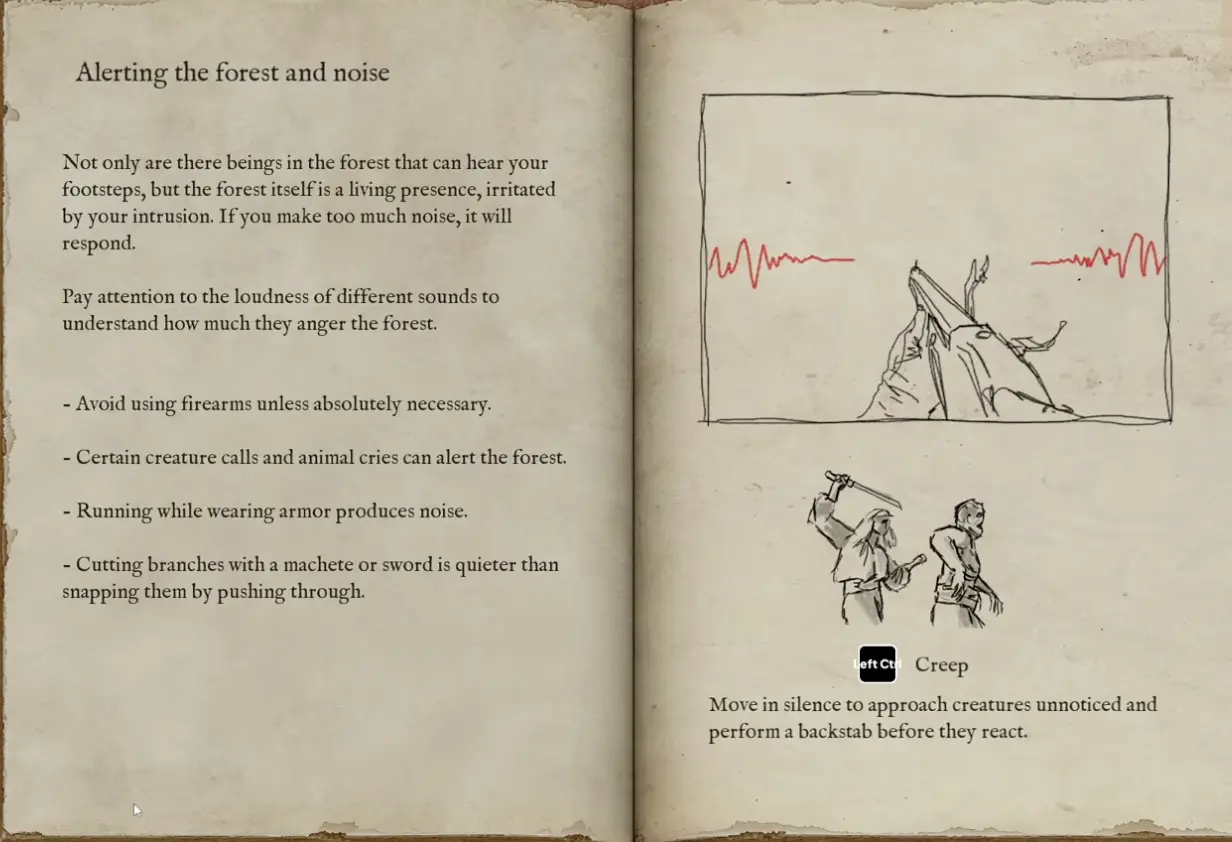
Noise wakes the forest.
The tutorial identifies several sources:
- gunfire;
- running in armor;
- footsteps;
- creature calls;
- animal cries;
- breaking through branches;
- repeated wagon calls.
Cutting branches with a Machete or Sword is quieter than pushing through them.
| Action | Relative noise risk | When I use it |
|---|---|---|
| Crouched backstab | Low | First choice against an isolated enemy facing away |
| Controlled melee | Medium | Team is together and has room to move |
| Bow or Crossbow | Medium-low | Range is needed without a firearm report |
| Flintlock or Musket | High | A teammate is pinned or a dangerous threat must die quickly |
| Repeated wagon call | Medium-high | Only when the group is genuinely lost |
| Sprint through combat | Medium-high | The expedition has already become an escape |
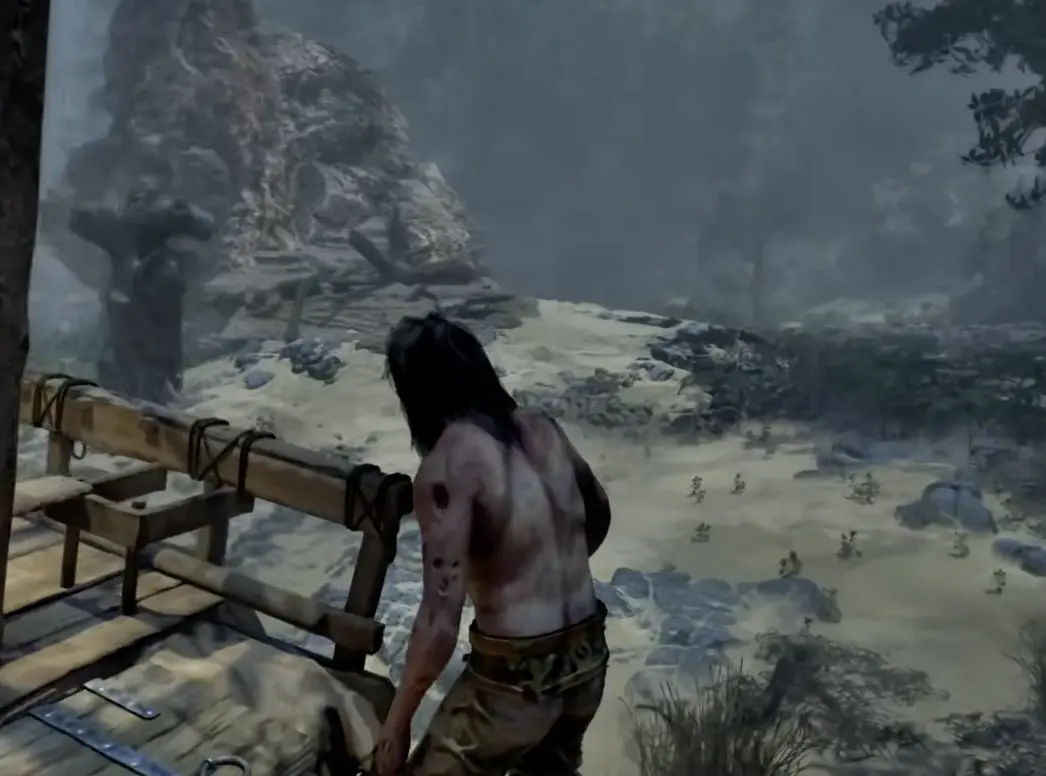
I stop forcing stealth when:
- the enemy has already detected the team;
- a teammate is trapped;
- several threats are converging;
- the objective is complete and the return path must be opened;
- delaying the attack is more dangerous than the noise.
Quiet play protects the route. It is not a rule that should get someone killed.
Rain Can Remove the Firearm Plan
Real rain can prevent gunpowder weapons from firing.
This is separate from hallucinated blood rain. Confirm that the weather is real before rebuilding the team’s combat plan around it.
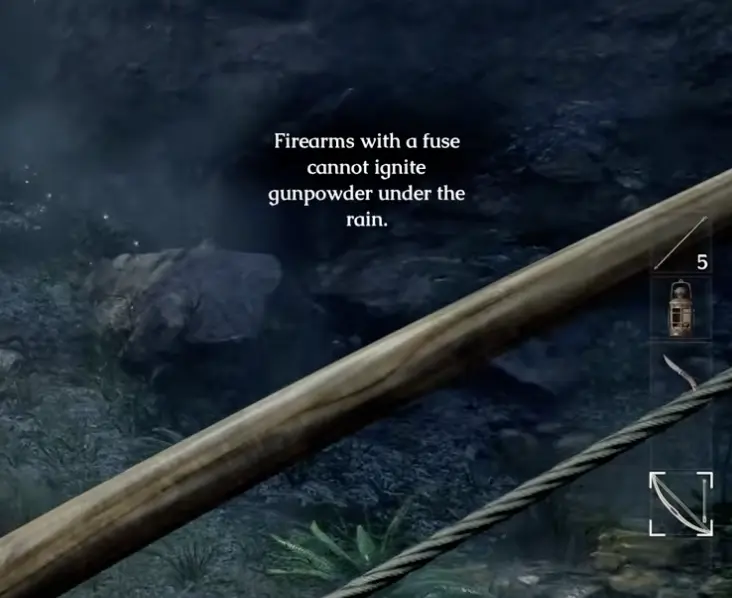
When real rain starts:
- move a melee, Bow, or Crossbow user forward;
- avoid unnecessary encounters;
- do not let a Flintlock remain the only emergency weapon;
- extract sooner if the team already has the objective and quota.
Weapons and Armor Can Break
Weapons and armor have durability and can break during an expedition.
A melee weapon can become unusable after enough fighting. A Helmet or Breastplate can break and disappear from the equipped loadout.
This changes the team’s actual condition even when health still looks acceptable.
| Equipment problem | Safer response |
|---|---|
| Main melee weapon breaks | Take a backup from the wagon or swap combat roles |
| Helmet or body armor breaks | Move that player away from the frontline |
| Ranged ammunition is low | Stop spending shots on isolated weak enemies |
| Bot loses armor | Do not rely on it to absorb the next encounter |
| Several players lose equipment | Shorten the route and prepare to extract |
A team with reasonable health but no armor, damaged weapons, and no spare loadout is already close to its return phase.
What to Do When a Teammate Falls
A fallen ally changes the expedition immediately.
Use this order:
- Call the exact fall location.
- Stop opening chests and side paths.
- Confirm the nearby players are real.
- Clear only the threat blocking the body.
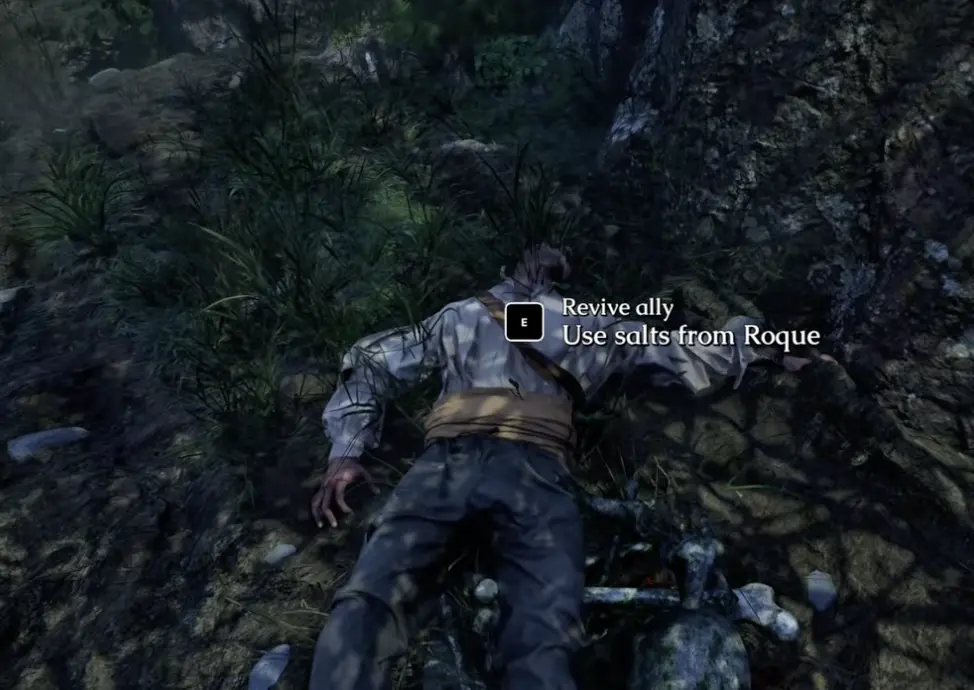
- Check for Ammonia Salts.
- Revive after creating enough space to move.
- Pull the recovery toward the ox-wagon if the body is exposed.
- Recheck equipment, sanity, and the return route.
- Extract if the team cannot survive another mistake.
Use the Correct Recovery Item
| Problem | Correct first response | What does not solve it |
|---|---|---|
| Low health | Food Ration or healing food | A Bandage without active bleeding |
| Bleeding | Bandage | Food alone |
| Fallen ally | Ammonia Salts | Mushrooms or normal food |
| Isolation pressure | Regroup and use a glowing mushroom | Continuing to scout alone |
| Unreliable teammate model | Action verification | Attacking based on appearance |
| Broken armor | Change formation or replace it | Eating food and keeping the same frontline |
| Broken weapon | Use a backup or swap roles | Entering the next fight empty-handed |
Food restores health. It does not stop bleeding.
A mushroom can help sanity pressure. It does not revive a player.
Ammonia Salts restore a fallen ally. They do not repair the route that caused the fall.
Bleeding Needs a Bandage
Bleeding can turn a completed fight into a delayed death.
My response is:
- Report the bleed.
- Stop moving once the area is clear.
- Use a Bandage or ask for one.
- Eat food only after controlling the bleed.
- Return to the wagon before opening another path.
- Extract if no Bandages remain and another fight is likely.
Centipedes: Vomiting and Splitting
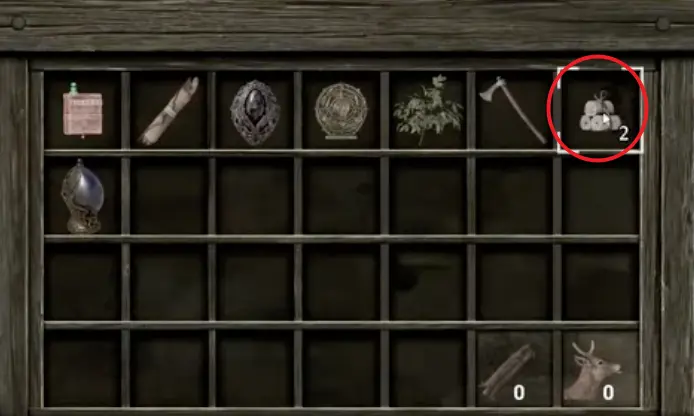
Centipedes can emerge after poisoning or vomiting.
The exact cause should not be reduced to one guaranteed formula, but the practical warning is clear: when someone begins vomiting, the group should prepare for an immediate threat rather than continuing to loot.
Use this response:
- Call out the vomiting.
- Move away from the wagon chest and fallen allies.
- Give the team room to fight without friendly fire.
- Watch for the Centipede to emerge.
- Continue watching after it is cut apart.
- Confirm that every moving section is dead.
- Check poison, health, equipment, and recovery items.
- Extract if the fight consumed too many resources.
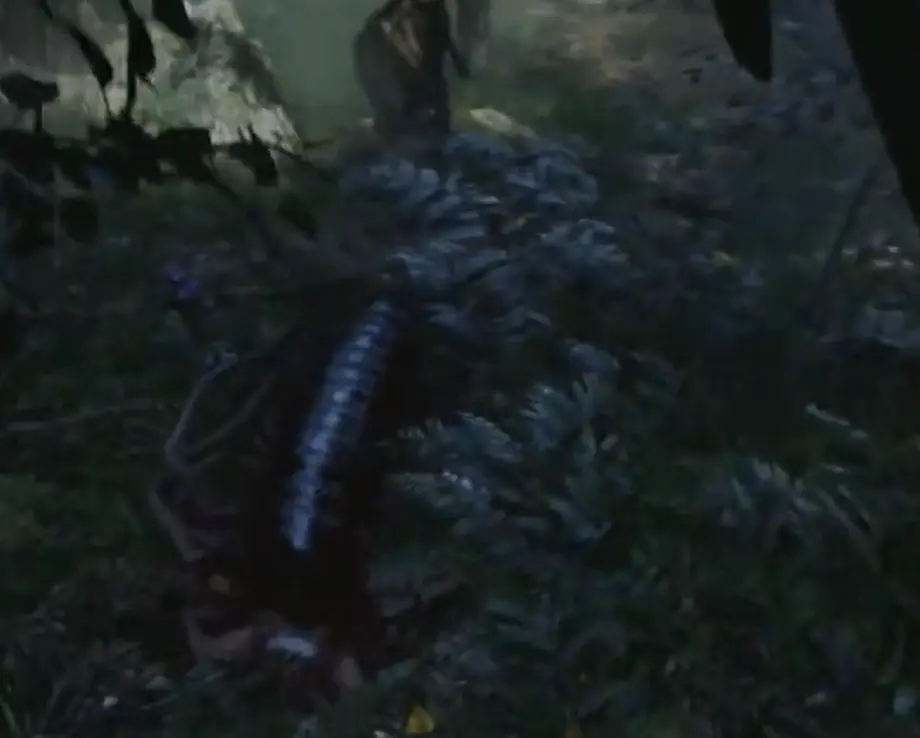
The mistake is treating the first cut as the end of the encounter.
Trapped Chests, Mimics, and False Treasure
Not every visible reward is safe or real.
The jungle can present:
- poisonous chest bursts;
- spike traps beside tempting routes;
- Mimics;
- pits near forts or caves;
- treasure that only one player sees.
Before opening suspicious loot, I check:
- whether another player sees the same object;
- whether anyone is already bleeding;
- whether the inventory has room;
- whether the wagon is close;
- whether the objective and quota are already secure;
- whether the team has space to retreat if it becomes a Mimic.
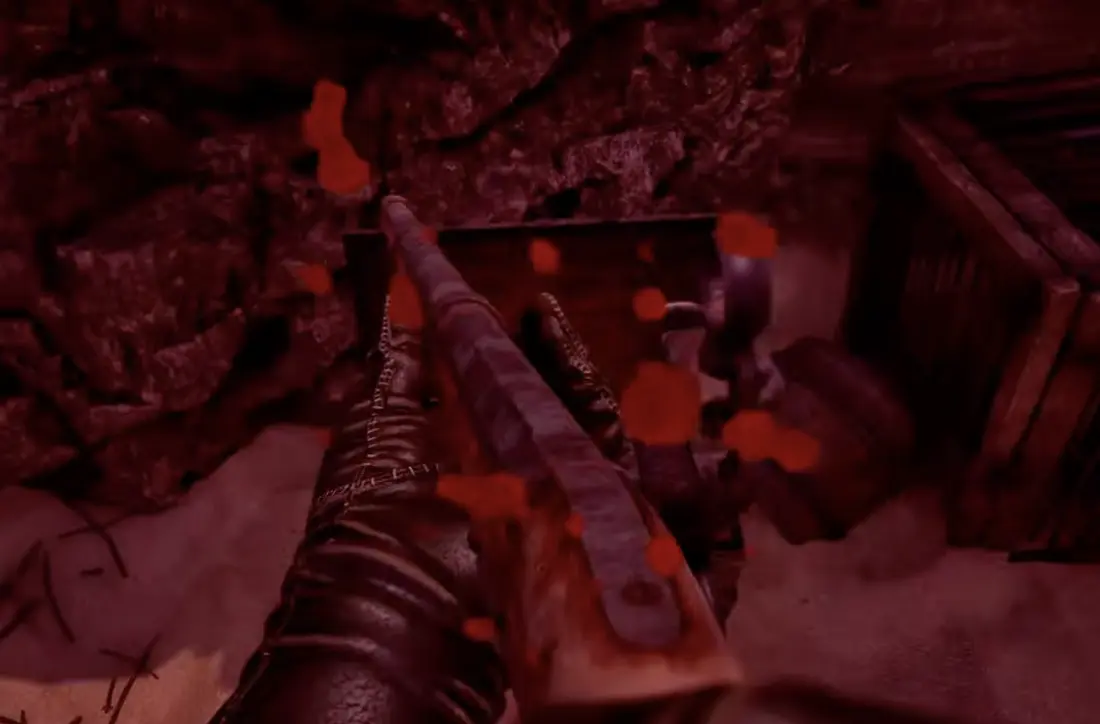
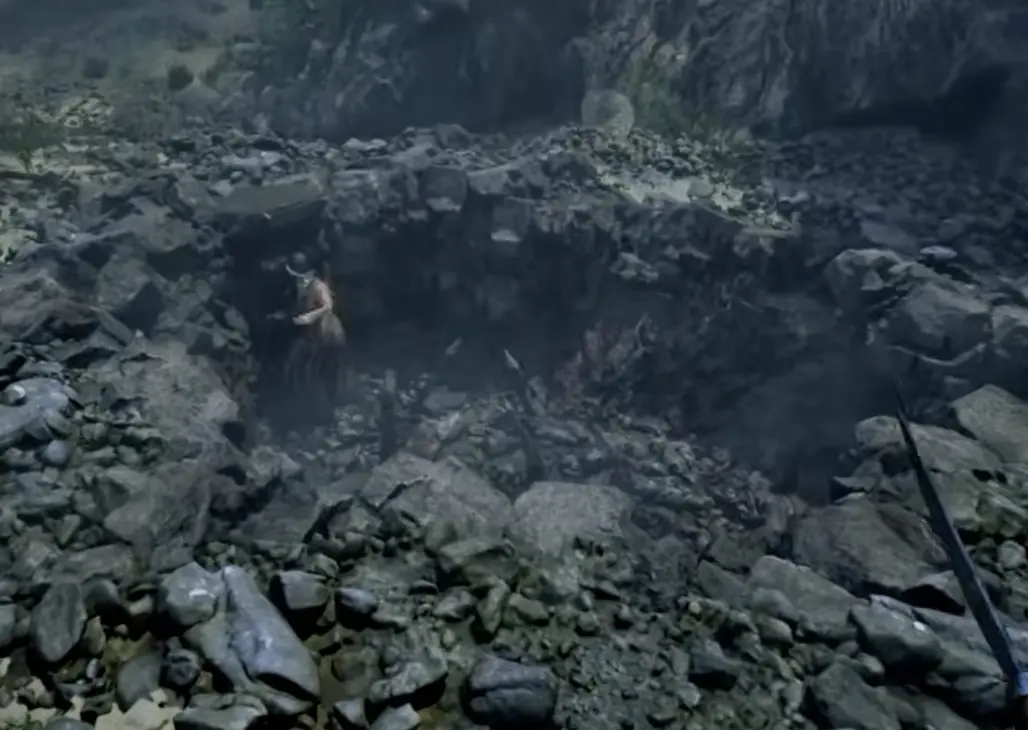
A completed contract does not need one more chest that only one player can see.
Forest Awakening Means the Return Phase
I do not wait for the forest to reach its worst possible state before leaving.
Use one extraction framework:
| Team state | Objective and quota | Forest pressure | Decision |
|---|---|---|---|
| Healthy and verified | Incomplete | Low | Continue the main route |
| Healthy and verified | Complete | Low | Begin extraction unless one safe requirement remains |
| One player hallucinating | Complete | Rising | Regroup and extract |
| One player down | Complete | Any | Rescue, then extract |
| Armor or main weapons broken | Nearly complete | Rising | Take only an immediate reliable objective, then leave |
| No Bandages or Ammonia Salts | Complete | Any | Extract immediately |
| Team split and wagon route unclear | Any | Rising | Stop looting and rebuild the return route |
| Multiple hallucinations and active enemies | Complete | High | Ignore side paths and finish the expedition |
Survival Troubleshooting
| Player problem or search | Likely cause | Practical fix |
|---|---|---|
| Why is it raining blood only for me? | Blood rain is a player-specific hallucination | Confirm the real weather and regroup |
| Why do I hear a horn nobody else hears? | Sanity may be creating a false extraction or rescue call | Verify the wagon and teammate positions before following it |
| Why does my teammate look like a monster? | The character model may be altered only on your screen | Ask the player to crouch and perform a second action |
| Why can nobody hear me? | Corruption may have interrupted your outgoing proximity voice | Return to the last confirmed group landmark |
| Why are my teammates’ voices robotic or ghostly? | Sanity can distort voices as well as models | Verify physical actions and stop splitting the team |
| Why did mushrooms not fix the hallucination? | They can reduce pressure without instantly clearing an active effect | Regroup and wait for information to stabilize |
| Why do I see two Bots? | One may be a hallucination | Use last confirmed position and command response |
| Why will my gun not fire? | Real rain may be preventing gunpowder ignition | Switch to melee, Bow, or Crossbow |
| Why did my weapon disappear? | Its durability reached zero | Take a backup from the ox-wagon |
| Why did my armor disappear? | It broke after repeated damage | Move out of the frontline |
| Why am I still losing health after eating? | Bleeding is still active | Use a Bandage |
| Why did a Centipede appear after vomiting? | Poisoning or a related status can precede its emergence | Call it out, create space, and prepare for multiple sections |
| Why did the Centipede keep moving after being cut? | Both separated parts can remain active | Confirm every moving section is dead |
| Why did a chest attack me? | It was trapped or a Mimic | Open suspicious loot only with space and support |
| Why do we die after meeting quota? | The team stayed after the safe extraction window | Leave when objective, quota, and route are secure |
What to Read Next
Use the Beginner Guide for the first expedition, six-slot inventory, shared equipment, Rank, Tokens, and full Solo Bot behavior.
Use the Contracts and Extraction Guide for contract tiers, treasure quota, Logbooks, Lost Survivors, Metal Idol values, Patron Saints, artifacts, and extraction requirements.
Return to the The Mound Guide Hub for the full progression route.
FAQ
Does The Mound have a sanity meter? +
No. The game does not use a visible sanity bar, warning siren, or normal UI icon. Your first warning may be an event that looks completely real, which is why the developers describe your teammates as the closest thing you have to a sanity meter.
What is the blood rain hallucination in The Mound? +
Blood rain is a localized visual hallucination that may appear for only one player. It does not necessarily mean that the real weather has changed, so confirm with the team before assuming gunpowder weapons are affected by actual rain.
Is every horn call in The Mound fake? +
No. Real wagon and teammate calls still exist, but low sanity can create a false reassuring horn. Before following it, ask whether another player heard the same call and confirm the wagon or teammate's last known position.
How do I check whether a teammate is real? +
Ask the player to perform a new physical action such as crouching once, then confirm their exact location. For a stronger check, ask for a second action such as changing weapon or turning toward a named landmark.
Do glowing mushrooms instantly remove hallucinations? +
Not reliably. They can help with isolation or sanity pressure, but an already active model or voice distortion may continue briefly after eating one. Regroup and verify the team again instead of assuming the next figure is real.
Can the Solo Bot be a hallucination? +
Yes. A false Bot can appear in a place where the real companion should not be. Use its last confirmed position and command response as evidence, but remember that one failed command alone is not proof because Bot behavior can also be inconsistent.
What happens when a Centipede is cut in half? +
The separated sections can remain active. Do not turn away after the first cut; confirm that every moving part has stopped before healing, looting, or returning to the wagon.
When should I extract from a survival run? +
Extract when the objective and quota are safe and the team has lost too many recovery options. No armor, no backup weapon, one remaining revive, unreliable callouts, or a broken return formation are stronger warning signs than health alone.