Quarantine Zone: The Last Check Walkthrough
Featured
Miami Zero Walkthrough: Days 1–15 and How to Escape
Clear the 15-day Miami campaign with the right inspections, story objectives, tool unlocks, and final escape preparations.
Read Guide →Game Guide Hub
Start Miami Zero, make the right survivor decisions, manage the checkpoint, and find your next objective before the final escape.
Recommended Order
Use these guides to find the right Quarantine Zone: The Last Check walkthrough, solution or next step.
Walkthrough
Clear the 15-day Miami campaign with the right inspections, story objectives, tool unlocks, and final escape preparations.
Guide
Repair the Miami yacht by assigning healthy survivors, building repair points, matching specialist workers, and protecting finished compartments.
Guide
Complete the Miami virus formula by collecting research subjects, testing drug combinations, identifying mutations, and finding all seven mutagens.
Guide
See what happens on Day 15, how completed yacht repairs and virus research change the final interrogation, and what is known about Miami's true ending.
Guide Cluster
Clear the 15-day Miami campaign with the right inspections, story objectives, tool unlocks, and final escape preparations.
Read Guide →Repair the Miami yacht by assigning healthy survivors, building repair points, matching specialist workers, and protecting finished compartments.
Read Guide →Complete the Miami virus formula by collecting research subjects, testing drug combinations, identifying mutations, and finding all seven mutagens.
Read Guide →See what happens on Day 15, how completed yacht repairs and virus research change the final interrogation, and what is known about Miami's true ending.
Read Guide →Track all 15 Miami Zero achievements, including hidden survivor encounters, Rat King, Cyberpunk, EUREKA!, and Secrets Revealed.
Read Guide →Select Miami Campaign to start Miami Zero without completing Chicago. Inspect Dr. Schultz with the Biometric Scanner, record his Tremor, and send him to the yacht.
From Day 2, keep healthy survivors working on the ship. When Schultz introduces the Wanted List, check the photographs before processing the survivor line and send matching people to the Research Ward.
Quarantine Zone: The Last Check puts you in charge of deciding who can safely enter a survivor area during a zombie outbreak. Every inspection requires you to identify symptoms, examine suspicious belongings, and choose a destination. A missed infection can endanger people already admitted, while rejecting a healthy survivor wastes someone who could have helped the checkpoint.
The original Chicago campaign focuses on inspections, quarantine management, laboratory work, and survivor evacuation. Miami Zero begins earlier in the outbreak, at a festival checkpoint where the crew is trying to repair a yacht and investigate an unusual virus.
Miami gives you 15 days before the final confrontation. The challenge is balancing ordinary inspections with tasks that cannot be completed simply by processing another survivor.
You can select Miami Campaign directly from the main menu. Completing the Chicago story is not required.
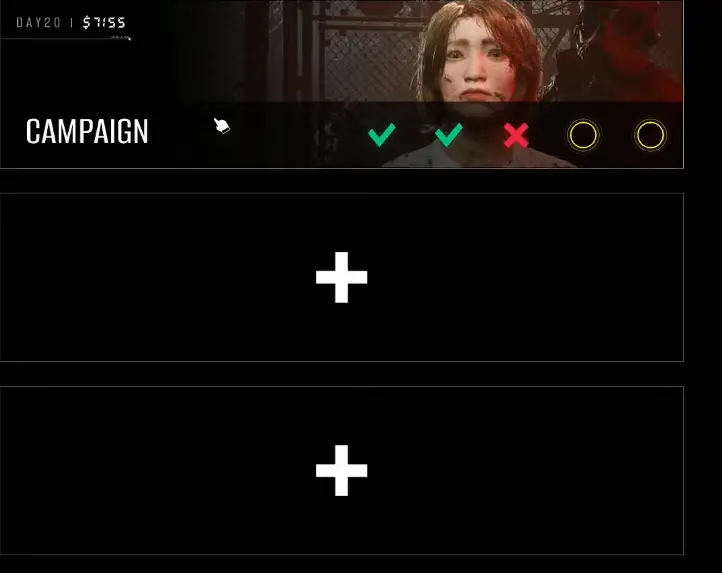
Chicago is the original campaign, where you learn the inspection systems and manage the consequences of your decisions across the survivor block.
Miami Zero is a free expansion with a separate story. Its setting is the early outbreak in Miami, and its main objectives involve preparing a yacht for evacuation and investigating the virus through Dr. Schultz’s experiments.
Both campaigns use the same basic principle: examine survivors carefully before deciding what happens to them. Miami introduces its inspection tools progressively, so starting there does not require you to have unlocked equipment in Chicago.
For the Miami story, follow the Day 1–15 walkthrough from Schultz’s first inspection through the equipment unlocks, story assignments, and final escape.
The first important distinction is between finding a symptom and deciding that someone is infected.
A survivor can have an unusual physical condition without carrying a dangerous infection. Tremor, for example, appears during Dr. Schultz’s opening inspection, but that finding alone does not justify treating him as infected.
Other conditions demand a different response. A bite mark is much more serious than an old scar, while certain physical abnormalities require observation before you can safely make a final decision.
The symptom handbook separates findings into categories that help determine the appropriate destination.
Safe findings do not establish infection by themselves. A person with harmless marks may still be suitable for admission once the rest of the inspection is clear.
Quarantine findings indicate that further observation or examination is needed. These cases should not be sent straight to the healthy population while their condition remains uncertain.
Infected findings identify dangerous conditions that make admission unsafe.
You still need to inspect the whole survivor. A harmless scar does not cancel out a dangerous symptom elsewhere, and finding one obvious infection sign does not mean the remaining abnormalities should be ignored.
A poor inspection can occur even when the destination you selected appears reasonable.
For example, you may correctly identify a dangerous bite mark but overlook other visible conditions. The person was unsafe to admit, yet the symptom report remains incomplete.
When the inspection result is worse than expected, check three things:
The report evaluates the accuracy of your inspection, not only the final destination.
I would check the symptom handbook whenever two findings look similar rather than repeatedly changing labels at random. This is particularly useful with scars, wounds, unusual posture, and physical reactions that may have more than one explanation.
A survivor who appears healthy may be valuable to the yacht, but sending an uncertain person directly aboard can create a much larger problem.
In Miami, the yacht contains people working on the escape preparations. Admitting an infected survivor can cause deaths and disrupt the work already underway.
That makes the destination decision a balance between protecting the existing crew and finding enough healthy people to finish the ship.
Send to Ship when the inspection supports admitting the survivor safely. They can then contribute to the yacht’s ongoing preparations.
Use Quarantine when the findings call for observation. The survivor can be inspected again later, and a person whose concerning symptoms have resolved may eventually be suitable for admission.
Use Liquidation when the inspection establishes an infection requiring elimination.
Use Research Ward when Schultz specifically requests a person for an experiment. The Wanted List identifies these assignments; they should not be confused with ordinary quarantine cases.
If you are struggling to find enough healthy workers, revisit survivors who have been held for observation instead of relaxing your inspection standards. A recovered quarantine survivor can be useful, while a missed infection risks the people already aboard.
Miami introduces new equipment as the campaign progresses. Each tool answers a different question about a survivor’s condition.
The Biometric Scanner handles the opening physical inspections, including visible abnormalities.
The Shocker examines muscular responses through an electrical charge. The intended inspection charge is delivered by stopping the indicator in the green zone; overcharging can injure the survivor.
The Reflex Hammer tests physical reflexes through a separate interaction. Use it on the appropriate limbs and observe the response.
The Service Dog can react to changes that are not immediately visible. Later, the X-Ray reveals internal abnormalities, while the UV Light helps examine suspicious skin markings that may conceal other findings.
There is little benefit in repeatedly using an instrument that cannot answer the question you are investigating. A suspicious internal organ requires a different examination from a tattoo that may conceal a mark.
As each new instrument becomes available, incorporate it into the appropriate inspections rather than relying entirely on the equipment from Day 1.
The survivor line remains your regular work, but Miami introduces several assignments that require attention elsewhere in the checkpoint.
The most important change is recognizing when a task has become an ongoing objective rather than a single inspection.
Beginning on Day 2, healthy survivors can help restore the damaged yacht.
Getting people aboard does not automatically finish the work. Individual compartments need preparation and workers, and repairs progress across shifts.
Some survivors contribute more when assigned to a compartment matching their occupation.
If the ship is not progressing, open the yacht management screen to check its current state rather than waiting for another ordinary inspection to solve the problem.
The Miami Zero yacht repair instructions cover repair points, specialist assignments, spending decisions, infection losses, and the requirements for completing the ship.
Schultz begins requesting specific people through the Wanted List.
During the inspection shift, compare incoming survivors with the current photographs and send the requested people to the Research Ward.
Delivering those subjects is only the first part of the assignment. The laboratory still needs to conduct the experiments.
Miami’s research involves preparing drugs, observing mutations, and completing a genetic sequence. Some successful experiments award equipment improvements instead of advancing the virus formula.
If you have delivered the requested people but your research progress has not changed, return to the laboratory and check the available experiments.
The virus research instructions explain how to finish the experiments, identify mutations, and collect all seven fragments.
Later in the campaign, the story begins sending you outside the regular inspection area.
Torres asks for items connected to a drink, while Schultz’s investigations lead toward the Adaptive Recovery Clinic and suspicious medical records.
Some objectives require searching the checkpoint for specific objects. Others depend on identifying something carried by an arriving survivor.
Pay attention to the wording of the active task. An instruction to search survivor baggage calls for a different approach from one that points you toward the Merch Shop, the laboratory, or a named character.
The Miami Zero walkthrough follows these assignments in order, including the blocked yacht plumbing, Torres’s investigation, the satellite phone, and Schultz’s locked computer.
Finishing the survivor line does not always mean every important task for the day is complete.
Before advancing, check whether Schultz is still waiting for requested subjects, whether someone is ready for an experiment, and whether the yacht has an available compartment that needs workers or preparation.
The active story objective also matters. A conversation, collected item, or unfinished equipment interaction can prevent the next task from progressing.
End-of-day reports can reveal problems you did not notice during inspections. If the yacht reports deaths or an infected compartment, examine the affected area before committing more resources to other repairs.
I would prioritize unfinished assignments that depend on the current day’s opportunities. Missing a research subject or leaving a repair idle can be harder to recover from than postponing an optional equipment interaction.
Some story events temporarily prevent normal checkpoint work.
After the unusual incidents involving Torres and the Rat King, Georgie may tell you that Schultz must clear you before you can return to duty.
Go to Schultz, complete the required conversation and medical-clearance task, then return to the inspection line.
The same principle applies when another named assignment interrupts the shift: follow the current objective before assuming the checkpoint is malfunctioning.
No. Miami can reach its final story sequence even when the yacht or virus research remains incomplete.
However, reaching the ending is different from completing both major assignments.
The final interrogation responds to their completion status. A run with the yacht repaired and research finished receives a different assessment from one where neither objective was completed.
Finishing both is also not enough, by itself, to establish that the true ending has been unlocked.
The Miami Zero endings explain the Day 15 confrontation, the different final reports, and what remains uncertain about the true-ending conditions.
Before entering the final sequence, check which objectives you still care about completing. Once the escape begins, you should not count on having another ordinary shift to repair a compartment or finish a missing experiment.
Miami adds 15 achievements, bringing the Steam total to 40.
Some unlock through normal progression, while others require a particular survivor or action. These include talking to the Rat King, eliminating two unique prisoners, using an overcharged Taser, and recognizing a survivor with cybernetic implants.
The campaign’s major completion achievements also have separate conditions. Completing the story does not automatically award every achievement connected to the yacht, virus research, or final ending.
Use the Miami Zero achievements checklist to track completed requirements and identify which interactions are still missing.
If you finish the campaign with only a few special achievements incomplete, another run is most useful when you focus on those particular encounters. For unfinished yacht repairs or research, begin working toward those objectives earlier rather than waiting until the final shifts.