The Upgrades I Buy First to Stop Wasting Time
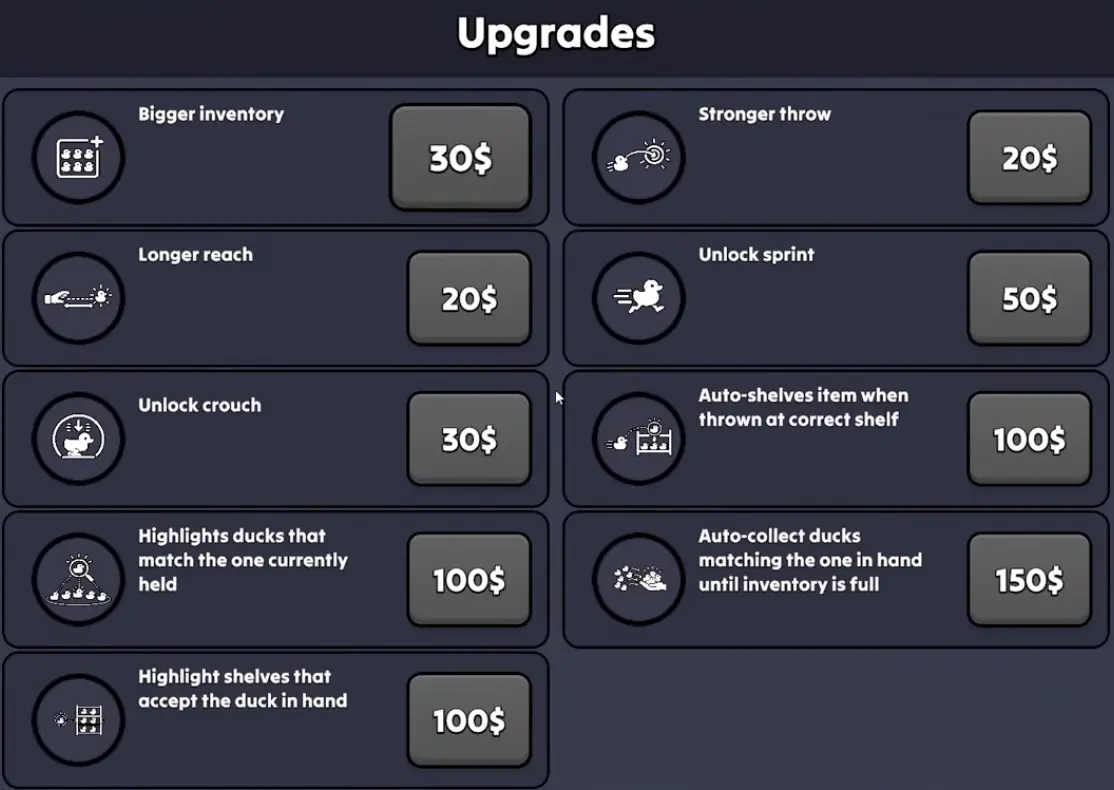
I buy Sprint first, save for the abilities that move whole groups of matching ducks, then expand inventory only when I can actually use the extra space.
Updated:
Quick Answer
For a normal first clear, I prioritize upgrades that remove travel and repeated handling before upgrades that only make one individual action slightly better.
My usual priority is:
Sprint — $50
→ Auto Collect — $150
→ Auto Shelves once I know the store layout
→ Bigger Inventory as my group-clearing abilities become stronger
→ Long Reach / Crouch / Stronger Throw when I have a specific reason for them
This is not the order I use for every challenge run.
For No Time to Waddle, I move Auto Shelves ahead of Auto Collect because I already know the shelf layout and want to cut placement time as early as possible. I keep that timed route in the Achievements guide.
I do not rush the $100 slot machine while I still have guaranteed upgrades I want.
The biggest change for me is not carrying one extra duck.
It is reaching a shelf faster, pulling an entire matching group toward me, and getting that group onto the shelf without handling every duck one by one.
The upgrade board looked more complicated than it really was once I understood what was costing me time.
At the start I could carry only a small handful of ducks, I could not sprint, and every trip from the pile to a shelf was manual.
That made almost every upgrade look useful.
They are not equally useful.
I stopped asking:
Which upgrade is cheapest?
and started asking:
Which upgrade removes the most repeated work from the next thousand ducks?
That gave me a much clearer buying order.
I Buy Sprint Before I Keep Expanding My Inventory
The first upgrade I consistently miss when I do not buy it early is Sprint.
It costs $50.
The difference sounds simple.
It is only movement speed.
But movement is involved in almost everything I do:
- pile to shelf;
- shelf to another shelf;
- upgrades back to the pile;
- checking an unfamiliar category;
- returning for another group;
- cleaning up ducks that landed on the opposite side of the shop.
That means Sprint helps whether I am carrying one duck or a full inventory.
When I finally bought it after spending too long walking at the base speed, the difference was immediate.
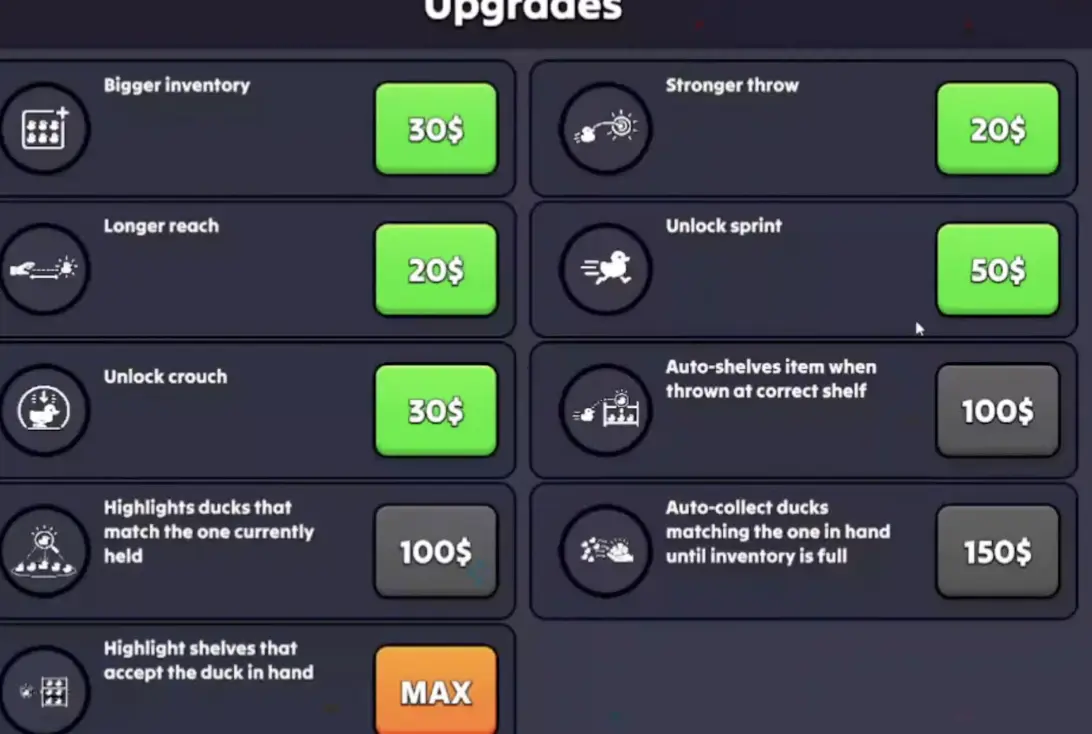
My mistake was thinking a cheap carrying upgrade would save more time because I could move more ducks per trip.
That only works when the ducks in my hand are already useful.
Sprint helps even when I am:
- carrying the wrong thing;
- checking a shelf;
- crossing the store empty-handed;
- or returning for one last duck.
So unless I am only a few dollars away from something much more important, I reserve my first $50 for Sprint.
I Save $150 for Auto Collect Instead of Buying Every Small Upgrade
The first expensive upgrade I am willing to save for is Auto Collect.
It costs $150.
The description sounds strong:
collect ducks matching the one in hand until the inventory is full.
It is stronger than it sounds once the pile is large enough.
The first time I used it properly, I had to correct one misunderstanding.
It is not a permanent vacuum running while I walk through the store.
I hold the duck type I want and activate the ability.
Matching ducks nearby are then pulled toward me.
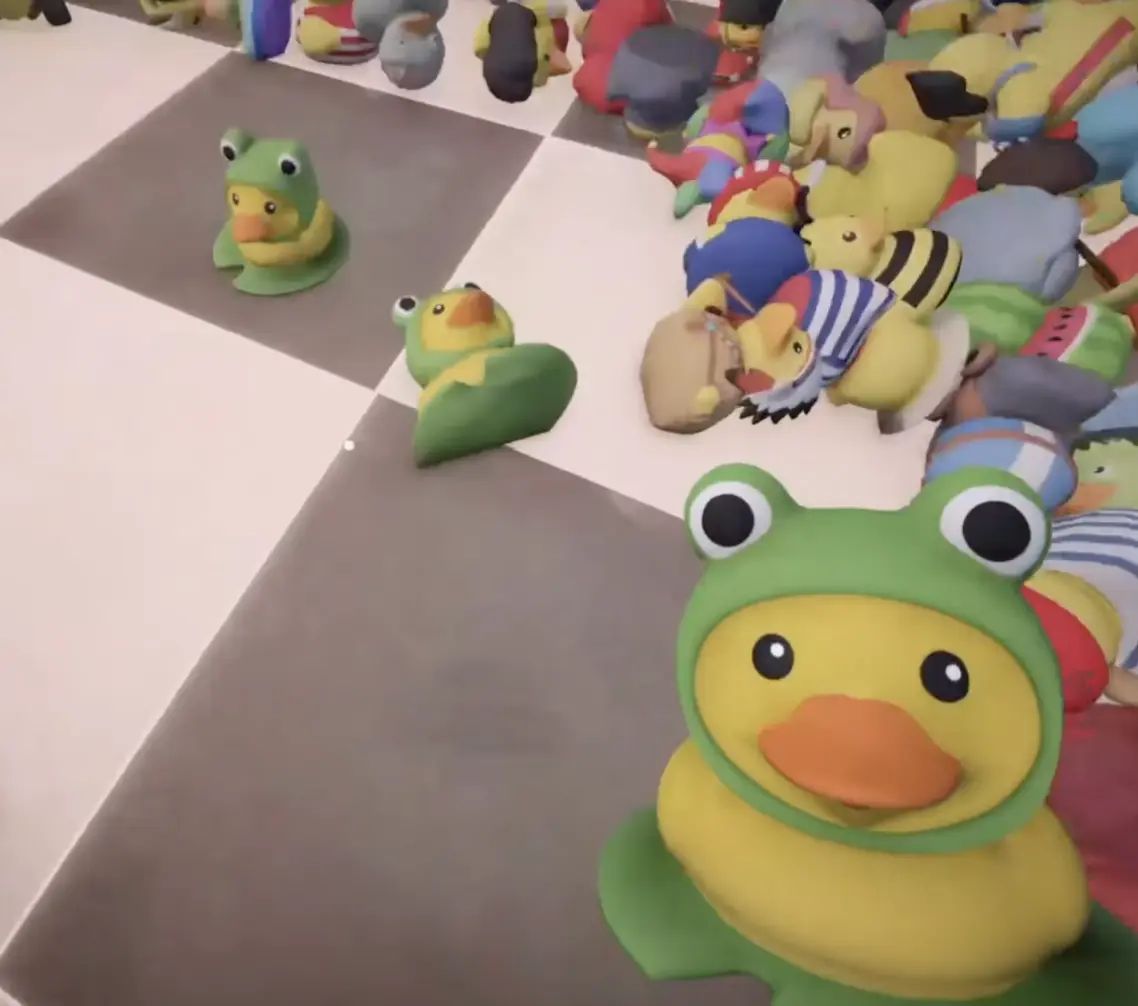
That changes the job completely.
Instead of:
spot one duck
→ walk to it
→ pick it up
→ spot the next copy
→ walk again
I can do:
choose one known type
→ activate Auto Collect beside the pile
→ fill my inventory with matching copies
→ run directly to the correct shelf
It is one of the first upgrades that makes me feel like I am processing a whole group instead of individual ducks.
Auto Collect Is When Bigger Inventory Starts Paying Off
Bigger Inventory changes from a convenience into a multiplier once Auto Collect is doing the filling for me.
The first Bigger Inventory purchase costs $30.
One early upgrade takes me from carrying 5 ducks to 6, and another step can take that to 7.
Before Auto Collect, those extra slots still depend on me finding more useful ducks manually.
After Auto Collect, every extra slot can become another matching duck pulled into the same trip.
That is when I start investing more aggressively.
In one full run I eventually pushed the regular Bigger Inventory line to 18 slots, but I did not need anything close to that during the opening minutes.
My rule is:
small inventory early
→ Sprint
→ Auto Collect
→ grow inventory only when I can fill the new space efficiently.
I Use Auto Collect on Sets With Many Copies Still Loose
The best target is not necessarily my favorite duck.
It is a duck type with enough unsorted copies around me to justify the cooldown.
If one Music row needs only one final duck, I usually do not burn a full Auto Collect use unless I am specifically hunting that missing type.
If a shelf needs a large chunk of the same duck and the floor is still covered in them, that is exactly what I want.
I particularly like using it when I can already see several matching copies around the pile.
I activate it, fill as much inventory as possible, then empty that batch into the known shelf.
As the store thins out, the role changes.
Early and midgame:
Auto Collect is a bulk-processing tool.
Late game:
it becomes a targeted cleanup tool.
That late-game use is especially helpful when a category is almost complete and I know exactly which type is short.
I handle the full final-duck troubleshooting order in the Missing Duck guide.
Auto Shelves Becomes Strong Once I Know Where the Duck Goes
Auto Shelves solves a different problem.
It does not tell me which category is correct.
I still need to know that.
What it removes is the fiddly placement after I get there.
Once unlocked, a duck thrown toward its correct shelf can be placed automatically.
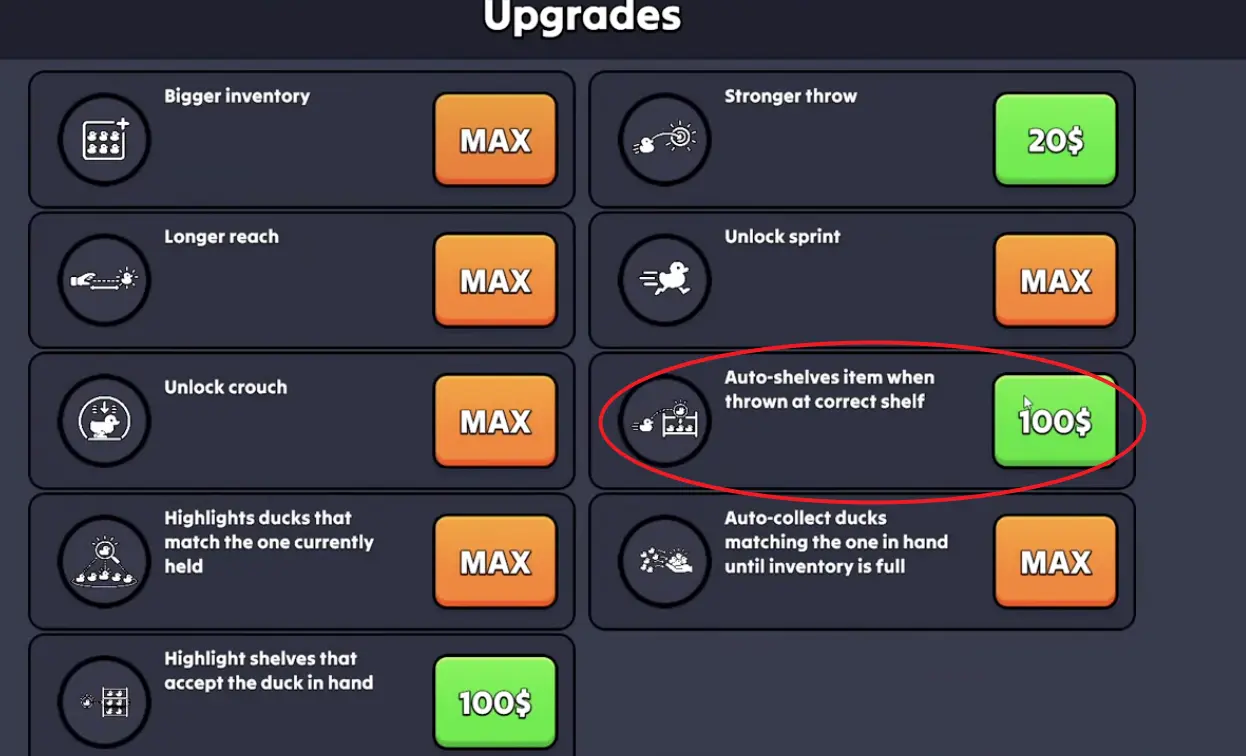
That distinction matters.
If I still do not know where Mermaid goes, Auto Shelves does not solve Mermaid for me.
If I already know Mermaid belongs with Pirates, it makes moving repeated Mermaid copies much faster.
This is why I value it more after I have learned the category wall.
I want the actual category answers in one place, so when a name keeps fooling me I use the Duck Shelf Finder and Shelf Categories guide rather than repeatedly throwing it at random shelves.
Once I know the destination, Auto Shelves takes over the repetitive part.
Auto Collect and Auto Shelves Solve Two Different Halves of the Same Trip
These two upgrades become especially good together.
Auto Collect helps me get the right copies into my hand.
Auto Shelves helps me get those copies out of my hand.
So a good midgame loop becomes:
pick one confirmed duck type
→ Auto Collect the matching copies
→ Sprint to that category
→ throw toward the correct shelf
→ Auto Shelves handles placement
→ repeat with another incomplete set
That is the first point where clearing thousands of ducks starts to feel systematic instead of purely manual.
It is also why I do not spend too much money early on small comfort upgrades.
I am trying to reach this loop.
I Upgrade Inventory Only When the Current Size Is the Bottleneck
I do not max Bigger Inventory just because another level is available.
I buy another level when the current capacity is clearly forcing extra work:
- Auto Collect fills me immediately;
- useful matching ducks are still left behind;
- I need two trips for one dense set;
- or the current cap stops me from clearing the group in front of me.
If I regularly return to a shelf with empty slots, capacity is not the problem yet.
That is the point where I stop spending on inventory and put the money somewhere that changes the route more directly.
Stronger Throw Is Better After Auto Shelves Than Before It
Stronger Throw is one of the cheap upgrades that tempted me early.
It sounds useful because I throw ducks constantly.
But throwing farther does not automatically solve the real bottleneck.
If I still have to:
- identify the category;
- walk close enough to see the shelf;
- and manually place the duck;
then a little extra throw distance does not transform my route.
Later, Auto Shelves changes that.
Now being able to throw confidently toward a known shelf is much more valuable because the shelf can finish the placement for me.
That is when I start liking Stronger Throw more.
So I treat it as a synergy upgrade, not my first priority.
I Buy Crouch When Ducks Start Hiding Low
Crouch was another upgrade I could delay without hurting my early progress much.
Most of the obvious ducks are sitting in the main pile or on accessible surfaces.
I can sort a large amount of the shop before crouching is essential.
Later the situation changes.
As piles collapse and I start looking for specific strays, ducks can be:
- under shelf edges;
- behind low clutter;
- in awkward gaps;
- or difficult to target from normal standing height.
That is when Crouch stops being a novelty.
I buy it when visibility becomes the problem I am actually dealing with.
I do not buy it because it is sitting on the board.
Long Reach Is a Late Convenience Until Something Is Actually Out of Reach
I handle Long Reach the same way.
There are moments when I genuinely want it, especially when a duck is awkwardly positioned among shelves or clutter.
But that is not my main problem during the first few hundred ducks.
Walking is.
Bulk collection is.
Repeated shelf placement is.
So Long Reach waits until reaching a duck is costing me more time than moving between categories.
Once the store is mostly clean and I am hunting individual problem ducks, its value goes up sharply.
The Highlight Abilities Are Stronger When I Am Still Learning the Store
There are two kinds of information that matter during sorting:
Where does the duck in my hand belong?
and
Where are the other copies of this duck?
The highlight abilities help answer those questions.
They are especially useful on a blind first clear.
But I do not automatically prioritize them above Sprint or Auto Collect.
If I already know most of the store layout, highlighting the correct shelf saves less time.
If I am completely lost among the 19 normal categories, it can save much more.
That is why my recommendation changes depending on where I am stuck.
If my problem is:
I know the shelf, but reaching it takes forever
I buy movement.
If my problem is:
I know the duck, but cannot find more copies
I value matching-duck tools.
If my problem is:
I keep carrying ducks to the wrong shelf
I value shelf information.
I buy against the actual bottleneck rather than following the upgrade board from left to right.
I Do Not Feed the Slot Machine My First $100
The slot machine costs $100 per pull.
That is a lot of money early.
More importantly, it is not the same as buying a guaranteed upgrade.
I had an early pull where I spent the full $100 and could not see any useful result.
That was money I could have put toward something I knew I wanted.
Later, the machine becomes much more attractive because it can provide useful extra improvements.
One of the better rewards I got was a Collect Ducks cooldown reduction.
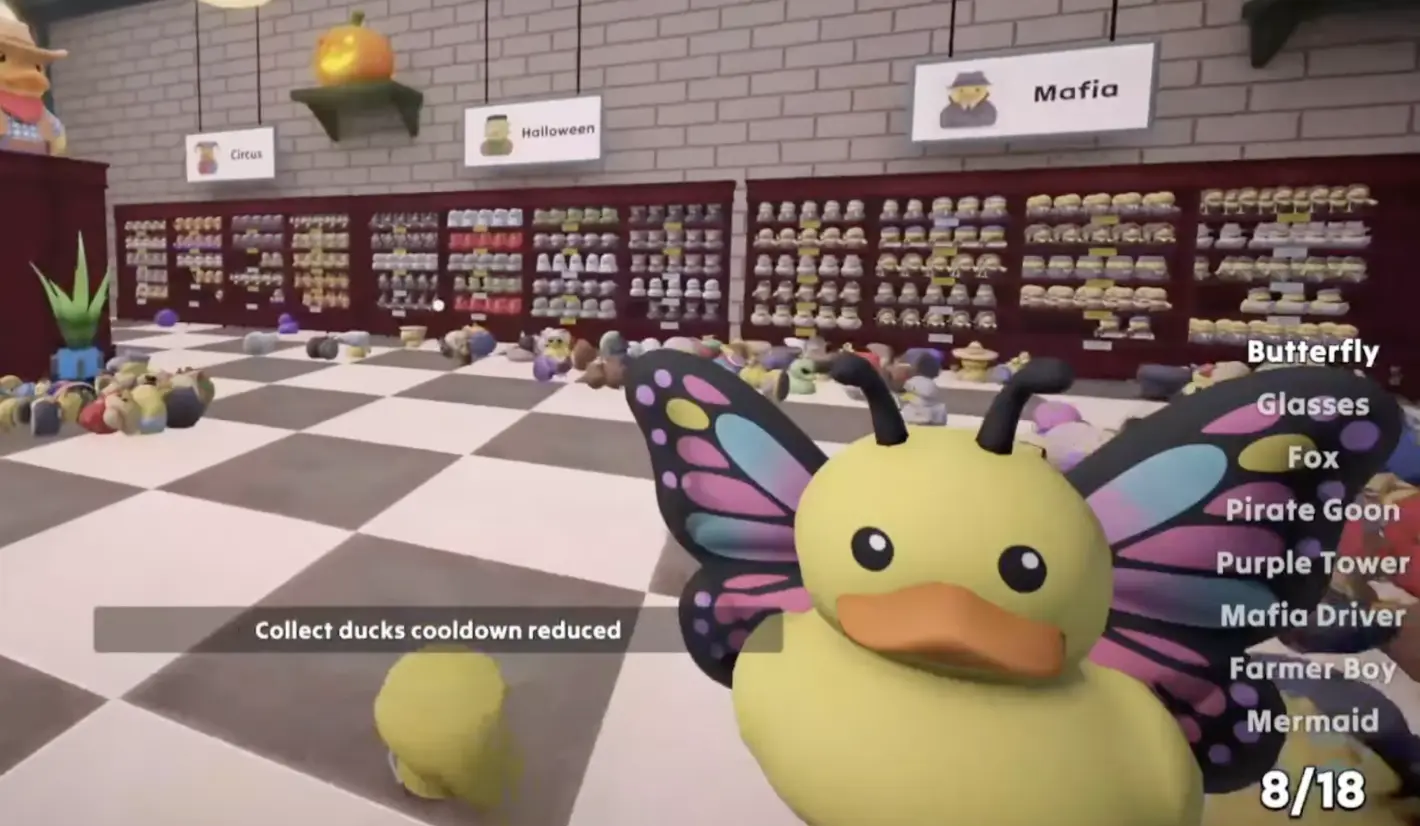
That reward mattered because Auto Collect had already become one of my favorite tools.
Reducing its cooldown improved something I was using constantly.
But I still would not trade my early Sprint money for a chance at that.
My rule is:
guaranteed core upgrade first, random bonus later.
Once my direct upgrade board is in good shape, I am much happier spending spare $100 chunks on the machine.
My Upgrade Order Changes Slightly Once the Store Is Mostly Clean
Early game is about speed and scale.
I want:
Sprint
→ bulk collection
→ faster shelf placement
→ enough inventory to support both
Near the end, I care less about processing 15 ducks at once.
I care about one duck that is:
- difficult to reach;
- difficult to identify;
- hidden behind the remaining clutter;
- or part of a nearly complete set.
That is where Long Reach, Crouch, matching highlights, and cooldown reductions become more valuable.
I do not call those bad upgrades.
I call them later upgrades.
The Normal-Clear Build I Would Use Again
If I started a normal first clear again, I would not spread my first money evenly.
I would get Sprint for $50 as soon as I could.
Then I would save for Auto Collect at $150, because the first clear still asks me to discover destinations while processing a huge number of repeated ducks.
Once I knew the shelf layout well enough to throw confidently, I would add Auto Shelves.
Then I would keep increasing inventory only when Auto Collect and my normal batches were actually filling it.
Crouch, Long Reach, Stronger Throw and the highlight options would come in when the specific problem they solve started slowing me down.
And I would keep my early money away from unnecessary slot-machine pulls.
For a timed replay, I would change that order rather than pretending one build is best for every goal. The Achievements guide owns the sub-four-hour route.
The shop contains thousands of ducks.
The best upgrade is not the one that makes one pickup slightly nicer.
It is the one that removes a repeated action I would otherwise perform hundreds of times.