I clear the shop in phases: learn the shelf wall, remove obvious groups, invest in faster sorting, save awkward ducks for later, then do one targeted cleanup.
I track the shelf that is still incomplete, use Find Duck for the exact missing type, fix misplaced tower colors, and check Mr. Duck before blaming a bug.
I buy Sprint first, save for the abilities that move whole groups of matching ducks, then expand inventory only when I can actually use the extra space.
My Sort Them Ducks walkthrough is much easier when I treat the shop as a series of
phases instead of trying to solve every duck the moment I pick it up.
My full-clear route is:
learn the shelf wall
→ clear obvious nearby groups
→ buy upgrades that reduce walking and repeated handling
→ park genuinely confusing ducks instead of testing every shelf
→ return for eggs once the store is easier to see
→ switch from bulk sorting to targeted cleanup near the end
The biggest mistake I made early was letting one confusing duck interrupt a good
sorting run.
If I do not know where something belongs after a couple of sensible checks, I put
it aside and keep opening the store.
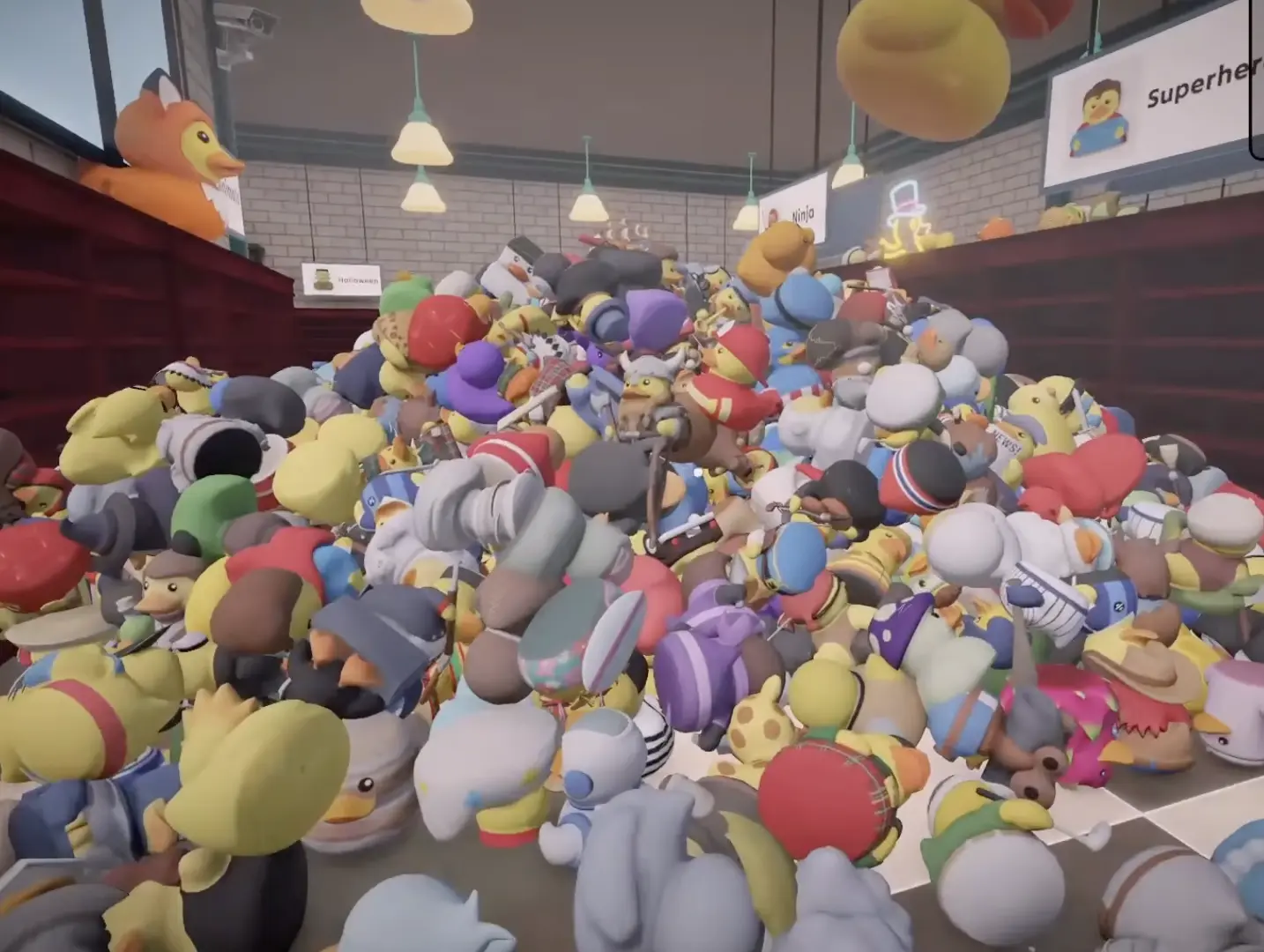
The first time I looked across the shop, the number of ducks was not really the
problem.
The problem was that I could barely see the shop underneath them.
There were 4,000+ ducks spread across the floor, counters, shelves, and central
display, with category signs visible behind a pile that I still had to physically
work through.
At the start I am not trying to memorize every duck. My first job is opening enough floor space to understand the shop.
That changed how I approached the whole clear.
This is the route I now use from the opening pile to the final completion trigger.
I am not trying to catalogue every duck on this page; each specific blocker links
to its own guide when I reach it.
I stopped thinking of the game as:
pick up duck → solve duck → repeat 4,000 times.
I started thinking of it as:
open the store → learn the routes → process groups → clean up exceptions.
That is much faster, and it also makes the last part of the game far less chaotic.
My First Goal Is to Learn the Shop, Not Finish a Category
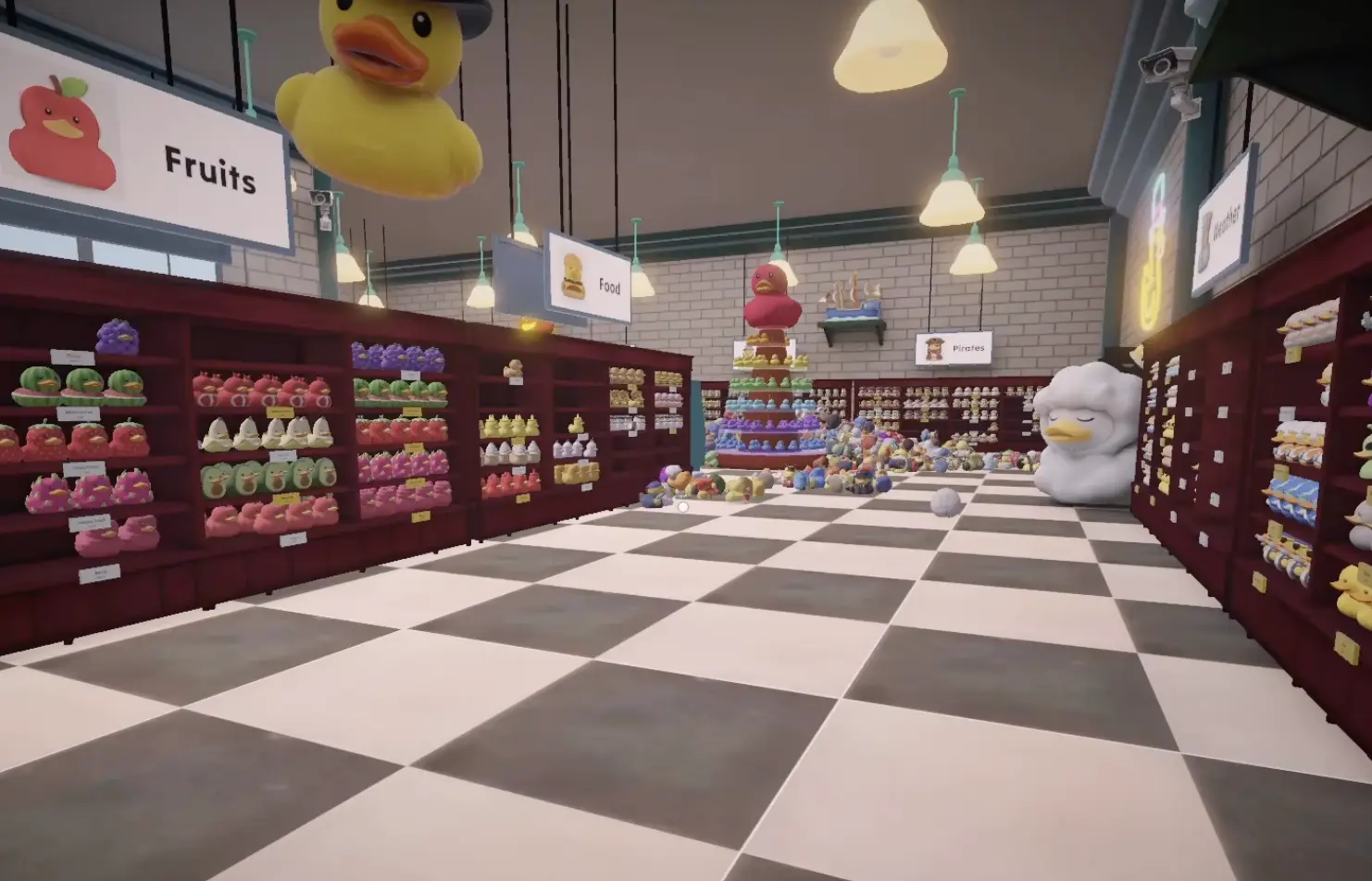
I spend my first few minutes walking the shelf wall.
I want to know roughly where the big themes live before I start hauling five
unrelated ducks around the store.
I do not need every individual answer yet.
I only need enough of a mental map that when I pick up:
an obvious pirate;
a piece of food;
a country duck;
a sports duck;
or a clear Halloween design;
I can move it without stopping to search the whole building.
There are 19 main shelf themes, but I do not try to memorize every named duck
inside all 19 at once.
Some placements are deliberately less intuitive than they look.
When a duck keeps sending me to the wrong shelf, I use the
Duck Shelf Finder and Shelf Categories guide
rather than turning one uncertain duck into five unnecessary cross-store trips.
I can search the duck name there and jump straight to the shelf answer instead of
testing the whole store again.
My early rule is:
obvious ducks move now; uncertain ducks can wait.
I Clear Piles That Are Blocking Routes Before Chasing Perfect Sets
One of the easiest traps is spotting a nearly complete shelf and abandoning
everything else to finish it.
Sometimes that is worth doing.
Early on, usually it is not.
If a giant pile is still covering the route between me and several categories, I
get more value from shrinking that pile.
I try to pick ducks that are already going in the same direction.
If I am heading toward Animals and I can grab several obvious Animal ducks, I take
them together.
If I am heading toward Pirates, I do the same there.
I avoid:
Pirate
→ cross shop
→ Food
→ cross shop
→ Cowboy
→ cross shop
when the floor still gives me enough known ducks to batch trips.
The real early-game efficiency comes from reducing travel.
I do not need perfect shelf completion yet.
I need room to move.
I Buy Around the Bottleneck I Actually Have
Money arrives naturally as I put ducks in the right places.
I do not spend it simply because an upgrade button lights up.
At the beginning, my bottleneck is movement.
Later it becomes carrying and processing groups.
Later again it becomes finding one specific missing duck.
Those are different problems.
So I let my build change with the store.
Sprint is the upgrade I notice immediately because every trip gets shorter.
Bulk collection becomes much stronger once I already understand where the duck in
my hand belongs.
Auto shelving matters more once I know the shelf wall well enough to throw with
confidence.
I keep the actual prices, buying order, and the upgrades I delay in the
Best Upgrades guide.
For the main clear, the useful principle is:
I buy the upgrade that removes the action I am repeating most often right
now.
I do not max something just because the next level exists.
I Keep One Small Area for Ducks I Have Not Solved Yet
This was one of the biggest quality-of-life changes in my run.
I stopped carrying an unknown duck around while testing half the store.
If the first sensible category fails and I still do not have a strong second clue,
I put that duck in one controlled pending area.
Then I continue.
This gives me two advantages.
First, I do not lose five minutes to one joke category.
Second, once most of the store is sorted, I have a compact group containing the
ducks that actually require thought.
That is a much better time to solve them.
By then:
more shelf labels are exposed;
other copies may already show me the answer;
there is less clutter hiding the signs;
and I can test categories without constantly climbing over piles.
I return early only when I get new information.
Otherwise I let the unresolved pile wait.
Midgame Is When the Store Starts Working for Me
There is a noticeable point where the shop stops feeling like a wall of ducks.
Large parts of the floor become visible.
I can see the tower base.
The shelf wall becomes readable.
My routes between categories stop changing every few minutes.
Once large sections of floor appear, I stop improvising every trip. This is where batching categories and using the shop layout starts paying off.
That is when I become much more systematic.
Instead of picking up anything close to me, I look for a useful batch.
If I know one side of the store still needs Animals, I clear Animals.
If a Music set is mostly untouched, I start moving Music.
If one known duck has many copies still scattered through the pile, it becomes a
good bulk-collection target.
My goal is to retire areas of the shop.
I want to reach the point where I can think:
I do not need to come back to this corner for normal sorting anymore.
Every corner I retire makes the next search easier.
I Do Not Turn Egg Hunting Into an Early Detour
I collect eggs when I happen to see them.
I do not stop a strong sorting route because I have found only three or four.
The serious egg sweep is much easier after the shop opens up.
By then I can actually see:
furniture gaps;
office edges;
high shelves;
sign areas;
and the machine side
without hundreds of loose ducks competing for my attention.
There are 10 eggs in total.
I use one late sweep rather than repeatedly searching the same room throughout the
run.
And if I have reached the point where the store looks finished but the game
disagrees, I switch to the
final Missing Duck route.
I do not solve all five problems at once.
I identify which stage I am actually in and solve that one.
The Store Eventually Becomes Almost Unrecognizable
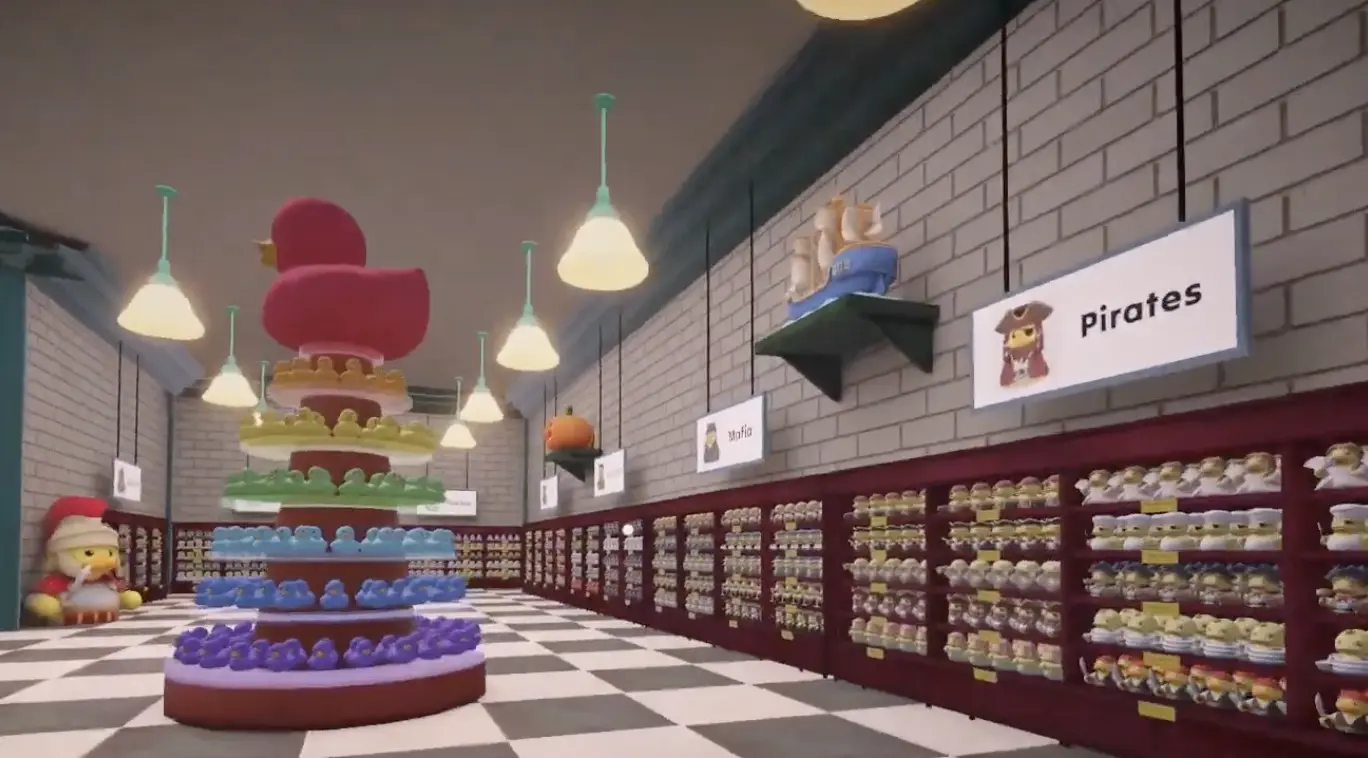
One of the most satisfying parts of the run is seeing how small the actual shop is
once the duck pile disappears.
At the start, the ducks define every route.
At the end, the floor, shelf wall, tower, office, and machines finally look like a
normal store again.
The store is surprisingly compact once the pile is gone. By this point my job is no longer bulk sorting; it is checking whatever specific set has not resolved.
That before-and-after difference is also the best way I can describe the whole
progression.
I do not beat the pile by remembering thousands of individual ducks.
I beat it by making the shop more readable with every pass.
The clearer the store becomes, the more precise my decisions become.
That is the route I would use again:
learn
→ open space
→ batch
→ upgrade
→ delay the awkward exceptions
→ clean up deliberately
instead of trying to solve 4,000+ separate problems one duck at a time.